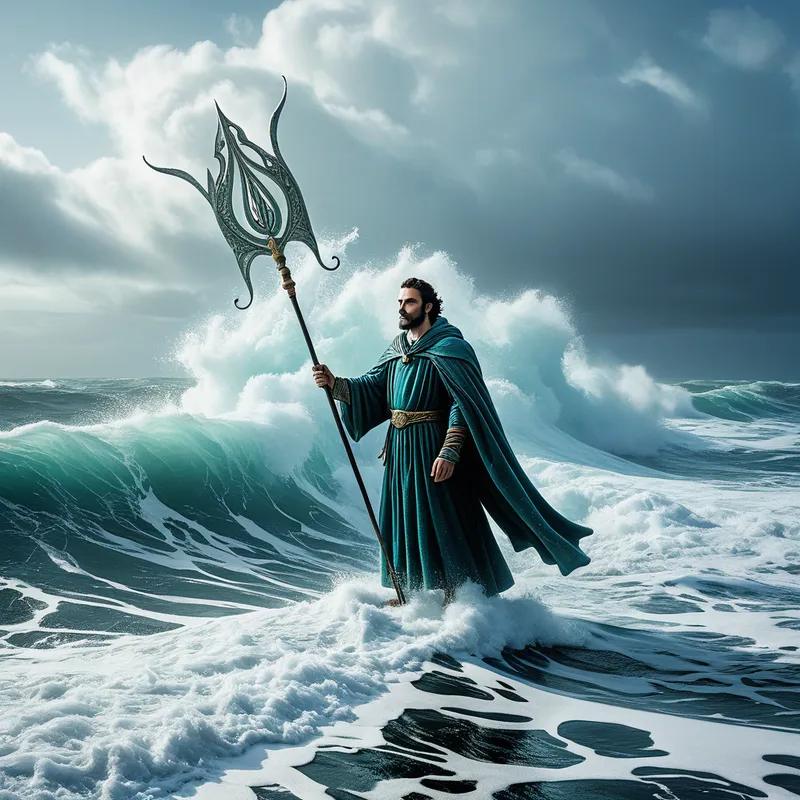
Manannán mac Lir Myth Meaning & Symbolism
The myth of the liminal sea god, master of mists and magic, who guards the threshold between the known world and the Otherworld.
The Tale of Manannán mac Lir
Listen, and let the salt air fill your lungs. Let the cry of the gull become the only sound. For I will tell you of the one who is not of the land, nor wholly of the sea, but of the space where they meet and become something else. I speak of Manannán mac Lir.
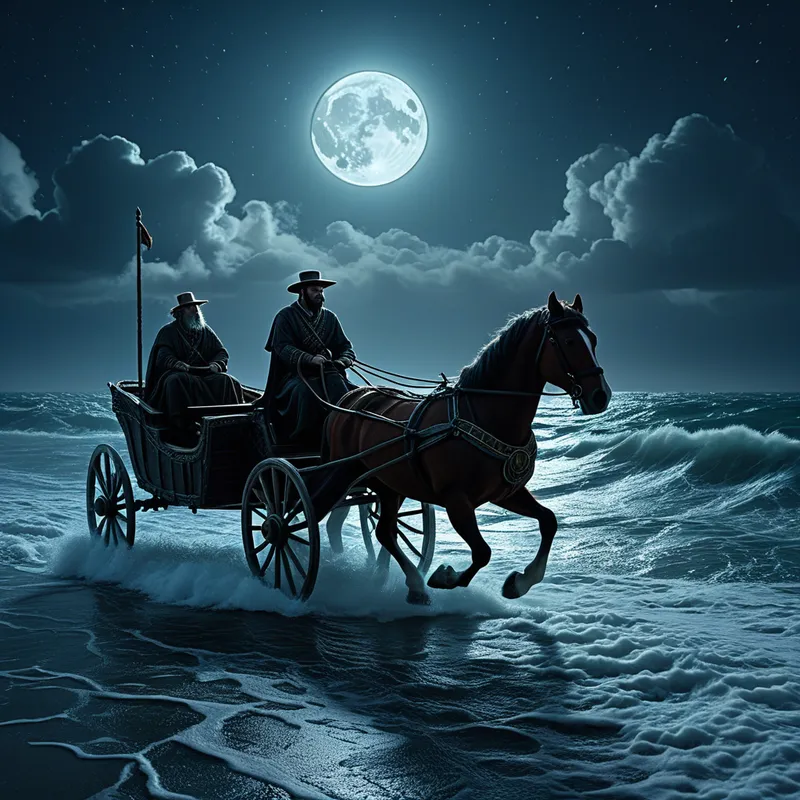
In the time before memory solidified, when the world was soft at its edges, he arose. Not born, but manifested from the sigh of the deep and the first breath of the morning mist. He is the Lord of Tír na nÓg, the Land of Youth, yet his domain is the grey, rolling expanse that separates it from the world of mortals. He does not rule the sea’s fury, but its mystery. His cloak is the sea-fog that swallows headlands whole; his chariot is the waves themselves, drawn by steeds named Enbarr that leave no track upon the water.
He is a keeper of thresholds. When the great heroes of the Ulster Cycle or the Mythological Cycle needed passage to the Otherworld, it was Manannán who decided. He might appear as a simple boatman, his face hidden by a hood, or as a king in shimmering grey, riding the crest of a storm. His boat, the Sguaba Tuinne (Wave-Sweeper), obeys his thought alone, needing neither sail nor oar.
His greatest treasures are not gold, but symbols of his essence: the Helm of Darkness that renders the wearer unseen, the sword Fragarach that commands truth and pierces any armor, and the Silver Branch whose chimes could heal wounds of the spirit or lull armies to sleep. He is a giver and a withholder, a protector and a trickster. He raised the sun god Lugh as his foster-son, teaching him the arts of magic and war. He married the sovereignty goddess Fand, and their love was as tumultuous and beautiful as the sea.
His story is not one of a single great battle, but of eternal motion. He is the mist that conceals the magical isles, the tide that both reveals and drowns the shore, the guide who appears when one is utterly lost between one world and the next. He does not conquer; he manifests. And when the old gods, the Tuatha Dé Danann, were defeated by the sons of Mil, it was Manannán who came to them. He did not lead them to war, but to retreat. He spread his great cloak of mist between the mortal world and the sidhe mounds, making the gods invisible, teaching them to dwell in the hills and hollows of the land, forever close, forever separate. He is the architect of the veil itself.
Cultural Origins & Context
The figure of Manannán is woven from the very fabric of the seafaring Celtic world, particularly the Gaelic cultures of Ireland, Scotland, and the Isle of Man, which bears his name. He is a god of the later Mythological Cycle, a sovereign deity who transitions into a role as a psychopomp and guardian of the Otherworld as Christian scribes began recording the old stories.
His tales were not preserved in a single sacred text, but in the vibrant, living tradition of the filid (the poet-seers) and later, in medieval manuscripts like the Lebor Gabála Érenn (The Book of Invasions) and the various cycles of tales. His societal function was multifaceted: as a divine explanation for the perilous and unpredictable nature of the sea; as a mythological justification for the "disappearance" of the old gods into the landscape; and as a narrative embodiment of the liminal spaces—shorelines, estuaries, fogs—that were considered inherently magical and dangerous. He governed the crucial passage between the mundane and the divine, a concept central to Celtic spirituality.
Symbolic Architecture
Manannán mac Lir is not merely a sea god; he is the archetypal personification of the liminal—the threshold state. He represents consciousness itself as it navigates the vast, unknown waters of the unconscious.
The true guide does not give you a map of his territory; he teaches you how to see in the fog.
His cloak of mist symbolizes the necessary veils that protect profound mysteries from premature exposure. The unconscious cannot be stared at directly in the full light of ego-consciousness; it must be approached through symbol, dream, and the softening of literal sight. His chariot riding the waves signifies mastery over the emotional and instinctual realm (the sea) not by suppressing it, but by moving in harmony with its rhythms.
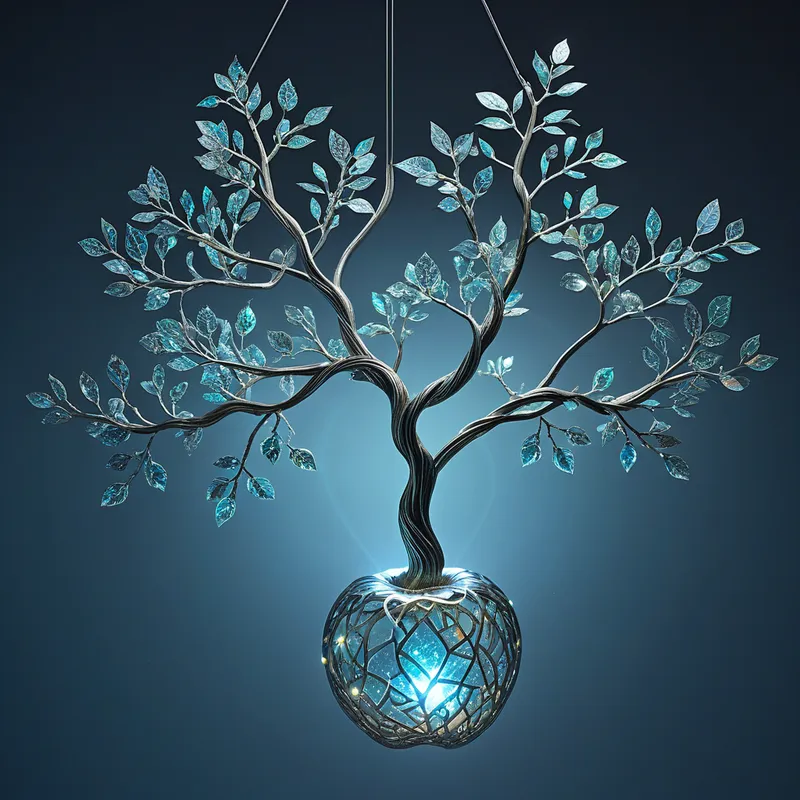
His treasures are psychological tools: the Helm of Darkness is the capacity for introspection and withdrawal from the outer world to hear the inner voice. Fragarach is the incisive power of discernment and truth that cuts through self-deception. The Silver Branch is the symbolic, poetic language of the soul that soothes, enchants, and connects us to a deeper reality. Manannán, as the foster-father, represents the inner, spiritual father who initiates the young hero (the emerging consciousness) into the arts of navigating the inner world.
The Dreamer's Resonance
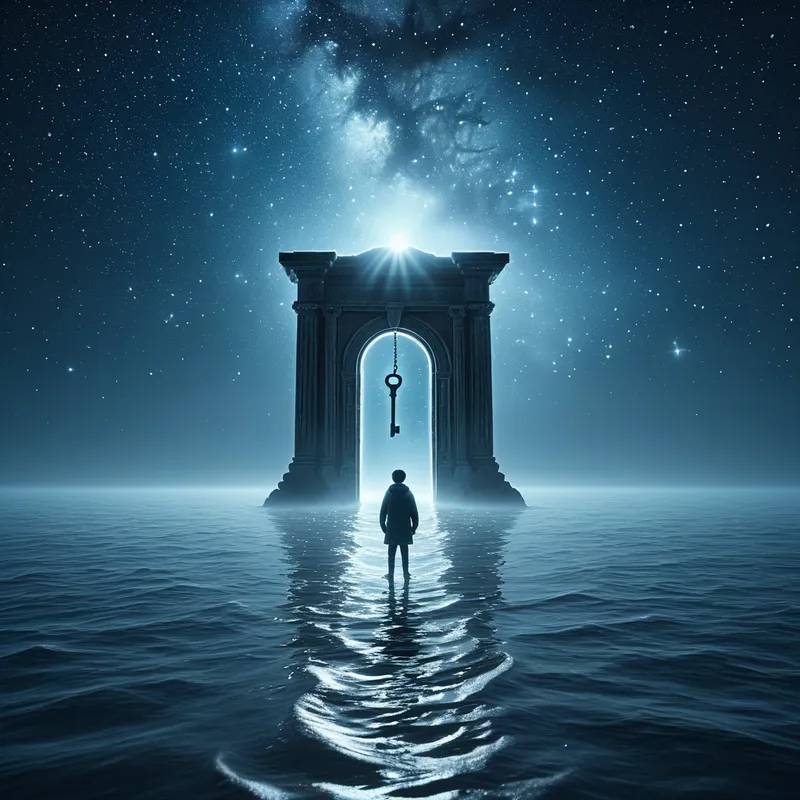
When the pattern of Manannán stirs in the modern psyche, it often manifests in dreams of profound transition and obscured guidance. The dreamer may find themselves on a misty shore, seeing a light or a shape they cannot reach. They may dream of a calm, vast ocean that feels both terrifying and peaceful, or of a boat with no pilot that knows its own way.
Somatically, this can correlate with feelings of being "at sea" in one's life—unmoored, directionless, yet on the cusp of a major internal shift. The psychological process is one of disorientation as a prerequisite for reorientation. The ego's familiar maps have failed. The appearance of a liminal guide—whether as a mysterious figure, an animal, or simply an intuition—signals that the unconscious is providing the necessary vehicle (the Sguaba Tuinne) for crossing this uncharted water. The dream is an invitation to surrender the need for absolute control and to trust the deeper, autonomous currents of the psyche.
Alchemical Translation
The alchemical journey modeled by Manannán is the transmutation of confusion into navigation. It is the "solution" phase—where the solid elements of the old identity (the prima materia) are dissolved in the waters of the unconscious.
The ego must become like mist—permeable, adaptable, and willing to be reshaped by the currents it cannot command.
The core struggle is the ego's resistance to losing sight of the shore, its terror of the boundless and formless. The triumph is the realization that one is not adrift in the sea, but is being carried by it toward a destination the conscious mind could not conceive. Manannán represents the Self—the total, organizing principle of the psyche—in its role as the inner ferryman. His "magic" is the synchronicitous, symbolic logic of the unconscious that operates when linear logic fails.
For the individual, the process involves cultivating a relationship with this inner magician. This means honoring liminal states: the twilight hours, the space between sleep and waking, the ambiguous feelings that defy simple categorization. It means learning the "language" of the Silver Branch—paying attention to art, poetry, and dreams that move you inexplicably. It is the work of building a vessel of trust to carry you across the dark water, guided not by a spotlight, but by the diffuse, pearlescent light that shines from within the mist itself. To know Manannán is to know that the veil is not a barrier, but the very substance of the revelation.
Associated Symbols
Explore related symbols from the CaleaDream lexicon: