
Magnum Opus Myth Meaning & Symbolism
The alchemist's quest to transmute base matter into gold, a sacred allegory for the soul's purification and ultimate psychic integration.
The Tale of Magnum Opus
In the beginning, there was the Massa Confusa. It was a realm of shadows and sighs, a swirling, formless womb where all elements fought and embraced in a perpetual, silent storm. From this chaos, a figure emerged, not born but called. The Adept. Their laboratory was not merely a room of glass and fire, but a sacred Vas Hermeticum, a reflection of the cosmos itself.
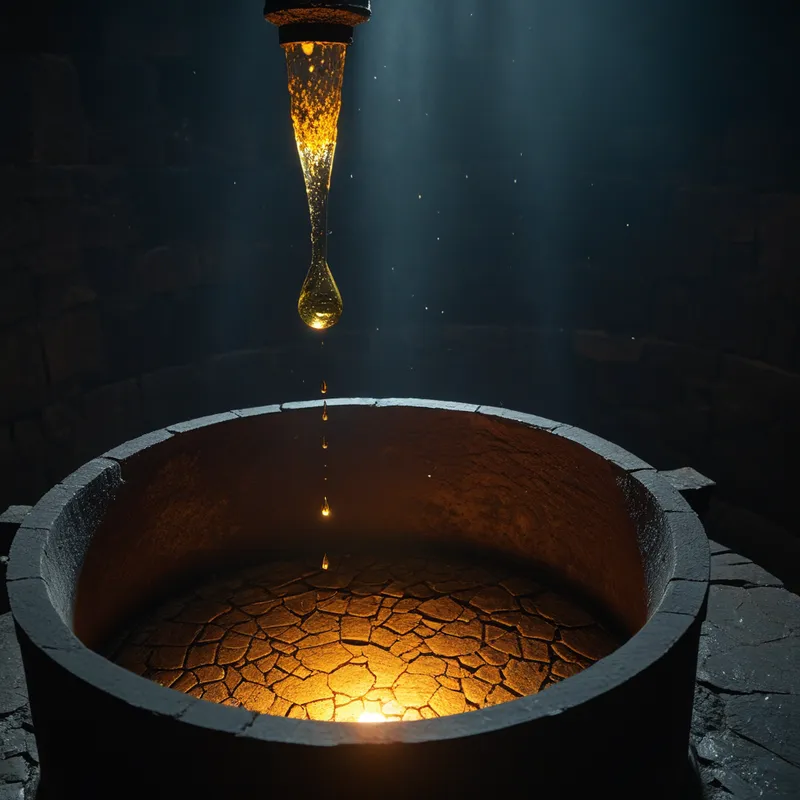
The work began in blackest night. The Adept took the base matter—a lump of lead, heavy with the weight of the world—and placed it into the crucible. The fire was lit. This was the Nigredo. The lead did not melt gracefully. It screamed. It wept a black, acrid smoke that stained the walls and choked the air. It cracked and bubbled, revealing foul, inner landscapes of despair. The Adept endured, for to turn away was to fail. They had to witness the death of the thing as it was.
Then, a miracle in the misery. From the absolute black, a faint, pearlescent sheen began to rise. Like the first hint of dawn after an endless night, a washing, whitening light emerged. This was the Albedo. The matter became like the moon—cool, reflective, and pure. It was not yet gold, but it was no longer lead. It had been stripped of its grossness, its soul washed clean in the tears of its own dissolution. A silver-white queen now sat where a blackened king had died.
But the work was only half-done. The fire was stoked again, its heat intensified to a searing, passionate blaze. The white matter began to blush. A rosy hue spread through it, deepening into a fierce, glorious crimson. This was the Rubedo. It was a time of great danger, for the heat could shatter the vessel or reduce all to ash. The Adept tended the fire with a lover’s precision, their will and the matter’s destiny becoming one. The crimson glow pulsed like a heart, beating in time with the furnace’s roar.
And then, in a moment of perfect, silent tension that followed the roar, it happened. The red collapsed inward, and from its center erupted a light that held all colors and none. A solid, serene, and impossibly radiant gold. The Lapis Philosophorum was born. It did not merely shine; it hummed with a quiet, eternal music. It was not just metal, but condensed light, solidified wisdom. The Adept, their face lined with soot and awe, beheld not just a stone, but their own soul, reflected and perfected. The Magnum Opus was complete.
Cultural Origins & Context
The myth of the Magnum Opus is not a single story with a fixed author, but a living, breathing tradition that permeated the secretive world of European Hermetic Alchemy from the late medieval period through the Renaissance. It was passed down in cryptic manuscripts, encoded in dazzling, paradoxical illustrations like the Rosarium Philosophorum, and whispered between masters and apprentices in hidden laboratories. Its tellers were not mere chemists, but philosopher-mystics like Basil Valentine and Paracelsus, who saw their work as a divine science, a participation in God’s ongoing act of creation.
Societally, it functioned on multiple levels. Exoterically, it promised the literal transmutation of metals, a powerful economic and political fantasy. But esoterically, for the true adept, it served as a sacred map for spiritual and psychological transformation. The myth provided a structured, symbolic language to describe the indescribable: the soul’s arduous journey from a state of unconscious, “base” suffering to a state of enlightened, “golden” wholeness. It was a container for the most profound human hopes, a narrative that gave meaning to suffering and a goal to the seeker’s life.
Symbolic Architecture
The myth’s power lies in its perfect symbolic architecture, where every material process is a mirror of an inner, psychic one. The Massa Confusa represents the undifferentiated, chaotic state of the unconscious self, full of potential but also conflict. The base metal—lead—is the shadow, the heavy, despised, and unconscious aspects of our personality we wish to ignore.
The crucible is the conscious ego, the vessel that must withstand the heat of confronting what we are.
The threefold process—Nigredo, Albedo, Rubedo—charts the death of the old, false self (blackening), the purification and illumination of the spirit (whitening), and the final, passionate integration of spirit and matter, conscious and unconscious, into a new, vibrant totality (reddening). The final gold, the Lapis, is the Self, the central, organizing principle of a fully individuated psyche. It is not perfection as flawlessness, but wholeness as the harmonious inclusion of all parts.
The Dreamer’s Resonance
When this myth stirs in the modern dreamer, it signals a profound somatic and psychological initiation. Dreams of the Nigredo might manifest as terrifying descents: being trapped in a collapsing mine, watching one’s home burn, or being submerged in thick, black oil. The body may feel heavy, leaden upon waking. This is the psyche’s necessary confrontation with its own shadow material—repressed grief, rage, or trauma—beginning to surface.
Dreams of the Albedo often carry a quality of eerie, silent beauty: walking through a moonlit, snow-covered forest; bathing in a still, silver pool; or finding a pristine white flower growing in a dump. There is a somatic sense of relief, of being cleansed. This reflects the ego’s surrender and the subsequent emergence of a more reflective, spiritual awareness after the storm of the Nigredo. The final, integrated state hinted at by the Lapis might appear in dreams as a simple, potent symbol: a child playing with a golden ball, a brilliantly lit inner room in a formerly dark house, or the deep, satisfying feeling of holding something of immense value that one has made oneself.
Alchemical Translation
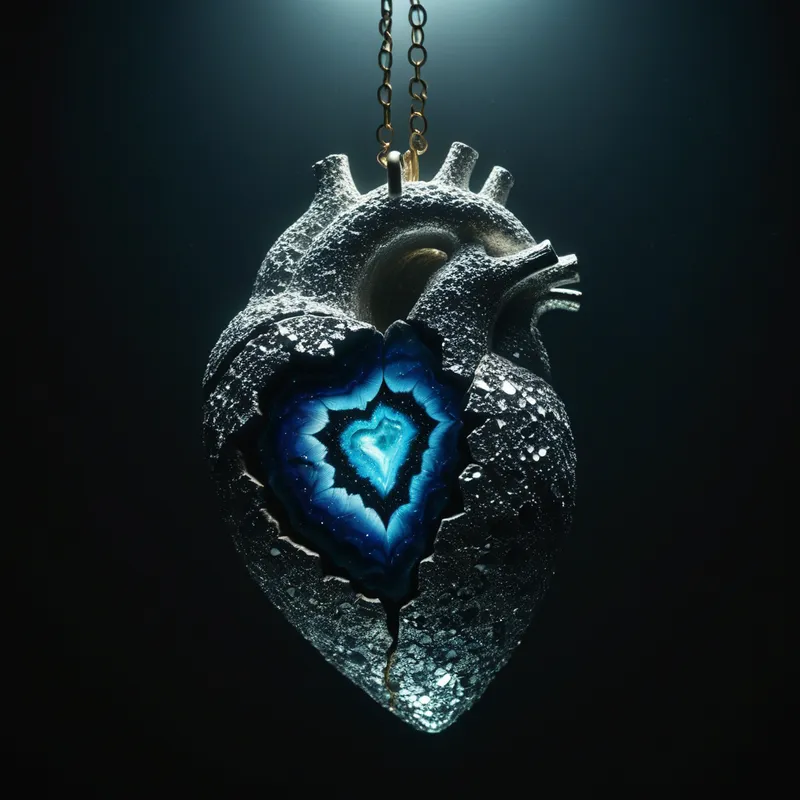
For the modern individual, the Magnum Opus is the ultimate model of individuation. It translates the spiritual quest into a psychological process of transmutation. We are all born as Massa Confusa. Our life’s task is to become our own Adept and undertake the Opus.
The lead we must work with is our personal history, our complexes, our wounds—the raw, unlovely material of our biography. The Nigredo is the dark night of the soul, the depression, the crisis that forces us to stop and look inward at our own chaos. It is not a mistake, but the first, essential step.
The fire is not punishment, but the fierce heat of attention and conscious suffering required to transform pain into wisdom.
The Albedo is the insight that follows, the compassionate understanding of our own patterns, the “aha” moments of therapy or meditation where we see ourselves clearly, without the old, crippling judgments. The Rubedo is the difficult, passionate work of integration—bringing that new awareness back into our daily lives, relationships, and work, often facing renewed resistance. The gold we seek is not a static state of bliss, but the Self: the experience of being authentically, fully who we are, with all our history transmuted from a burden into the unique substance of our character. The Magnum Opus teaches that our deepest value is not found, but forged.
Associated Symbols
Explore related symbols from the CaleaDream lexicon: