Maenads / Bacchantes Myth Meaning & Symbolism
The myth of the Maenads reveals the sacred, terrifying power of ecstatic release, the wild feminine, and the psyche's untamed, transformative core.
The Tale of Maenads / Bacchantes
Hear now a tale not of Olympus’s serene heights, but of the dark, root-tangled earth and the fever that rises from it. It begins with a god who is a stranger, who arrives not with thunder but with the scent of crushed grape and damp soil, with the sound of flutes that stir the blood like a serpent uncoiling. He is Dionysus, son of a mortal woman and divine fire, and he walks the roads of Thebes not as a conqueror, but as a whisper.
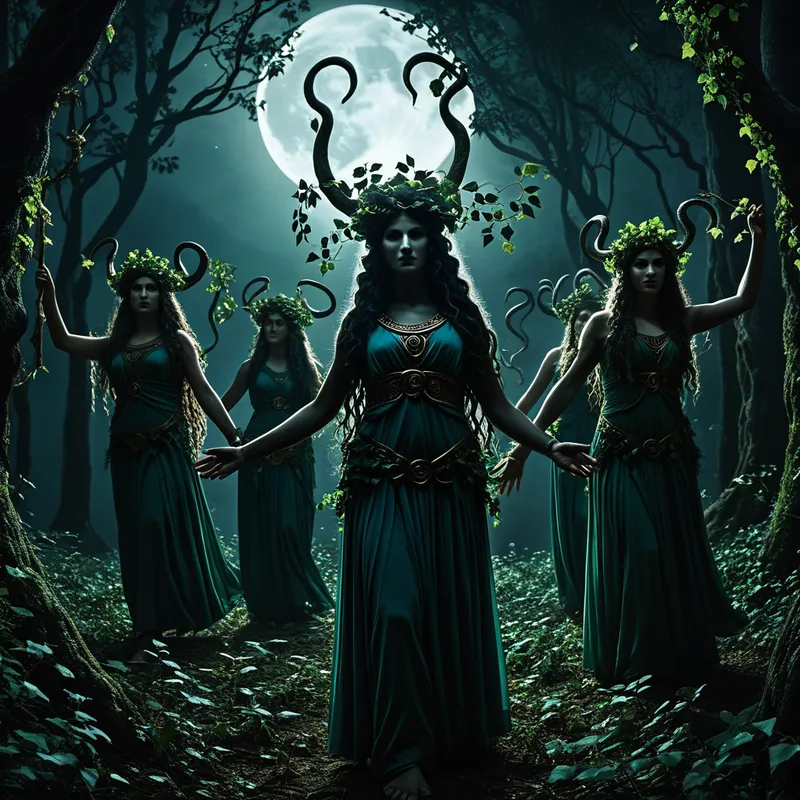
The king, Pentheus, hears this whisper and calls it a plague. He sees the women of his city—his own mother Agave, his aunts—slipping from their looms and their quiet courtyards, drawn by a call older than walls. They go to the wild mountain, to Mount Cithaeron. There, under the raw moon, they are no longer mothers, wives, or queens. They are Maenads, the Raving Ones.
They wear fawnskins, not linen. In their hands, they carry the thyrsus, which is both a wand and a weapon. They drink not from polished cups, but from streams and from the very air, which is thick with the god’s presence. They dance until their feet bleed and the world dissolves into a single, pulsing drumbeat. With their bare hands, they tear goats limb from limb, the sparagmos, and taste the raw, living flesh, the omophagia. It is not savagery, but sacrament. They become one with the god, one with the life force that kills and creates in the same breath.
But Pentheus, the man of reason and order, spies on the sacred. Disguised as a woman, drawn by a lurid curiosity the god himself cultivates, he climbs the mountain. He hides in a pine tree, peering down at the swirling, ecstatic throng. Then, a cry goes up. A spy! A profane eye! The Maenads, their senses supernaturally sharpened, see him. Led by Agave, who in her divine madness sees not her son, but a mountain lion sent to destroy their rites, they surge forward.
They do not draw swords. They use the earth itself. They grip the tree and, with a strength born of collective frenzy, tear it from the roots. Pentheus falls. His mother is upon him first. Her sisters join. There is no royal purple now, only the red of life unleashed. The sparagmos is performed not on a beast, but on the king. Agave, triumphant, impales the head of her “lion” on her thyrsus and descends the mountain, singing a victory hymn to her god.
She returns to Thebes, to the silent, horrified streets. She presents her trophy to her father, old Cadmus. And slowly, as the divine madness ebbs like a tide, her vision clears. The lion’s mane becomes a familiar curl of hair. The fierce eyes she once kissed goodnight stare back, vacant. The cry that leaves her is not that of a Maenad, but of a mother, hollowed out by a truth too terrible to hold. The god’s lesson is complete, written not in stone, but in blood and unbearable awakening.
Cultural Origins & Context
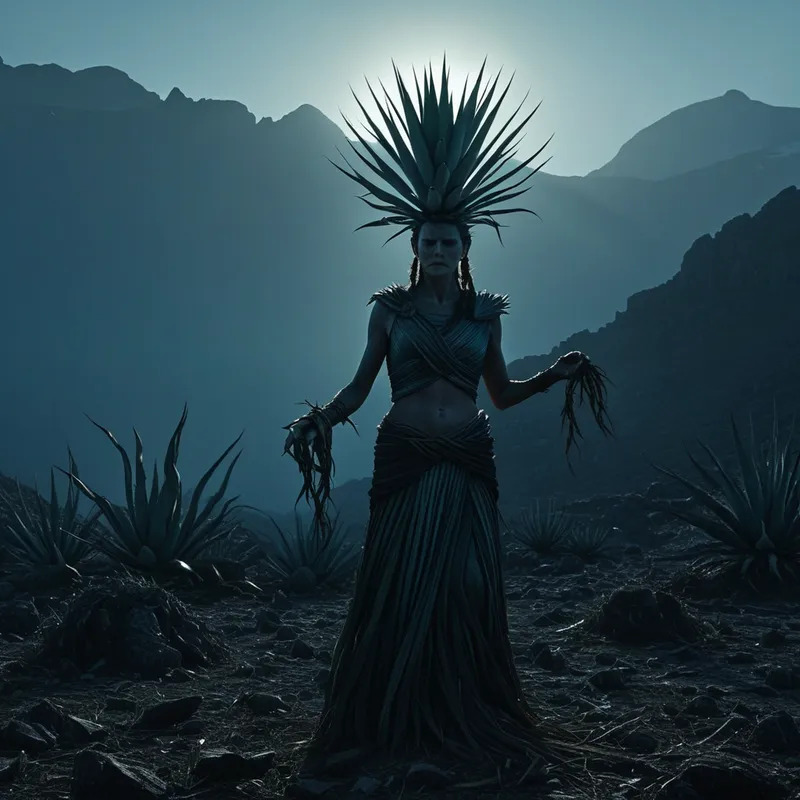
This myth, most powerfully preserved in Euripides’ tragedy The Bacchae, was not mere entertainment. It was a cultural nerve center, touching the deepest anxieties and recognitions of the Greek world. The rites of Dionysus, from which the figure of the Maenad emerged, were historical realities. These were often women-only rituals (orgia) held in the wilds, separate from the polis’s male-dominated civic sphere. They provided a sanctioned, sacred outlet for energies that daily life suppressed.
The myth was told in theaters during the City Dionysia, a festival for the god himself. The audience, predominantly male and citizen, would watch this story of their world inverted—women wielding ultimate power, a king destroyed for his hubris (arrogant disregard for the divine). The function was cathartic but also cautionary. It acknowledged a power that civilization was built upon containing: the raw, chaotic, creative-destructive force of nature and the unconscious. The myth served as a societal pressure valve, ritually acknowledging what must be kept at bay, yet also revered, for the god of the vine was also the god of the lifeblood of the community.
Symbolic Architecture
The Maenad represents the psyche’s untamed, instinctual stratum, what Jung termed the shadow and the archetypal energy of the anima in its most ecstatic and formidable form. She is not evil, but other—the principle that exists outside logos, reason, and patriarchal order.
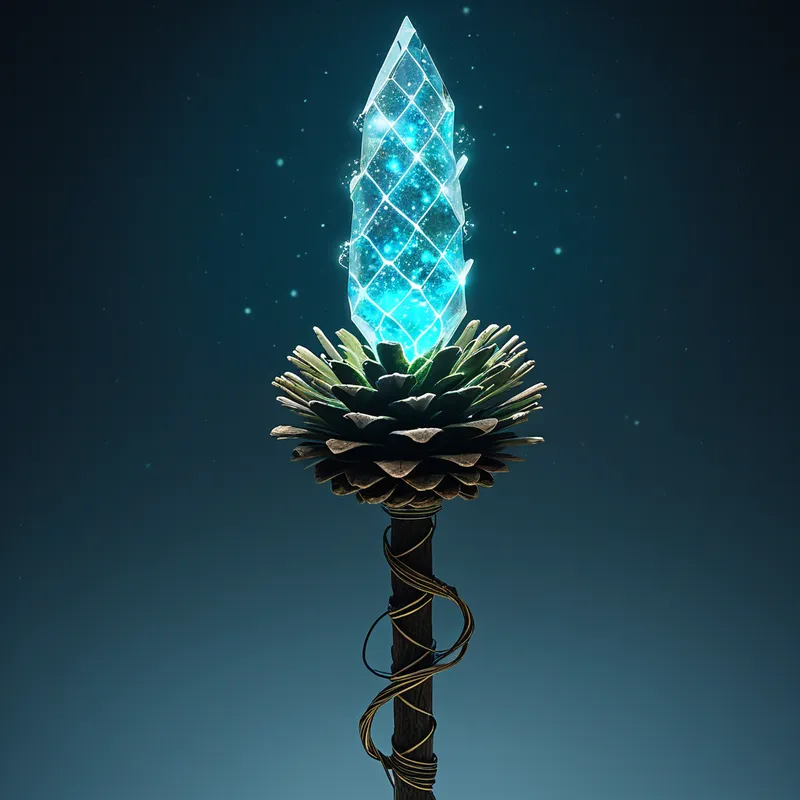
The thyrsus is the ultimate symbol of this duality: a gentle fennel stalk crowned with the destructive potential of the pine cone, wound with the ever-binding, ever-growing ivy. It is the weaponized life force.
The sparagmos (the rending) and omophagia (the raw feast) are not mere brutality. They are profound symbols of deconstruction and assimilation. To know the god, to achieve enthousiasmos (the god within), the rigid structures of the ego and identity must be torn apart. The raw, undifferentiated “flesh” of experience—the pain, the joy, the primal urge—must be consumed and integrated. Pentheus is the ego that refuses this process, that seeks to observe and control the unconscious from a safe distance. His fate is the fate of any conscious attitude that denies the power and reality of the deeper Self with arrogant rigidity.
The Dreamer’s Resonance
When the energy of the Maenad erupts in modern dreams, it seldom appears as a historical figure. It manifests as a somatic and emotional process. It might be dreams of being chased by a wild animal that is also part of oneself, of uncontrollable dancing or laughter, of teeth falling out or hair growing wildly, or of being in a frenzied crowd. The dreamer may wake with a racing heart, a sense of panic, or a strange, residual exhilaration.
This signals a profound psychological event: the uprising of the repressed instinctual life. It is the psyche’s demand for enthousiasmos—for a connection to a vitality that has been starved by over-civilization, excessive rationality, or rigid self-control. The terror in the dream is the ego’s fear of dissolution; the exhilaration is the Self’s promise of renewal. The dreamer is undergoing a necessary, often violent, renegotiation between the persona (the civilized mask) and the shadow forces it has imprisoned.
Alchemical Translation
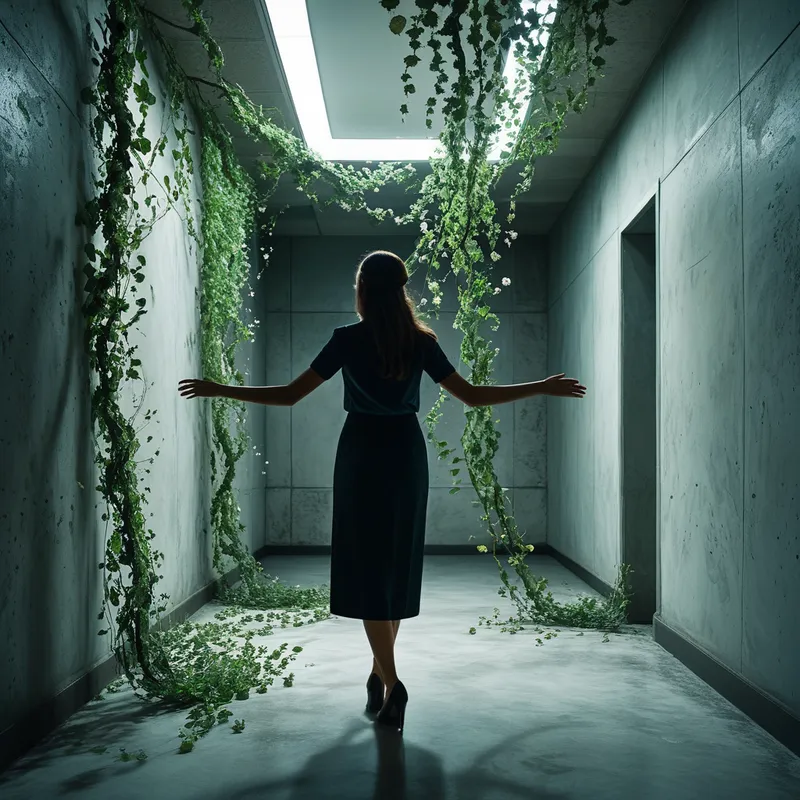
The myth of the Maenads models the nigredo phase of psychic alchemy—the blackening, the dissolution, the descent into the chaotic prima materia of the soul. It is the stage where the old king (the dominant, ruling consciousness of Pentheus) must die.
The individuation journey is not a gentle path of self-improvement, but at times a sacred, ecstatic dismemberment. We must, in a symbolic sense, become Agave: first, possessed by the divine frenzy that tears apart our outmoded self-concepts, and then, heartbroken and clear-eyed, holding the consequence of that action, integrating the terrible beauty of what we have done and what we truly are.
For the modern individual, the “mountain” is the inner wilderness. The “Dionysian call” is the summons from a life that has become too sterile, too controlled, too inauthentic. To answer is to risk everything. It is to allow the ecstatic, creative, and destructive energies to flow, to temporarily suspend the tyranny of the ego and engage in a sacred sparagmos of our own rigid identities. The goal is not to become a permanent Maenad, living in perpetual frenzy, but to undergo the rite and return, like Cadmus, transformed. We are to carry the god’s wisdom—that life and death, creation and destruction, sanity and madness, are inseparable partners in the dance of being. The triumph is not in maintaining control, but in surviving the sacred loss of it, and being remade.
Associated Symbols
Explore related symbols from the CaleaDream lexicon: