Maenads Myth Meaning & Symbolism
The story of the Maenads, women who abandoned society for ecstatic rites in the wild, embodying the raw, untamed life force that civilization seeks to control.
The Tale of Maenads
Hear now the sound that breaks the silence of the ordered world. It is not a song of the lyre, nor a hymn sung in marble temples. It is a cry that rises from the deep earth, a ululation that tears through the veil of polite society. It is the call of the god who was born twice.
In the high-walled cities of men, where hearth fires burn steady and looms click in rhythm, a strange rumor begins to whisper. It speaks of a new god, Dionysus, son of Zeus and the mortal Semele. He walks not as a king, but as a wandering enchanter, with long, perfumed hair and a smile that promises both unbearable joy and utter ruin. And where he walks, women listen.
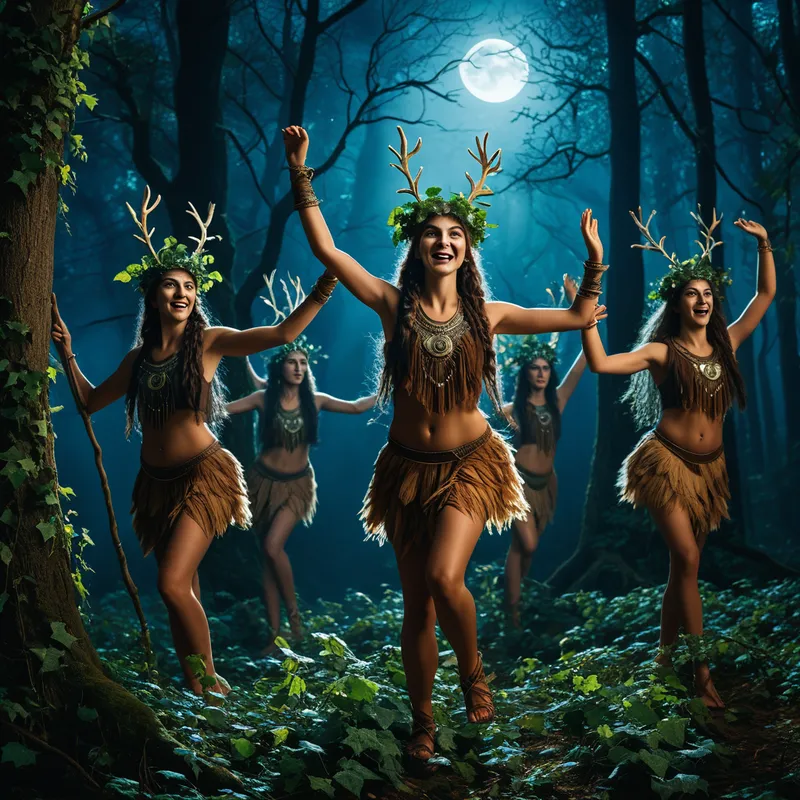
They are the daughters, wives, and mothers of Thebes, of Corinth, of every city that believes itself civilized. One day, they hear the sound—the distant thrum of flutes, the beat of a drum that matches the pulse in their own wrists. A longing, sharp as a thorn, pierces their hearts. The loom is abandoned. The water jar is left at the well. Without a word, they cast off their peplos and chiton, donning the skins of fawns. They take up the thyrsus, a fennel stalk crowned with ivy and pine. They let their hair fall wild.
They stream out of the city gates, a river of women flowing uphill, against all reason, into the trackless mountains—to Cithaeron, to Parnassus. There, in the moon-dappled clearings, the god awaits. And the Maenads dance.
This is no measured step. It is a whirling, a leaping, a head-tossing frenzy that shakes the soul loose from its bones. They drink not wine, but the very spirit of the grape, the oinos that is the god's own blood. The mountain itself responds. Milk and honey spring from the soil at the stamp of their feet. Vines snake up trees in an instant, heavy with clusters. The women, in their sacred madness, can tear bulls and goats limb from limb with their bare hands—the act of sparagmos—and feast on the raw flesh, omophagia, becoming one with the raging life of the beast.
But woe to the man who spies on these mysteries. King Pentheus of Thebes, the epitome of rigid, skeptical order, chains the god and imprisons the women. He climbs the mountain, hidden in a tree, to witness the obscene rites. Dionysus, free and smiling, points him out. The Maenads, led by Pentheus's own mother, Agave, see not a king, but a wild beast lurking. In a storm of collective ecstasy, they surround the tree, uproot it, and fall upon him. Agave, her eyes wide with divine insanity, is the first to lay hands on her son, and the last to recognize the gory head she triumphantly carries back to the city is not a lion's, but her child's.
The cry that began in ecstasy ends in a wail of horrific awakening. The god has been acknowledged, but the price is written in blood on the mountain soil. The wild has spoken, and its voice is terrible and beautiful beyond all understanding.
Cultural Origins & Context
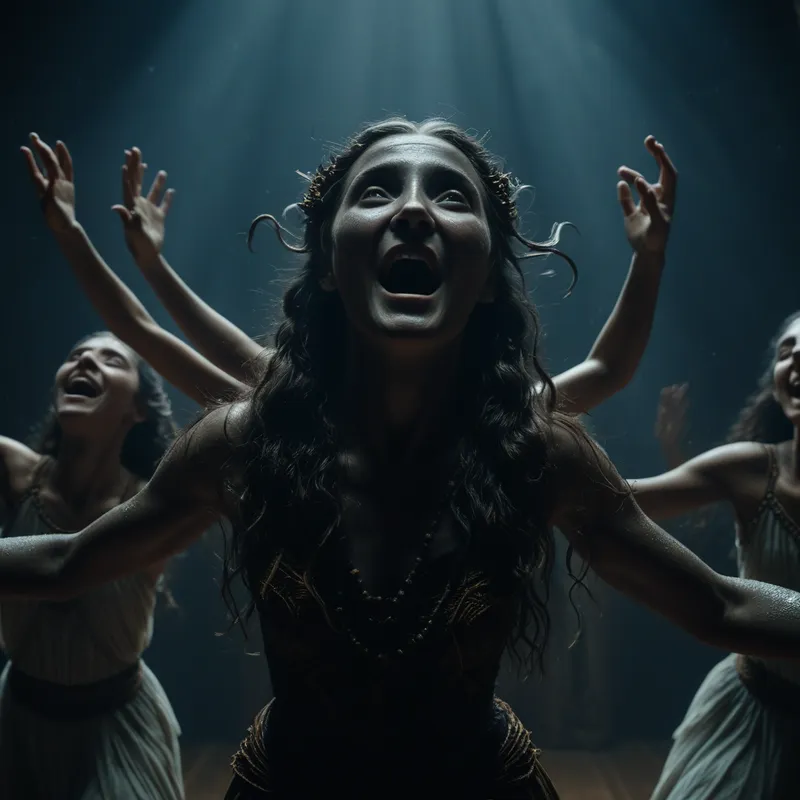
The myth of the Maenads, or Bacchae, was not merely a story for the ancient Greeks; it was a cultural container for a profound and terrifying reality. Its primary literary vessel is Euripides’s tragedy The Bacchae, a masterpiece that explores the catastrophic clash between the god of ecstasy and the king of order. This myth gave narrative shape to actual religious practices—the Dionysian Mysteries. These were not state-sanctioned temple rituals but secretive, initiatory cults open to women and men, promising liberation and a blessed afterlife through communion with the god.
In a society where women’s lives were largely confined to the domestic sphere (oikos), the myth and its associated rites provided a sanctioned, if feared, outlet. For a few days each year, women could legally leave their homes and families to participate in the oreibasia—the mountain-dancing. This was a societal pressure valve, acknowledging a powerful force that, if completely repressed, could erupt destructively, as in the tale of Pentheus. The myth served as both a warning to those who would deny the irrational (like Pentheus) and a sacred map for those who sought to engage with it ritually, safely channeling the chaotic life force it represented.
Symbolic Architecture
The Maenad represents the archetypal force of untamed, instinctual life that exists in direct opposition to, yet in necessary tension with, the Apollonian principles of order, reason, and individuation.
The Maenad is the embodied scream of the soul against the cage of the persona. She is the life that will not be civilized.
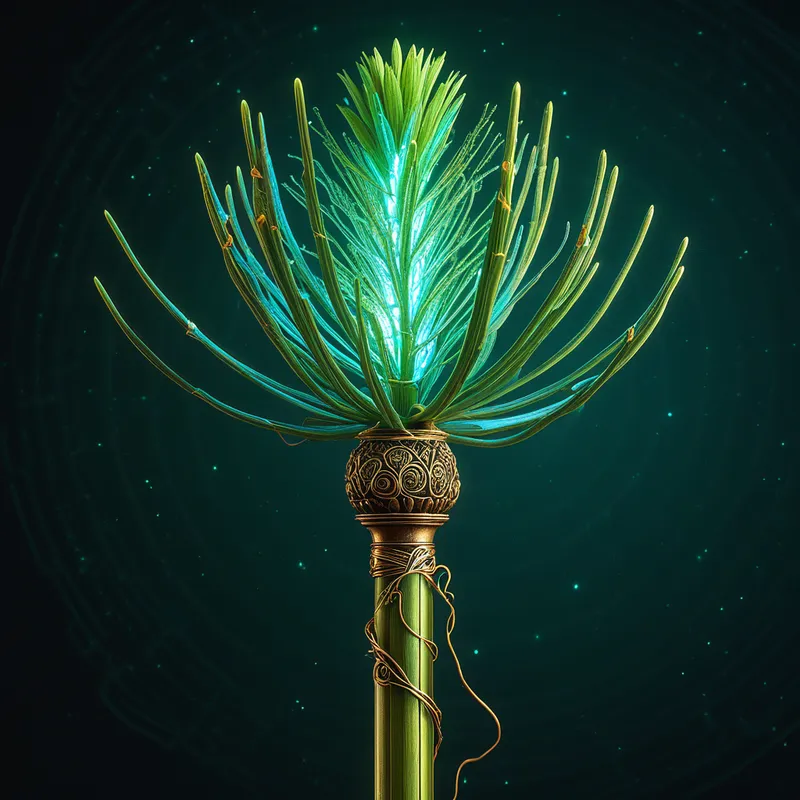
Psychologically, they symbolize the contents of the personal and collective shadow—the raw emotions, primal desires, and creative/destructive energies that civilized consciousness deems unacceptable and tries to bury. The thyrsus itself is a potent symbol: a humble fennel stalk (the spine of consciousness) crowned with the fertile, intoxicating pine cone (the erupting unconscious) and bound by ivy (the connecting, binding, and intoxicating nature of the instinct itself). Their dance is not mere movement; it is a ritualized disintegration of the ego’s boundaries, a temporary dissolution into the collective, instinctual stream of life.
The horrific act of sparagmos followed by omophagia is the ultimate symbol of this dissolution. It represents the tearing apart of one’s rigid, identified self (the "Pentheus" within) and the assimilation of raw, undifferentiated psychic energy. It is nature red in tooth and claw, internalized. The enemy spied upon and destroyed is always, ultimately, the part of oneself that spies, judges, and seeks to control the wild interior.
The Dreamer's Resonance
When the pattern of the Maenad erupts in modern dreams, it signals a profound somatic and psychological uprising. The dreamer may not see ancient women in fawn-skins, but they will feel the archetype’s signature.
Somatically, this can manifest as dreams of uncontrollable shaking, dancing until exhaustion, feeling a wild animal trapped inside one’s chest, or the sensation of vines growing through the body. Psychologically, the dreams often feature a sudden, irresistible compulsion to break free—running out of a workplace, tearing off constricting clothing, or screaming in a silent library. There may be images of a calm, orderly environment (a home, an office) being invaded by lush, uncontrollable plant growth or wild animals. The dream ego often takes the role of Pentheus—the curious, judgmental, and terrified observer who is about to be torn apart by the very forces they sought to control.
This dream-state indicates that a long-repressed aspect of the instinctual self—be it creative fury, sexual vitality, raw grief, or untapped joy—is demanding recognition. The psyche is initiating its own oreibasia, forcing the conscious self to the mountain whether it wishes to go or not. The process is one of involuntary de-structuring, where the persona’s walls are being shaken by seismic activity from below.
Alchemical Translation
The alchemical journey modeled by the Maenad myth is not for the faint of heart. It is the nigredo—the blackening, the dissolution—par excellence. It is the necessary chaos that precedes any authentic transformation.
The individuation process requires a willing descent into one’s own Bacchic rites. One must learn to dance with the madness, not simply chain it in the palace dungeon.
For the modern individual, the "civilized city" is the constructed identity: the job titles, the social masks, the curated life. The "call to the mountain" is the inner crisis, the depression, the creative block, the inexplicable rage or longing that dismantles that identity. The alchemical work is to consciously heed that call, to voluntarily engage with the wildness within. This is not about literally acting out destructive impulses, but about creating a sacred, interior space—a temenos—where these forces can be acknowledged, danced with, and ultimately integrated.
The goal is not to become a perpetually raving Maenad, nor to remain a rigid Pentheus. It is to become like the god Dionysus himself, who contains the paradox. He is the civilized wanderer who unleashes the wild; the god of ecstatic loss of self who also presides over the individuating revelation of the theater. To integrate the Maenad is to allow the thyrsus to grow within one’s own spine—to have a core of consciousness (the stalk) that can safely channel and crown the erupting, fertile power of the unconscious (the pine cone). One learns to let the dance happen without being utterly destroyed by it, to taste the raw vitality of life without being consumed by it. The triumph is the reconciliation of the mountain and the city within a single, more complex, and truly vibrant soul.
Associated Symbols
Explore related symbols from the CaleaDream lexicon: