
Mabon Myth Meaning & Symbolism
The story of a divine child stolen at birth, imprisoned in darkness, and rescued to fulfill his destiny, symbolizing the recovery of innate potential.
The Tale of Mabon
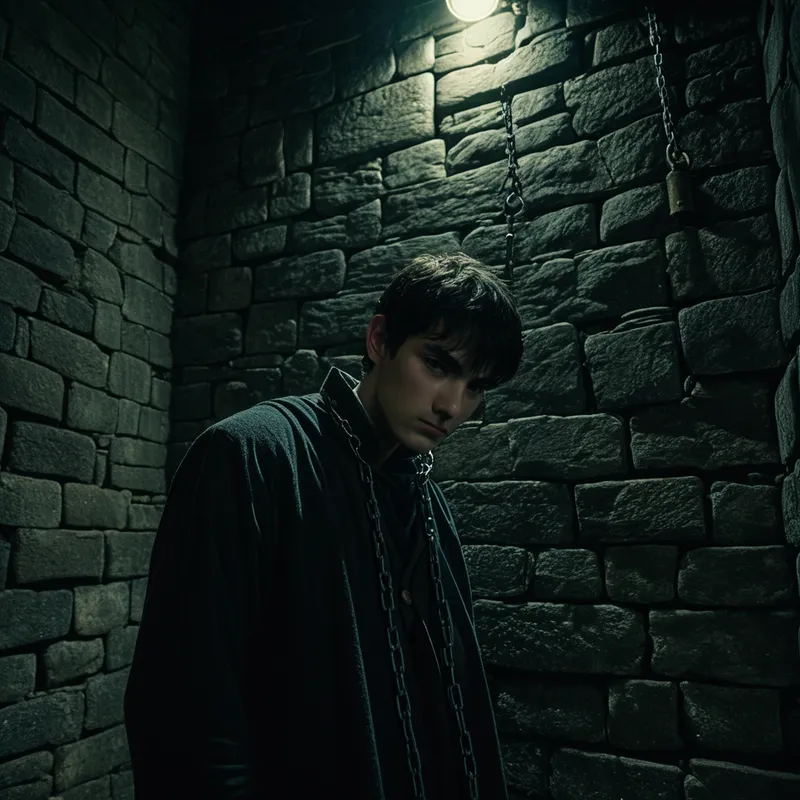
Listen. The story begins not with a cry, but with a silence. In the time when the world was younger and the veils between realms were thin, a son was born to Modron. His name was Mabon, son of Modron, and his birth was a song of pure potential, a star falling to the fertile earth. But on the third night of his life, in the vulnerable hours between the wolf’s howl and the cock’s crow, a shadow passed over the cradle. Not with violence, but with a terrible, quiet theft. He was taken—stolen from his mother’s arms—and plunged into a prison of stone and perpetual twilight. No one knew where. The world, it seemed, had swallowed its own promise whole.
His mother’s lament became the wind in the reeds, a ceaseless, mournful sound. Seasons wheeled. Kings rose and fell. The story of the lost son faded to a whisper, a half-remembered ache in the bones of the land. He became a ghost in the world’s memory, a divine spark buried in the utter dark.
Until a quest demanded him. The great hero Culhwch, bound by a fateful oath to win the hand of the formidable Ysbaddaden's daughter, was set a series of impossible tasks. The final and most desperate task was to retrieve the razor, scissors, and comb from between the ears of the monstrous boar, Twrch Trwyth. To hunt such a beast, Culhwch needed the greatest hunter who ever lived or would live. The oldest and wisest of the assembled company, the memory-keeper, spoke a name into the firelight: "Only Mabon son of Modron can do this. But no one knows where he is, or if he even lives."
So began the rescue, not with a sword, but with a question. Culhwch and his uncle, the peerless Arthur, sought out the oldest, most primordial beings of the island, asking each the same thing: "Do you know of Mabon?"
They asked the Blackbird of Cilgwri, who pecked at an anvil now worn to the size of a nut. "I do not know," it said, "but I will lead you to one older than I." They asked the Stag of Redynvre, whose antlers were a forest of dead wood. "I do not know," it sighed, "but follow me." They asked the Owl of Cwm Cawlwyd, who had seen three forests grow and decay in its valley. "I do not know," it hooted, "but I know who is older still." At last, they were led to the most ancient of all: the Salmon of Llyn Llyw, who knew every current and secret of the waters.
And the Salmon knew. "Every high tide," it said, its voice the sound of deep rivers, "I swim up the river to the walls of Caer Loyw. From there, I hear a lament, a weeping that has continued since the beginning of time. That is he."
On the broad back of the Salmon, Arthur’s men traveled to the stark, weeping walls of the fortress. There, from a window no light could properly reach, they heard the sorrow. Arthur’s champions stormed the walls, not for gold or glory, but for a sound—a human sound of endless grief. They shattered the door of the deepest cell. And there he was: Mabon, the prisoner. Not a child, but a youth grown in darkness, his eyes holding the memory of the stolen moonlight. The chains fell away. He stepped forth, not with weakness, but with a terrible, pent-up strength. The land itself seemed to shudder and sigh. The lost son was found. And with his freedom, the impossible hunt could begin.
Cultural Origins & Context
The story of Mabon is not a standalone myth, but a vital episode embedded within the larger tapestry of Culhwch and Olwen, one of the earliest Arthurian narratives preserved in the Mabinogion. It is a distinctly Welsh Celtic tradition, passed down by bards and storytellers (cyfarwyddiaid) who functioned as the living memory and psychological interpreters of their culture.
Its societal function was multifaceted. On one level, it is a just-so story explaining the necessity of community and intergenerational knowledge; the quest requires consulting beings of ever-increasing age, modeling respect for ancestral wisdom. On another, it served as an initiatory parable. In a warrior society, the theme of a hidden, essential power that must be recovered before a great task can be accomplished speaks to the process of a youth accessing his latent courage and skill. The myth also reinforces the Celtic cosmological view of an animate, speaking world. The rescue is achieved not solely through human heroism, but through a congress with the land itself—the Blackbird, Stag, Owl, and Salmon are not mere animals but ancient, sovereign intelligences. The world conspires to remember what humanity has forgotten.
Symbolic Architecture
At its core, the myth of Mabon is an archetypal drama of the lost essential self. Mabon is not a developed hero; he is pure potential, the innate genius or divine spark that is part of our birthright. His theft "on the third night" signifies an early, pre-conscious trauma—a loss of connection to our core nature through familial, cultural, or personal circumstance.
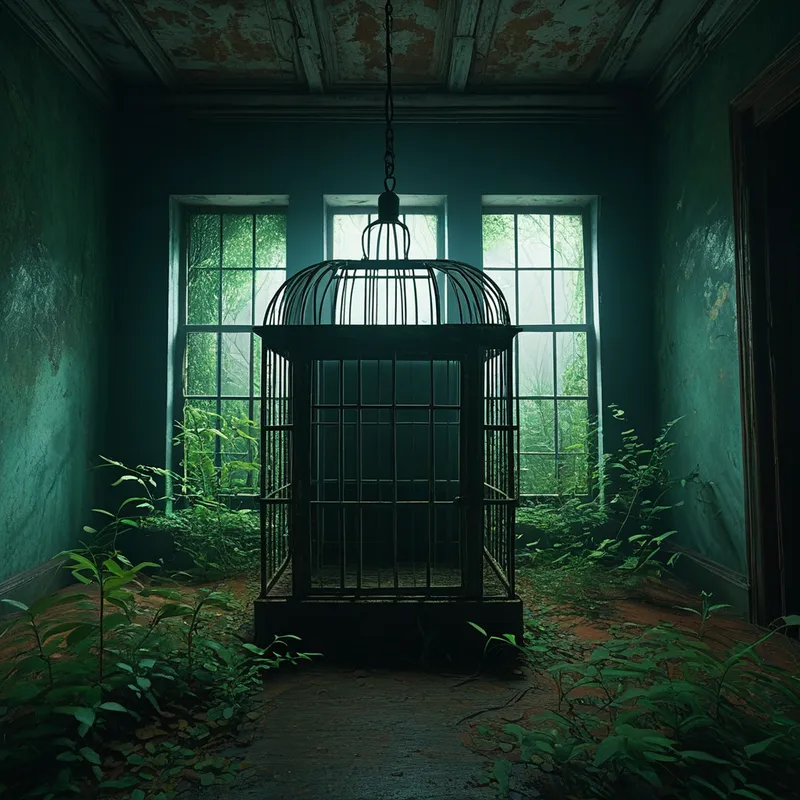
The prison is not made of stone, but of forgetting. The self that is lost is not gone; it is waiting in the deepest chamber of the psyche, where time moves differently.
His imprisonment in Caer Loyw (often translated as the "Gloomy Fortress") represents the shadow realm, the unconscious where vital parts of the personality are relegated. The rescue mission, led by Arthur (symbolizing the organizing, questing principle of the conscious ego), must descend into this older, animal wisdom. The chain of ancient creatures represents the layers of the personal and collective unconscious, the phylogenetic memory we must access to find our truth. The Salmon of Llyn Llyw, creature of the deepest waters, is the ultimate guide—the wisdom of the unconscious itself, which knows where everything of value is hidden.
The Dreamer's Resonance
When this myth stirs in the modern dreamer, it announces a profound psychological process: the summons to recover a long-abandoned potential. One might dream of discovering a hidden room in a childhood home, finding a forgotten but priceless heirloom, or hearing the cries of a child or animal trapped in a basement, cellar, or well. The somatic feeling is often one of urgent compassion mixed with anxiety—a knowing that something vital is in distress and must be attended to.
These dreams surface during life transitions—midlife, career changes, after periods of burnout or depression—when the adapted persona (the Culhwch, striving to achieve societal tasks) feels hollow and insufficient. The psyche signals that to move forward, one must go backward and downward, into the "gloomy fortress" of neglected memories, abandoned talents, or stifled emotions. The weeping heard in the dream is the sound of the orphaned self, the part of us that has been waiting, sometimes for decades, to be reintegrated. The dream is the beginning of the rescue party.
Alchemical Translation
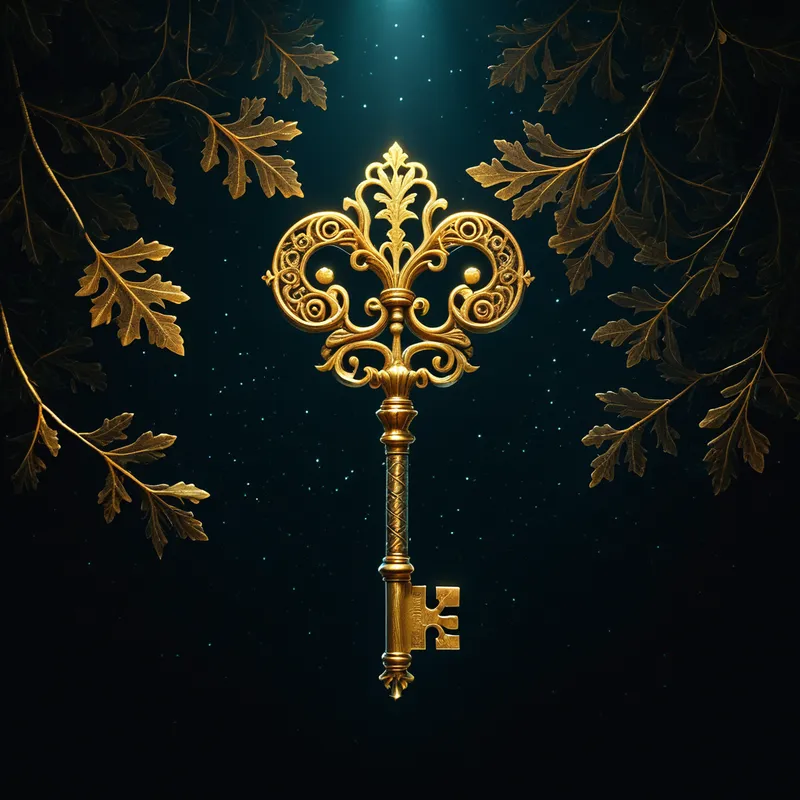
The alchemical process mirrored here is the *recovery of the *Lapis or philosophical gold—the true self hidden in the *massa confusa of life. Mabon's journey is the model for individuation.
First is the theft (nigredo), the initial depression or sense of loss that darkens the psyche. Then comes the quest (albedo), the conscious decision to seek wholeness, often prompted by an "impossible task" in outer life. This leads to the descent (citrinitas), consulting the "old animals"—engaging with therapy, ancestral work, body awareness, or active imagination to dialogue with the oldest, most instinctual layers of the self. The conversation with the Owl and the Salmon represents gaining insight from the unconscious.
The rescue is not the end, but the beginning of potency. The freed self must then be applied to the great hunt of life.
Finally, the rescue and return (rubedo) is the liberation of energy and identity. The freed Mabon does not retire; he immediately joins the hunt for the Twrch Trwyth. This is critical. The recovered potential is not for contemplation alone; it is a functional power meant to engage with the wild, untamed, and challenging aspects of reality (the monstrous boar). The myth teaches that the goal of healing is not merely to feel better, but to become effective in the world in a way that is authentically and powerfully your own. The son, once lost and lamenting, becomes the indispensable hunter, completing the circuit between the deepest self and the most daunting of life’s tasks.
Associated Symbols
Explore related symbols from the CaleaDream lexicon: