
Lyrebird Spirit Myth Meaning & Symbolism
A myth of primal fire lost, a spirit's desperate dance, and the creation of the lyrebird's song and tail from ashes and memory.
The Tale of Lyrebird Spirit
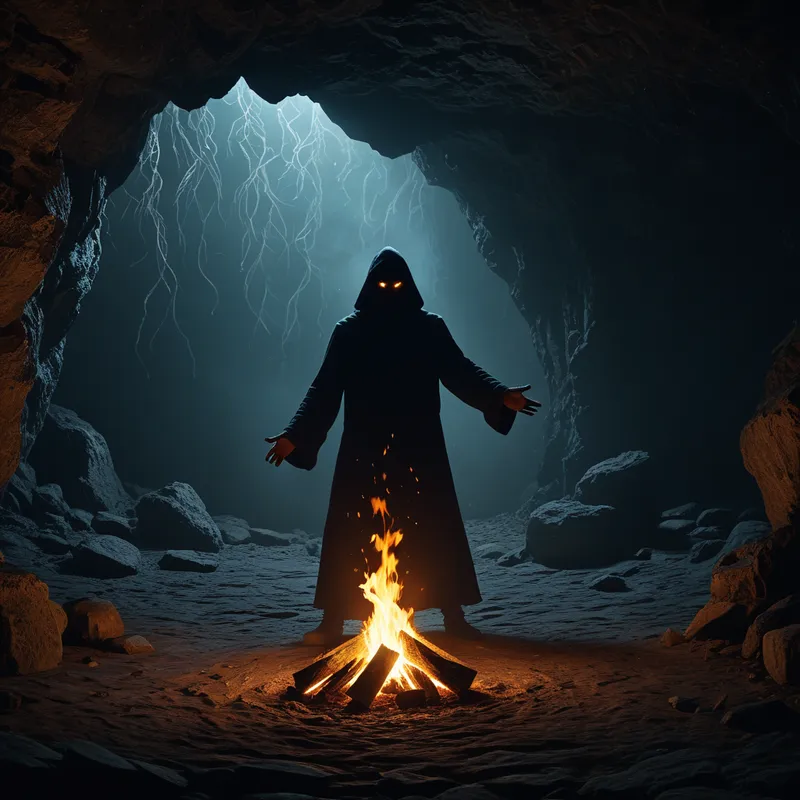
In the Dreamtime, when the world was soft and the laws were being sung into the earth, a great and solemn duty was given. The fire, that sacred spark of life and warmth, was entrusted to the care of a single spirit. This was Lyrebird Spirit, a diligent and quiet guardian. He kept the flame in a sheltered hearth, a glowing heart for the nascent world, and all creatures knew where to find its comfort.
But the world is woven with both vigilance and forgetfulness. One day, as a cold mist crept through the towering gums and the cicadas hushed, Lyrebird Spirit’s attention drifted. Perhaps he was listening to the first, tentative songs of the other birds, or watching the play of light on a spider’s web. The moment stretched, thin and fragile. And in that lapse, a bitter wind stole into the shelter. It coiled around the precious flame, and with a sigh that was colder than stone, the fire died.
Not a flicker remained. Only a mound of grey ash, still faintly warm, and a silence so profound it felt like the end of the world. Panic, cold and sharp, pierced Lyrebird Spirit. He knew the magnitude of his failure. Without fire, the night would own them forever. The people would shiver, food would remain raw, and the great gatherings of story would be swallowed by darkness. Despair threatened to paralyze him.
But then, a desperate, creative madness took hold. He could not relight what was gone, but perhaps he could remember it back into being. He began to dance. Not a dance of joy, but a frantic, scraping, digging movement around the dead hearth. He kicked up the ashes, his feet moving in a furious, rhythmic pattern, trying to conjure warmth from memory alone. He scraped at the earth, his movements becoming more and more exaggerated, his body contorting with the effort of his will.
As he danced, something miraculous and sorrowful began to happen. The ashes themselves, stirred by his passionate, grieving motion, began to cling to him. They coated his legs, his body, and streamed out behind him in long, graceful filaments. From his throat, torn by panic and effort, not a song but a raw, incredible cascade of sound erupted—a perfect mimicry of every sound he had ever heard: the crackle of the lost fire, the cry of the currawong, the rush of the wind that had betrayed him, the drip of water, the rustle of leaves. He was becoming an archive of the world in its moment of loss.
His dance of desperation became a performance of breathtaking, tragic beauty. The other spirits and first animals, drawn by the strange symphony, watched from the shadows. They saw not a failed guardian, but a spirit transforming his catastrophe into a new kind of gift. Where the single flame had been, now there was a living, moving creature adorned with the ashes of that fire, singing the memory of all life. From his profound failure, the first lyrebird was born, its magnificent tail the frozen shape of his frantic dance, its song an eternal echo of the world it once failed to protect.
Cultural Origins & Context
This foundational narrative belongs primarily to the Koori nations of southeastern Australia, such as the Dharug and Gundungurra peoples. It is a Dreaming story, a sacred text encoded in the landscape itself. The story was not merely told but performed—passed down through generations by custodians of knowledge, often accompanied by dance, song, and the intricate patterns of body painting that mirrored the lyrebird’s feathers.
Its societal function was multifaceted. On a practical level, it explained the unique characteristics of the superb lyrebird: its incredible vocal mimicry and its elaborate tail. On a deeper, pedagogical level, it served as a powerful teaching about responsibility, the consequences of negligence, and the proper care for communal resources like fire. Most profoundly, it modeled a cultural philosophy of transformative resilience. It taught that error and loss are not final; they can be the raw materials from which new beauty, new art, and new identity are forged, provided one has the courage to engage with the process fully.
Symbolic Architecture
At its heart, the myth of the Lyrebird Spirit is an alchemical drama of the psyche. The lost fire represents a central, vital energy—the libido, the spirit, the connection to the divine, or the animating spark of a project or relationship. Its loss signifies a profound inner desolation, a "dark night of the soul" where what once gave life and meaning is extinguished.
The guardian who loses the fire is not a villain, but the part of the self that must undergo the catastrophe to discover a deeper form of creation.
Lyrebird Spirit’s frantic dance is the critical pivot. It is the refusal to succumb to passive despair. This is the symbolic act of active engagement with the ashes—with the ruins, the memories, the guilt, and the fallout of the loss. The dance is not initially beautiful; it is desperate, messy, and somatic. It represents the often-ugly, compulsive work of grief, depression, or obsessive rumination that follows a great failure. Psychologically, this is the ego confronting the shadow of its own inadequacy.
The transformation—the ashes becoming the magnificent tail, the panic becoming a symphony of mimicry—symbolizes the emergence of the individuation process. The spirit does not get the old fire back. Instead, he integrates the experience of its loss into his very being. His new form is a complex, beautiful, and melancholic testament to what happened. The mimicry suggests the development of the persona—but one built not on falsity, but on a deep, empathetic resonance with all aspects of existence, including suffering.

The Dreamer's Resonance
When this myth pattern stirs in the modern dreamer, it often manifests as dreams of profound loss, forgotten responsibilities, or desperate, repetitive attempts to fix something irreparably broken. You may dream of a house fire gone out, a lost essential item, or being tasked with guarding something precious you then fail to protect. The somatic feeling is one of cold dread, frantic searching, and heavy guilt.
The appearance of a lyrebird in a dream, or the act of engaging in a strange, compulsive dance or task, signals the psyche’s movement from passive suffering into the active, transformative phase. It is the unconscious prompting the dreamer to "dance in the ashes." This means to consciously engage with the material of the failure or loss—to write about it, to talk about it, to create art from it, or to physically move the body (as in trauma therapies) to process the stuck energy. The dream is presenting the ancient algorithm for transmutation: total, embodied engagement with the aftermath.
Alchemical Translation
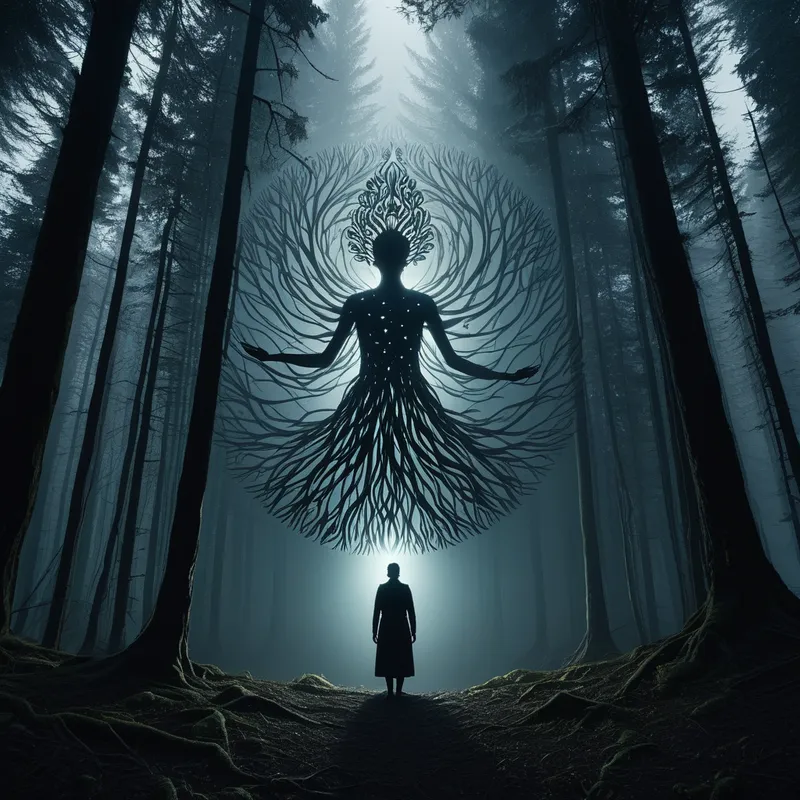
The journey of Lyrebird Spirit is a perfect map for the process of psychic transmutation, or individuation. It begins with the nigredo, the blackening: the loss of the fire, the plunge into the darkness of failure and shame. This is a necessary dissolution of the old, naive identity as the "perfect guardian."
The dance is the albedo, the whitening, but not as a pure, clean state. It is the whitening of ashes—the conscious, laborious work of sorting through the debris. The spirit does not seek to escape his ashes; he moves them, wears them, works with them. In psychological terms, this is shadow work: acknowledging, owning, and actively working with one's flaws, regrets, and repressed memories.
The new creation is not a replacement for what was lost, but a more complex synthesis born of having fully lived through the loss.
The final transformation into the lyrebird is the rubedo, the reddening or culmination. It represents the birth of a new, more resilient consciousness. The ego is no longer just the guardian of a single, external flame. It has become a creator, whose very essence (the magnificent tail) is shaped by its past catastrophe, and whose voice (the song) can now hold and reflect the full spectrum of experience—joy, sorrow, and the mundane sounds of the world. The fire is not re-lit externally; it is internalized as the creative warmth of a spirit who has mastered the art of transformation. For the modern individual, the myth teaches that our greatest failures, our most profound losses, contain the latent blueprint for our most authentic and beautiful forms, if we have the courage to perform the sacred, messy dance of remembrance.
Associated Symbols
Explore related symbols from the CaleaDream lexicon: