
Lugh Myth Meaning & Symbolism
A shining stranger arrives at the gates of Tara, claiming a place among the gods by proving he is master of all arts, the many-skilled one.
The Tale of Lugh
Listen, and hear the tale of the coming of the Shining One.
In the days when the Tuatha Dé Danann held the green island, a shadow fell. Their king, Nuada, had lost his arm in battle, and by the old law, a king must be whole. A new king, the oppressive Bres, sat on the throne at Tara, and under his rule, the land groaned. The gods were taxed into poverty, the harvests failed, and the laughter of the people turned to ash.
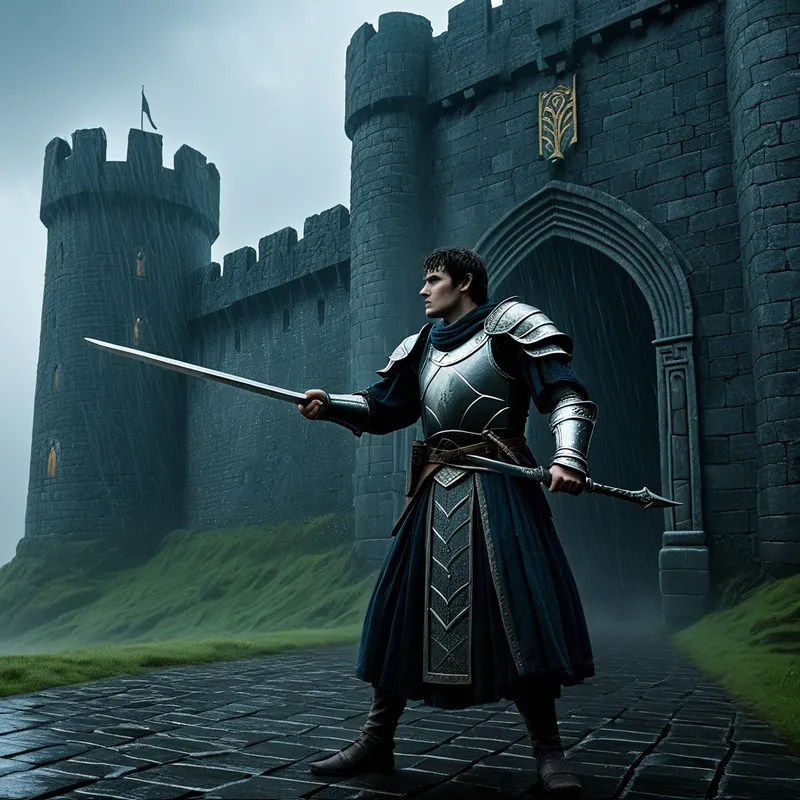
On a day of grey mist and sighing wind, a stranger approached the high gates of Tara. He was young, his hair the color of red-gold flame, and his eyes held the light of a clear sky after rain. He moved with a grace that spoke of both the warrior and the poet. The gatekeeper, Gamal, barred his way, for none entered the fortress of the gods without a craft to offer.
“What art do you practice?” Gamal demanded, his voice echoing against the stone.
“I am a builder,” said the stranger. “We have a builder. Luchta is here. We have no need of you.” “Then I am a smith.” “We have a smith. Goibhniu is here. We have no need of you.”
One by one, the stranger named the great arts: harper, hero, poet, historian, sorcerer, physician, cupbearer, brazier. And to each, Gamal gave the same reply: “We have one here. We have no need of you.”
A silence fell, thick and heavy. The mist coiled around the stranger’s feet. Then he smiled, and it was like the sun breaking through cloud.
“Ask your king,” he said, his voice ringing clear, “if he has one man who possesses all these arts. For I am Samildánach. I am Lugh.”
The words hung in the air, a challenge and a promise. Admitted at last, Lugh stood in the great hall. To prove his worth, he took up the harp of the gods and played three strains: the strain of sorrow that made every warrior weep, the strain of joy that set them laughing like children, and the strain of sleep that laid the entire host into a gentle slumber. He played the fidchell board with the king and won. He displayed feats of strength and skill that left them breathless.
In Lugh, they saw not a jack of all trades, but a master of integration. He was the missing piece, the one who could unite their fragmented strengths. With Nuada’s arm restored by the physician Dian Cécht, the rightful king was made whole again. Lugh was placed at the head of the Tuatha Dé Danann’s armies. In the cataclysmic Second Battle of Mag Tuired, it was Lugh who faced the monstrous, one-eyed Balor of the Evil Eye, whose gaze could destroy an army. Using his sling, Lugh cast a stone with such terrible force that it drove Balor’s own deadly eye out through the back of his skull, turning the destructive power back upon its source. The tyranny was broken. The land breathed again. The Shining One had arrived, not by birthright alone, but by the sovereign right of his manifold excellence.
Cultural Origins & Context
The myth of Lugh comes to us from the medieval Irish textual tradition, primarily the Cath Maige Tuired (The Second Battle of Mag Tuired), a prose narrative that weaves history, mythology, and sovereignty ideology into a foundational epic. These stories were the province of the filid, the poet-seers who were the inheritors of the ancient druidic tradition. They were not mere entertainers but custodians of cosmic order, memory, and law.
The telling of Lugh’s tale served a crucial societal function. It was a myth for a complex, hierarchical, skill-based society. The Celts revered mastery—in craft, in warfare, in poetry. Lugh, as Samildánach, embodies the ideal of the complete person, the one whose value is not in one specialty but in the synergistic combination of all. His arrival and triumph legitimize a model of leadership based on multifaceted competence rather than mere lineage or brute force. He is the god of the óenach, the assembly, where all arts and trades gathered; he is the patron of civilization itself, where the smith, the bard, and the king must work in concert for the tribe to thrive.
Symbolic Architecture
Lugh is the archetype of the integrated Self. He is not a collection of parts but a new, emergent whole. His primary symbols reveal a profound psychological blueprint.
His most famous epithet, Samildánach, is the key. He does not have many skills; he is the unity of those skills. This represents the psychological move from a fragmented identity (“I am a smith,” “I am a poet”) to a cohesive, sovereign identity (“I am the one in whom these forces are harmonized”).
The hero’s journey is not to acquire what he lacks, but to recognize and orchestrate the symphony already playing within.
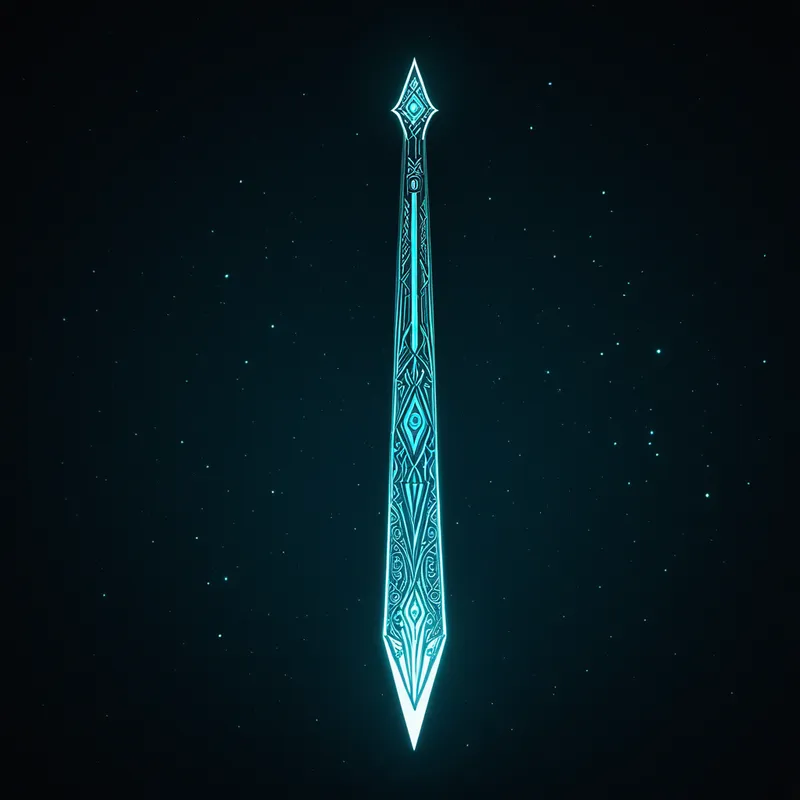
His weapon, the spear Areadbhair, is not just a tool of war. It is described as so bloodthirsty it had to be sedated with a poultice of poppy when not in use. This symbolizes focused, directed consciousness—the application of integrated skill (the shaft) with piercing, unstoppable intent (the point). It is the will made manifest, the channeling of disparate energies into a single, potent vector of action.
His defeat of Balor is a masterclass in psychological alchemy. Balor’s Evil Eye represents the toxic, paralyzing gaze of the negative complex—be it shame, a traumatic memory, or a crippling self-doubt—that petrifies the psyche. Lugh does not meet it head-on. He uses a sling, a weapon of cunning and distance, and his stone drives the eye backward, turning the destructive power back upon its source. This is the act of conscious reflection: taking the energy of a complex, understanding its origin, and dissolving it from within.
The Dreamer's Resonance
When the pattern of Lugh stirs in the modern dreamer, it speaks to a crisis of integration and a call to sovereignty. You may dream of standing before a great, imposing gate (a job interview, a social circle, your own potential) and being asked, “What is your skill?” only to feel a panicked multitude of answers rise and clash within. You are the stranger at the gate, feeling both overqualified and unrecognized.
Somatically, this can feel like a buzzing, scattered energy—a restlessness in the hands that want to create, a tension in the jaw that wants to speak, a heaviness in the shoulders meant for a burden you have not yet claimed. The dream may present a chaotic workshop where tools lie unused, or a stage where you are meant to perform but have forgotten which instrument to play.
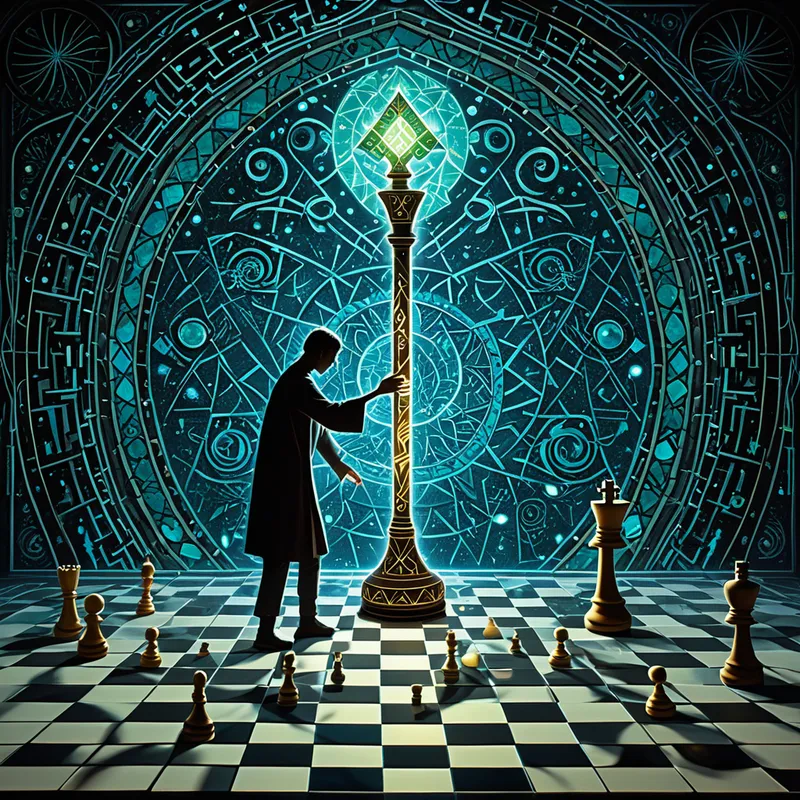
The psychological process is one of gathering. The ego, the gatekeeper Gamal, initially rejects these inner figures (the smith, the bard, the healer) because it sees them as separate, competing claimants. The dreamwork of Lugh is to introduce them to each other, to let them recognize they are facets of a single, shining entity—your latent, complete Self.
Alchemical Translation
The myth of Lugh provides a precise model for the alchemical process of individuation—the journey toward psychological wholeness. It maps the transition from the prima materia of raw, uncoordinated potential to the lapis philosophorum, the philosopher’s stone of the integrated personality.
The first stage is the Nigredo, the blackening. This is the rule of Bres: the inner tyranny where one complex (often the critic, the people-pleaser, the victim) rules over the other inner talents, taxing them into depression and sterility. The land of the psyche is barren.
Lugh’s arrival marks the Albedo, the whitening. This is the conscious inventory. The ego must stand at its own gate and honestly name all its parts, especially those it deems unnecessary or embarrassing. The poet, the warrior, the trickster, the child—all must be acknowledged. This is not an exercise in listing hobbies, but in claiming archetypal energies.
Individuation is not about adding more to the self, but about becoming the conscious container for the self that already, secretly, is.
The confrontation and integration is the Citrinitas, the yellowing. Here, the ego, now aligned with Lugh-consciousness, faces the Balor-complex. It does not fight the complex with its own weapon (shame vs. shame). Instead, it uses the sling of reflective consciousness—therapy, journaling, active imagination—to “turn the eye around.” To ask: “What ancient hurt powers this destructive gaze? What does it protect?” By understanding it, you rob it of its autonomous, paralyzing power.
The result is the Rubedo, the reddening. This is the sovereignty of Samildánach. The inner kingdom is ruled not by a single, rigid tyrant, but by a fluid council of all your skills and selves, presided over by a consciousness that can call upon any of them as needed. You become the master of the assembly of your soul. Your spear, your focused will, is now forged from all your metals, and it can be aimed with purpose, because you finally know who—and what—you truly are.
Associated Symbols
Explore related symbols from the CaleaDream lexicon: