Long Myth Meaning & Symbolism
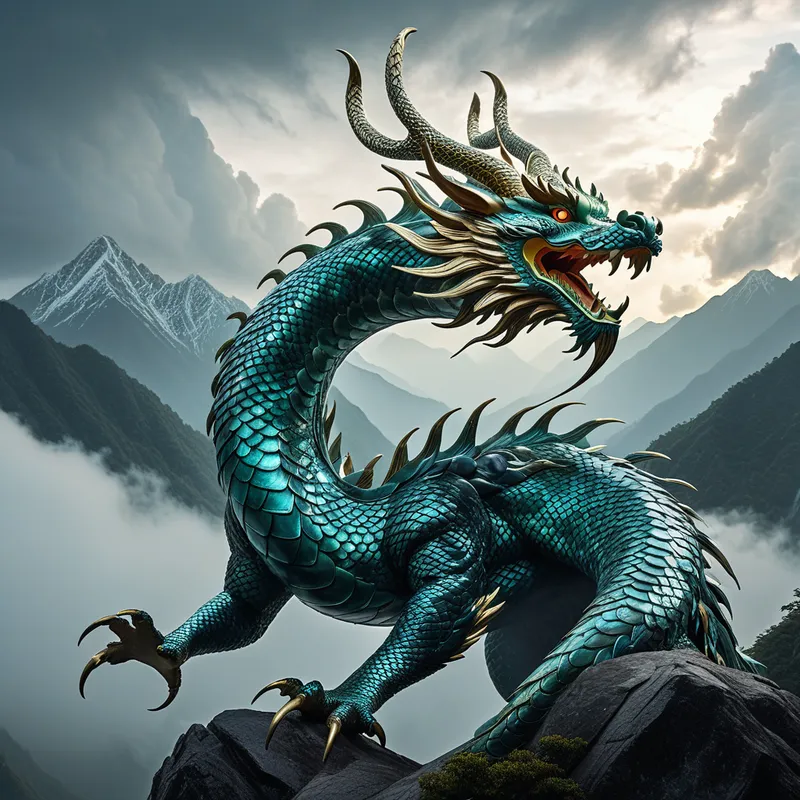
The Long is a celestial dragon of Chinese myth, a sovereign being of water and sky, embodying the power of benevolent transformation and cosmic order.
The Tale of Long
Before the world knew its name, there was the Hundun. From its swirling, formless depths, a presence stirred. Not born, but becoming. It was the first breath, the first intention towards order. This was the awakening of Long.
Listen now. In the age when rivers were the veins of the earth and mountains its bones, the Long ascended. It did not crawl from mud or hatch from stone. It coalesced from the very principles of the cosmos: the rising Yang became its fiery breath and soaring spirit; the descending Yin became its watery form and profound wisdom. Its body was a river of stars given flesh—scales like polished jade that caught the first and last light of day, a mane of flowing mist and cloud, eyes that held the calm depth of ancient lakes and the electric fury of gathering storms.
The Long did not claim the sky by force; the sky yearned for it. Where it swam through the heavens, the clouds parted in reverence, and gentle rains followed in its wake, blessing the land below. It was the intermediary, the sovereign without a throne, connecting the Tian to the Di. Its voice was the rumble of distant thunder, not in anger, but in proclamation. Its flight traced the sacred patterns of the seasons.
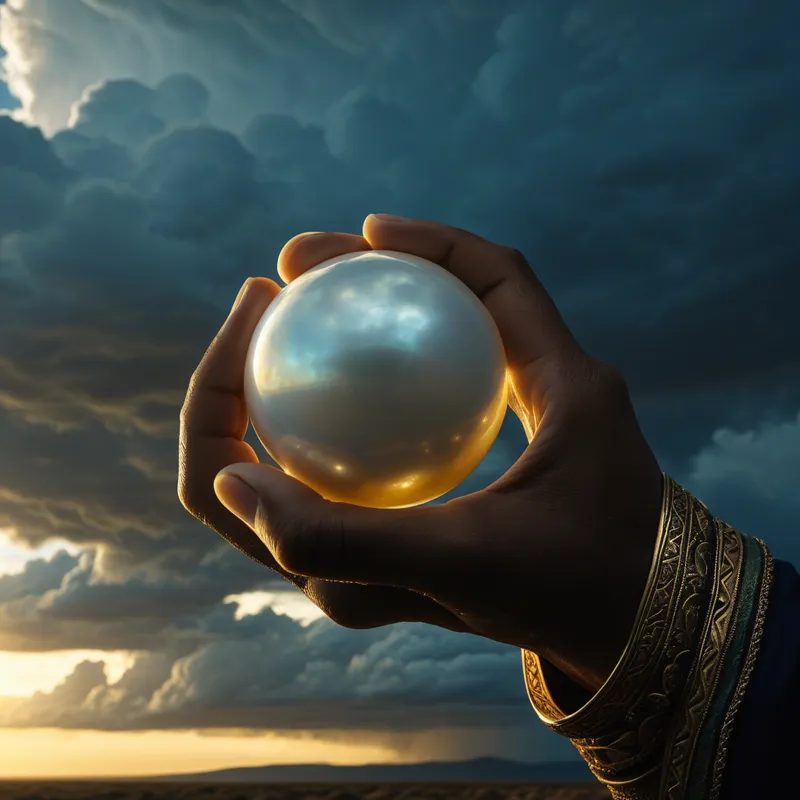
Yet, its power was most profoundly felt not in the vastness above, but in the hidden depths. The Long was the master of waters—the roaring cataract, the silent underground river, the life-giving downpour. It was said that in the deepest, stillest pool of every sacred mountain, a Long slept, and its dreaming was the very vitality that fed the springs and wells. To find its hidden pearl—the Flaming Pearl—was to glimpse the concentrated essence of cosmic truth, a sphere of captured moonlight and inner fire, which the Long both guarded and played with, a symbol of the eternal pursuit of perfection.
This is the tale not of a beast, but of a function of the universe. The Long is the animate principle of benevolent power, the dynamic harmony that turns the wheel of the heavens and nourishes the roots of the earth. It is the breath between chaos and order, forever in motion, forever complete.
Cultural Origins & Context
The Long is not a singular character from one story, but a foundational archetype woven into the very fabric of Chinese civilization, from the earliest oracle bone inscriptions of the Shang dynasty to the robes of Qing emperors. Unlike the often-chaotic, treasure-hoarding dragons of the West, the Chinese Long evolved as a symbol of legitimate authority, auspicious power, and natural order.
It was the emblem of the Tianzi, the Emperor, who was himself considered the human embodiment of the dragon's sovereign virtue. The myth was passed down not merely as entertainment, but as a cosmological and political doctrine. It was depicted in court rituals, woven into silks, carved into palace pillars, and painted on temple walls. Folk traditions also embraced the Long as a rain-bringer and agricultural guardian, with festivals and dances (like the dragon dance) performed to invoke its blessings for the community.
The myth was sustained by a symbiotic relationship between the imperial institution, which used it to legitimize power, and the agrarian society, which revered it as a vital natural force. Scholars, poets, and artists across millennia refined its image, integrating attributes from various animals—the horns of a stag for wisdom, the scales of a carp for perseverance, the claws of an eagle for strength—creating a composite being that represented the pinnacle of all natural virtues.
Symbolic Architecture
Psychologically, the Long represents the ultimate integration of the instinctual and the spiritual, the chaotic depths of the unconscious and the ordering principle of consciousness. It is the archetype of benevolent, ordained power—the right to rule, not just the capacity.
The Long does not conquer the waters; it is the consciousness of the waters. Its sovereignty is not over territory, but over the inner state of harmonious flow.
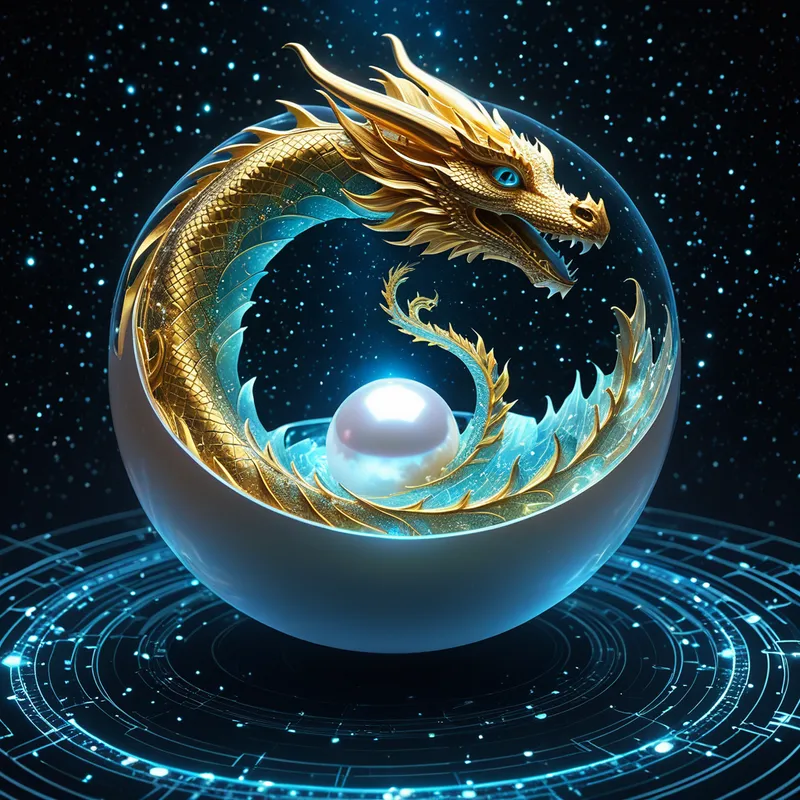
Its serpentine form symbolizes the kundalini-like life force, the coiled potential for transformation and ascent. Its association with water connects it to the emotional and intuitive depths of the psyche, while its flight in the heavens represents spiritual aspiration and cosmic awareness. The Flaming Pearl it often chases or holds is a profound symbol of the Self in Jungian terms—the wholeness, the luminous center of the personality that one eternally seeks to integrate and embody. The dragon’s pursuit of the pearl is the ego’s journey toward Self-realization.
Furthermore, the Long embodies the successful mediation between opposites: heaven and earth, fire and water, activity and receptivity. It is a living symbol of the Yin-Yang principle in dynamic, animate form.
The Dreamer's Resonance
When the Long swims into the modern dreamscape, it heralds a profound encounter with one's own latent authority and potential. It is not an archetype that appears during times of passive victimhood, but during a crisis or opportunity that calls for the dreamer to assume a greater degree of personal sovereignty.
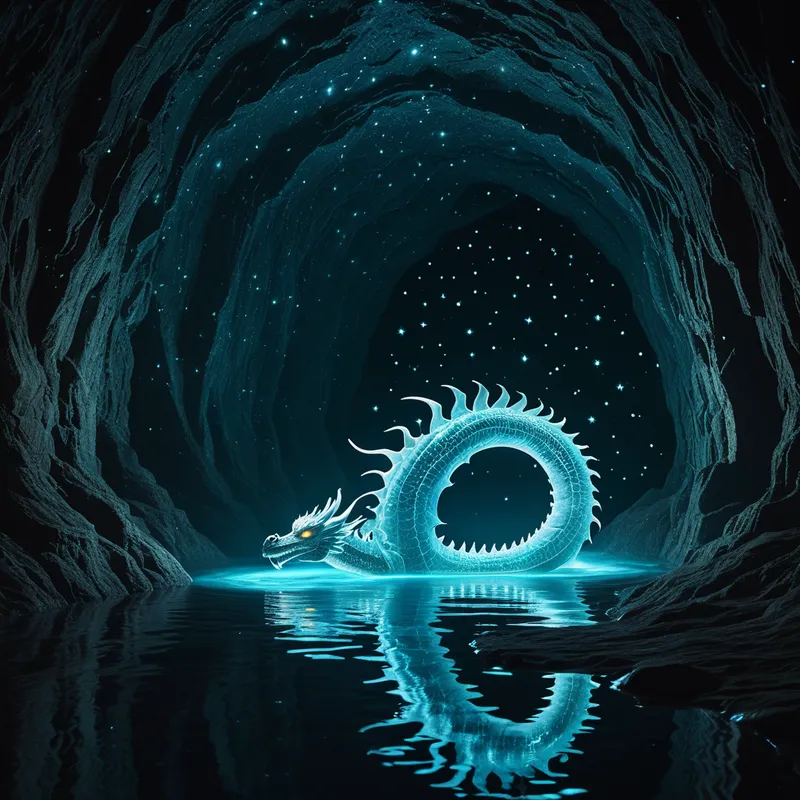
To dream of a Long soaring through storm clouds may correlate with a somatic feeling of expansion in the chest and spine—a calling to rise above a chaotic situation with calm, authoritative power. To dream of a Long coiled in a deep pool or cave connects to the watery realm of the emotions and the unconscious; it suggests a need to dive into one's own depths to retrieve a hidden source of vitality or wisdom (the pearl). A dream of becoming the Long, or feeling its scales upon one's skin, often accompanies a psychological process of major identity transformation, where instinctual energies (the serpentine body) are being successfully integrated with one's spiritual or intellectual aspirations (the celestial flight).
The Long in a dream challenges the dreamer: "Where in your life are you being called to rule with wisdom, not force? Where is your power dormant, waiting to be animated with purpose and benevolence?"
Alchemical Translation
The myth of the Long provides a majestic blueprint for the alchemical process of individuation—the journey toward becoming an integrated, sovereign Self. The initial state is the Hundun of the unexamined life, where potentials are formless and conflicting.
The first alchemical operation is the coagulation: the gathering of disparate elements of the personality (the animal attributes—carp, stag, eagle) into a single, potent intention. This is the "becoming" of the Long from chaos. The second is the sublimation: the conscious effort to raise this composite energy from the murky waters of the unconscious (instinct, emotion, shadow) up through the spine of awareness into the celestial realm of spirit and purpose. This is the dragon's flight.
The ultimate alchemy is not the possession of the pearl, but the eternal, graceful dance with it. The Self is not a trophy to be won, but a relationship to be maintained.
The core struggle is maintaining the harmonious flow between these poles. The triumph is not in a final, static state of perfection, but in the ongoing capacity to mediate, to bring life-giving rain (conscious insight) to the parched earth of daily life, and to draw vitality from the deep waters of the soul. To embody the Long archetype is to become a vessel for a power greater than the individual ego—the power of natural law and cosmic order—and to express it with benevolence, creativity, and awe-inspiring grace in one's own sphere of influence. One becomes, in a sense, a human conduit between heaven and earth.
Associated Symbols
Explore related symbols from the CaleaDream lexicon: