Loki at the Feast of the Gods Myth Meaning & Symbolism
The trickster god, uninvited, crashes a divine feast, hurls brutal truths at every deity, and triggers a chain of events leading to his eternal binding.
The Tale of Loki at the Feast of the Gods
The mead flowed like golden rivers in Aegir’s hall, a cavern of coral and wave-smoothed stone deep beneath the ocean’s sigh. Laughter, rich and unburdened, echoed against walls hung with the silver scales of leviathans. The Aesir and Vanir were gathered, a glittering pantheon at peace. Odin’s one eye gleamed with quiet satisfaction. Thor’s mighty laugh boomed. The goddesses shone like constellations.
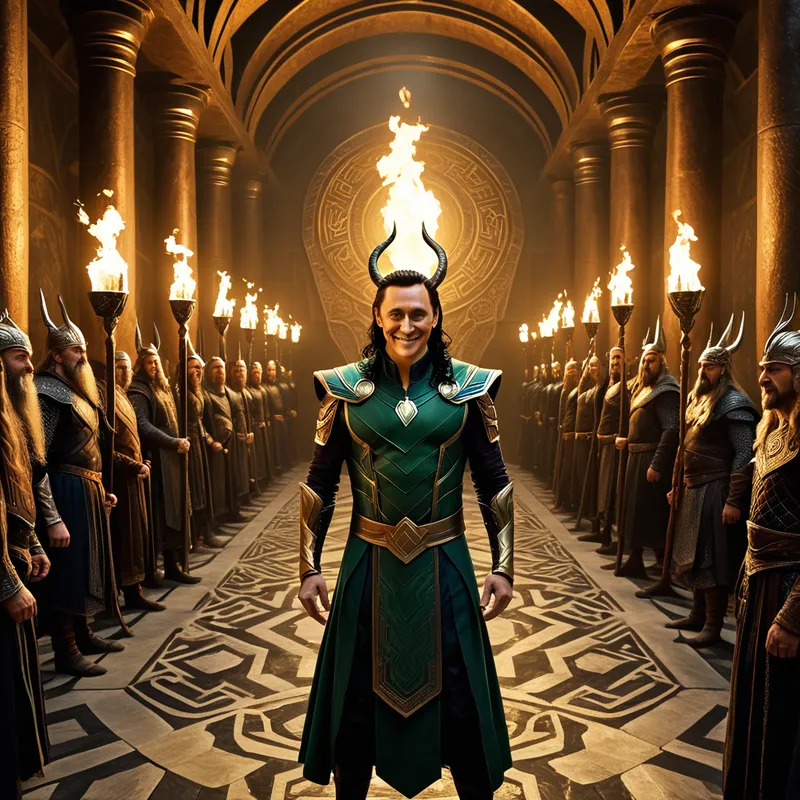
But a shadow fell where no torch could cast one. The great doors, which had been barred to him, swung open without a sound. And there he stood: Loki. His entrance was not a crash, but a seep, a cold draft that made the hearth-fires gutter. Silence, thick and sudden, swallowed the hall. He had not been invited. The crimes of the world’s finest smith, a murder woven from malice and a net of his own hair, still hung fresh upon him. Yet here he was, a smile playing on his lips that did not touch his eyes—two chips of flint in a face of shifting cunning.
A servant, brave or foolish, challenged him. With words smooth as poisoned honey, Loki argued his right to enter, to drink, to belong. He spoke of oaths of blood-brotherhood with Odin, older than the walls of Asgard itself. The gods, uneasy, relented. A seat was grudgingly made. But the feast was dead. The air curdled with his presence.
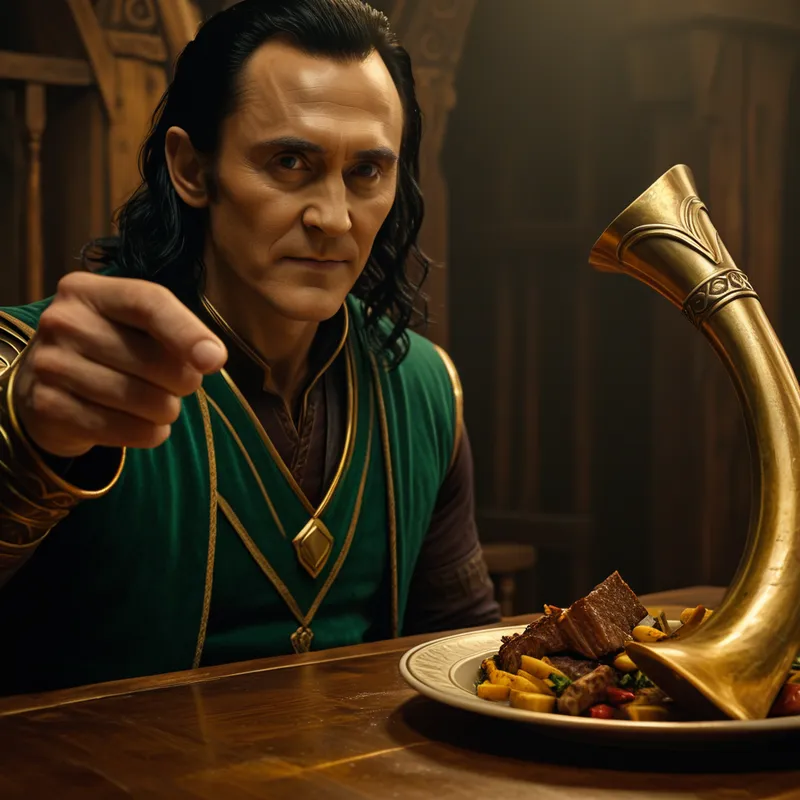
Then the mead, which brings forth song and fellowship, worked a darker magic in Loki. He began to speak. Not in jests, but in truths—cruel, precise, and utterly unforgiving. He turned his gaze upon each god and goddess in turn, and like a surgeon laying bare a festering wound, he recounted their deepest shames, their most foolish deeds, their hidden hypocrisies. To Frigg, he whispered of her son’s doom. He mocked Odin’s unwise bargains for wisdom. He laid bare the cowardice of the gods in the face of a giant builder. He jeered at Forseti for failing to bring peace, and scorned Freyja for the price of her necklace.
The hall trembled not with thunder, but with a rage born of humiliation. Gods of storm and law, of love and war, sat stripped of their divine mantles, revealed as flawed, fearful beings. Only when he turned his venom on Heimdallr and Sif did Thor finally rise, his hammer Mjölnir glowing with a lethal light. Loki fled, laughing, into the night—a serpent sliding back into the cracks of the world.
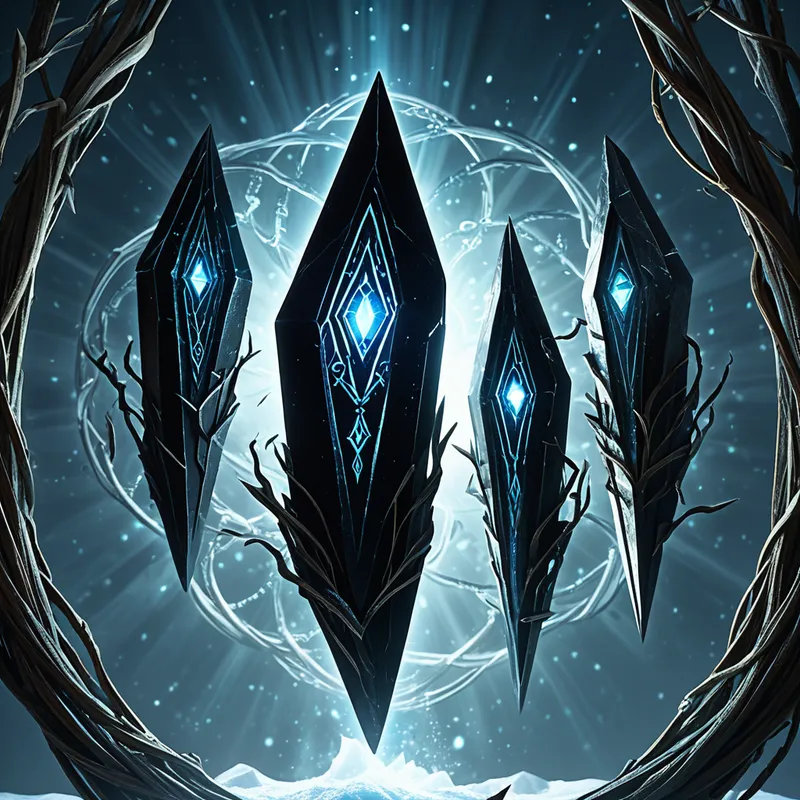
But his flight was the beginning of his end. His truths had severed the last fragile thread of his kinship. The gods hunted him. He transformed—a salmon in a river, a flicker of silver evasion—but the net of fate, of his own weaving, closed. They caught him. And in a cave far from the sun, they took his sons. From one, they forged a chain. With the other’s entrails, they made a bond no strength could break. They bound Loki to three sharp stones, and a serpent was fastened above him, its eternal venom dripping onto his face. His wife, Sigyn, stays with him, catching the poison in a bowl. But when she turns to empty it, the acid burns, and his writhing shakes the earth itself. The feast was over. The reckoning had begun.
Cultural Origins & Context
This pivotal myth is preserved primarily in the Lokasenna (Loki’s Flyting or Quarrel), a poem found in the 13th-century Poetic Edda. These texts, compiled in Christian Iceland, are our main windows into a much older, pre-Christian Norse worldview. The Lokasenna is not a simple story of a party gone wrong; it is a formal “flyting,” a ritualized contest of insults and verbal dueling, a recognized literary and social practice where truth, no matter how painful, was a weapon that could dismantle reputation and order.
The myth functioned as a complex societal mirror. For a culture valuing honor, oath-keeping, and communal harmony, Loki’s actions were the ultimate transgression. He violated hospitality (grith), broke frith (the sacred peace of the gathering), and used sacred speech not for wisdom or poetry (skáldskap) but for pure, destructive revelation. The tale served as a cautionary narrative about the limits of tolerance, the explosive power of repressed truths, and the necessity of enforcing boundaries against chaos—even chaos that speaks truth. It was a mythic explanation for why the disruptive element, the “necessary evil” or cunning ally, must ultimately be contained for the cosmos to function, foreshadowing the inevitable conflict of Ragnarök.
Symbolic Architecture
Loki at the feast is the archetypal Shadow made manifest at the table of the conscious Self. The gods represent the established order of the psyche—our virtues, our roles, our cherished self-image (the ruler, the warrior, the lover, the nurturer). The feast is the state of relative psychic equilibrium, where these aspects commune in apparent harmony, ignoring the debts and deceptions in the cellar.
The uninvited guest is always a truth the ego has refused to host.
Loki is not merely “evil.” He is the accumulated psychic residue: every repressed lie, every unacknowledged cowardice, every selfish act dressed as nobility, every broken promise to oneself. His crashing of the feast is the moment when this repressed content can no longer be kept at bay. It forces its way into awareness. His “slander” is, symbolically, the brutal, unvarnished truth of the psyche’s own compromised integrity. He is the function of psychological critique, merciless and undiscriminating. The binding that follows is equally symbolic: the ego’s attempt to forcibly repress this critical function once more. But as the myth shows, binding the shadow does not silence it; it only makes its convulsions (anxiety, depression, neurosis) shake the foundations of the personal world.
The Dreamer's Resonance
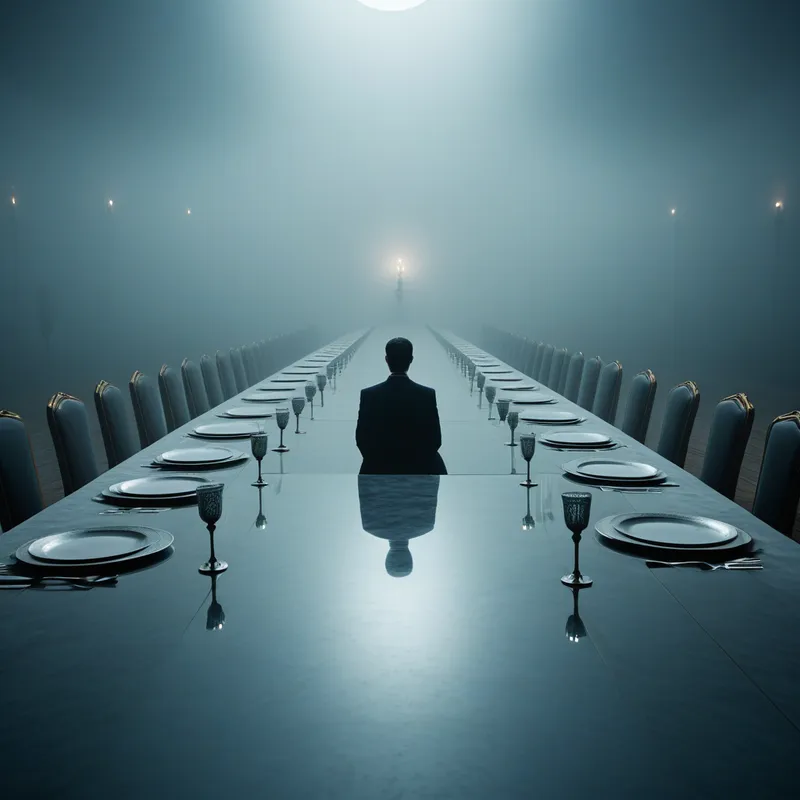
When this mythic pattern stirs in modern dreams, it often manifests as a disruptive figure at a gathering—a stranger who exposes secrets, a crasher at a wedding or funeral, or even the dreamer themselves acting out in shocking, “out-of-character” ways at a solemn event. The somatic experience is one of intense heat, constriction in the chest, or a chilling cold—the body registering the shock of exposure.
Psychologically, this dream signals a critical phase of shadow integration. The “feast” represents a current life situation where the dreamer is investing heavily in a persona—a career role, a family dynamic, a social identity—that has become too rigid, too false. Loki’s entrance is the unconscious insisting on authenticity. The dreamer is undergoing the painful but necessary process of having their personal “gods”—their inner ideals of perfection, success, or goodness—challenged by their own hidden truths. It is a call to self-honesty that feels like self-destruction, a warning that continuing the charade will lead to a more catastrophic rupture.
Alchemical Translation
The alchemical journey modeled here is the nigredo—the blackening, the putrefaction, the tearing down of the old, inflated personality. The feast represents the persona, the glittering but brittle compound of who we pretend to be. Loki is the spiritus mercurius, the volatile, dissolving agent that reduces this compound to its base, truthful elements.
Individuation does not begin with building a better mask, but with the shattering of all masks by the truth-teller within.
The process is agonizing. To sit at one’s own inner feast and allow Loki to speak is to endure a profound humiliation of the ego. Each accusation, though painful, is a liberation from a specific self-deception. The modern individual’s “binding” of Loki is the temptation to rationalize, spiritualize, or numb these truths—to chain the critic with excuses and renewed repression. But the myth’s deeper alchemy points to a more transformative path: not to bind Loki, but to hear him. To integrate his truths without being destroyed by his chaos. This means acknowledging one’s cowardice, one’s hidden shames, one’s compromises, not as failures to be buried, but as parts of the whole self. Only then can Sigyn’s bowl—the capacity for compassionate containment—hold the venom. The trembling of the earth becomes not a prelude to doom, but the necessary shaking loose of a foundation built on sand, making way for one built on the unflinching bedrock of self-knowledge. The feast that follows this ordeal is not one of blind celebration, but of earned, conscious communion.
Associated Symbols
Explore related symbols from the CaleaDream lexicon: