Lice of Hera Myth Meaning & Symbolism
A forgotten myth where Hera's divine body, infested with lice, is cleansed by a mortal, revealing a sacred, hidden process of purification and transformation.
The Tale of Lice of Hera
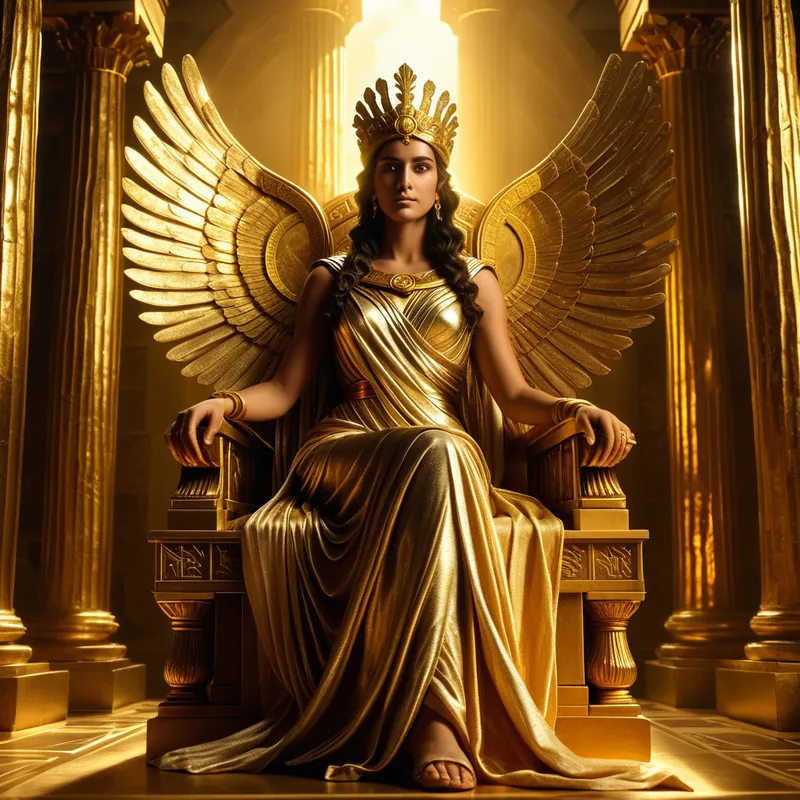
Hear now a tale seldom sung, a whisper from the hearth of Olympus where even the gods must bow to the humble processes of being. The air in the great hall was thick, not with incense, but with a sacred discomfort. Hera, the ox-eyed queen, she of the peacock’s pride and the marriage bed’s sovereignty, sat upon her throne of polished ivory. Yet her famed beauty was clouded. A divine misery had settled upon her skin, a crawling, itching affliction that no nectar could soothe, no ambrosia could cure.
From the crown of her dark, oiled hair to the soles of her immortal feet, a plague of lice moved. But these were no common vermin of the field. They were born of her own divine essence, a paradoxical corruption sprung from perfection itself—glistening, golden-shelled, and relentless. Each minute movement was a pinprick of torment against her infinite nature. The other Olympians averted their eyes, for who dares acknowledge the vulnerability of the mighty? The shame was a silent thunder in the hall.
Word, carried on the sighing wind, reached the mortal world below. In a humble village, a woman known not for heroism with spear or sword, but for the quiet, patient art of cleansing, heard the goddess’s unspoken plea. She did not hesitate. With a heart full of awe and hands steady with purpose, she ascended the hidden paths to the divine realm. Presented before the towering, suffering form of the Queen, she did not flinch.
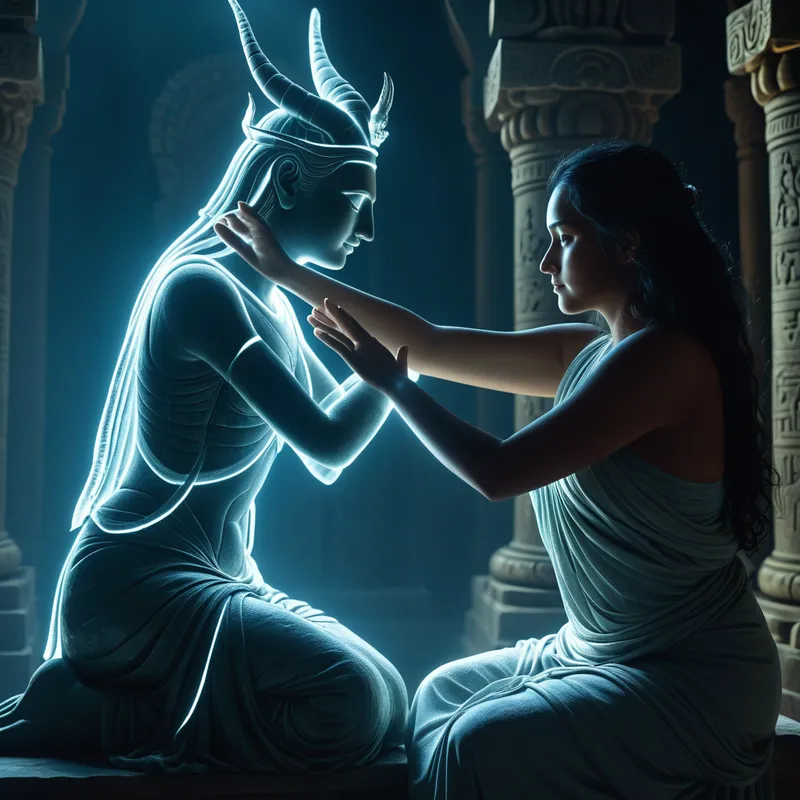
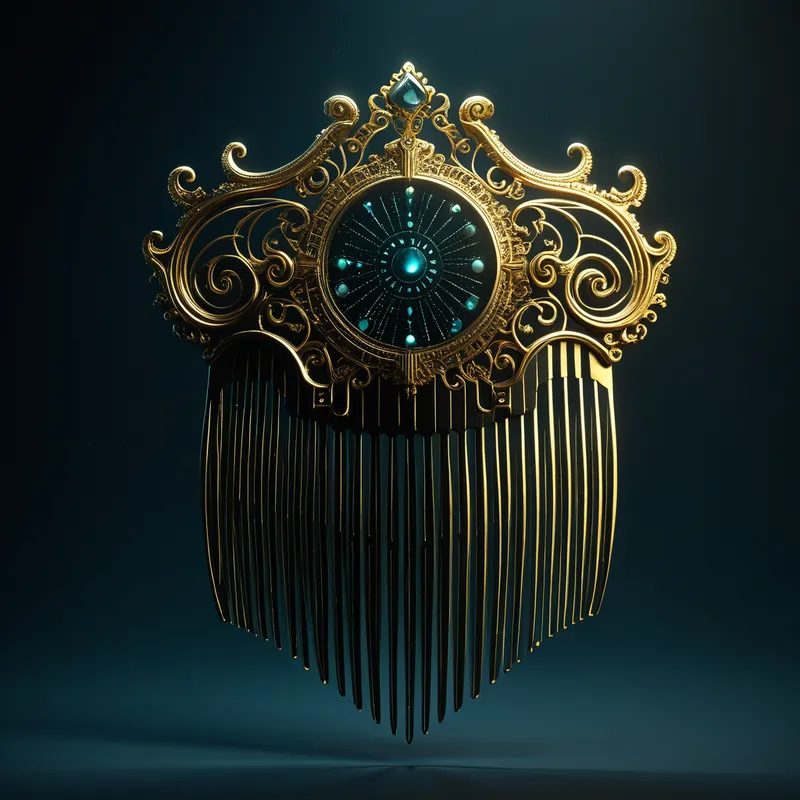
There, in the profound silence, the mortal woman began her sacred service. With fingers gentle as twilight, she parted the goddess’s hair. She took up a comb of finest silver, and began the meticulous, reverent work. Each golden louse was carefully lifted from its divine cradle. The ritual was agonizingly slow, a meditation in minutiae. As each parasite was removed, a visible wave of relief, like cool water over a fevered brow, passed over Hera’s majestic form. The itching ceased where the mortal’s hands traveled. The golden shells of the captured lice, once removed, dissolved into motes of faint, dusty light.
For days and nights uncounted, the woman worked, a single point of focused, healing attention against the vastness of divine affliction. Finally, it was done. Hera’s skin was clear, her majesty restored, yet now tempered by a knowing grace. The goddess looked upon the weary, mortal caregiver. In her eyes was not just gratitude, but a recognition of a power different from her own—the power of devoted, healing touch. The reward was given, as such things are in myths: perhaps a promise of protection for her lineage, a gift of prosperity. But the true gift was the work itself, the completed act of purification that restored balance to the very queen of heaven.
Cultural Origins & Context
This obscure fragment of myth survives not in the grand epics of Homer or the sweeping tragedies of the stage, but in the scholia—the marginal notes and commentaries of ancient scholars preserved in texts like those of Didymus Chalcenterus. It belongs to the stratum of mythography that deals with etiology, explaining the origins of customs, rituals, and even humble professions. The myth likely served to sanctify and elevate the role of the kourotrophos (child-nurse) and the broader, often invisible, carework performed by women in the Greek household and in service to goddess cults.
Its transmission is that of a specialist’s knowledge, passed among those who tended the sacred statues of the gods in their temples. Just as cult statues required ritual washing (loutron), dressing, and feeding, this myth suggests that the divine body itself, in its narrative life, required a more profound, physical cleansing. It functioned as a sacred precedent, turning a mundane, even lowly act of delousing into a hieratic duty. It whispered that service to the divine could be found not only in grand sacrifice but in the alleviation of sacred suffering, acknowledging that even the most perfect forms can harbor a need for purification.
Symbolic Architecture
The myth’s power lies in its stark, alchemical imagery. Hera, the archetypal Animus of order, marriage, and social contract, is afflicted from within. The lice symbolize a paradoxical, auto-immune condition of the psyche: the “shadow” of the ruling principle.
The parasites of the queen are not invaders, but born of her own substance; the psyche’s greatest irritations are often its own repressed contents, feeding on the very energy of the conscious attitude.
They are “golden,” indicating they are not mere evil, but value-laden—repressed vitality, neglected duties, or the petty, nagging resentments that fester beneath a polished persona of control and majesty. The itching is the psyche’s signal that something requires attention, a divine discontent that cannot be ignored.
The mortal caregiver represents the ego’s capacity for humble, patient attention—the therapeutic function. She does not fight the affliction with violence (which would only scatter it), but engages it with focused, respectful care. Her act is one of discernment: separating the valuable essence (Hera’s restored divinity) from the symptomatic form it has taken (the parasitic lice). This is not an act of heroism, but of service, modeling that healing often comes through submission to a necessary, meticulous process.
The Dreamer’s Resonance
When this myth stirs in the modern unconscious, it may manifest in dreams of infestation—of bugs crawling on the skin, in the hair, or within one’s home. The somatic feeling is one of profound irritation, shame, and a desperate need to cleanse. Psychologically, this signals that a long-held self-image or a ruling complex (the inner “Hera”—one’s role as a responsible leader, perfect parent, or impeccable professional) is suffering from a buildup of neglected psychic material.
The dream-ego may find itself in a role similar to the mortal woman: tasked with an endless, minute, and overwhelming cleaning project. This is the psyche initiating its own “shadow-work.” The process feels tedious, distasteful, and unglamorous. It is the work of combing through one’s own thoughts, habits, and recurring irritations, not to destroy them in disgust, but to examine them with care, to see what “golden” insight or repressed life-force might be trapped within the annoying symptom. The resolution in the dream is not a battle won, but a patient task completed, leading to a deep sense of relief and restored integrity.

Alchemical Translation
The alchemical opus mirrored in this myth is the separatio and mundificatio—the separation and purification. Hera’s afflicted state is the materia prima, the base, corrupted divine state. The mortal’s service is the slow, careful application of the alchemical labor.
Individuation is not merely the slaying of dragons, but often the meticulous, uncelebrated cleansing of the sacred image from the parasites of its own creation.
For the modern individual, the “Lice of Hera” models the process of psychic transmutation wherein one must tend to the afflictions of one’s highest values and identities. The “hero’s journey” here is inward and downward into service. One must become the caregiver to one’s own inner royalty, attending to the petty, itching resentments, the small corruptions of pride, and the hidden dependencies that feed on our best intentions.
The triumph is not an explosion of light, but the restoration of clarity and function. The reward is the “gift from the goddess”: a more authentic, grounded, and compassionate form of authority, one that has integrated the humility of the cleansing process. The gold is not found in a distant treasure, but is the very essence of the self, purified through the patient, devoted work of attention. The myth ultimately teaches that divinity—or wholeness—is maintained not by static perfection, but through cycles of sacred attention and renewal.
Associated Symbols
Explore related symbols from the CaleaDream lexicon: