Library of Alexandria Myth Meaning & Symbolism
A myth of a cosmic library containing all knowledge, its fiery loss, and the eternal human quest to remember and rebuild from the ashes.
The Tale of the Library of Alexandria
Hear now, and listen with the ear of your soul, to the tale not carved in stone, but whispered on the wind from the delta to the desert. It begins not with a king’s decree, but with a god’s sigh—the sigh of Thoth, he who measured the heavens and gave words their weight. He looked upon the land of Kemet and saw a great hunger, a thirst not for water, but for understanding. The stars spoke, the river sang, the stones held memories older than dynasties, but who was there to listen? Who was there to remember?
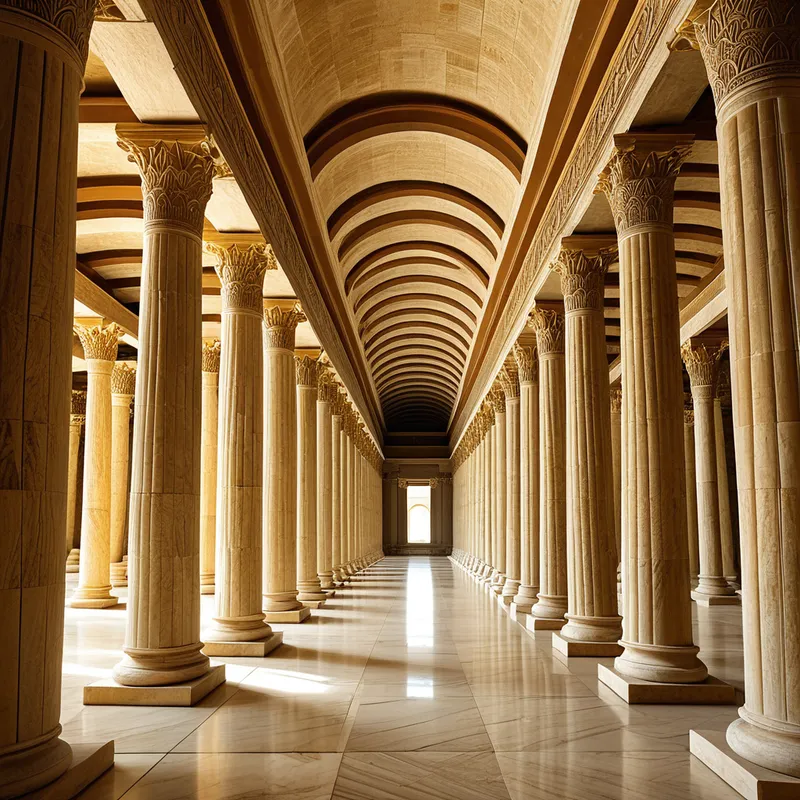
And so, from the breath of Thoth and the dream of Calliope, who walked the shores where Nile met sea, a vision was spun. Upon the spit of land between the lake and the great Middle Sea, a city of white stone arose, and at its heart, a temple of the mind. They called it the Bibliotheka, the Library. But it was more. Its shelves, of fragrant cedar and ivory, did not merely hold scrolls; they held the breath of civilizations. Here slept the geometry of Babylon, the tragedies of Athens, the star-charts of Chaldea, the medical lore of the Nile, the epic poems of forgotten kings. It was to be the memory of the world, a second Nun from which all future thought could be born.
For generations, it stood. Scholars, their brows furrowed in lamplight, moved like priests in a silent liturgy of learning. The air was thick with the scent of papyrus and ink, a sacred incense. The Library was a living entity, pulsating with the collected heartbeat of human curiosity. It was said that to walk its halls was to hear the faint, collective hum of all known stories, all solved equations, all recorded dreams.
Then came the fire.
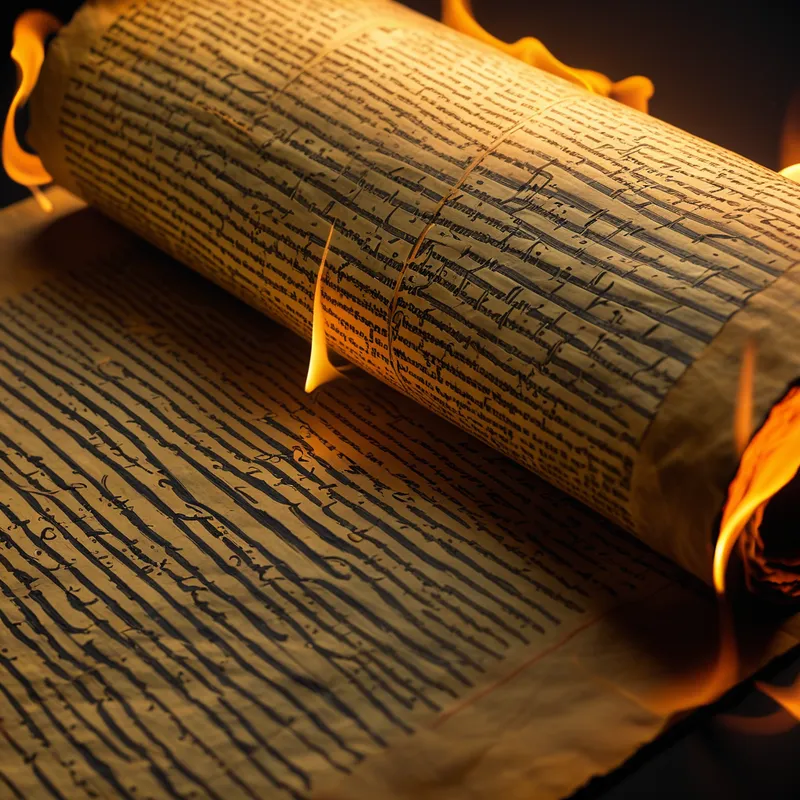
It did not come with the roar of an invading army, but with a whisper—a single, errant spark, born of accident or perhaps of a deeper, more jealous fate. It caught on a dry papyrus edge, a corner of a map of the world. And like knowledge itself, it spread, insatiable. The flames were not merely orange and red; they were the color of dying wisdom, of forgetting. They danced along shelves, consuming histories, devouring philosophies, turning songs to smoke and science to ash. The scholars wept not with water, but with a despair more profound, watching the memory of millennia become a pyre that lit the Alexandrian night. The great memory was unmade. The silence that followed was heavier than any before it, a silence filled with the ghosts of ten thousand lost voices.
Cultural Origins & Context
The myth of the Library of Alexandria, while rooted in the historical institution founded in the 3rd century BCE Ptolemaic Egypt, transcends its Hellenistic framework to tap into a deep, pre-existing Egyptian psychic stratum. Historically, it was a center of Greco-Egyptian scholarship, but as a myth, it was forged in the subsequent centuries of loss and lament. The tale was not passed down in a single sacred text but was woven from the threads of historian’s regrets, poet’s elegies, and scholar’s nostalgia. It became a story told by those who came after the catastrophe—Arab chroniclers, Byzantine monks, Renaissance humanists—each layer adding to its symbolic weight.
Its societal function was dual. For the learned, it was a cautionary tale about the fragility of civilization and the sacred duty of preservation. For the broader culture, it resonated with ancient Egyptian core values: the paramount importance of sacred words (medu netjer, the god’s words), the god Thoth as the divine scribe and guardian of all knowledge, and the concept of ma’at—cosmic order—which requires memory and record to be maintained. The burning was not just a loss of books; it was a tear in ma’at, a descent into the chaos of forgetfulness.
Symbolic Architecture
The Library is the ultimate symbol of the Self in its potential wholeness. It represents the psyche’s innate drive to collect, integrate, and comprehend all experience—every memory, every insight, every fragment of inner and outer truth. It is the inner sanctum where the ego, the scholar, may consult the vast archives of the personal and collective unconscious.
The fire, therefore, is not merely destruction, but a terrifyingly necessary aspect of the alchemical nigredo. It is the burning away of identification with accumulated knowledge, the painful dissolution of a personality built upon what it knows rather than who it is.
The scrolls themselves symbolize crystallized thought, dogma, and complex—beautiful and valuable, but static. Their consumption by flames represents the often-traumatic process by which life forces us to surrender our most cherished intellectual constructs and identities. The myth asks: What remains of you when your personal library burns?
The Dreamer's Resonance
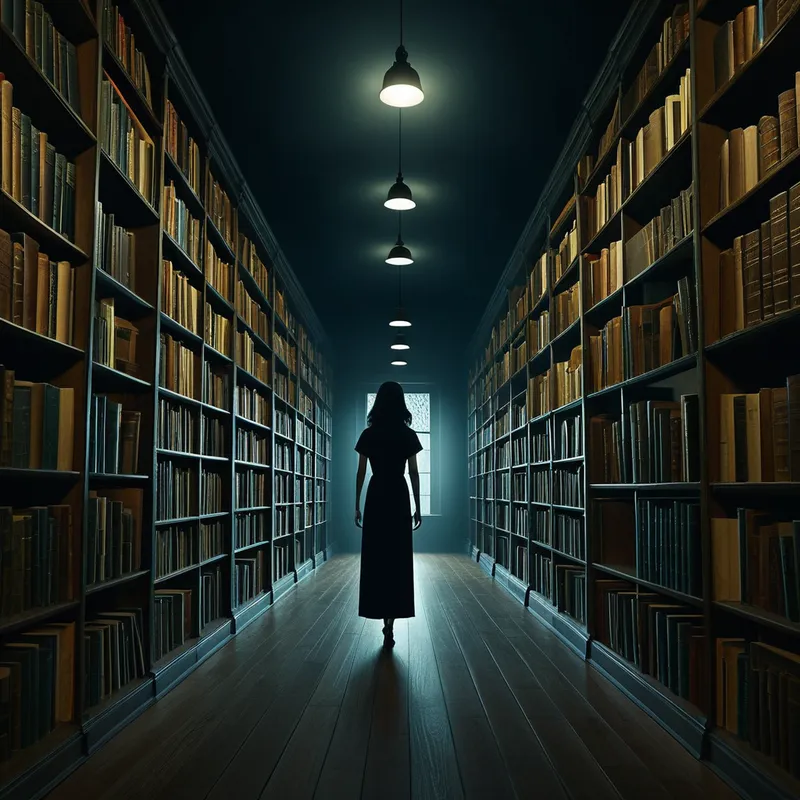
To dream of the Library of Alexandria is to dream at the frontier of one’s own psyche. The dreamer may wander endless, labyrinthine halls, searching for a specific, crucial text they can never find—symbolizing a search for a lost memory, a forgotten talent, or a core piece of self-understanding that feels just out of reach. The books may be in languages they cannot read, representing unconscious content not yet ready to be translated into conscious understanding.
A somatic sense of awe mixed with anxiety is common. The sheer scale induces a sublime vertigo, the weight of all one does not know. To dream of the library burning is a profound crisis dream. It often coincides with a life transition so radical it feels like the annihilation of the old self—a career loss, the end of a relationship, a spiritual awakening. The body may feel the heat, or a profound, chilling silence afterward. This is the psyche’s dramatic enactment of de-integration, the necessary clearing of the inner shelf to make space for new, more authentic growth.
Alchemical Translation
The myth models the full arc of individuation, the alchemical opus. The building of the library is the coniunctio, the conscious ego’s noble effort to gather and order the disparate elements of the psyche. It is a phase of collection, study, and expansion.
The fiery destruction is the crucial, dreaded stage of calcinatio and mortificatio. Here, the treasured contents of the conscious mind—our beliefs, our stored-up knowledge of who we are, our life’s narrative—are subjected to the purifying fire of reality, suffering, or deep introspection. This is not a failure of the Self, but its deepest operation. The ego, identified as the “librarian,” must witness its life’s work turn to ash.
The triumph of the myth lies not in a physical rebuilding, but in the psychic transmutation that follows. The ashes of the burned scrolls become the prima materia for the next stage.
The scholar who survives the fire is no longer merely a curator of external knowledge. He or she becomes the living text. The knowledge, now internalized and stripped of its literal form, becomes wisdom. It becomes intuition. It becomes the ability to generate new thought from the fertile black soil of loss. The process moves from knowledge-as-possession to knowing-as-being. The new library is not a building, but a state of mind—resilient, humble, and forever aware that true understanding is a living flame, not a preserved scroll. The individual learns to hold the tension between the desire to preserve and the necessity to destroy, between memory and forgetting, finding their sovereign center in the very space where the great fire once raged.
Associated Symbols
Explore related symbols from the CaleaDream lexicon: