Li Myth Meaning & Symbolism
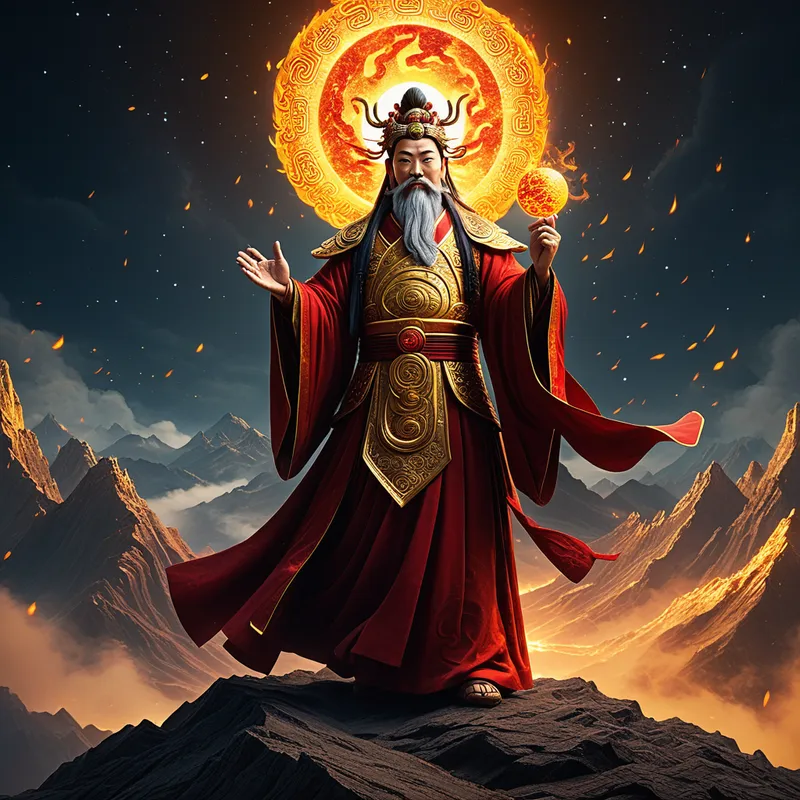
The myth of Li, the celestial god of fire, who descends to bring light and forge order from primordial chaos, embodying the sacred spark of consciousness.
The Tale of Li
In the time before time, when the breath of the cosmos was still and heavy, the world was not a world. It was a vast, formless egg, a womb of swirling Hundun. Within it, shadow and substance danced an endless, silent waltz, neither light nor dark, neither high nor low. There was no name for things, for there were no things to name. Only the potential, thick as ink and cold as the space between stars.
Then, from the highest reaches of the Dao, a stirring began. It was not a sound, but a gathering warmth. A presence coalesced, born not of flesh but of pure celestial principle. This was Li. He was the embodiment of the separating flame, the spirit that discerns and divides. In his essence burned the need to see, to know, to distinguish the mountain from the valley, the day from the night.
Looking down upon the silent, grey expanse of the primordial egg, Li felt not disdain, but a profound calling. This chaos was not void; it was a canvas awaiting the first stroke. With a will that resonated through the fabric of potential, he began his descent. He did not walk, for there was no ground. He became his journey, a streak of brilliant gold and crimson piercing the uniform grey.
Where his light touched the Hundun, a great sigh seemed to echo. The mist recoiled, not in fear, but in transformation. The lighter, warmer essences rose, drawn upward by his fiery nature, beginning to spin and gather into a luminous canopy—the first hints of the heavens. The heavier, cooler essences sank, settling and thickening into the dark, fertile promise of earth. This was the great separation, the Li of the cosmos itself.
But his work was not done. The newborn earth was dark and silent, and the new sky was empty. Li raised his hands, and from his palms blossomed twin suns of pure fire. He cast one into the sky, where it hung, a blazing heart bringing warmth, vision, and the very concept of "day." The other he pressed into the heart of the world itself, a subterranean furnace to warm the roots of mountains yet unborn and stir the waters in their deep beds. With a final, shaping breath, he traced the courses of rivers with a finger of flame and defined the peaks of mountains with a glance.
And so, from the formless, Li forged form. From the silent, he initiated rhythm. He did not create substance from nothing, but awakened the latent order within the all-potential. Where there was once only the whisper of maybe, now there was the clear song of this and that. He stood then, a figure of fire upon a world of solid stone, the first architect of reality, his task complete. The canvas was prepared. The story could begin.

Cultural Origins & Context
The figure of Li is deeply woven into the earliest layers of Chinese mythological thought, appearing in fragments from the Warring States period and texts like the <abbr title=""Annals of the Bamboo Books", an ancient chronicle">Zhushu Jinian. He is often identified as one of the <abbr title=""Three Sovereigns", legendary god-kings who established civilization">San Huang, specifically the <abbr title=""Flame Emperor" or "Red Emperor", a culture hero">Yandi, or as a divine minister under the Huangdi.
This myth was not a single, canonical story recited in temples, but a cosmological principle expressed through ritual and philosophy. It functioned as an etiological narrative, explaining the fundamental architecture of the experienced world: why there is sky above and earth below, light and dark, heat and cold. Li’s act was the primal precedent for all human acts of making order—building a home, founding a city, establishing a calendar. He modeled the civilizing impulse itself. The myth was passed down by court historians and philosophers who saw in Li’s descent a metaphor for the emergence of consciousness and culture from the undifferentiated state of nature. His fire was the sacred spark of ritual, technology, and social distinction.
Symbolic Architecture
At its core, the myth of Li is a master narrative of differentiation. It symbolizes the necessary, sacred violence of consciousness as it emerges from the unconscious.
The first act of creation is not making, but seeing. It is the courageous separation of self from the womb of all-potential.
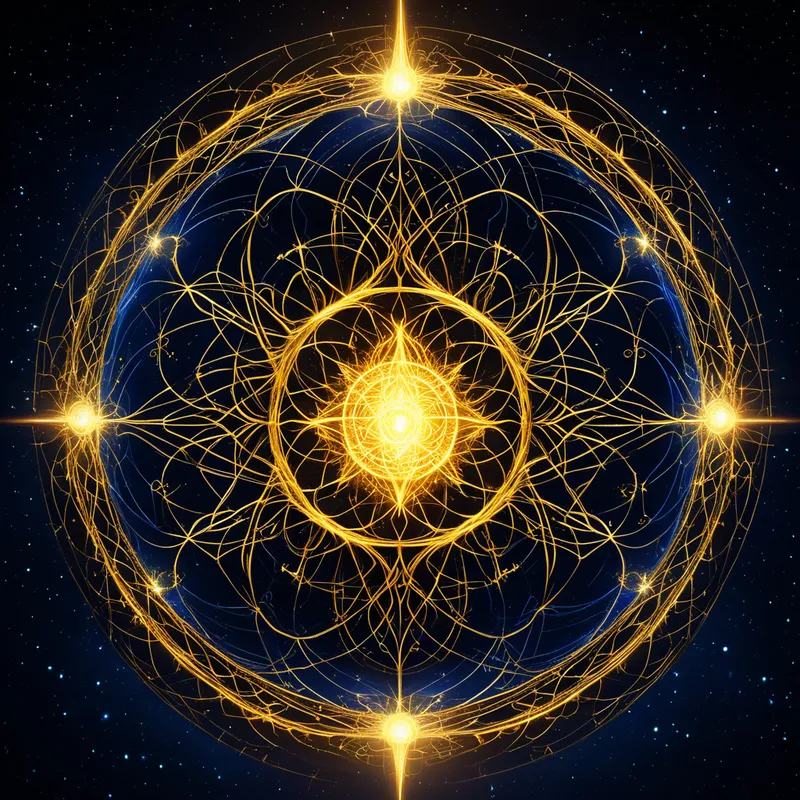
Hundun represents the primal, unconscious state—the blissful, terrifying unity where all opposites are merged. It is the inner world before ego, before identity, where thoughts, feelings, and potentials swirl without boundary. Li is the archetypal force that ends this state. His fire is the light of attention, the heat of discernment. He does not destroy Hundun; he organizes it. The rising Yang and sinking Yin are the birth of psychic duality: subject and object, conscious and unconscious, known and unknown.
Psychologically, Li represents the heroic ego-function in its most essential and noble task: bringing light to the inner chaos. He is the principle that says, "I am here, and this is different from that." His journey from the Dao into chaos mirrors the descent of awareness into the murky depths of the psyche to perform the foundational work of distinction. The twin fires—one celestial, one chthonic—symbolize the need for this illuminating consciousness to operate on both the "higher" levels of spirit and idea and the "lower" levels of instinct and the body.
The Dreamer's Resonance
When the archetype of Li stirs in the modern dreamer, it signals a profound somatic and psychological process: the struggle to bring form to inner formlessness. This is not the drama of battling monsters, but the more fundamental anxiety of confronting the primordial mist within.
One might dream of being in a familiar place—a childhood home, an office—that has become eerily indistinct. Walls lose their solidity, merging into grey fog. Paths disappear. This is the Hundun of the psyche, often experienced during life transitions, creative blocks, or depressive episodes where categories collapse and meaning dissolves. The somatic feeling is one of weight, cold, and disorientation.
The Li-process in the dream may manifest as the sudden appearance of a single, unwavering light source (a candle, a flashlight beam), the discovery of a tool for marking or cutting, or the act of deliberately naming objects in the fog. The dream-ego is tasked with the lonely, patient work of defining boundaries. It is a dream of re-establishing inner order, of separating confused emotions, of distinguishing a personal desire from an imposed expectation. The resolution comes not with a battle won, but with a landscape clarified.
Alchemical Translation
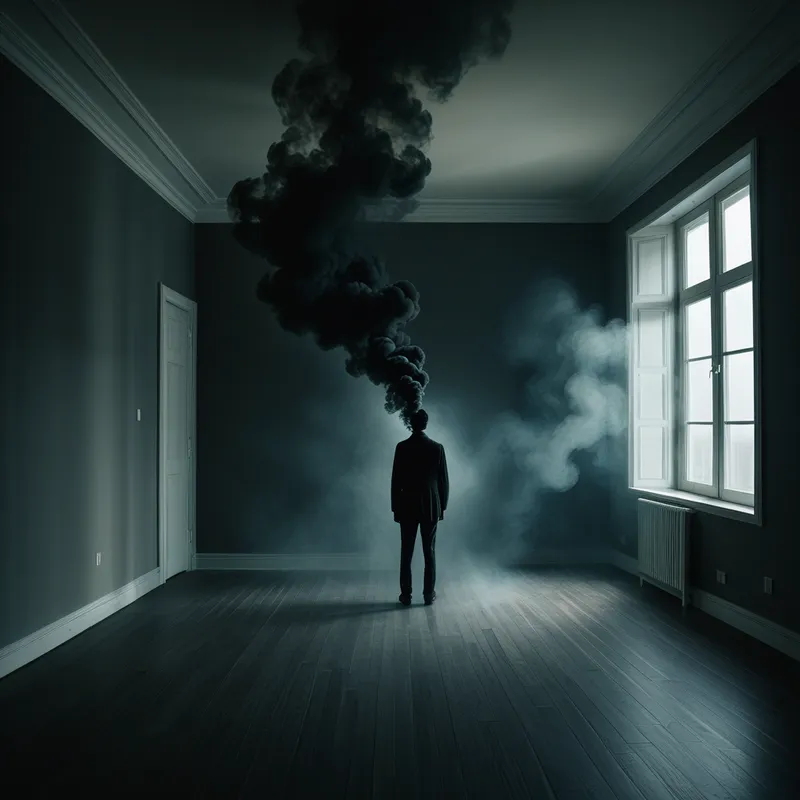
The individuation journey modeled by Li is the alchemy of self-creation through conscious distinction. It is the foundational stage of psychic transmutation, where the lead of undifferentiated potential is heated by the fire of attention to begin its transformation into the gold of a coherent Self.
Individuation begins not with becoming someone special, but with becoming someone at all—a distinct point of awareness in the field of being.
For the modern individual, the "primordial chaos" is the inherited and internalized mass of unlived life: unexamined family patterns, cultural conditioning, bundled traumas, and dormant talents—all swirling in an inner Hundun. To "descend like Li" is to turn one's conscious focus into this inner fog. It is the difficult, fiery work of introspection and discrimination. This means saying, "This pain is mine, but this expectation is not." "This anger belongs to me, but its root is over there." "This creative impulse is this shape, not that one."
The "twin fires" represent the dual focus required. The celestial fire is the light of understanding, insight, and spiritual aspiration. The chthonic fire is the heat of embodied feeling, instinctual truth, and grounded passion. True self-creation requires both: insight must warm the instincts, and passions must illuminate the ideals. The process is often experienced as a burning away of false unities—the comfortable illusions that keep us fused with our chaos. It is a sacred violence against inner vagueness.
Ultimately, Li’s myth teaches that order is not imposed from outside, but revealed from within. The coherent self, the solid world of meaning we inhabit, is not found ready-made. It is forged, moment by moment, by the courageous, sustained application of our own sacred, discriminating fire to the rich, waiting chaos of our own being. We do not escape the Hundun; we become its architect.
Associated Symbols
Explore related symbols from the CaleaDream lexicon: