Lex Duodecim Tabularum Myth Meaning & Symbolism
The sacred struggle to carve public law from private power, forging the foundational code that transformed Rome from a tribal city into a world-shaping republic.
The Tale of Lex Duodecim Tabularum
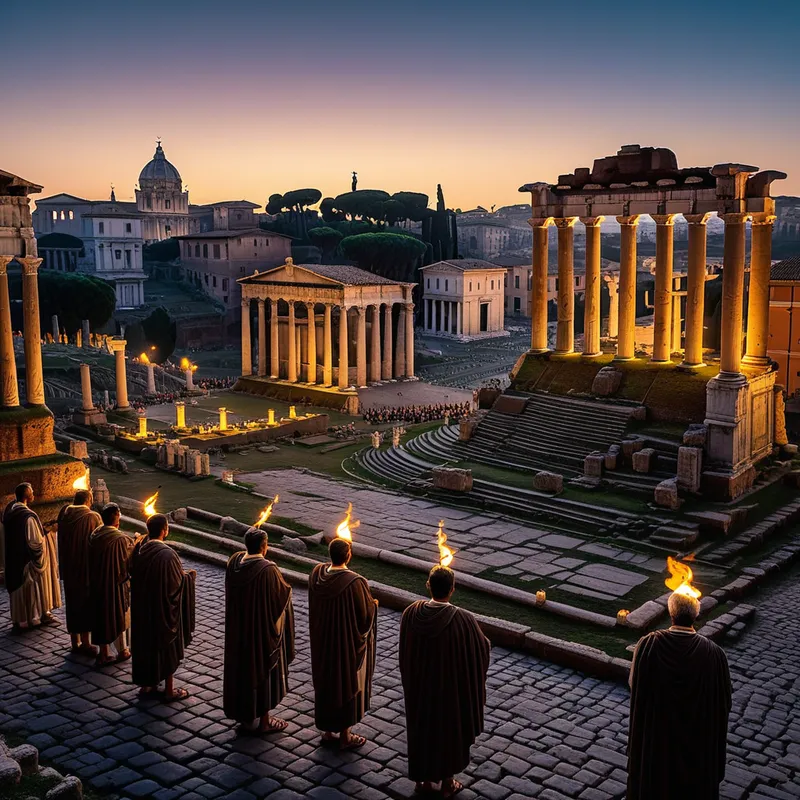
Hear now, and listen well, for I speak of a time when Rome was young, a city of brick and ambition, yet ruled by the old blood and the secret law. The air in the Forum was thick with the smell of sacrifice and the sharper scent of discontent. The common folk, the plebeians, walked with heads bowed, not just under the sun, but under the weight of a justice they could not see, could not read, could not challenge. The law was a whispered thing, a patrimony of the patricians, spoken from the porches of their great houses like the will of the gods themselves.
The plebeians had had their fill of whispers. Their backs, bent from labor and war, finally straightened in a collective refusal. They did not take up swords against their own city; instead, they performed a more profound act of defiance. They walked. In a solemn, silent exodus, they left the walls of Rome and encamped upon the Mons Sacer, the Sacred Mount. There, under the open sky, they built not a camp of war, but a city of absence. Rome’s forges fell silent, her markets empty, her legions hollow. The city itself became a ghost, haunted by the labor that had built it.
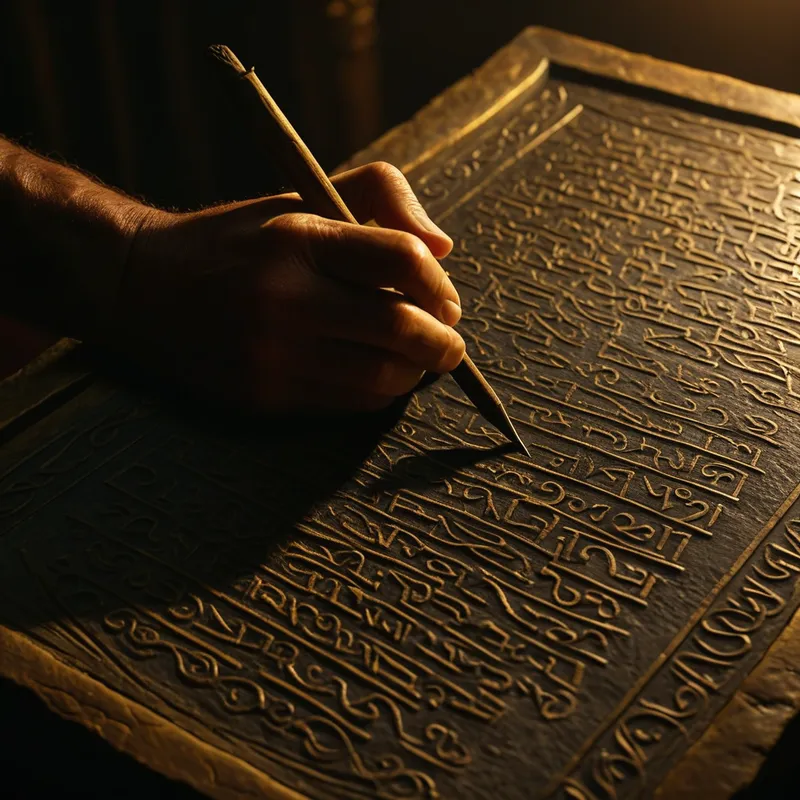
In the silent Capitoline, the patricians felt the chill of this new, quiet power. The gods demanded order, and order was unraveling. The Senate, that council of elders, knew that a city divided against its own heart could not stand. A pact was struck, a tense and fragile thing. The plebeians would return, but the law would no longer be a mystery. It would be made plain, set in bronze for all to see.
And so, ten men were chosen—the Decemviri. They were given supreme power, the consuls and tribunes stepping aside. For a year, they labored not in the field of battle, but in the deeper field of principle. They listened to the grievances of shepherd and senator alike. They traveled to the great Greek city of Athens, to learn from the wisdom of Solon. They sought not to invent, but to discover the bones of justice upon which the flesh of society must hang.
Then came the day of revelation. In the heart of the Forum, where all roads of public life converged, the twelve tablets were erected. They were not adorned with gold or the faces of heroes. They were stark, severe, and magnificently public. The crowd gathered, a sea of anxious faces. A scribe, his voice clear and unadorned, began to read the words carved there: “Si in ius vocat, ito.” If he summons you to court, you shall go. The law spoke of debt and property, of injury and inheritance, of the sacred rights of fathers and the solemn duties of sons. It spoke of procedure, of the space between accusation and judgment. It was not gentle, but it was clear. It was not merciful in every line, but it was blind in its application. For the first time, the shadow of the patrician porch was dispelled by the hard, clear light of the published word. The mystery was over. The republic had found its spine.
Cultural Origins & Context
The story of the Lex Duodecim Tabularum is not a myth of gods and monsters, but the foundational civic myth of the Roman Republic. It occupies a sacred space between history and legend, a story Romans told themselves about who they were and how they came to be a people of law. While the traditional date is 451-450 BCE, its precise historicity is less critical than its profound cultural function.
It was passed down not by poets singing of epic voyages, but by orators, statesmen, and schoolmasters. Every Roman schoolboy was required to memorize the Twelve Tables, long after the original bronze tablets were destroyed (traditionally in the sack of Rome by the Gauls in 390 BCE). The statesman Cicero wrote that learning them by heart was a fundamental rite of passage. The myth served a crucial societal function: it legitimized the Republic’s legal order by rooting it in a moment of sacred crisis and resolution. It transformed law from a tool of class power into a publicly witnessed covenant, the very mos maiorum (custom of the ancestors) made manifest. It was the story of how chaos—the secession—was alchemized into structure, creating the stable container in which Roman virtue and ambition could grow.
Symbolic Architecture
Psychologically, the myth represents the monumental shift from a psyche (or a society) governed by unconscious, archaic, and parental complexes to one structured by a conscious, differentiated ego. The patricians and their secret law symbolize the unconscious tyranny of the familial and tribal patria potestas (power of the father), where rules are arbitrary, unspoken, and based on raw power dynamics.
The law carved in public view is consciousness itself emerging from the shadow of instinct.
The plebeian secession to the Mons Sacer is not mere rebellion; it is a necessary withdrawal of psychic energy from an oppressive system. It is the ego’s refusal to participate in its own oppression, creating the empty space—the crisis—that forces transformation. The Decemviri symbolize a temporary, transcendent function—the Self archetype intervening to mediate between warring opposites (plebeian and patrician, emotion and tradition, chaos and rigidity). Their journey to Athens represents the ego’s search for objective principles beyond its own familial trauma.
The Twelve Tables themselves are the ultimate symbol: the codified superego. But this is not the harsh, internalized critic. This is the superego as a necessary, civilizing structure. It is the internal constitution that allows for complex societal (and intrapsychic) interaction. It replaces the capricious “father’s will” with the impartial “letter of the law,” enabling predictability, fairness, and the possibility of true individuality within a collective.

The Dreamer's Resonance
When this myth stirs in the modern dreamer, it often manifests as a profound somatic tension between chaos and containment. One might dream of being lost in a city with no street signs (the unspoken law), or of violently arguing in a court where the judge speaks an unknown language. Conversely, one might dream of meticulously organizing a chaotic room into labeled boxes, or of inscribing a personal manifesto onto a wall for all to see.
The psychological process at work is the individuation drive confronting a systemic, internalized injustice. The “plebeian” part of the psyche—the feeling function, the needs of the inner child, the creative impulse—feels oppressed by an archaic, “patrician” internal authority (perhaps a critical inner parent, a rigid belief system, or a corporate persona that demands conformity). The dreamer is in the pre-secession tension. The somatic feeling is often a tightness in the chest or throat—the unspeakable grievance. The dreamwork involves recognizing this internal “secret law” and finding the courage for a psychic secession: setting a boundary, voicing a long-held need, withdrawing energy from a toxic internal dynamic to force a renegotiation of the psyche’s own constitution.

Alchemical Translation
The alchemical process modeled here is coagulatio: the fixing of the volatile into the solid. The prima materia is the hot, volatile conflict of social and psychic forces—the resentment, the fear, the entitlement. The secession is the separatio, the necessary division that clarifies the opposing elements. The work of the Decemviri is the sacred coniunctio oppositorum (conjunction of opposites), not by blending them into a bland unity, but by finding a third, transcendent principle—objective law—that can hold them both in a stable tension.
The individuated Self is not the rebel who destroys the temple, nor the priest who guards its empty rituals, but the lawgiver who inscribes its living principles anew for all to see.
For the modern individual, the alchemical translation is the move from being subject to one’s internal, unconscious “patricians” (complexes, triggers, inherited narratives) to becoming the author of one’s own conscious code. This is not about crafting a rigid set of self-punishing rules. It is the profound act of making the unconscious conscious, of “publishing” your values, boundaries, and core principles to yourself. It is writing your own Twelve Tables: a personal constitution born not from rebellion alone, but from the hard, sacred work of listening to all parts of the self—the noble and the common, the traditional and the revolutionary—and forging from their conflict a durable, visible structure for a responsible life. This is the foundation upon which the temple of the individual psyche is built, stone by conscious stone.
Associated Symbols
Explore related symbols from the CaleaDream lexicon: