Leonidas I Myth Meaning & Symbolism
A king chooses a narrow pass as his throne, trading his life for a nation's soul. The ultimate sacrifice becomes an immortal story of defiance.
The Tale of Leonidas I
Hear now of the day the mountain pass became a throne, and a king’s death became a nation’s soul.
The sun, Helios, rose not with warmth but with a glint of warning over the narrow gates of Thermopylae. The air, thick with salt from the Malian Gulf and the dust of countless marching feet, tasted of iron and inevitability. From the east came a shadow that drank the light—the host of Xerxes, son of Darius, a river of empire so vast its murmuring advance was the sound of the earth itself groaning. Gold and silver, linen and leather, the snorting of horses and the silent, terrible discipline of the Immortals: this was the tide that sought to wash over Hellas and erase its name from memory.
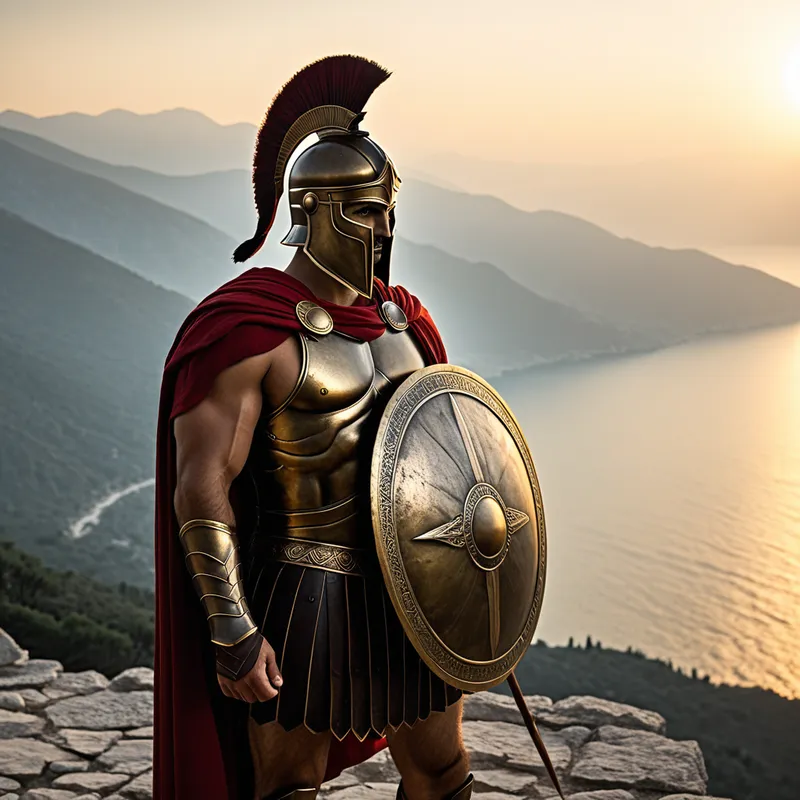
And before this tide stood a wall. Not of stone, but of flesh, bronze, and spirit. Three hundred Spartiates, and a few thousand more from other cities, their hearts beating in the dread and glorious rhythm of the phalanx. At their center was Leonidas, son of Anaxandridas. He did not stand before his men; he stood as the first man, the point of the spear. His helmet was cool in the morning air, his crimson cloak—the color of life and the deeper color of death—stirring in the hot wind. In his eyes was not the fire of rage, but the deep, still water of a choice already made. The Pythia had spoken: either a king of Sparta must die, or Sparta itself would be lost. Leonidas had heard the whisper of the Moirai in that oracle. He had come not to win a war, but to fulfill a destiny.
For two days, the wall held. The pass was so narrow that the Persian numbers meant nothing. The long dory spears of the Greeks found their marks, the overlapping aspides forming an unbreakable shell of bronze and oak. The shrieks of clashing metal, the guttural cries of the xiphos finding its home, the heavy, final thud of bodies falling—these were the rhythms of those days. The Spartans fought with a terrible, graceful efficiency, a dance of death they had practiced since boyhood. They fought in the shade, they joked, they died.
Then came the betrayal. A local shepherd, Ephialtes, hungry for gold, whispered of a hidden path that led behind the Greek wall. The Moirai’s shears hovered. When the news reached him, Leonidas did not flinch. He dismissed the allies, saving them for the battles to come. But the Spartans, his three hundred, and the brave Thespians and Thebans who chose to remain, would stay. This was the moment. The sacrifice was not to be shared; it was to be consummated.
On the third day, he led them out from the wall, into the wider part of the pass. He turned his face to the rising sun, and to the endless sea of enemies. “Eat well, men,” he is said to have told them that final morning, “for tonight we dine in Hades.” They fought until their spears shattered. They fought with swords, then with hands and teeth. Leonidas fell. A fury erupted over his body—Spartans fighting not for victory, but for the honor of their king’s corpse. They retrieved him, fought again, fell again. Finally, the Persians overwhelmed them, burying the last defenders under a storm of arrows.
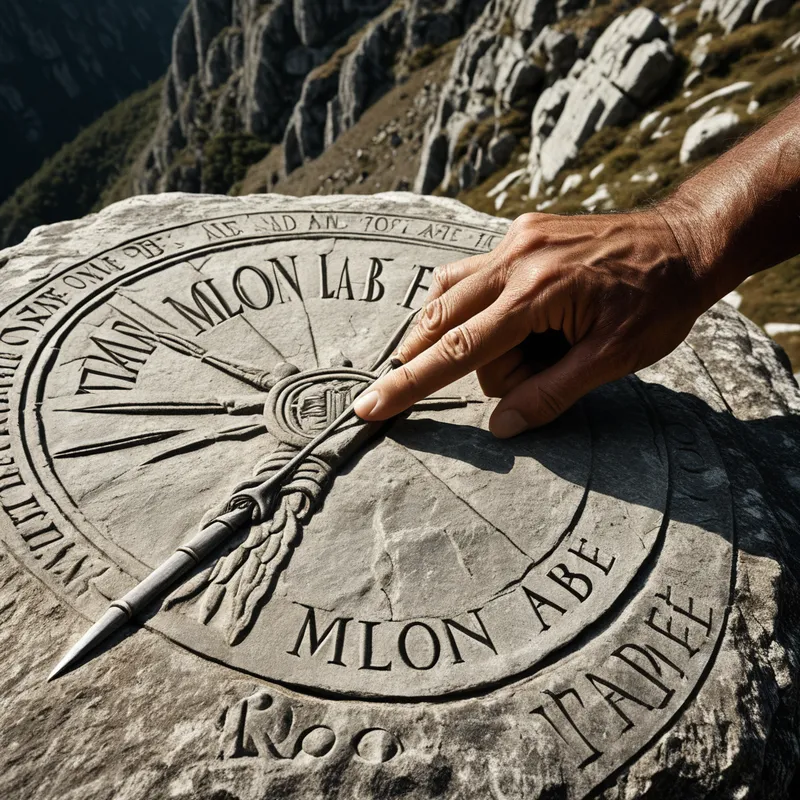
The tide passed over the wall of bodies. But the story of the wall did not die. It was etched into the very soul of the West with the words later carved upon a stone at that pass: Stranger, go tell the Spartans that here we lie, obedient to their laws.
Cultural Origins & Context
The story of Leonidas is a unique artifact, suspended between the stark light of history and the deepening shadows of myth. Its primary source is the historian Herodotus, writing just decades after the Persian Wars. For Herodotus and the Greeks, Thermopylae was not merely a battle; it was a moral and existential parable.
In the fiercely competitive world of the Greek polis, Sparta was an enigma—a society entirely geared for military excellence and communal discipline. The myth of Leonidas served a crucial function for both Sparta and the wider Hellenic world. For Sparta, it was the ultimate validation of their brutal agoge system and their ideals of austerity, courage, and obedience to the state. Leonidas was the perfect homoios (equal), the king who died as the first among equals.
For other Greeks, often skeptical or fearful of Sparta, the story was reframed as a Panhellenic sacrifice. Leonidas became the shield of all Greece. The tale was told in symposia, recited by poets, and became a foundational pillar of Greek identity—a story of the few defending the many, of civilization making its defiant stand against what they perceived as the “barbarian” despotism of the East. It was a story that explained why they, the Greeks, were different, and why they had won.
Symbolic Architecture
At its core, the myth of Leonidas is not about military tactics, but about the geometry of the soul facing the infinite. It maps a profound psychological landscape.
The true throne is not a seat of comfort, but the ground one chooses to die upon. Sovereignty is the conscious acceptance of a limiting form.
The Narrow Pass (Thermopylae) is the central symbol. It represents the critical, constricted point of choice—the moment in a life, or in the life of a psyche, where expansion is impossible, and one must stand firm in a defined shape. It is the ego, conscious and bounded, facing the overwhelming, undifferentiated forces of the unconscious (the Persian host). To flee the pass is to be dissolved; to hold it is to define oneself through resistance.
Leonidas himself symbolizes Conscious Sovereignty. He is the part of the psyche that can hear a terrible oracle (the call of destiny or Self) and, without flinching, align with it. His sacrifice is not a failure, but the ultimate act of will—choosing how and for what one will be overcome.
The hero is not the one who conquers the monster, but the one who chooses the monster that will consume him, thereby giving his consumption meaning.
The Betrayal by Ephialtes represents the inevitable shadow, the flaw in the terrain of the conscious self. No defense is perfect; the unconscious always finds a path around our walls. The myth acknowledges that the conscious stance will, eventually, be overwhelmed. The triumph is not in eternal victory, but in the quality of the stance before the end.
The Dreamer's Resonance
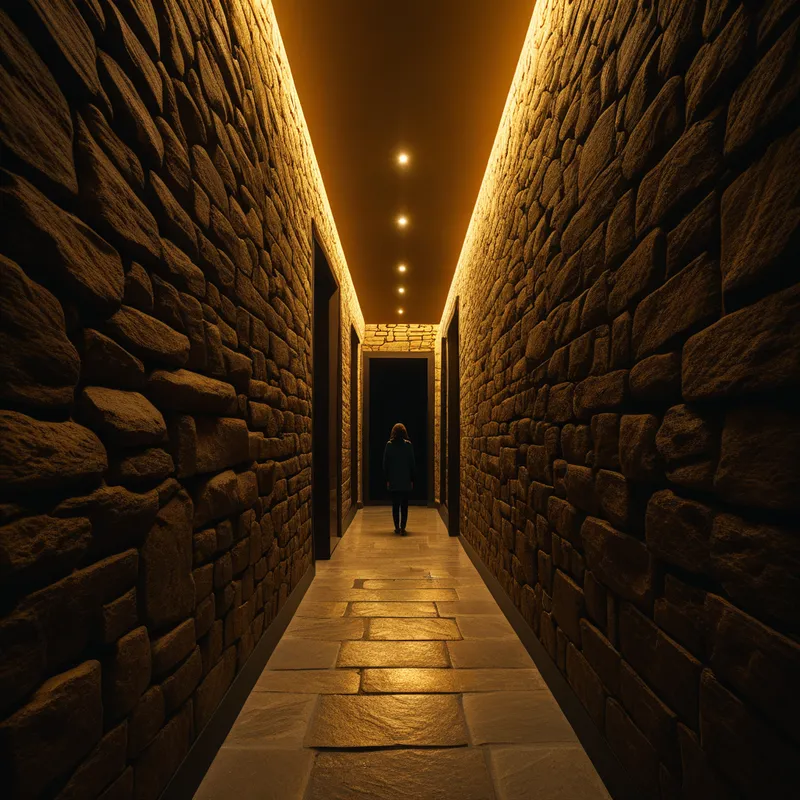
When this myth stirs in the modern unconscious, it rarely appears as a historical reenactment. Instead, one dreams of constriction under pressure. You may dream of being in a hallway that narrows dangerously, of holding a door against a immense, formless force, or of standing alone before a vast, silent audience or authority.
Somatically, this can feel like a tightening in the chest and shoulders—the body preparing to brace, to become a wall. Psychologically, this dream pattern emerges when the individual is facing a situation that demands an impossible stand: a moral dilemma at work, the defense of a personal boundary against overwhelming familial or social pressure, or an internal crisis where a cherished part of the self feels besieged by anxiety or depression.
The dream is asking: What is your Thermopylae? What principle, value, or nascent sense of self is so essential that you are willing to be diminished, or even "die" in some symbolic sense, to affirm its reality? The terror in the dream is not of the fight, but of the choice to stand and fight at all.
Alchemical Translation
The alchemical process mirrored in Leonidas’s myth is that of Calcinatio—the burning down to a pure, white ash. It is the individuation journey of the man or woman who must discover their true sovereignty, not through acquisition and expansion, but through radical, conscious limitation and sacrifice.
The first stage is the Oracle—the call from the Self (the Delphic pronouncement). This is the inner knowing of a necessary, fateful confrontation. The ego (Leonidas) must heed this call, however dreadful.
The second is the Choice of the Vessel—the selection of the narrow pass. In our lives, this is the conscious decision to engage the conflict on ground of our own choosing, to give it a form. This might mean having the difficult conversation, setting the non-negotiable boundary, or committing to a path that guarantees friction.
The alchemical gold is not forged in the fire of victory, but in the ashes of a sacrifice willingly made. The king does not save his kingdom by living, but by becoming the memory that makes the kingdom worth saving.
The final, transcendent stage is Transmutation Through Defeat. The Persian host, the overwhelming force, represents all that is not-you: collective pressures, inherited complexes, the sheer weight of reality. By allowing this force to break upon the conscious, sovereign stance until that stance is consumed, a miracle occurs. The ego is not merely destroyed; it is transformed into story. The literal, historical Leonidas died. But the myth of Leonidas became an indestructible psychic fact—a symbol of courage that has inspired for millennia.
For the modern individual, the alchemical translation is this: our greatest power lies not in avoiding our personal Thermopylae, but in marching to it with eyes open, defining its narrow confines as sacred ground, and understanding that our most devastating defeats—if met with conscious sovereignty—can become the cornerstone of an unassailable inner legend. We do not overcome fate. We marry it in a ceremony of our own choosing, and from that union is born meaning itself.
Associated Symbols
Explore related symbols from the CaleaDream lexicon: