Lei niho palaoa Myth Meaning & Symbolism
A myth of a chief's sacrifice, transformed into a whale-tooth pendant, binding the living to the ancestors and the deep ocean's wisdom.
The Tale of Lei niho palaoa
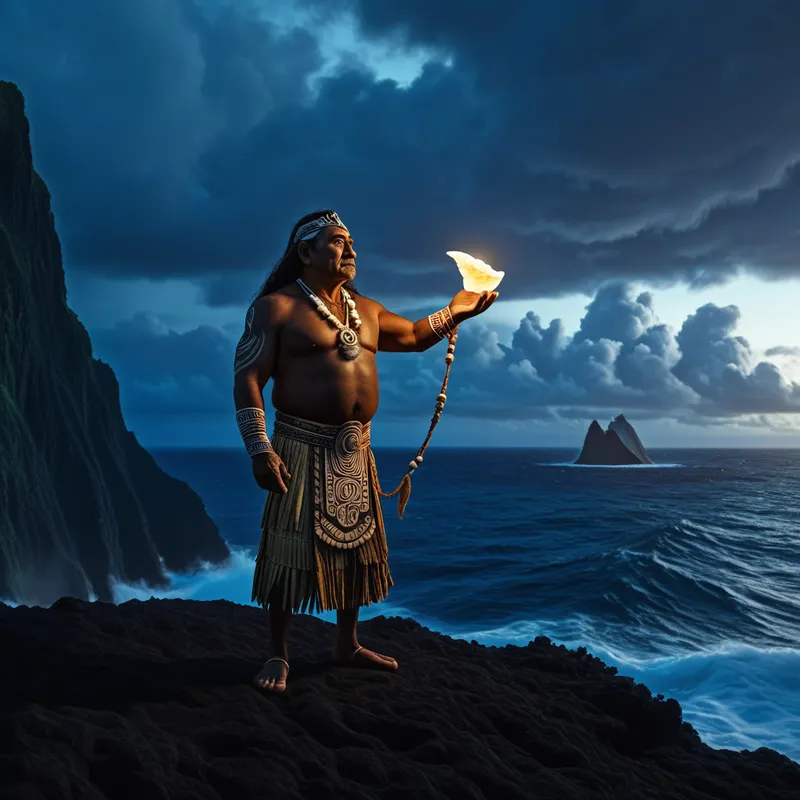
Listen. The story does not begin on the land, but in the deep, the moana. It begins with a silence so profound it is a sound—the sound of the great paloa descending into the black. On the island, a great chief felt this silence in his bones. His name is lost to the waves, but his mana, his sacred power, was like the pressure of the deep.
He was a navigator who had read the stars until they were etched behind his eyes, a warrior whose shadow was long upon the sand. Yet, a hollow wind blew through his spirit. His people were strong, but the connection to the aumakua felt thin, a frayed cord. The songs of creation, the oli, seemed to echo from a great distance.
One night, a storm tore at the sky, sent by the sea god Kanaloa. The chief stood on the black cliffs, salt stinging his face, and made a vow not to the roaring wind, but into the quiet center of the storm. He offered not a pig, not a harvest, but the very anchor of his terrestrial power: his life, willingly given, to forge a new bond between the people of the land and the sovereigns of the sea.
He walked into the churning water, a descent into the womb of Papa. The sea did not take him with violence, but with a terrible, deliberate embrace. In the crushing dark, his body was unmade. Bone, breath, and mana were scattered like star-dust in the deep current.
Years passed. The people mourned, and the story of his sacrifice became an oli, whispered to children. Then, a whale hunter, far out on the ink-blue sea, harpooned a mighty paloa. As they hauled the immense being onto the canoe, a miracle gleamed. Embedded in the great creature’s jaw, grown into the very bone, was a tooth unlike the others. It was smoother, denser, humming with a familiar warmth. When the carver held it, his hands knew. With tools of basalt and shark tooth, he worked, not carving, but revealing. From the whale’s tooth emerged the form it had always held: the curved, potent shape of the chief’s own canine, transformed. It was strung on thousands of finely braided threads of human hair, each strand a prayer, a memory, a thread of lineage. The lei niho palaoa was born. When the new chief wore it upon his chest, the people did not see ornament. They felt the deep current of connection pull taut once more. They heard, in the stillness, the old chief’s vow fulfilled—a bridge of bone and bravery between the world above and the world below.
Cultural Origins & Context
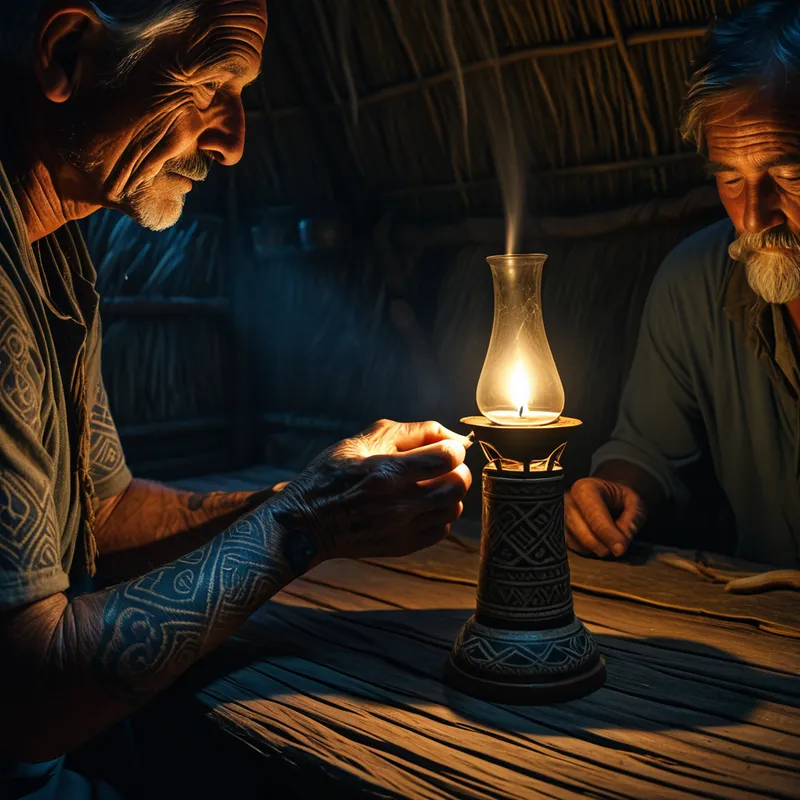
The lei niho palaoa is far more than a myth; it is a material incarnation of a core Polynesian cosmological principle. Originating primarily in Hawaiʻi, these pendants were among the most sacred tapu objects, worn exclusively by high-ranking aliʻi. The myth surrounding it was not a single, fixed tale but a living narrative embedded in the object’s very existence. It was passed down through the kahuna and chanted in koʻihonua, which traced the lineage of the chiefs back to the gods.
Its societal function was multifaceted. Primarily, it was a kinetic document of legitimacy and mana. To wear the pendant was to visibly carry the weight of ancestry, demonstrating a direct, unbroken line from the gods and the heroic, self-sacrificing forebear. Secondly, it acted as a metaphysical contract. The whale (paloa) was a creature of Kanaloa’s realm, a symbol of the deep, unknowable origins and the vast psychic unconscious of the world. The human hair cord represented the world of light, people, and conscious lineage. The pendant was the knot that bound them, ensuring the fertility of the land (from the sea’s rains) and the wisdom of the chief (from the ancestral deep).
Symbolic Architecture
At its heart, the myth is a profound alchemy of substance and identity. The chief’s sacrifice represents the ultimate act of ego dissolution for a transpersonal purpose. His individual life is surrendered to become part of a larger, enduring pattern—the lineage itself.
The most sacred power is not taken, but forged in the voluntary surrender of one form to serve a greater one.
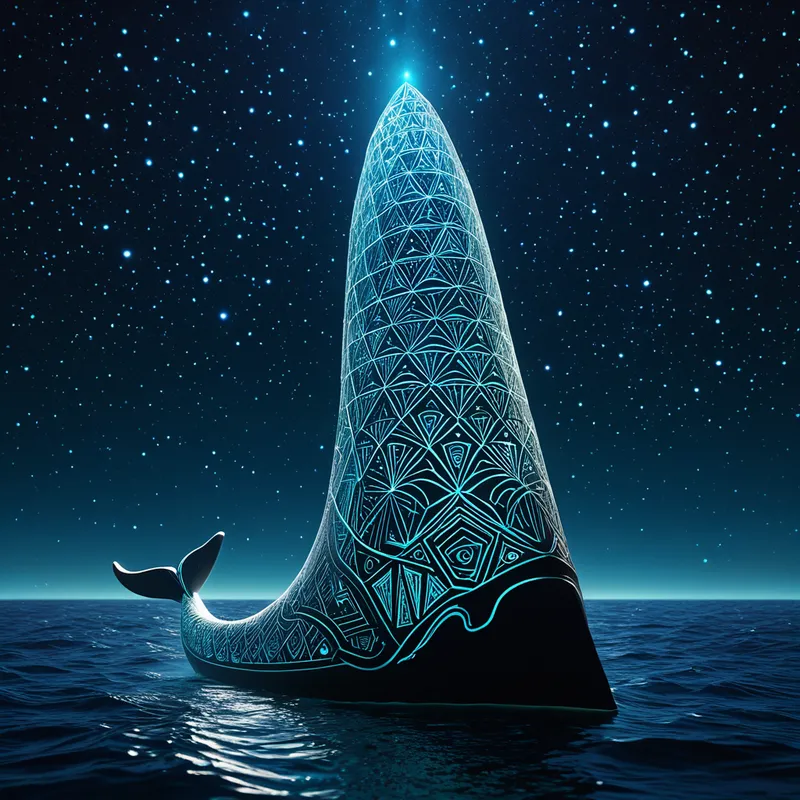
The whale tooth is the perfect symbol of this transmutation. It is a thing of both death and durability, a weapon that becomes an object of peace and connection. Its incorporation into the whale signifies a gestation period in the unconscious—the idea or the sacrifice must be “digested” by the depths before it can return as wisdom. The braided human hair cord is equally critical. It is not mere string, but the collective life-force of the community, the literal and figurative tying of generations. Thus, the pendant symbolizes the axis mundi, the world pillar: the whale tooth is the root in the oceanic underworld/unconscious, the cord is the trunk in the human world/consciousness, and the wearer is the crown reaching toward the celestial realm.
The Dreamer’s Resonance
For a modern dreamer, to encounter the image of the lei niho palaoa is to be called to a profound process of psychic integration. It often appears when one is grappling with a necessary “death”—the end of a career, a identity, a long-held belief. The dream may feature finding a heavy, smooth object (the tooth) or the laborious, meticulous act of braiding (the cord).
Somatically, this can feel like a pressure on the chest or sternum—the very place the pendant rests. Psychologically, it signifies the process of turning personal trauma, loss, or sacrifice into a core of identity that is no longer personal, but archetypal. The dream asks: What part of you must be willingly given to the “deep”—the unconscious—to be transformed? What raw, perhaps painful, experience (the tooth) needs to be carefully integrated with the threads of your skills, relationships, and history (the cord) to create a new center of gravity and authority in your life? It is a dream of ancestral healing, but not of blood ancestors alone; it is healing your connection to the deep, ancestral layers of your own psyche.
Alchemical Translation
The myth of the lei niho palaoa is a masterful map of the individuation process. The journey begins with the conscious ego (the chief) recognizing a profound disconnection from the Self (the ancestral/unconscious source). The inflation of personal power has led to a spiritual famine.
The voluntary sacrifice is the crucial nigredo, the darkening. It is the conscious decision to submit the ego’s agenda to a larger process. This is not annihilation, but dissolution for the purpose of recombination. The ego’s structures are broken down in the saline depths of the unconscious (the sea).
Individuation is not about becoming who you are, but discovering what you are made from, and consenting to be remade.
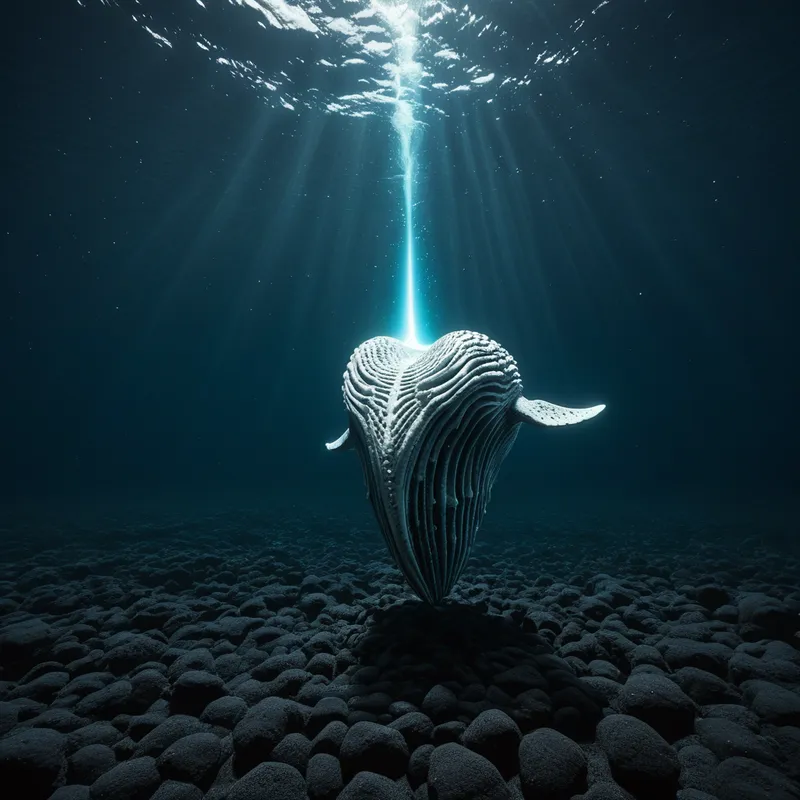
The gestation within the whale represents the albedo, the whitening. In the belly of the great creature—a symbol of the nurturing, containing aspect of the unconscious—the scattered elements are purified and prepared. Finally, the carving and braiding is the rubedo, the reddening. It is the conscious, careful work of the psyche (the carver) to bring the new, integrated symbol into being. The resulting lei niho palaoa is the Philosopher’s Stone of this inner work: a tangible, wearable center of gravity. It represents the achieved state where one’s personal identity is no longer at odds with the transpersonal forces of lineage and the deep unconscious, but is the vital point of connection between them. The modern individual completes this alchemy not by wearing a pendant, but by carrying that integrated, sacred weight of meaning within their own psyche, becoming a bridge between their own depths and their life in the world.
Associated Symbols
Explore related symbols from the CaleaDream lexicon: