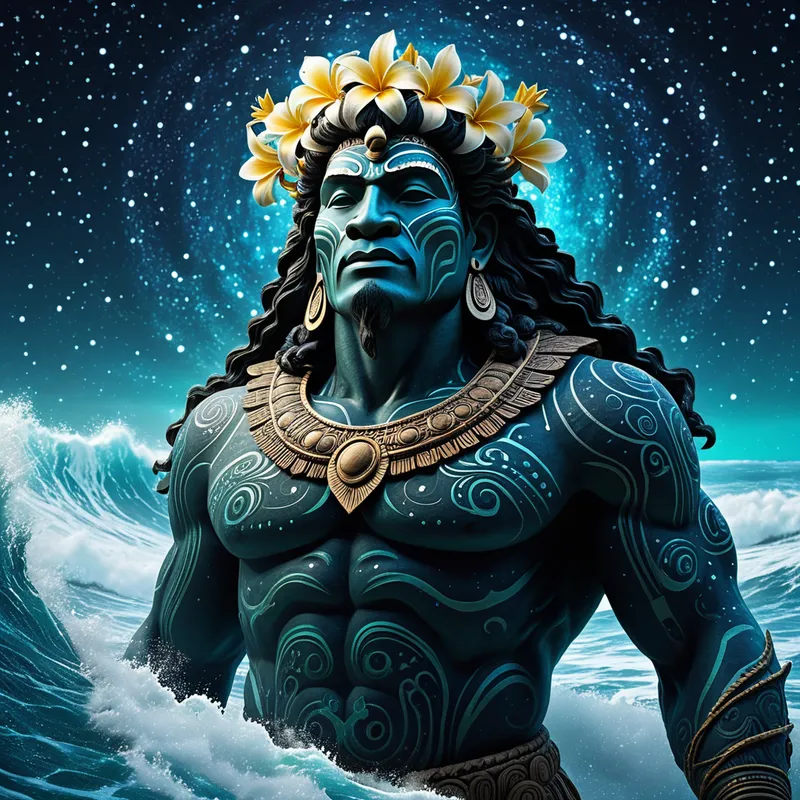
Lei Myth Meaning & Symbolism
A mythic tale of a primordial being whose self-sacrifice weaves the fabric of the world, binding the spiritual to the material in an eternal embrace.
The Tale of Lei
In the time before time, when the world was a formless churning of dark sea and darker sky, there existed only the great, silent void of Po. From this profound nothingness, a presence stirred. Not a god of thunder or fire, but a being of quiet potential, whose name was whispered by the first currents: Lei.
Lei beheld the loneliness of Po. The sea had no shore to kiss, the sky had no earth to blanket. The spirits of the deep and the spirits of the air drifted, separate and sorrowful, unable to meet, to create, to become. A great ache swelled within Lei’s heart, an ache that was the first feeling in all existence. This was not the ache of pain, but the profound yearning for connection, for relationship, for something other to cherish.
And so, Lei began to sing. The song was not made of sound, but of intention, a vibration that moved through the fabric of Po. From their own essence, Lei began to pull forth strands—not threads of flax, but filaments of being. Some were radiant as the yet-unborn sun, warm and golden. Others were deep as the abyssal trenches, cool and mysterious. Some carried the scent of blossoms that had never bloomed, others the salt-tang of tears not yet shed.
With infinite patience, Lei began to weave. They took a strand of celestial light and a strand of oceanic depth, and with a movement that was both a giving and a receiving, bound them together. Where they crossed, a point of tension and harmony sparked into being. This was the first knot. From this knot, Lei drew more strands: the silver of mist, the green of life stirring in the deep, the hard certainty of stone dreaming within the sea.
The weaving was an act of immense self-giving. Each strand pulled from Lei’s own form, each knot tied with a fragment of their own substance. Their majestic form, once whole and potent, began to diffuse, to unravel into the growing tapestry. They did not fight this dissolution; they embraced it as the necessary price of the binding. They wove the sky to the mountain peaks that now pierced the clouds. They wove the freshwater springs to the vast, waiting salt sea. They wove the breath of life into the clay of the earth, and the first heartbeats echoed in the newly formed valleys.
Finally, as the last knots were tied—binding the people who would come to the land that would nourish them, binding the ancestors to the living, binding every story to every star—Lei was no longer a separate being. Their body was the mana flowing through all things. Their breath was the wind that connected distant islands. Their final, loving sigh became the tradition of the lei itself—the circle of fragrant blooms and leaves placed around a neck, a tangible echo of that first, sacred act of binding spirit to spirit, person to place, the past to the present.
Cultural Origins & Context
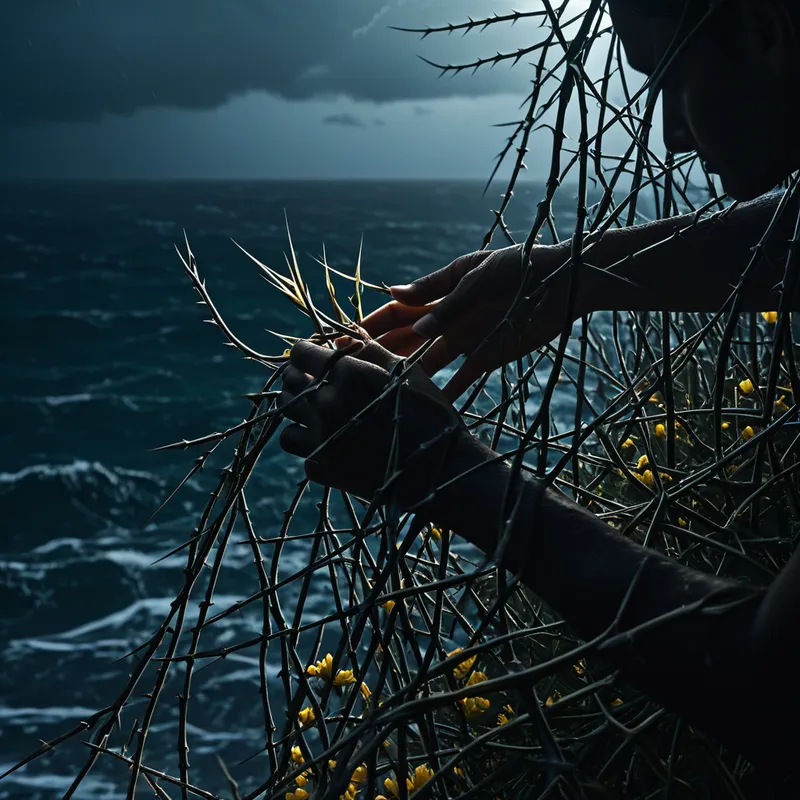
The mythic patterns surrounding the concept of Lei are woven deeply into the oral traditions across the Polynesian triangle, from Hawaiʻi to Aotearoa (New Zealand) to Tahiti. While not a singular, standardized narrative like those of Greco-Roman myth, the archetype of the being who binds creation through self-sacrifice is a foundational undercurrent. These stories were not mere entertainment; they were the ontological framework, told by kahuna and elders during sacred ceremonies, rites of passage, and when teaching the genealogies (whakapapa).
Its societal function was multifaceted. Firstly, it explained the inherent sacredness and interconnectedness of all things—the land (ʻāina), sea, sky, and people were not separate domains but bound together in a single, living network of mana. Secondly, it provided the mythic precedent for the cultural practice of giving and receiving lei. The physical lei was a microcosm of Lei’s act: a deliberate, beautiful binding that created relationship, honored status, sealed agreements, and expressed aloha in its deepest sense. The myth taught that to create connection, something of the self must be willingly offered.
Symbolic Architecture
At its core, the myth of Lei is a master symbol of the principle of relationship as the fundamental creative act. Lei is not a conqueror or a ruler, but a weaver, a binder, a caregiver of the highest order.
The first act of creation is not division, but connection. The universe begins not with a word, but with a knot.
Psychologically, Lei represents the archetypal force that moves the psyche out of the undifferentiated chaos of the unconscious (Po) and into the structured world of consciousness and relationship. The "strands" are the disparate elements of our inner world—emotions, thoughts, memories, potentials. The "weaving" is the arduous, lifelong process of ego-formation, of making connections between these elements to create a coherent Self. The act is sacrificial because to form a conscious identity, we must give up the blissful, ignorant wholeness of unconsciousness. We must differentiate, which feels like a loss, even as it creates the possibility of love, meaning, and purpose.
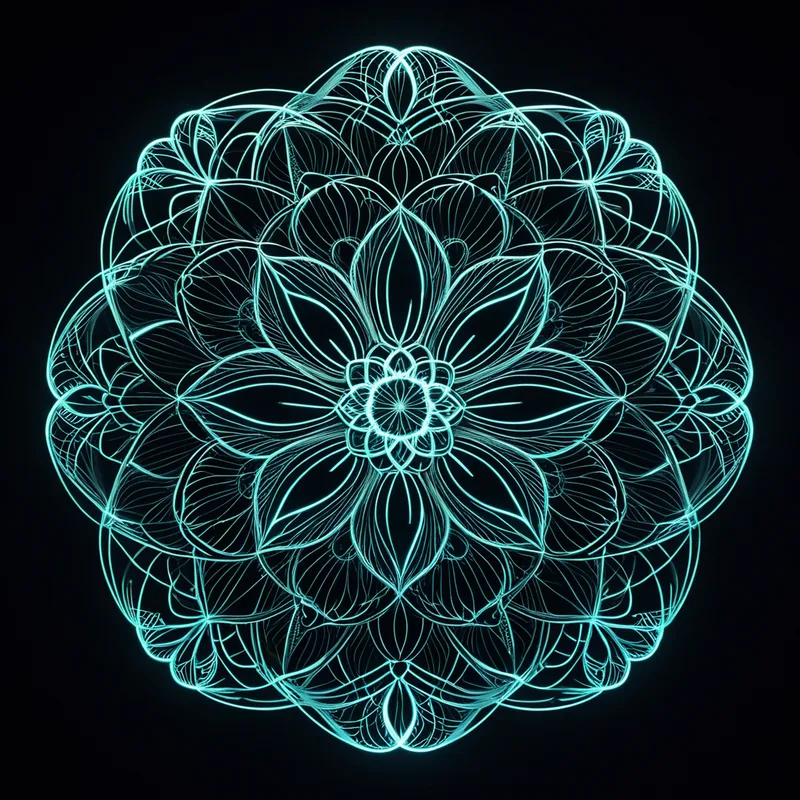
The lei itself, the tangible symbol, is a perfect mandala of this process: a circle with no beginning and no end, intricately woven from the fragments of the living world, representing the individuated Self as both a unique creation and an inseparable part of the whole.
The Dreamer's Resonance
When this mythic pattern stirs in the modern dreamer, it often manifests as dreams of weaving, knitting, tying intricate knots, or being entangled in beautiful, living vines or fibers. One might dream of mending a vast, torn tapestry, or of lovingly assembling a complex object from scattered, precious parts. Conversely, its shadow may appear as dreams of being trapped in a net, of unraveling, or of frantically trying to tie things together that refuse to hold.
Somatically, this process can feel like a deep, often anxious, pull in the chest or solar plexus—the "heartache" of Lei sensing the separateness in Po. It is the somatic signature of a psyche attempting to integrate. The dreamer is going through a process of conscious relationship-building: perhaps integrating a neglected aspect of their personality, healing a familial rift, forging a deep bond with a partner, or seeking a spiritual connection to nature or community. The psyche is performing the sacred, sacrificial labor of using its own substance to create bridges where there were once voids.
Alchemical Translation
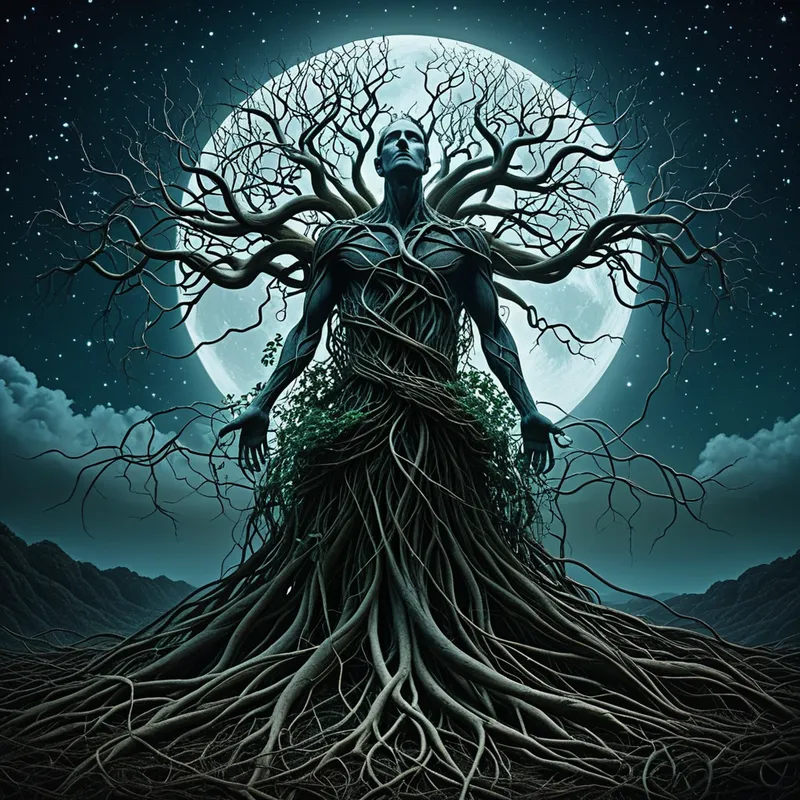
The alchemical journey modeled by Lei is the transmutation of primal, undifferentiated prima materia (the chaos of Po) into the unus mundus (the one interconnected world) through the agent of sacrifice. For the modern individual on the path of individuation, this is not about grand heroic deeds, but the quiet, persistent work of inner and outer binding.
Individuation is the craft of weaving a soul. The thread is spun from our experiences, the pattern is guided by archetype, and each knot is tied with a conscious choice.
The first stage is confronting our inner Po—the formless, often chaotic swirl of unlived life, repressed emotions, and unintegrated potentials. This can feel like depression, confusion, or existential loneliness. The Lei archetype awakens the impulse to connect, not to escape. The alchemical work begins when we start to "pull strands" from this chaos: naming a feeling, acknowledging a memory, giving form to a creative impulse.
The sacrifice is the willingness to give up our simpler, more fragmented state. To weave a coherent self, we must sacrifice the comfort of blaming others, the identity of the perpetual victim, or the illusion of total independence. We offer up these fragments to be rewoven into something more complex and beautiful. The "knots" are the insights, the hard-won understandings, and the commitments that bind these elements together. The final "garland" is the realized Self—not a perfect, static being, but a living, breathing network of reconciled opposites, capable of both deep individuality and profound connection. We become, like Lei, both the weaver and the woven, the giver and the gift, a conscious participant in the eternal act of binding the world into meaning.
Associated Symbols
Explore related symbols from the CaleaDream lexicon: