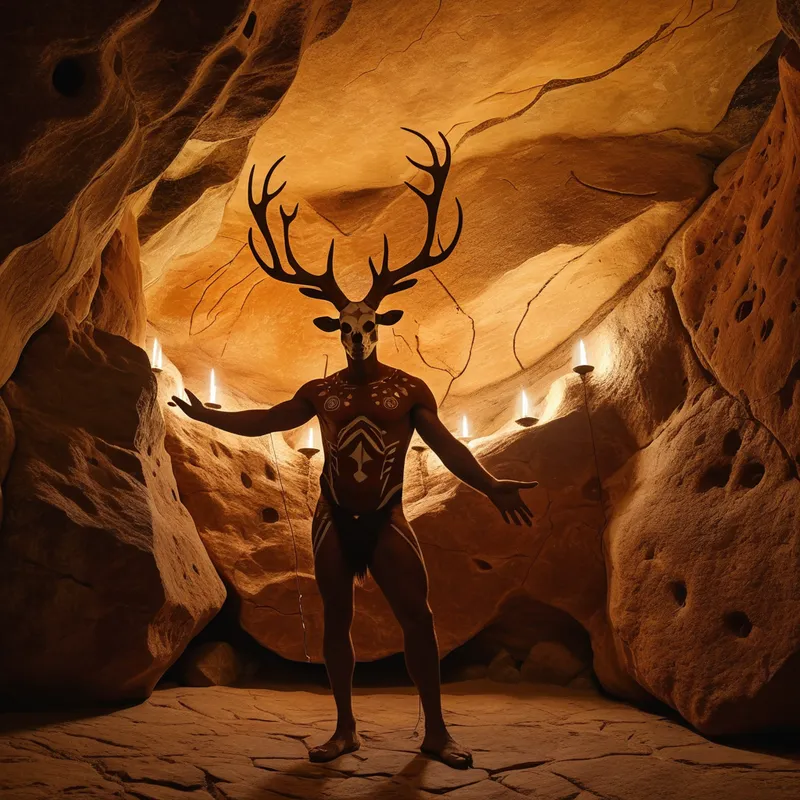
Lascaux Shaman Myth Meaning & Symbolism
A Paleolithic seer descends into the world-belly cave, communes with the Animal Powers, and returns with a vision that re-members the tribe to the living earth.
The Tale of the Lascaux Shaman
Listen. The world above is a skin of light stretched thin over the dark, dreaming belly of the earth. The people of the horse and the bison know this. They feel the hunger in the wind, the tremor in the herd's path. The stories are growing thin. The songs are forgetting their own tunes. A coldness, a forgetting, has begun to seep into the bones of the tribe.
One is chosen. Not by vote, but by a look in the eye that cannot meet another's, by dreams that leave the scent of wet clay and musk-ox on the waking mind. He is the one who already walks with a foot in both worlds. They call him The Listener. He prepares in silence. He fasts until the world shimmers. He paints his own skin with the blood of the earth—red ochre, the color of life and of the womb from which all things come.
He takes a lamp, a simple dish of fat with a moss wick, and turns his back on the sun. The mouth of the World-Belly opens before him, a yawn of absolute black. The air changes. It becomes thick, ancient, tasting of stone and time. The chatter of the world above dies. All that remains is the drip of water from a thousand-year-old stalactite, the scuff of his own feet, and the frantic dance of his shadow against the wall.
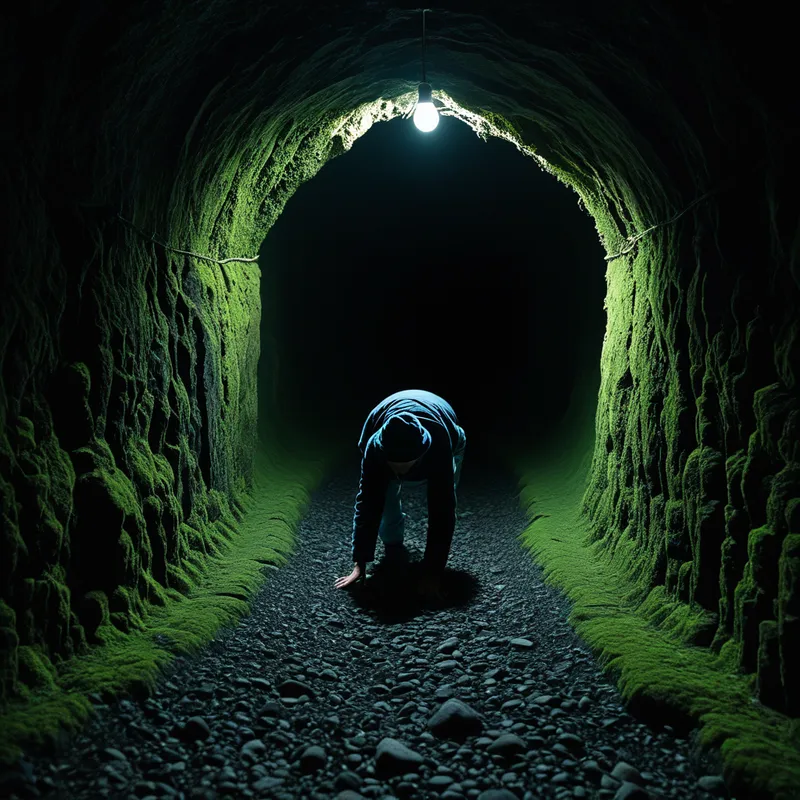
He crawls. The ceiling presses down. The tunnel narrows until the rock kisses his shoulders, his back. He is being swallowed. The air grows thin. His lamp gutters. In the rising panic, in the grip of the earth's own heartbeat, he must let go. He must surrender the man who entered. This is the first death.
And then, the chamber.
His lifted lamp reveals not emptiness, but a sudden, shocking presence. The walls are alive. A great, thunderous Aurochs charges from the stone, muscles coiled in perpetual motion. A herd of Horses flows like a river across the ceiling. A Bison turns its shaggy head, its painted eye holding the wisdom of millennia. These are not pictures. They are the Animal Powers themselves, sleeping in the rock, waiting.
He begins to shake. The tremors are not his own. The spirit of the Stag enters his bones, arches his spine. He feels the weight of antlers he does not have. He sways, his breath becoming the snort of the Bison, his pulse the gallop of the Horse. He is no longer a man looking at beasts. He is the place where man and beast are the same dreaming thing. He dances the animals into being. He chants the story of their hooves on the tundra, the taste of spring grass, the fierce love for their young, the sacred surrender to the hunter's spear. He learns the compact: life for life, breath for breath.
The vision crests and breaks. Exhaustion, deeper than any sleep, pulls him down. He lies on the cold floor, empty and full. When he can move, he takes a piece of charcoal from his pouch. With a trembling hand, guided by a memory not his own, he adds one final, crucial mark to the living gallery: the outline of his own hand, sprayed over with ochre, placed beside the paw of a great cave lion. A signature. A covenant. I was here. We are kin.
The return is a rebirth. He emerges, blinking, into the blinding white of the snow-covered world. He is gaunt, forever marked by the dark. But in his eyes is a new fire. He opens his mouth, and what comes out is not his voice alone. It is the voice of the Herd, the story of the deep earth, the map of the seasons written in the language of hoof and horn. He sings, and as he sings, the people remember. They remember who they are, where they come from, and the sacred, trembling web that binds them to the blood-warmth of the bull and the green heart of the new shoot. The forgetting is healed. The stories have come home.
Cultural Origins & Context
This narrative is not a single, codified myth but a speculative reconstruction drawn from the potent evidence of Upper Paleolithic cave art, most famously at Lascaux (c. 17,000 years ago), and supported by anthropological study of global hunter-gatherer shamanic traditions. In a world without written word, myth was not recited but enacted. The cave itself was the sacred text, the ritual chamber, and the portal.
The myth was likely "told" through participatory ritual. The community's spiritual specialist—the proto-shaman—would physically journey into the profound darkness of the cave, a liminal zone between worlds. His ordeal (the sensory deprivation, the physical challenge, the potential use of rhythmic sound or psychoactive substances) induced an ecstatic state. His subsequent paintings were not mere decoration but were understood as capturing, harnessing, or communing with the vital essence of the animals depicted. His return and recounting—perhaps through chant, dance, or story—would have been a vital societal function. It served to renew the cosmological order, ensure hunting success through sympathetic magic, and heal the psychic fissures within the group by reconnecting them to the foundational powers of their world. The myth was the tribe's living dialogue with the source of its life.
Symbolic Architecture
At its core, this myth maps the fundamental human journey from a state of psychic fragmentation (the "forgetting") to wholeness (the "remembering") through a voluntary descent into the unknown.
The Cave is the ultimate symbol of the psyche's depths. It is the collective unconscious, the dark, fertile ground from which all images of instinct and archetype arise. To enter it is to embark on what mythologist Joseph Campbell termed the "hero's journey," but here the boon is not a physical trophy but a visionary realignment.
The shaman does not conquer the dark; he learns its language and returns to translate it for those who live in the light.
The Animal Powers are the archetypal inhabitants of this inner world. They represent pure, undomesticated instinct—the power of the charge, the wisdom of the herd, the resilience of migration. The shaman's fusion with them signifies the crucial psychic act of reclaiming these instinctual forces, not as alien "beasts" but as essential parts of the complete human self. The final act of spraying the handprint is profound: it is the individuated ego ("I") acknowledging its place within the vast, timeless tapestry of life ("We"). It is the signature of consciousness upon the raw canvas of the unconscious.
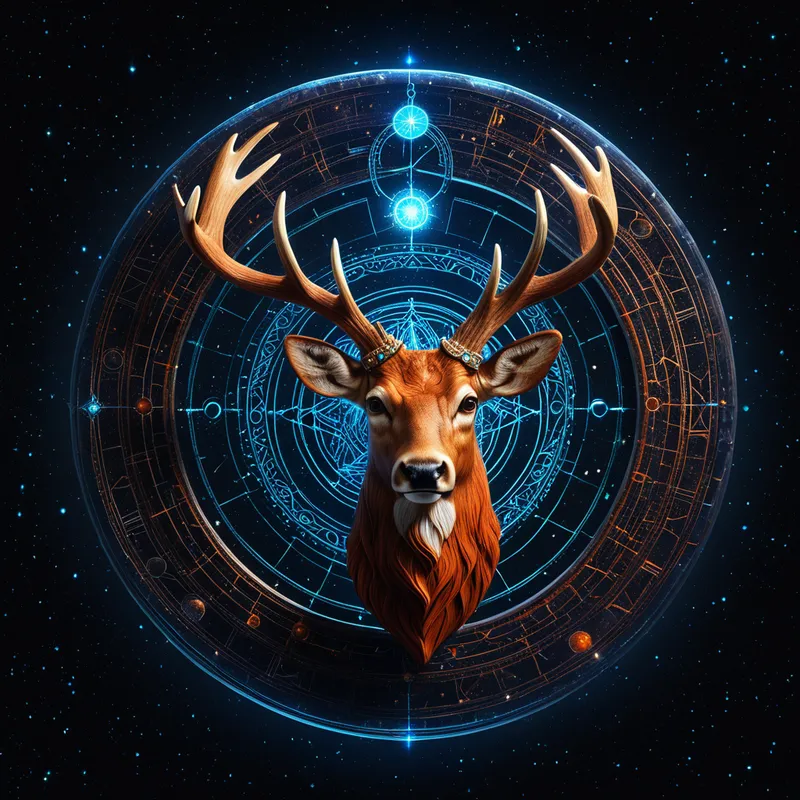
The Dreamer's Resonance
When a modern dreamer encounters the pattern of the Lascaux Shaman—dreams of crawling through narrow tunnels, discovering hidden, painted chambers, transforming into or being chased by powerful animals, or finding ancient artifacts in caves—it signals a profound somatic and psychological process.
This is the psyche's call for a vision quest. The feeling of constriction in the dream tunnel mirrors a felt sense of being trapped in one's conscious identity, career, or relationships. The body in the dream feels the pressure, the lack of air. This is the somatic signal of an impending psychic birth. The animals that appear are not random; they are direct emissaries from the dreamer's own unconscious, representing dormant strengths (the stamina of the horse), shadow energies (the aggression of the bull), or needed wisdom (the grounded power of the bison). To dream of merging with them is to experience, safely in the night-world, the terrifying and exhilarating dissolution of the ego's boundaries, necessary for a more expansive identity to form. Such dreams often precede or accompany major life transitions, calling the dreamer to withdraw from the "tribe" of consensus reality, descend into their own depths, and seek the authentic image that will guide their next chapter.
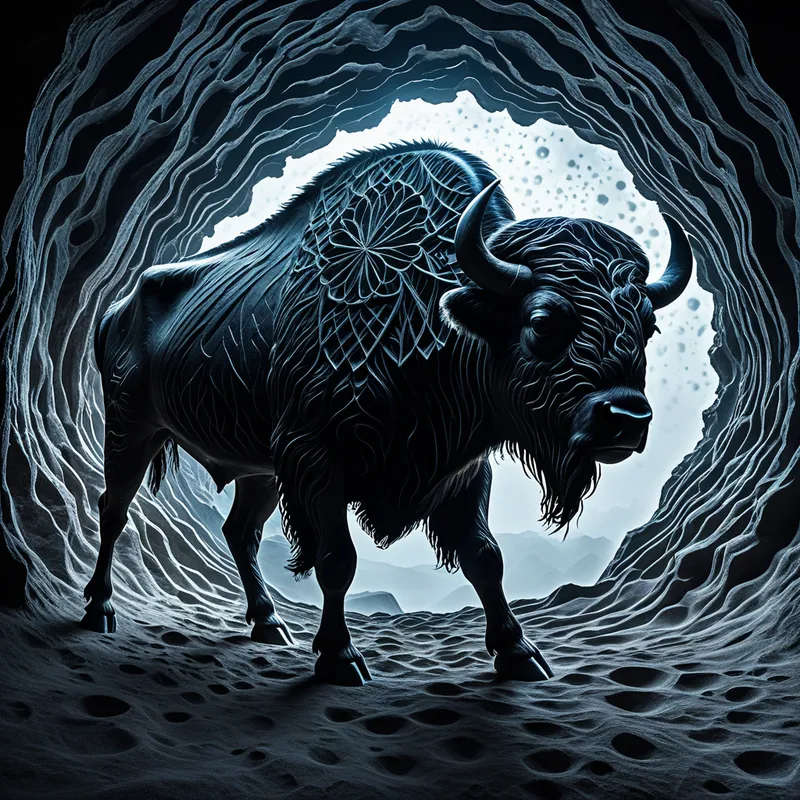
Alchemical Translation
The shaman's journey is a perfect allegory for the Jungian process of individuation. The "forgetting" of the tribe is the neurosis of modern life: a disconnection from instinct, meaning, and the symbolic layer of existence. The conscious personality lives on the surface, feeling the "coldness."
The voluntary descent—the Nigredo—is the critical first step of therapy or deep self-reflection. It is the willingness to confront the shadow, the repressed, the chaotic contents of the personal and collective unconscious (the cave). This stage feels like a death, a disintegration, as old certainties crumble.
The painted chamber is the moment of Albedo, where the raw material of the psyche reveals its inherent, archetypal order.
Communing with the Animal Powers represents the integration of the Animus/Anima and other autonomous complexes. The dreamer learns that these powerful inner figures are not enemies to be suppressed but sources of vitality and guidance. The dance is the active, engaged relationship with these contents.
The return with a vision is the Rubedo, the culmination. The transformed individual does not return to the "tribe" as a detached mystic but as a translator. The vision—now a new creative work, a renewed relationship, a philosophical insight—becomes the "song" that re-members the dreamer's own life, bringing the wisdom of the depths to bear on the challenges of the surface world. The modern seeker may not paint on cave walls, but they must find their own medium—art, writing, dialogue, parenting, leadership—to "spray their handprint" beside the powers they have encountered, declaring their hard-won, embodied place in the great chain of being. The myth teaches that wholeness is not a state of blissful arrival, but the ongoing, sacred work of bridging the deep earth of the soul with the daily light of the world.
Associated Symbols
Explore related symbols from the CaleaDream lexicon: