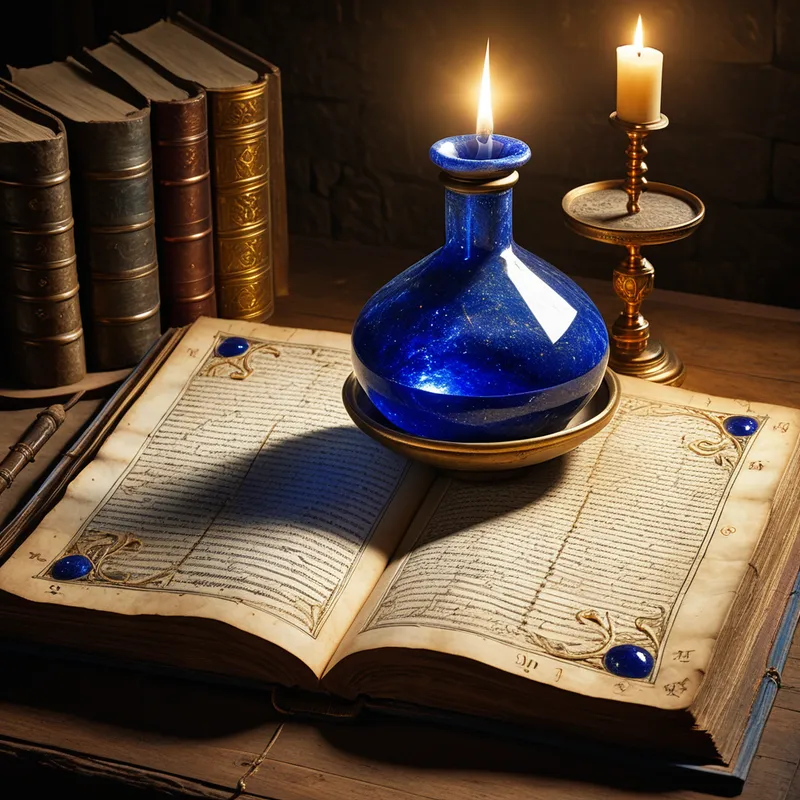
Lapis Philosophorum Myth Meaning & Symbolism
The alchemical quest for the Lapis Philosophorum, a stone of perfection, symbolizing the soul's arduous journey to transmute base matter into spiritual gold.
The Tale of Lapis Philosophorum
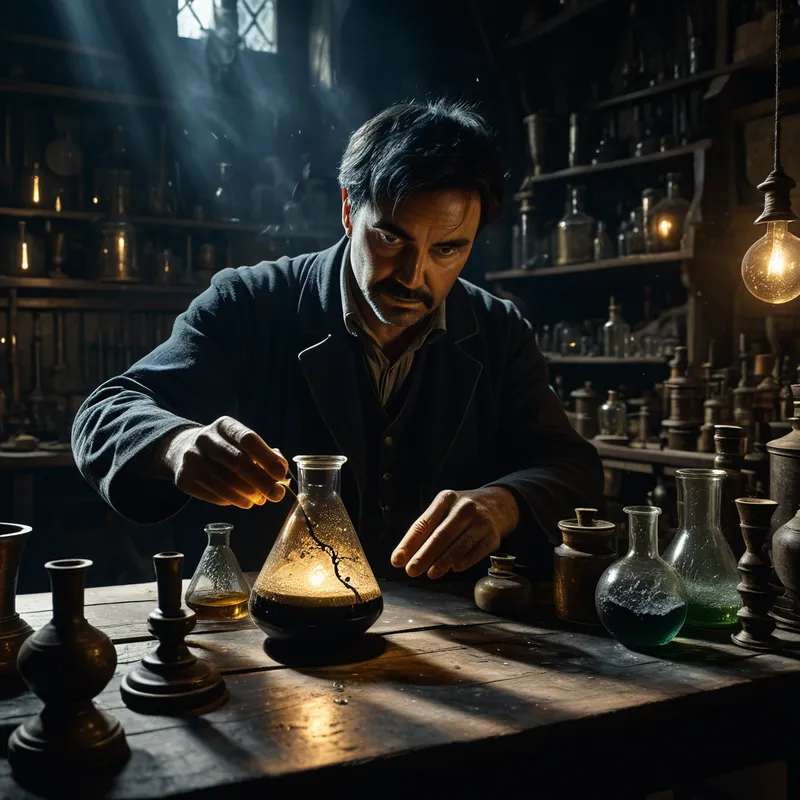
Listen, and I will tell you of a quest not for lands or crowns, but for the secret heart of creation itself. In the silent hours between midnight and dawn, when the world holds its breath, the seeker enters the oratory. The air is thick with the scent of salt and sulfur, of vinegar and strange earth. Before them lies the vas Hermetis, the sealed womb of all work.
This is no simple task of mortar and pestle. It is a descent. The seeker takes the prima materia—the base, chaotic, and despised matter of the world and of the self—and commits it to the fire. This is the Nigredo, the blackening. All order dissolves. In the vessel, matter putrefies; in the soul, all certainty rots. The seeker is left in a void of despair, a starless night where the familiar self is annihilated.
From this profound blackness, a washing begins—the Albedo, the whitening. Tears of the spirit, distilled through endless cycles of patience, cleanse the black mass. A moon-pale substance emerges, pure but cold, reflective as silver. It is the soul washed clean, but not yet alive. It yearns.
Then, the fire is raised. This is the Citrinitas, the yellowing. The solar fire of passion and consciousness is applied, not to destroy, but to animate. The white matter blushes with gold, gaining warmth and character. Yet, it is still divided, a king without a queen, a spirit not yet wedded to the body.
The final marriage is a perilous conflagration—the Rubedo, the reddening. The fierce, enduring heat of the furnace forces the union of all opposites: spirit and matter, male and female, conscious and unconscious, sulfur and mercury. In a moment that is both an eternity and an instant, the chaos coalesces. The many become one. The fire dies.
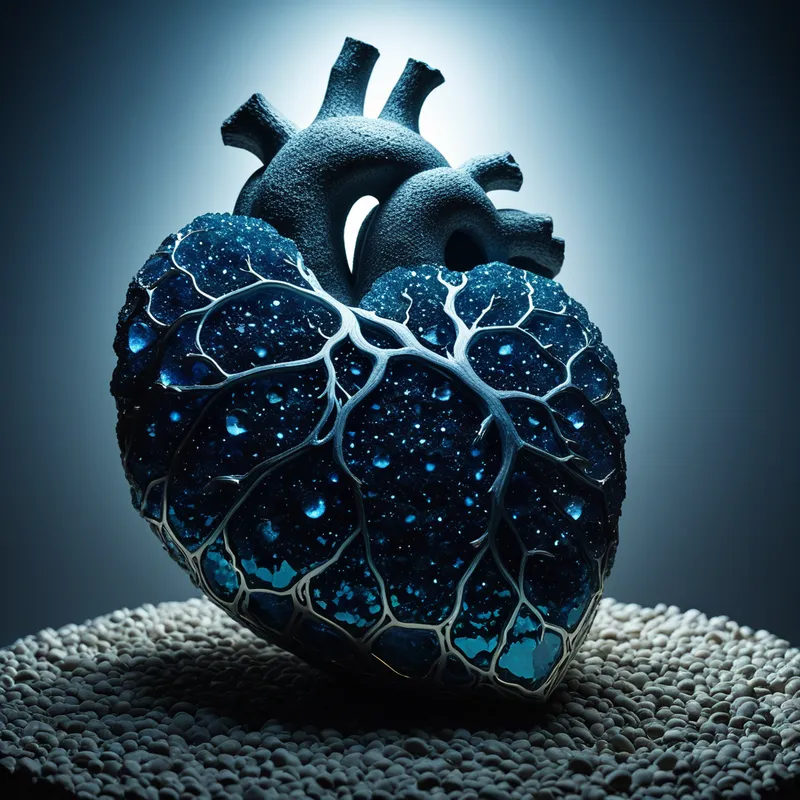
And there, in the cool ashes of the spent crucible, it rests. Not a grandiose jewel, but often described as a "stone" of modest appearance, yet possessing impossible weight and radiating a quiet, potent warmth. The Lapis Philosophorum. It can transmute base lead into perfect gold, not of the marketplace, but of the spirit. It is the healed and whole Self, born from the long sacrifice of the partial ego.
Cultural Origins & Context
The myth of the Lapis Philosophorum is the central narrative of Western alchemy, a tradition spanning from Hellenistic Egypt through the Islamic Golden Age to the Renaissance and early modern Europe. It was never a single, standardized tale but a pervasive, evolving pattern encoded in cryptic texts, enigmatic illustrations, and oral teachings within guilds and secretive circles.
Its primary function was not to produce material wealth (though charlatans promised this), but to serve as a psychocosm. The myth was passed down through symbolic "recipes" that were intentionally obscure to the profane. Figures like Hermes Trismegistus, Maria the Jewess, and later Paracelsus were not just chemists but mystics and psychologists, using the language of furnace and flask to describe the torment and ecstasy of inner transformation. In a society where direct exploration of the psyche was often heretical, alchemy provided a sanctioned, if clandestine, framework for the soul's journey toward divinity and completion.
Symbolic Architecture
The myth is a dense symbolic map of the individuation process—the journey toward becoming an integrated, whole individual. Every substance, color, and operation is a facet of the psyche.
The prima materia represents the unformed, chaotic contents of the personal and collective unconscious—our raw potential, our shadow, our forgotten and despised parts. The oratory is the sanctified space of the Self, where this work is undertaken with reverence and purpose.
The stone is not found, it is made; and it is made of the very substance the seeker once most wished to discard.
The four cardinal stages—Nigredo, Albedo, Citrinitas, Rubedo—mirror the necessary psychological deaths and rebirths. The Nigredo is the confrontation with the shadow, a depressive, disorienting collapse of the persona. The Albedo is the emergence of a purified, reflective consciousness, often symbolized by the lunar, feminine anima. The Citrinitas is the integration of this new awareness into a sense of spiritual purpose (the solar, masculine animus). Finally, the Rubedo symbolizes the sacred marriage (coniunctio oppositorum) within, resulting in the Lapis—the embodiment of the Self, the central archetype of order and totality.
The Dreamer's Resonance
When this myth stirs in the modern unconscious, it manifests in dreams of profound transformation centered on a core, often hidden, object or truth. One may dream of a forgotten room in a house (the oratory) containing a dusty, complex apparatus. There might be dreams of tending a fire that must not go out, or of being lost in a dark forest (Nigredo) before finding a clear, silver pool (Albedo).
Somatically, this process can feel like a "dark night of the soul"—periods of depression, fatigue, or illness that feel purgative. This may be followed by surges of creative energy and insight (the heating of Citrinitas). The dreamer is undergoing a fundamental restructuring of their psychic substance. The dream-Lapis might appear as a simple, heavy stone that glows, a child made of light, or a perfectly balanced geometric shape. Its appearance signals that the deep, often painful work of integration is reaching a point of fruition and stability.
Alchemical Translation
For the modern individual, the myth of the Lapis Philosophorum models the ultimate act of self-creation. It translates the process of individuation into a tangible, albeit arduous, operation.
The first step is the recognition and acceptance of one's prima materia: our flaws, traumas, irrational passions, and hidden talents—all that we consider "base." Instead of projecting it onto others or repressing it, we must, like the alchemist, "submit it to the vessel." This means committing to self-examination through therapy, journaling, art, or mindful reflection, and enduring the inevitable Nigredo of that confrontation.
The lead of the personality—its inertia, its resentments, its fears—is not an enemy to be destroyed, but the essential ingredient awaiting transmutation.
The subsequent stages remind us that purification (Albedo) requires patience and repeated effort, and that insight (Citrinitas) must be fused with feeling. The final goal is not perfection in a sterile sense, but a state of resilient, dynamic wholeness—the Lapis. In a psychological sense, this is the achieved Self: a personality that has consciously integrated its opposites, possesses a stable center, and can engage with the world with compassion and authenticity. It is the "gold" of a life lived with meaning, born from the long, faithful work of transmuting our innate, often difficult, human material.
Associated Symbols
Explore related symbols from the CaleaDream lexicon: