Laocoön Myth Meaning & Symbolism
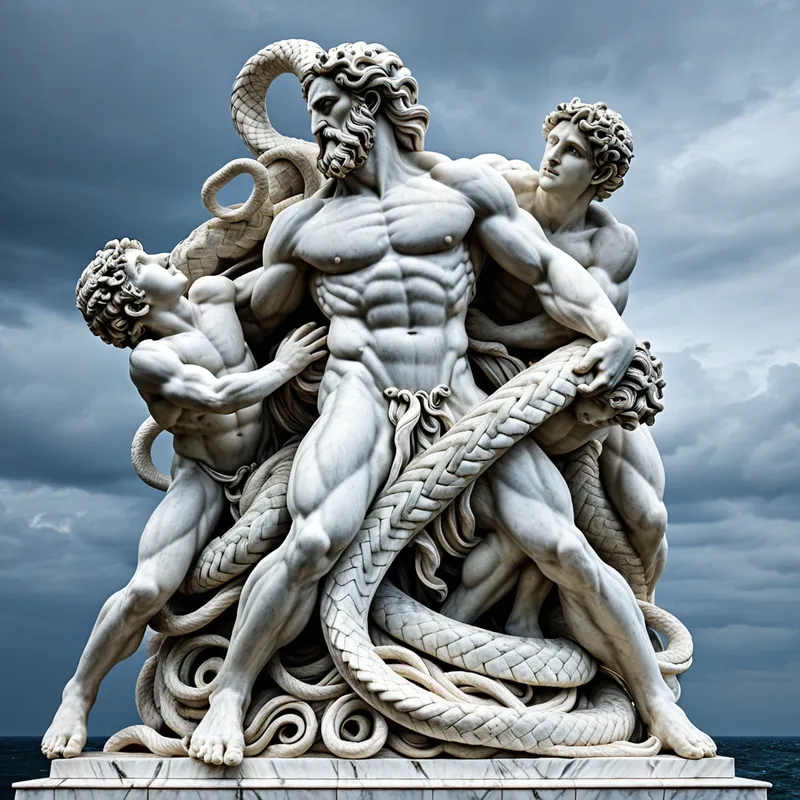
A Trojan priest and his sons are strangled by sea serpents after he warns against the Greek's wooden horse, a sacrifice to the blindness of fate.
The Tale of Laocoön
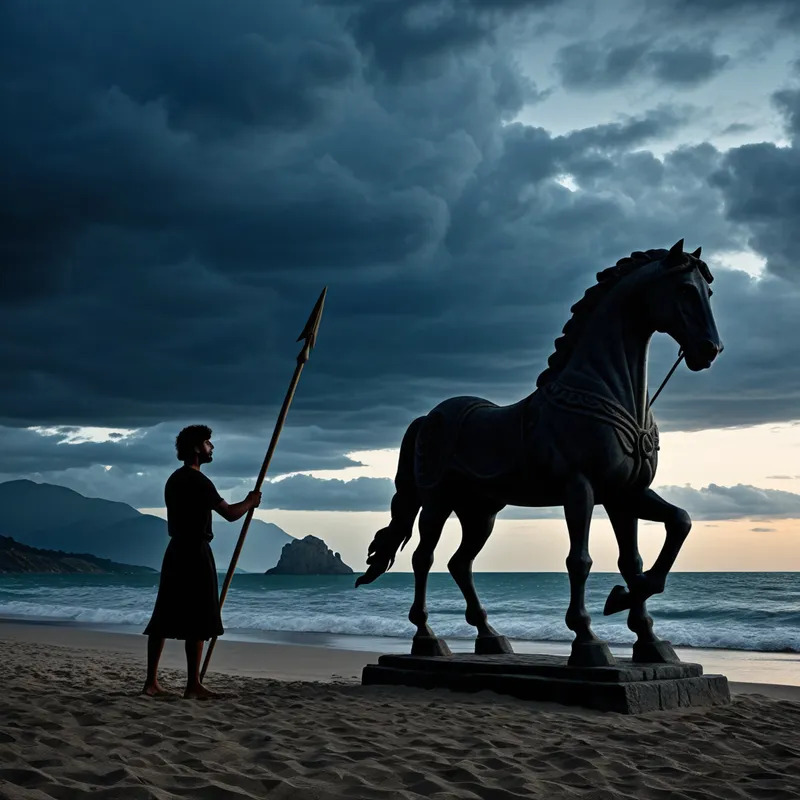
The air of Troy was thick with a strange, unearned jubilation. For ten long years, the din of bronze and the cries of men had been the city’s only song. Now, silence lay upon the plain like a shroud, and in its place, a monstrous gift. The Greeks were gone, vanished as if by a god’s caprice, leaving behind only the rumors of their flight and this: a colossal effigy of a horse, crafted from seasoned fir, its flanks towering over the beach like a new, unnatural hill.
From the Scaean Gates, the people poured, their fear melting into a giddy, dangerous relief. They gathered around the beast, fingers brushing its smooth, painted wood, voices rising in speculation and awe. Was it an offering to Athena for a safe voyage? A trophy of their deliverance? The crowd’s desire, a living thing, began to shape the answer. It yearned for an end, for a story of victory.
Then came the voice that cut the celebration like a cold blade.
“Are you mad, wretched citizens?” The cry belonged to Laocoön, priest of Apollo. He pushed through the throng, his face not lit by joy but darkened by a seer’s dread. “Do you truly believe the enemy has sailed away? Do you know Odysseus so little? Either this thing holds Greek warriors in its wooden belly, or it is an engine of war, built to spy upon our walls or breach them. Whatever it is, I fear the Greeks, even bearing gifts!”
His words, heavy with truth, hung in the salt air. To give them force, he took a heavy spear from a guard and with all his might hurled it at the creature’s flank. The point struck deep with a sickening thunk that echoed across the silent shore. From within the hollow womb of the horse, the sound was answered—a faint, metallic shudder, the muffled clink of armor. A gasp rippled through the Trojans. The truth was there, vibrating in the wood.
But fate had already woven its threads. As the crowd wavered, another figure was brought forth: Sinon, the cunning plant of Odysseus. With a tale of persecution and false sacrifice, he stoked their pity and their piety, masterfully painting the horse as an sacred object whose desecration would call down Athena’s wrath. The people’s doubt, so briefly kindled by Laocoön, was smothered by a sweeter, easier story.
Then, as Laocoön moved to make a sacrifice to Poseidon at a remote altar by the shore, the sea itself answered. From the calm, wine-dark depths of Tenedos, two immense serpents emerged. Their scales shone with a vile, coppery light, their bodies as thick as temple pillars, crests maned like hellish waves. They surged onto the beach, their eyes fixed not on the flock, not on the altar, but on the priest and his two young sons.
Terror turned the boys to statues. Laocoön sprang before them, a father before a priest, but it was futile. The serpents coiled with dreadful, deliberate speed. First, they enfolded the children, binding their small limbs, silencing their cries. Then, they turned to Laocoön. He fought like a lion, his muscles straining against the crushing pressure, but the coils were inexorable. They wrapped his torso, his neck, squeezing the breath and the truth from him in one final, agonized gasp. Priest, father, and prophet were strangled as one, a tangled monument of mortal struggle against divine machinery. The serpents, their work done, slid to the citadel of Athena and vanished beneath her shield.
The Trojans saw only one meaning: Laocoön was punished for his sacrilege, for striking the sacred offering. His death was the final sign. With ropes and rollers, they dragged the wooden doom into their city, and sealed their own fate with songs and garlands.
Cultural Origins & Context
The story of Laocoön exists in the liminal space between epic and tragedy, most famously recounted in The Iliad’s sequel, Virgil’s Aeneid. While earlier Greek cycles may have contained the tale, it was Virgil’s Roman pen that etched it into the Western imagination with unparalleled pathos and political purpose. For Virgil, writing under Augustus, Laocoön was not merely a casualty of war; he was the tragic emblem of Troy itself—noble, perceptive, yet ultimately doomed by forces both within and beyond its walls. The myth functioned as a foundational trauma for the Roman people, descendants of the Trojan Aeneas, explaining the necessity of their great ancestor’s painful exile and the fated rise of Rome.
In Greek culture prior to Virgil, the story was likely part of the larger "Epic Cycle," oral traditions that filled the narrative gaps around Homer’s works. It served as a profound moral and religious caution. It explored the terrifying ambiguity of divine will—was Laocoön punished by Poseidon for violating his priestly office, or by Athena for thwarting her favored Greeks? The myth asked the audience to sit with an unbearable truth: that clear sight and righteous warning are not only powerless against collective delusion, but may invite annihilation from the very powers that govern the cosmos.
Symbolic Architecture
At its heart, the myth of Laocoön is an archetypal drama of the perceived truth-teller in collision with destiny. Laocoön embodies the principle of conscious insight. He sees the hidden pattern, the danger cloaked in the guise of a gift. His spear thrust is a heroic act of making the hidden manifest, a demand that reality be acknowledged.
The true sacrilege is not in striking the idol, but in exposing the collective lie that wishes to worship it.
The Wooden Horse is the perfect symbol of the enantiadromia—the deceptive gift that contains its own opposite. It is the longed-for peace that harbors total war, the resolution that masks annihilation. The Trojans’ eager acceptance of it represents the psyche’s powerful desire to believe the comforting narrative, to end cognitive dissonance, even at the cost of reality.
The serpents, sent from the sea, are agents of the unconscious depths and of fate itself. They do not argue; they enact. Their attack is not a battle but an execution, a swift, brutal realignment of the individual who disrupts a pre-ordained script. They represent the terrifying, constrictive power of the archetypal field when an individual consciousness attempts to divert its flow.
The Dreamer's Resonance
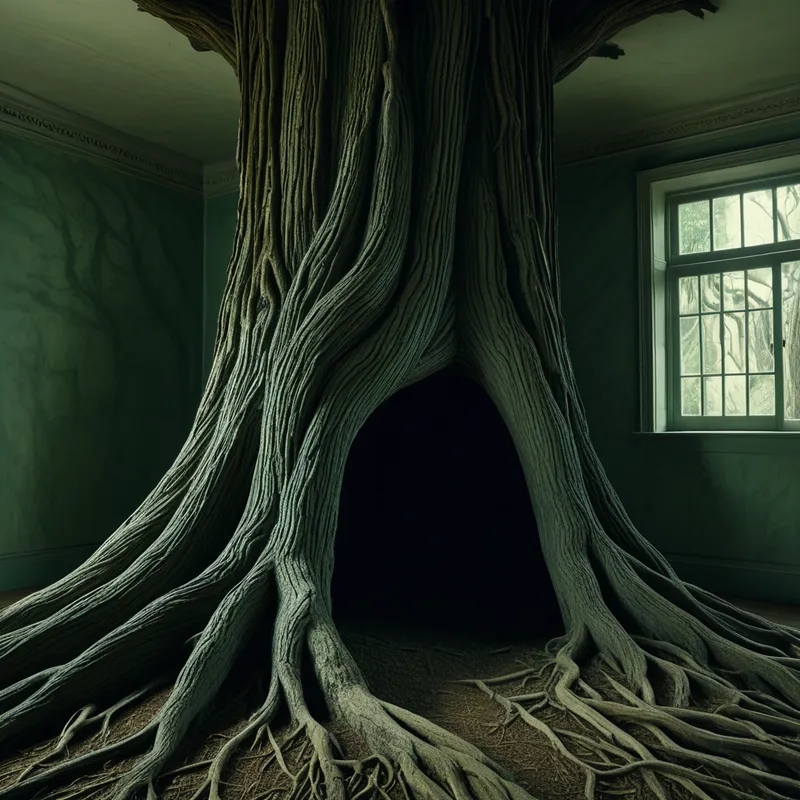
When this myth stirs in the modern dreamer, it often manifests not as a literal image of serpents, but as the somatic experience of Laocoön. One may dream of being bound—by sheets, by vines, by shifting architecture—while trying to shout a warning that emerges as a whisper. The dream ego is in the role of the one who knows, but is physically prevented from communicating or acting on that knowledge.
Psychologically, this signals a profound conflict between an emerging conscious insight and an entrenched complex or life pattern. The “Trojan Horse” in the dream could be a new job, a relationship, or an ideology that feels like a salvation but which the dreamer’s deeper self recognizes as carrying a hidden, destructive payload. The crushing sensation is the pressure of the unconscious—the “serpents”—enforcing the old pattern, strangling the nascent truth before it can change the course of one’s personal story. It is the dream of the psyche in the moment before a necessary, and perhaps traumatic, awakening.
Alchemical Translation
The alchemical process mirrored here is the nigredo, the blackening, the confrontation with the poisonous truth that must precede any transformation. Laocoön’s journey is not one of triumph but of essential sacrifice. His fate models the brutal phase of individuation where the ego’s clear perception is violently rejected by both the outer collective and the inner archetypal powers-that-be.
The first stage of transmutation is often not the gaining of gold, but the drowning in the sea of meaninglessness, strangled by the very truths you have unearthed.
For the modern individual, the “Laocoön moment” arrives when one sees the hidden cost of a family myth, the dysfunction in a cherished institution, or the shadow side of a personal ambition. Speaking this truth may result not in gratitude, but in isolation and psychological attack—the “serpents” of anxiety, depression, or social ostracization. The alchemical key is in recognizing that this suffering is not a punishment for being wrong, but the inevitable friction of consciousness pushing against fate.
The transmutation occurs in the aftermath. Laocoön dies, but his truth does not. It echoes in Aeneas’s flight, in the founding of a new world. Psychically, the individual who endorses this crushing insight—who allows the old, naive self to be “strangled”—does not perish. Instead, they are initiated. They move forward carrying a bitter wisdom, no longer invested in the collective fantasy, tasked with building a consciousness that can bear the weight of reality, however terrible its gifts may be. The sacrifice of the naive truth-teller gives birth to the resilient, disillusioned survivor, the only one who can navigate the ruins and begin again.
Associated Symbols
Explore related symbols from the CaleaDream lexicon: