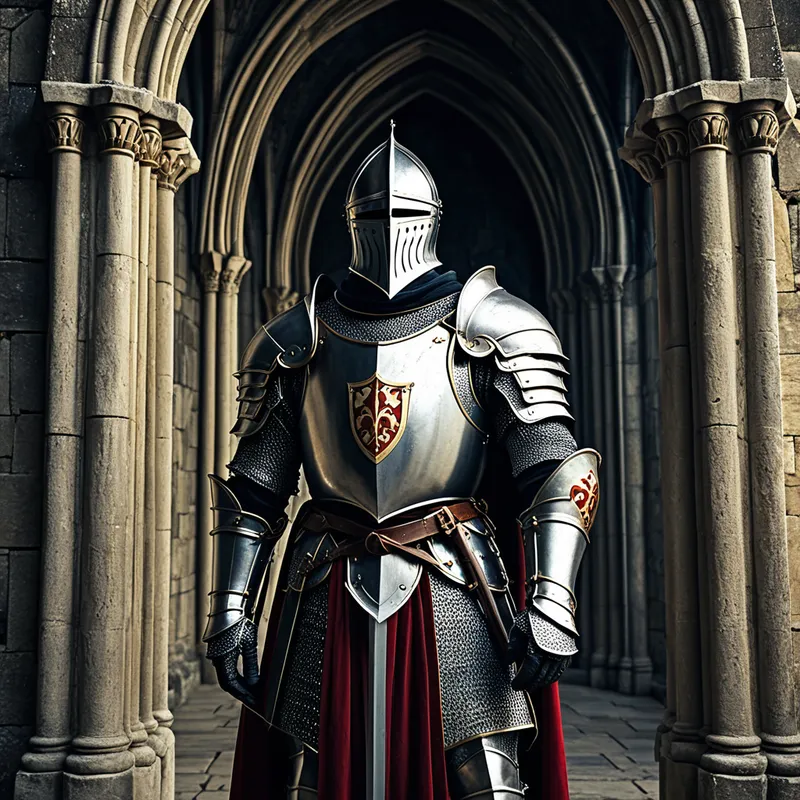
Lancelot Myth Meaning & Symbolism
The story of the greatest knight, whose love for his king's queen shatters the ideal kingdom and reveals the conflict between duty and desire.
The Tale of Lancelot
Listen, and hear the tale of the sun that cast its own kingdom into shadow. In the golden age of Camelot, where justice flowed like a clear river and the Round Table shone like a promise made to the world, there came a knight from across the sea. His name was Lancelot du Lac, and he moved with a grace that made swords seem like feathers and dragons seem like dreams. He was the embodiment of the knightly ideal: courage without cruelty, strength without arrogance, faith without question. King Arthur, whose heart was as wide as his realm, saw in him a brother, a pillar for his dream of a perfect world.
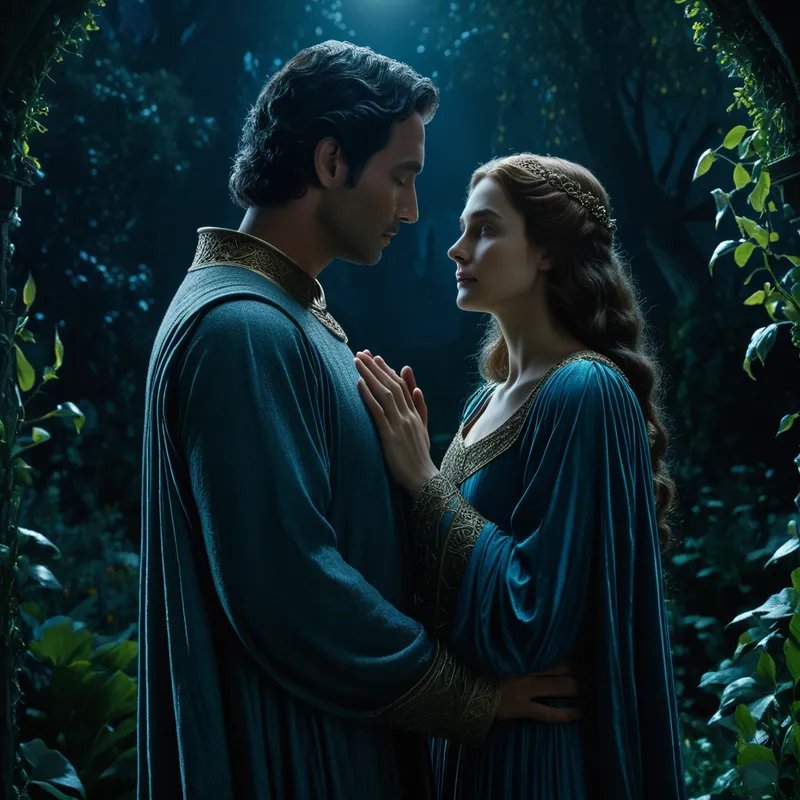
But the heart is a kingdom unto itself, with laws unknown to kings. When Lancelot’s eyes first met those of Queen Guinevere, it was not a meeting of courtiers, but of two stars recognizing a shared, fatal orbit. In her gaze, the flawless knight discovered a flaw—a chasm of longing that his code of honor could not bridge. Their love was a secret chapel built in the wilderness of their duty, a place of whispered vows and stolen glances that bloomed like a forbidden rose amidst the stone of Camelot.
This hidden flower bore a poison vine. The knight Mordred, whose soul was a twisted mirror, saw the shadow between the light. He laid a trap, bursting in upon the lovers. In the frantic, desperate struggle that followed, Lancelot escaped, but left behind knights loyal to Arthur slain by his own hand. The perfect knight had shattered the peace he was sworn to protect. The queen was condemned to the flames.
Then came the thunder of hooves. Lancelot, his love now a public wildfire, stormed the execution ground, a one-man army against the law he had broken. He rescued Guinevere, but in doing so, he wounded his king and brother, Arthur, in the deepest place—the heart of trust. The kingdom cracked. Arthur, bound by his own laws, pursued them to Lancelot’s coastal fortress. There, they faced each other not as lord and vassal, but as two men broken by the same beautiful dream. Guinevere, seeing the ruin, returned to a nunnery, taking the veil of a penitent. Lancelot, too late, sought the Holy Grail, but was found unworthy, his vision clouded by earthly passion.
The final note was one of hollow solitude. Arthur fell in the great, tragic battle of Camlan, brought low by Mordred’s betrayal—a chaos born from Lancelot’s sin. Hearing of his king’s death, Lancelot found Guinevere on her deathbed. They exchanged final words of forgiveness and eternal sorrow. The greatest knight of Christendom ended his days not in a castle hall, but as a hermit and a monk, his mighty arms now used only in prayer, until he too was laid in the earth, his story a sigh in the wind where Camelot once stood.
Cultural Origins & Context
The myth of Lancelot is a late and profoundly psychological addition to the Arthurian cycle. He is virtually absent from the earliest Welsh and Breton tales. His figure was sculpted in the 12th century by Chrétien de Troyes, in the courtly culture of Champagne, where the new ethos of fin’amor (refined love) was flowering. This was not the loyal love of marriage, but a passionate, often adulterous, and always ennobling devotion of a knight to a lady, usually of higher station.
The myth was passed down not by bards around a fire, but by clerks and poets in aristocratic courts, serving as both entertainment and a complex social mirror. It functioned as a sublime thought experiment: what happens when the highest secular ideals—chivalric loyalty to one’s lord and passionate devotion to one’s lady—come into irreconcilable conflict? The story explores the fault line between the feudal bond, which structured society, and the emerging individualistic, romantic consciousness. It asked its audience a terrifying question: Can a man be perfect in a world where his duties to heart and crown are at war?
Symbolic Architecture
Lancelot is the archetype of the Persona pushed to its glorious, tragic limit. His identity as the “perfect knight” is a shining suit of armor—beautiful, impenetrable, and ultimately a prison. Guinevere represents the call of the Anima, the soul-image that connects a man to the depths of his own feeling, passion, and vulnerability. Arthur and Camelot symbolize the Self in its nascent, collective form—the dream of a unified, conscious kingdom of the psyche.
The tragedy is not that love opposes honor, but that both are absolute gods demanding the same sacrifice: the wholeness of the individual.
The love affair, therefore, is not merely a moral failing, but a symbolic necessity. The flawless persona must be cracked open by the anima for any deeper development to occur. The rescue of Guinevere from the fire is a powerful image of rescuing one’s own soul-life from the condemning, rigid judgments of the conscious moral code. Yet, because this process is enacted unconsciously and selfishly, it causes catastrophic civil war—the Shadow, in the form of Mordred, rises to exploit the division and destroy the kingdom. Lancelot’s failure at the Grail quest confirms his state: he is still identified with his personal passion, unable to perceive the transpersonal, divine grace that requires a healed and integrated self.
The Dreamer's Resonance
When this myth stirs in modern dreams, it signals a profound crisis of integrity. The dreamer may be living a “perfect” life—an exemplary career, a dutiful role in family or community—yet feel a deep, gnawing emptiness or a compulsive attraction that threatens to upend it all. Dream images might include:
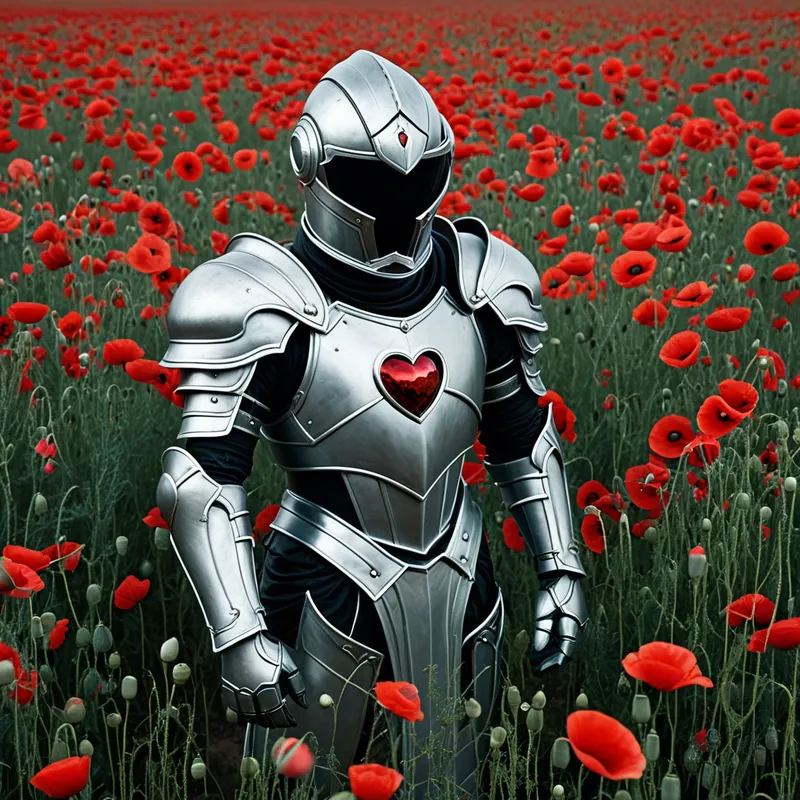
- A magnificent but empty suit of armor.
- Being a revered champion in a game where the rules suddenly feel meaningless or cruel.
- A secret, beautiful room hidden within a familiar, austere building.
- A beloved authority figure turning away in silent disappointment.
Somatically, this can feel like a tightness in the chest—the armor constricting the heart—or a nervous energy in the hands, the body’s urge to act and break free. Psychologically, it is the process of the conscious ego-structure (the Knight/Lancelot) being confronted by the powerful, authentic, but disruptive energy of the soul (the Queen/Guinevere). The dreamer is at the threshold where maintaining the flawless facade becomes more painful than facing the chaos of being real.
Alchemical Translation
The alchemical journey modeled by Lancelot is not one of success, but of necessary, devastating nigredo—the blackening, the utter ruin of the old identity. His story shows that before the gold of the integrated Self can be found, the base metal of the perfect persona must be dissolved in the acid of impossible conflict.
For the modern individual, the “Camelot” is the provisional personality we have carefully constructed to navigate the world. The “Quest for the Grail” is the call to a higher, spiritual wholeness. Lancelot’s path warns us that we cannot answer that call if we are secretly ruled by an unintegrated, possessive passion, whether for a person, an ideal, or our own reputation. His final years as a hermit point to the next stage: the albedo, or whitening. It is a withdrawal from the outer world of deeds and honors to confront the inner reality. The prayer is the beginning of a dialogue with something greater than the fractured self.
Individuation often begins not with a quest, but with a fall from grace. The shattered loyalty is the crack through which the true self, not the ideal self, can finally be glimpsed.
The alchemical translation is this: one must become conscious of both the knight and the lover within. The duty to the inner king (the Self’s ordering principle) and the devotion to the inner queen (the soul’s feeling life) must be brought into a conscious, sacred marriage within the individual. This is the true, unattainable “Grail” that Lancelot sought too late—not a celestial object, but the state of inner reconciliation where one’s actions in the world are no longer at war with one’s deepest passions. We are not meant to choose between being Lancelot or Arthur, but to endure the terrible fire of their conflict until a third, more conscious king can be born in the psyche.
Associated Symbols
Explore related symbols from the CaleaDream lexicon: