Kshirasagara Myth Meaning & Symbolism
The churning of the primordial ocean of milk, a cosmic collaboration between gods and demons to obtain the nectar of immortality and the treasures of existence.
The Tale of Kshirasagara
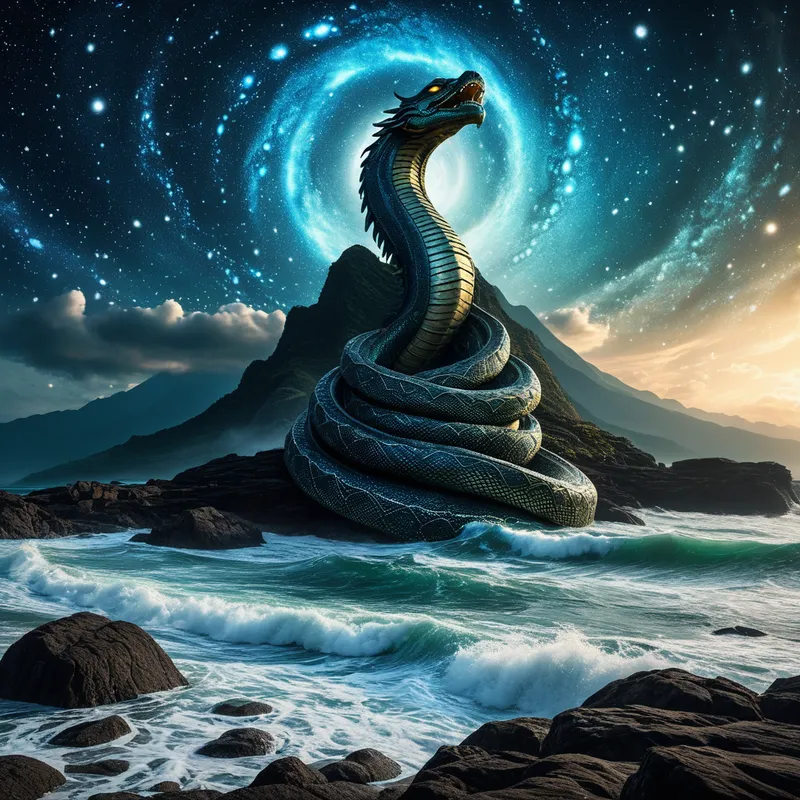
Before the world knew its shape, before time began its measured tread, there existed only the boundless, silent expanse of Kshirasagara. It was not water, but a sea of pure potential, a luminous, curdled light holding within its depths the seed of all that was, is, and ever shall be. The gods, though mighty, were weary. They had been cast from their celestial abodes by the demons, their radiance dimmed by the shadow of defeat. In their despair, they sought the counsel of Vishnu, who reclined upon the coils of the great serpent Shesha, floating upon the very surface of that milky void.
Vishnu’s voice was the sound of deep space. “To regain your sovereignty, you must partake of Amrita. But it lies hidden, deep within the womb of Kshirasagara. You cannot retrieve it alone. You must enlist the very ones who cast you out.”
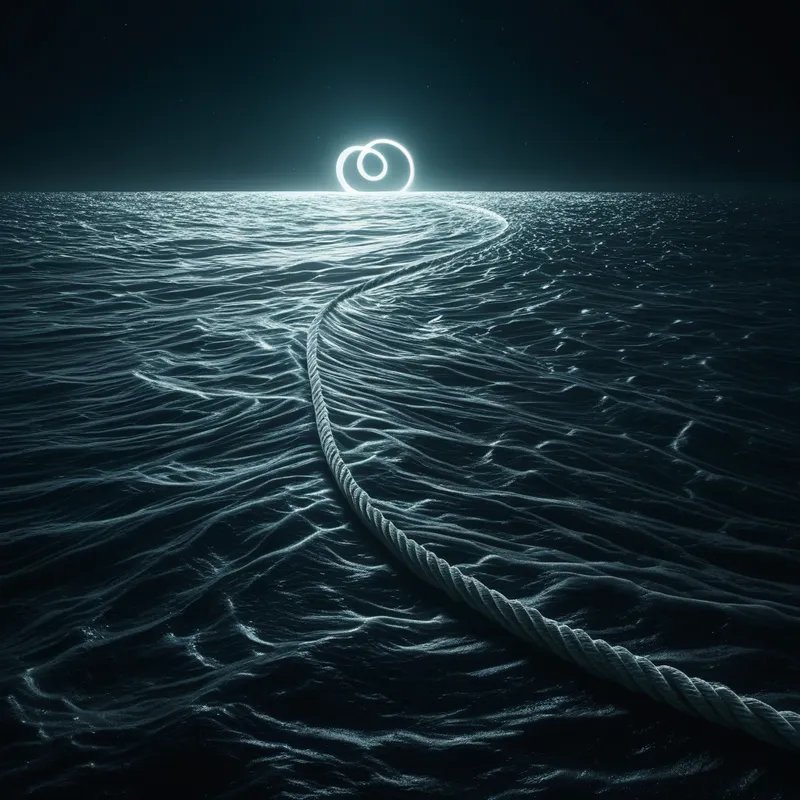
Thus began the great conspiracy of creation. Gods and demons, eternal adversaries, forged a temporary pact. Their goal: to churn the ocean of milk and bring forth its treasures. For a churning rod, they uprooted the colossal mountain Mandara. For a churning rope, they persuaded the king of serpents, Vasuki, to offer his immense body. The gods took hold of Vasuki’s tail, the demons his head, and they began to pull.
The mountain span. The serpent groaned. And the placid ocean began to heave. The first product of this agonizing labor was not treasure, but a deadly, suffocating poison—Halahala—that threatened to consume all creation. In desperation, the gods turned to Shiva, the ascetic lord. Moved by compassion for a world yet unborn, Shiva gathered the virulent poison and drank it, holding it in his throat, which turned blue, earning him the name Neelakantha.
With the poison contained, the churning resumed. From the frothing, luminous depths emerged wonders: the wish-fulfilling cow Kamadhenu, the celestial elephant Airavata, the goddess of wine, the moon, and finally, the physician of the gods, Dhanvantari, who emerged holding the radiant pot of Amrita.
Seeing the prize, the pact shattered. The demons snatched the pot. Chaos erupted. It was then that Vishnu took his second form, that of the enchanting Mohini. Distracting the demons with divine beauty, Mohini secured the Amrita and served it only to the gods, restoring their immortality and power, and setting the stage for the eternal dance of order and chaos that defines the cosmos.
Cultural Origins & Context
The myth of the Churning of the Ocean of Milk, or Samudra Manthan, is one of the most seminal and frequently depicted narratives in the Hindu tradition. Its primary sources are the great epics, the Mahabharata and the Ramayana, and it is elaborated in the Puranas, particularly the Vishnu Purana and the Shiva Purana.
This was not merely a story for entertainment; it was a cosmological blueprint and a societal mirror. Recited by bards and priests, it functioned as a foundational parable on the nature of existence. It explained the origin of celestial objects (the moon, the sun), precious substances, and even potent medicines. More profoundly, it modeled the necessary, if uneasy, collaboration between opposing forces—devas and asuras, light and shadow, order and chaos—required to generate the richness of manifested reality. It taught that creation is not a peaceful act, but a violent, churning process where poison emerges before nectar, and that sustaining the world requires both the preserver’s strategy and the destroyer’s sacrifice.
Symbolic Architecture
At its heart, Kshirasagara is the Brahman in a symbolic form—the undifferentiated, potential-filled substrate of consciousness itself. The churning is the act of attention, of desire, of tapas (austerity), which agitates the unconscious to bring its contents into the light of awareness.
The ocean of milk is the psyche in its primordial state; to churn it is to engage in the perilous, necessary work of self-discovery.
The mountain Mandara represents the axis mundi, the steadfast spine of the individual or the cosmic pillar around which reality revolves—one’s core principles or unwavering focus. The serpent Vasuki is the potent, often dangerous, energy of Kundalini or raw life force that must be harnessed. The gods and demons are the internal polarities of the psyche: our aspirational, luminous selves and our instinctual, shadowy drives. The myth insists that both must participate in the work; we cannot create or transform by repressing our demons, only by engaging them.
The first yield, the poison Halahala, is the unavoidable shadow material—the repressed trauma, rage, and fear—that surfaces when we delve deep. Shiva’s act of containing it is the ultimate psychological lesson: this toxic material must not be rejected or re-swallowed, but consciously held, transmuted, and integrated (symbolized by its containment in the throat, the center of expression). Only after this integration can the true treasures—creativity (Kamadhenu), wisdom, and ultimately, the nectar of wholeness (Amrita)—be realized.
The Dreamer's Resonance
When this myth stirs in the modern dreamer, it signals a profound somatic and psychological process of inner agitation. One may dream of vast, opaque bodies of water in turmoil, of being part of a great, straining collective effort, or of a terrifying yet fascinating serpent. There is a palpable sense of labor, of a necessary but exhausting process underway.
Somatically, this can feel like a deep churning in the gut, a roiling of energy, or a sense of pressure building in the spine or chest—the Vasuki within, being pulled. Psychologically, the dreamer is in the midst of a “churning” life phase: a career change, a relational upheaval, or a dark night of the soul where old certainties dissolve. The emergence of “poison” in dreams—as toxic relationships, sudden outbursts of anger, or overwhelming anxiety—is not a sign of failure, but an indicator that the process is working, that deep material is coming up for integration. The dream ego is simultaneously the god, the demon, and the mountain, caught in the necessary friction of self-creation.
Alchemical Translation
The Samudra Manthan is a perfect allegory for the alchemical process of individuation—the Jungian journey toward psychic wholeness. The prima materia, the base substance, is the unexamined life, the milky ocean of latent potential and unconscious content.
Individuation is the churning of one’s own ocean. The goal is not to become only a god, but to become the entire process—the ocean, the churn, the poison, and the nectar.
The first stage, the agreement between gods and demons, is the conscious acknowledgment of one’s inner contradictions. One must make a pact with the shadow, agreeing to engage with one’s greed, anger, and fear, not as enemies to be destroyed, but as forces to be harnessed for the work. The churning itself is the sustained application of consciousness—through therapy, art, meditation, or honest reflection—that agitates the psyche.
The emergence and containment of the poison is the critical stage of shadow-work. This is the painful confrontation with one’s own Halahala. The Shiva archetype within must activate: the capacity to witness, hold, and neutralize this toxicity without being destroyed by it. This is the “blue throat” stage, where what was poisonous becomes a mark of distinction and transformative power.
Finally, the nectar of Amrita is not literal immortality, but the achievement of a more durable, authentic self. It is the psychological state where one has accessed a source of inner renewal and resilience. Yet, even this prize is contested. The Mohini phase represents the necessary discernment and guile to ensure this hard-won wholeness serves the integrated self (the gods) and is not stolen back by the unintegrated, compulsive aspects of the shadow (the demons). The myth concludes not with an end, but with a new equilibrium, reminding us that the work of self-creation is the eternal, churning dance of life itself.
Associated Symbols
Explore related symbols from the CaleaDream lexicon: