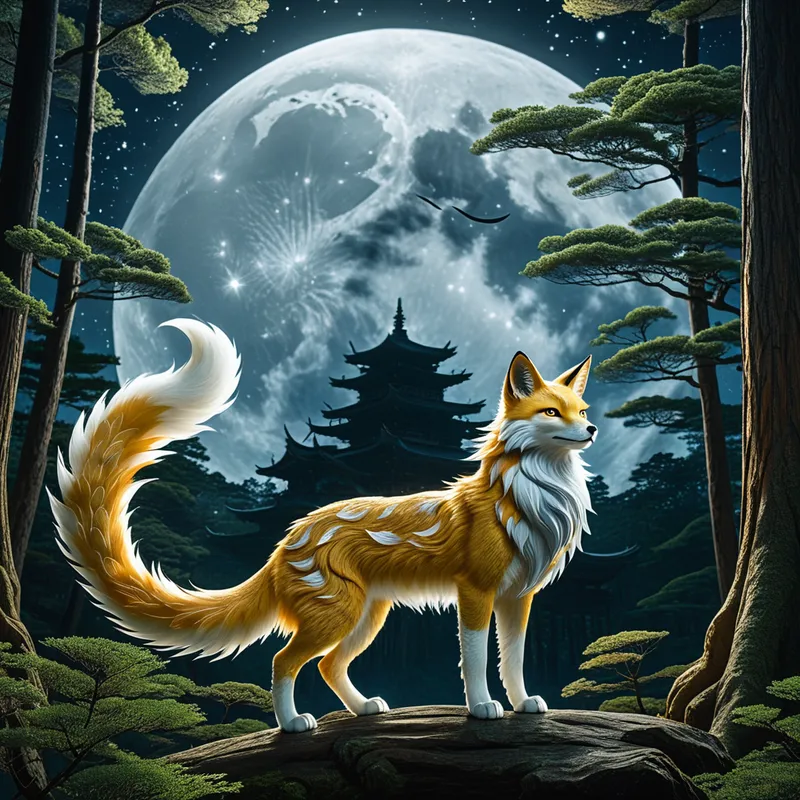
Kitsune Myth Meaning & Symbolism
A myth of the shape-shifting fox spirit, embodying wild wisdom, divine trickery, and the sacred marriage of the untamed soul with the human world.
The Tale of Kitsune
Listen, and let the veil between worlds grow thin. In the time when the mountains were young gods and the rivers sang with the voices of forgotten spirits, there lived a creature of the borderlands. Not wholly of the deep, shadowed forests, nor of the sunlit rice fields tended by human hands, but of the liminal space where mist gathers at dusk.
This was the Kitsune. Some were wild things, nogitsune, who delighted in leading proud samurai astray with phantom lights, or whispering lies into the ears of the greedy to watch their houses fall. But others served the great Inari Ōkami, messenger and guardian, their white fur a sign of celestial favor.
Our tale follows one such fox, a young spirit with but a single brush of a tail. She watched, for decades, a humble woodsman who daily left an offering of rice at a small, mossy shrine in the forest—not out of grand piety, but from a simple, consistent heart. A deep curiosity, a yearning for the warmth and complexity of human feeling, grew within her. On a night when the moon was a sliver of silver, she gathered her kitsunebi, the fox-fire, and wove herself a new form. The rustle of leaves became the silk of a kimono; the whisper of the wind, a soft sigh. She stepped from the treeline no longer a fox, but a beautiful woman with eyes that held the depth of the forest.
She called herself Kuzunoha. Meeting the woodsman, she offered healing herbs for a wound he did not show. Their lives entwined, a marriage built in a small house at the forest's edge. A son was born, a boy with a startling cleverness and a love for both his mother’s stories and the wild creatures outside. For years, the secret held, a pearl of great price nestled in the ordinary shell of daily life.
But the wild soul cannot be fully caged. One evening, as the scent of blooming hagi filled the air, the woodsman brought his son a gift—a fledgling sparrow. The boy, delighted, held it too tightly. A cry escaped the tiny bird, a sound of pure, animal terror. From the kitchen, Kuzunoha heard it. The instinct was faster than thought, older than her human shape. A vulpine yelp tore from her throat.
The woodsman stood frozen in the doorway. The sound hung in the air, a truth that could not be unheard. The illusion, woven with such care, began to fray. Kuzunoha’s eyes met his, and in them, he saw not a monster, but the same loving being he knew—and also the ancient, wild fox from the shrine. The conflict was not of anger, but of shattered reality. With a heart heavier than any stone, she knew the border she had crossed must now be re-sealed. She could not stay.
Before dawn, she took a charcoal stick from the hearth. On the shōji screen, she wrote a poem of farewell, a lament of love bound by cosmic law. Then, she walked back into the mist of the forest, her human form dissolving into the graceful shape of a white fox. But as she paused at the treeline for one last look at her sleeping family, a second tail, luminous and new, unfurled beside the first. Her love, though ending in separation, had been real. And for its truth, the universe itself had granted her a measure of its power. She vanished into the dawn, a guardian spirit watching from the shadows, forever between.
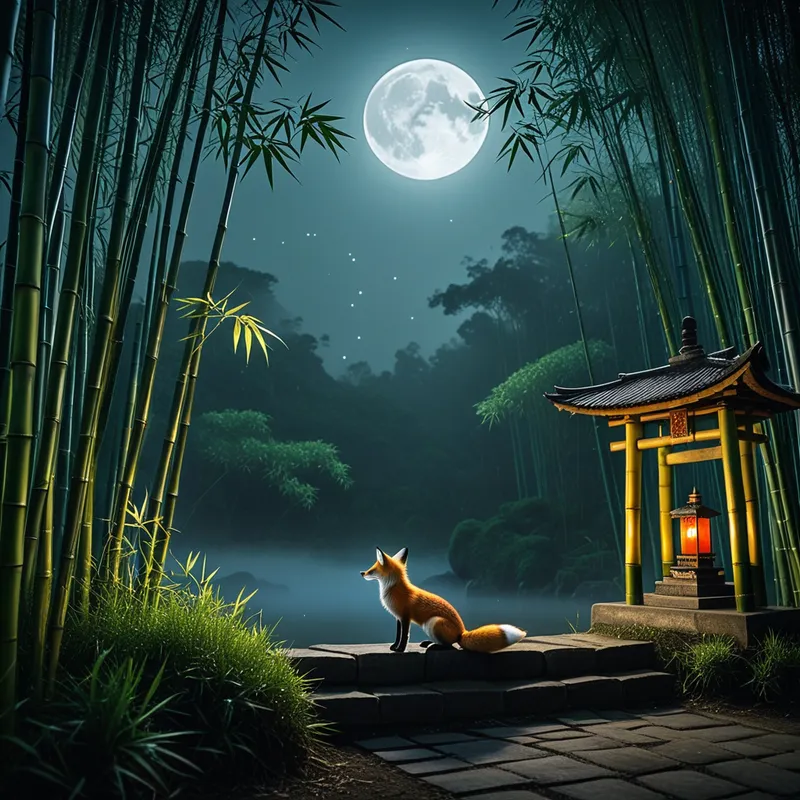
Cultural Origins & Context
The myth of the kitsune is not a single story but a vast, living tapestry woven from the threads of Shinto animism, imported Buddhist and Taoist lore, and centuries of folk storytelling. Foxes (kitsune is simply the Japanese word for fox) were observed as clever, elusive animals living at the periphery of human settlements, natural candidates to be seen as kami or their messengers. Their association with the immensely popular deity Inari, patron of rice, tea, and prosperity, elevated them to a position of sacred reverence. Thousands of Inari shrines across Japan are guarded by stone fox statues, often with a symbolic jewel or key in their mouths.
These tales were passed down orally for generations, told by farmers, priests, and travelers around hearths and in taverns. They served multiple societal functions: as cautionary tales about the dangers of pride and deceit (the work of the nogitsune), as explanations for mysterious illnesses or fortunes (attributed to fox possession or blessing), and as profound narratives exploring the tension between the untamed natural world and the structured human community. The kitsune myth provided a language to discuss the Other—the intelligent, powerful, and often ambivalent forces that exist just beyond the lantern light of civilization.
Symbolic Architecture
At its core, the kitsune is the archetypal symbol of the shape-shifter, a being of fluid identity and profound intelligence. It represents the psychic energy that exists at the threshold of consciousness, capable of great creativity and great deception.
The fox does not lie; it reveals the truth of your own perception through illusion.
Its multiple tails, gained through centuries of wisdom or profound experience, signify accrued spiritual power and integration. The single-tailed fox is the nascent instinct, the raw potential. The nine-tailed fox (kyūbi no kitsune) is the fully realized Self, a being that has mastered and harmonized all aspects of its nature. The pivotal moment in tales like Kuzunoha’s is the involuntary reversion—the yelp, the glimpse of the tail in water. This symbolizes the indestructible core of one's true nature. No matter what persona we construct, the essential instinct, the foundational soul-image, will eventually make itself known.
The kitsune’s duality—as both benevolent Inari messenger and chaotic nogitsune—mirrors the duality of the unconscious itself. It can be a guide, offering inspiration and psychic fertility, or a trickster, exposing our hubris and unresolved complexes. The myth insists that wisdom and wildness are not opposites but intertwined strands of the same powerful force.
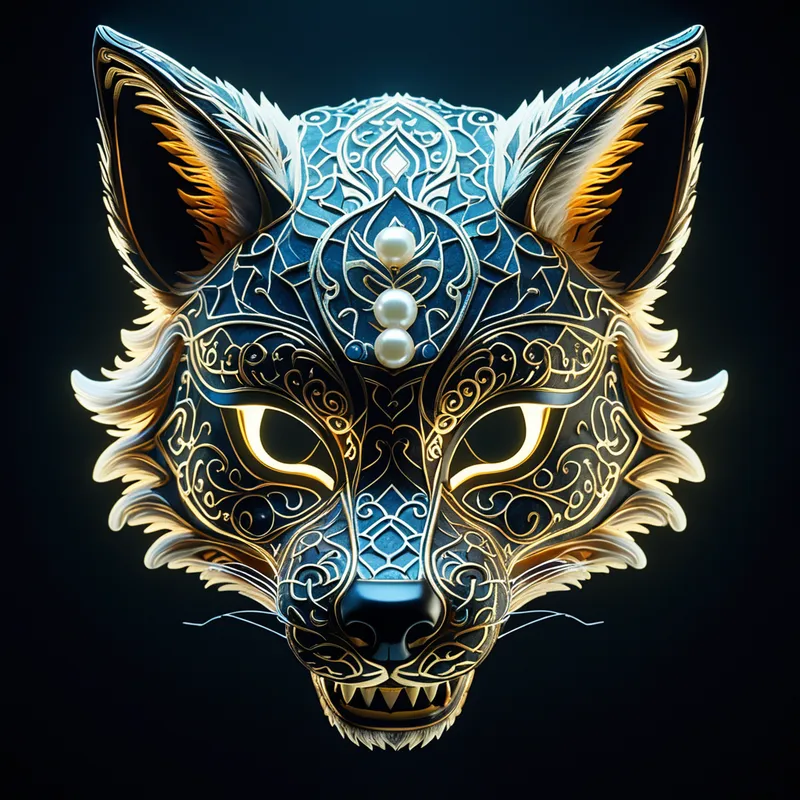
The Dreamer's Resonance
When the figure of the kitsune appears in a modern dream, it signals an active process at the margins of the dreamer’s identity. It is the psyche working on the theme of authenticity versus adaptation.
Dreaming of being pursued by a fox may indicate a fear of an instinctual truth “catching up” with a carefully constructed life. To dream of being a kitsune, especially one struggling to maintain a human disguise, speaks to the somatic cost of wearing a mask, of feeling one’s true nature is somehow unacceptable and must be hidden. The anxiety of exposure is palpable. Conversely, dreaming of a peaceful, wise fox offering a gift or guidance suggests the dreamer is learning to listen to their intuitive, non-rational intelligence—perhaps a creative insight or a deep bodily knowing is seeking entry into conscious life.
The kitsune in dreams often appears at thresholds: doorways, mirrors, forest edges. It marks a transition point where the dreamer is negotiating between different aspects of themselves—the civilized and the wild, the conscious persona and the instinctual shadow.
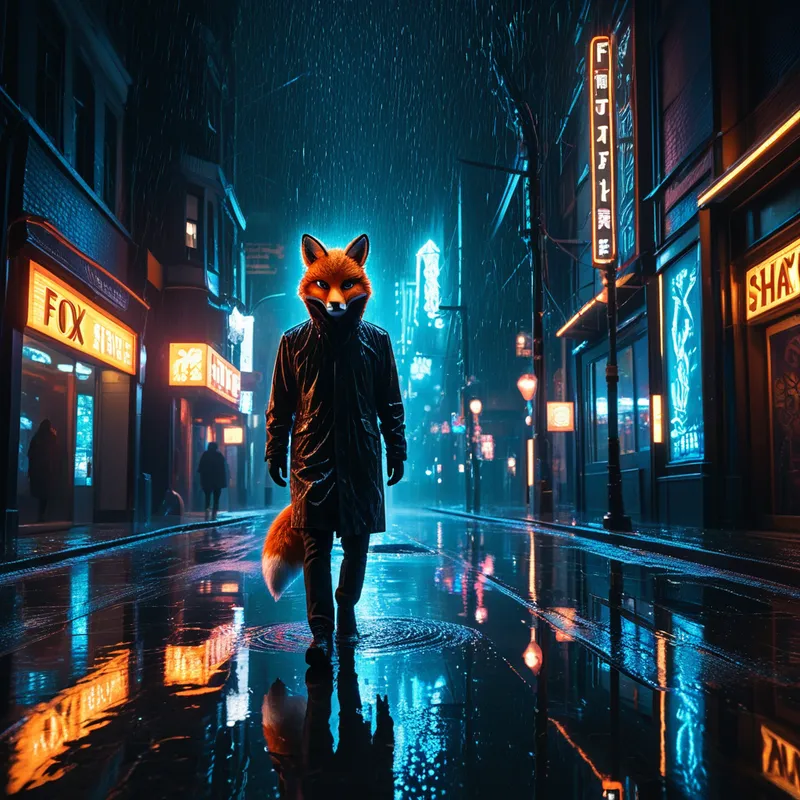
Alchemical Translation
The alchemical journey modeled by the kitsune myth is not one of slaying a beast, but of courting and integrating the wild intelligence within. It is the path of the Magician.
The initial state is one of separation: the human world and the fox world are distinct. The human ego is identified solely with its ordered, daylight self. The first step is curiosity—the fox’s longing for human warmth, or the human’s fascination with the mysterious forest. This is the ego’s nascent recognition of the Other within. The marriage, as in Kuzunoha’s tale, is the conjunction, the sacred and perilous attempt to unite these opposites in conscious life. It is the creative endeavor, the relationship, or the life path that tries to honor both soul and society.
The goal is not to choose between the fox and the human, but to become the shrine where both are honored.
The inevitable crisis—the exposure—is not a failure, but a crucial nigredo, the darkening necessary for transformation. The old form of the relationship must die. The farewell poem is the act of conscious suffering and acknowledgment, the mortificatio. The true alchemical gold is revealed in the resolution: Kuzunoha does not revert to a mere animal, nor does she remain a human. She transforms into a greater fox, gaining a tail. She becomes a kami, a transcendent third thing. The integrated psyche is not a bland compromise, but a new, more potent entity. The human family is not cursed, but protected; the love was real and transformative for all.
For the modern individual, this myth instructs us that our deepest instincts and wildest natures are not enemies to be repressed, but sources of sacred power. The process involves the risk of exposure, the pain of necessary endings, and the courage to live authentically at the border of our own becoming. We are asked to build our shrine, leave our honest offerings, and welcome the wise, shape-shifting spirit of our own depths.
Associated Symbols
Explore related symbols from the CaleaDream lexicon: