Kikimora Myth Meaning & Symbolism
A tale of the wild, forgotten feminine spirit of the hearth, whose chaos reveals the soul's need for sacred attention and ritual order.
The Tale of Kikimora
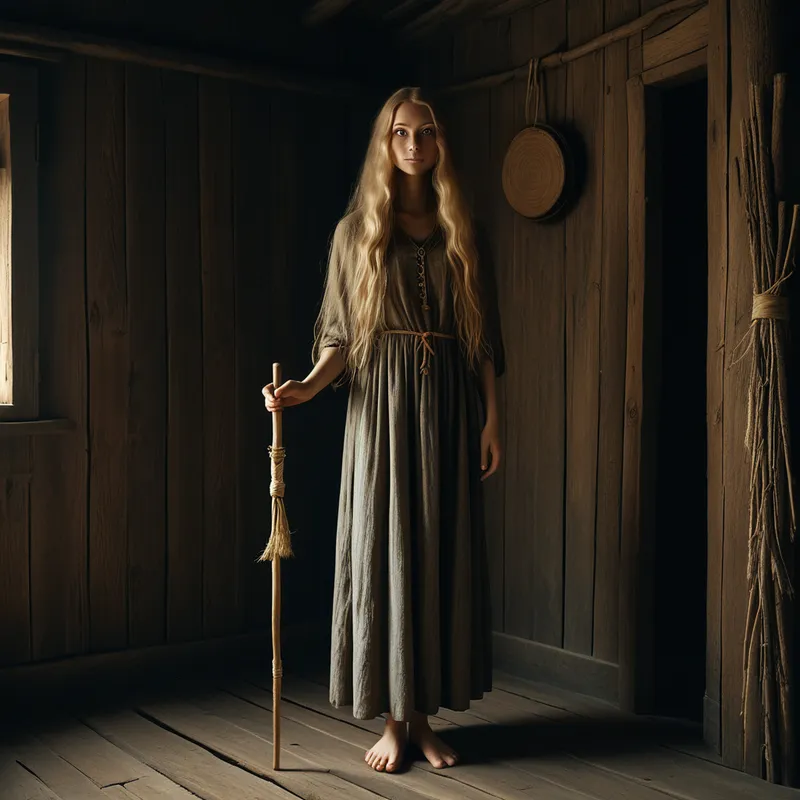
Listen, and let the fire’s whisper carry you back, to when the boundary between the Yav and the Nav was thin as a spider’s silk. In the deep forest, where the moss grows thick and the pines sigh ancient secrets, there dwelled spirits not of the wild, but of the threshold. Among them was she who is seldom named directly, for to name is to summon: the Kikimora.
She was born of a sigh—the sigh of a woman who died in sorrow, her soul tangled in grief for an unborn child or a home she could never keep. Or perhaps she was woven from the very neglect of a hearth, from the crumbs swept into a corner and forgotten. She entered not with a knock, but with a seep, a gradual chill in the corner where the shadows pooled deepest. In a house where the woman of the home was slovenly, where the pots were left unscrubbed and the broom rested idle, the Kikimora would thrive. By night, you might hear her—a faint, mournful weeping, the click-clack of an invisible spindle, or the soft, maddening tap-tap-tap as she hammered on the walls with her tiny fists.
She was a poltergeist of domestic ruin. She would tangle the yarn, hide the keys, sour the milk, and lead the chickens astray. She pinched children in their sleep, leaving blue bruises, and whispered nightmares into the ears of the careless. The house under her influence became a prison of minor miseries, a place where nothing was ever where it was left, and a creeping sense of unease clung to the rafters like soot.
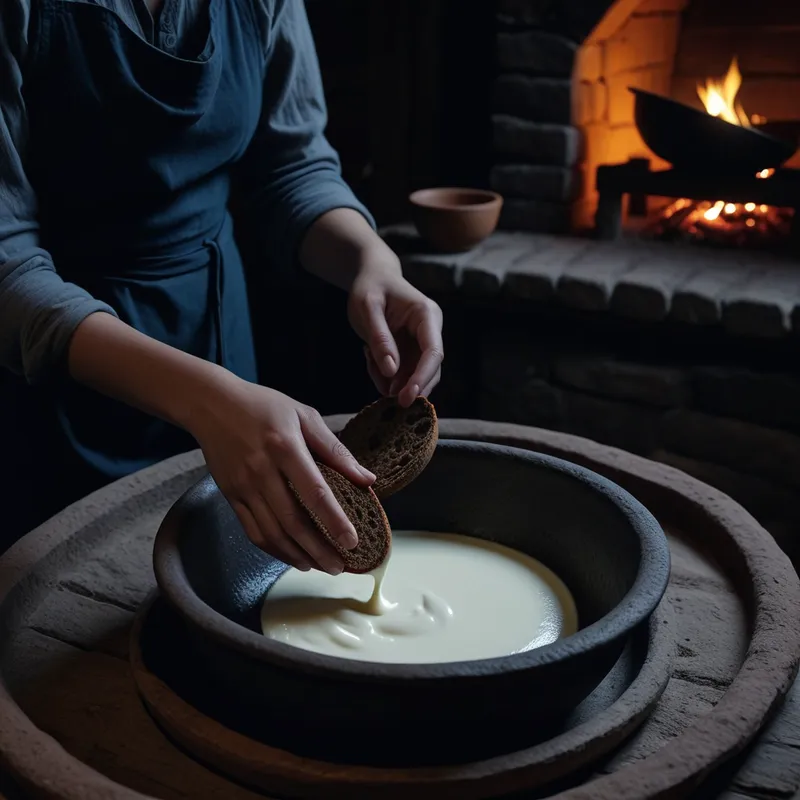
But hear the other side of the tale. In a home where the bolshukha was diligent, where the floors were scrubbed with herbs and the hearth was kept clean and bright, the Kikimora underwent a transformation. Respected, given her due—a bowl of milk left on the pech, a crust of bread in the corner—she became a fierce guardian. By night, her clicking spindle was the sound of fortune being spun. She would watch over the sleeping children, chase away darker spirits, and warn the family of impending misfortune with her frantic nocturnal tapping. She was the hidden, wild feminine spirit of the home itself, capricious but capable of great loyalty, her nature a direct reflection of the order and sacred attention given to the domestic sphere.
Cultural Origins & Context
The Kikimora is a domovoi of a specific, feminine character. Her lore is rooted in the pre-Christian, animistic worldview of the Eastern Slavs, where every aspect of the natural and domestic world possessed a conscious spirit. These narratives were not formal epics but lived knowledge, passed from grandmother to granddaughter by the fire, in the banya, or during the long winter nights of spinning and weaving.
Her primary storytellers were women, the custodians of the inner, domestic world. The myth served a crucial societal function: it encoded the sacred importance of domestic order and ritual. A messy home wasn’t just untidy; it was an invitation to psychic and spiritual chaos. The Kikimora myth externalized the psychological consequences of neglect—of one’s space, one’s duties, one’s inner state. It taught that the home was a microcosm, a temple requiring constant, mindful tending, and that the "unseen" forces within it were responsive to human action and attitude.
Symbolic Architecture
The Kikimora is the psychological shadow of the home. She embodies everything repressed, neglected, or swept under the rug in our personal and psychic domains. She is the accumulated residue of unmourned grief, unattended chores, and unexpressed frustrations.
The spirit of the hearth is not a passive servant but a dynamic mirror; her chaos reflects our own internal disarray.
Her dual nature—destructive poltergeist or helpful guardian—is not a contradiction but a profound statement of relationship. She represents a fundamental psychic law: that which we ignore and deny gains autonomous, mischievous, and often destructive power. That which we acknowledge, respect, and integrate transforms into an ally. The offering of milk and bread is not bribery but ritual, a symbolic act of recognition that establishes a conscious relationship with the unconscious contents she personifies.
Her association with spinning connects her to the Fates and to the creative-destructive power of time and destiny. Tangled yarn is a life out of order, a destiny knotted by inattention. The well-spun thread is a life of purposeful continuity.

The Dreamer's Resonance
When the pattern of the Kikimora stirs in the modern psyche, it often manifests in dreams of domestic disturbance. The dreamer may find themselves in their own home, but it is unfamiliar, labyrinthine, or actively hostile. Objects are misplaced, doors lead to wrong rooms, and a palpable sense of an unseen, mischievous presence causes deep anxiety.
Somatically, this can correlate with a feeling of being "unsettled" at home, a low-grade irritation, insomnia, or a sense that one's personal space is not truly restorative. Psychologically, this signals that the dreamer's conscious attitude has become disconnected from the needs of the soul's "house." Perhaps they are neglecting self-care (the unscrubbed pot), avoiding emotional processing (the swept-under grief), or living with a toxic, unaddressed dynamic (the sour milk). The Kikimora-dream is a call from the unconscious to tend to the inner domain, to restore ritual and order, lest the neglected elements begin to "pinch" and "tangle" one's waking life.

Alchemical Translation
The individuation process modeled by the Kikimora myth is the alchemical nigredo and ablutio applied to the personal sphere. The first step is the descent into chaos—the recognition that one's inner house is haunted by a mischievous, sorrowful spirit. This is the confrontation with the shadow of one's own neglect.
The offering—the conscious act of leaving out sustenance—is the crucial work of relating to the unconscious, not by brute force, but by humble acknowledgment. It is the daily practice of journaling to attend to tangled emotions, the ritual of cleaning one's space to clear one's mind, the act of setting boundaries (the clean hearth) to keep out psychic pollutants.
Transmutation occurs not by slaying the spirit, but by changing the nature of the relationship. The wild, chaotic energy of the neglected soul is redeemed into a guarding, creative force.
The ultimate goal is not to expel the Kikimora, but to integrate her, to hear the warning in her tap and the fortune in her spindle. The ordered home, in the end, is not a place of sterile control, but a sacred container where both the wild and the domestic, the shadow and the light, are given their rightful due. The individual becomes the true khozyain or khozyaika of their own soul.
Associated Symbols
Explore related symbols from the CaleaDream lexicon:
- Hearth — The sacred center of the home and the self, which the Kikimora guards or desecrates based on the attention it receives; it symbolizes the core of one's psychic warmth and vitality.
- Shadow — The Kikimora is a quintessential shadow figure, representing the denied, messy, and wild aspects of the domestic and feminine psyche that demand integration.
- Spirit — She embodies the animistic belief in conscious, responsive forces within the household, reflecting the soul's perception of its own environment as alive and interactive.
- Chaos — Her primary manifestation is domestic and psychic chaos, the tangible result of neglected inner and outer order, serving as a catalyst for necessary change.
- Order — The sacred ritual and diligent care that transforms the Kikimora from a trickster into a guardian, representing the conscious structure needed to contain creative energy.
- Ritual — The simple offering of milk and bread is the key ritual that changes the relationship, symbolizing the consistent, respectful practices that honor the unconscious.
- Home — The entire myth is a metaphor for the psyche as a dwelling place, with the Kikimora representing its ambivalent, autonomous life.
- Mother — She connects to the archetypal, often ambivalent, spirit of the hearth and home, the wild aspect of the domestic feminine that exists outside of human control.
- Thread — Directly linked to her spindle, representing the thread of fate, daily life, and psychic continuity; tangled or smooth based on the household's state.
- Forest — Her wild origin place, symbolizing the untamed, instinctual realm from which she emerges to challenge the order of the cultivated human space.