Keju System Myth Meaning & Symbolism
A mythic tale of a celestial examination hall where souls are tested, forging identity through a crucible of ink, memory, and imperial mandate.
The Tale of Keju System
Listen, and hear the tale of the great forging. It does not begin with a bang of thunder, but with the soft, relentless scratch of a brush on paper, a sound that built an empire’s spine.
In the age when the world was a tapestry of warring states and fragmented dreams, the August Sovereign looked upon the chaos and saw a deeper disorder—a chaos of the soul. Men of ambition clashed like un-tempered swords, their worth measured by bloodline and blade, not by the substance of their character or the clarity of their thought. The empire groaned under the weight of incoherence.
From this yearning for a celestial pattern, the Sovereign summoned the Mandarins of the Void. "We shall build a Hall of Judicious Accord," he decreed, his voice echoing the mandate of heaven. "Not of stone and mortar, but of principle and paradox. It shall be a crucible for the soul's metal."
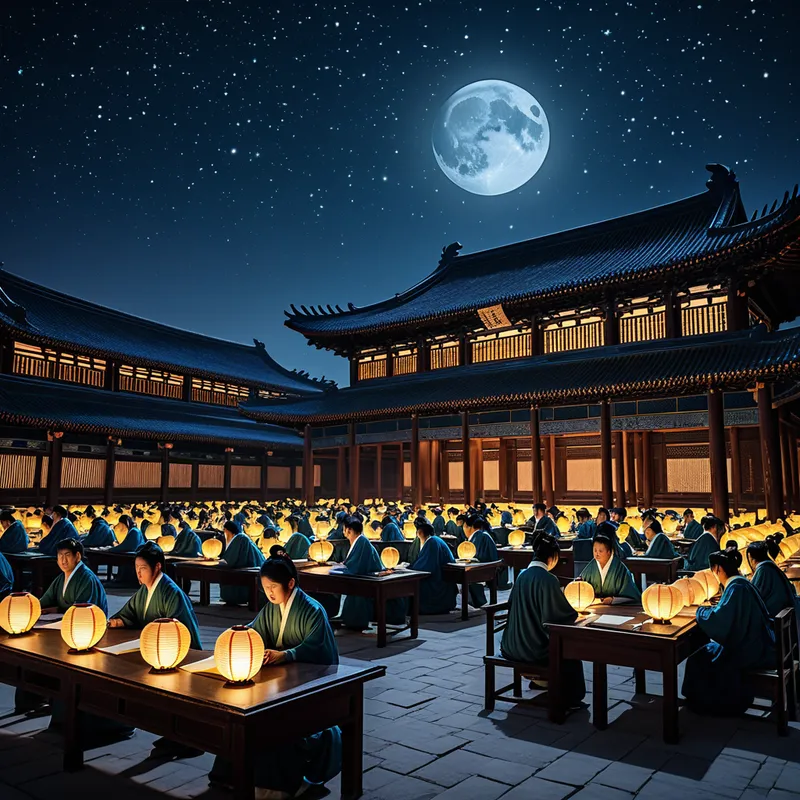
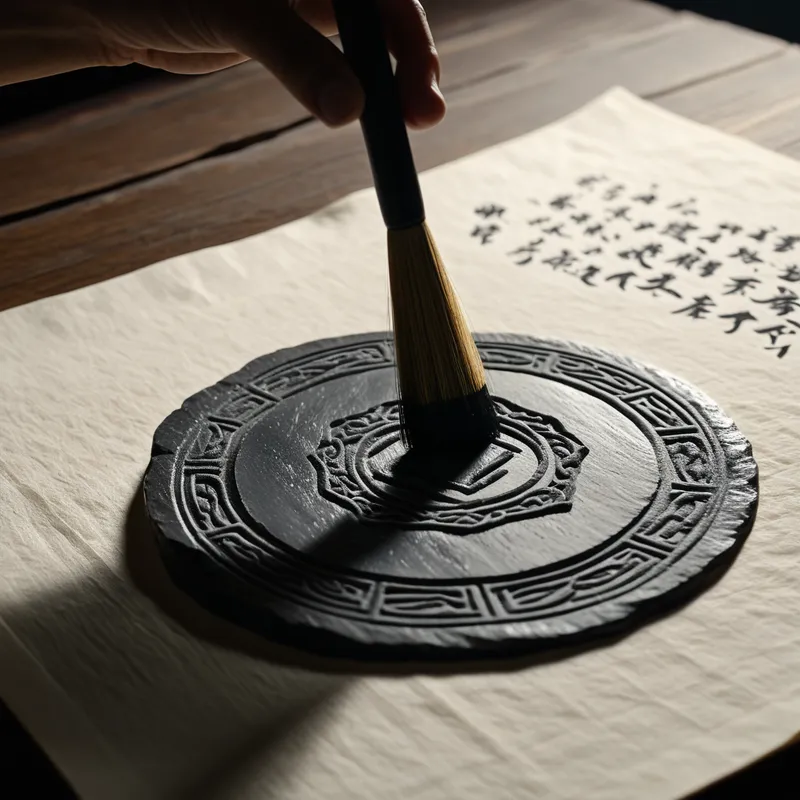
And so it was woven into being. The Hall was not a place one could find on any map, yet every aspiring heart knew the path. At the appointed time, under a sky heavy with the promise of rain or revelation, the seekers would arrive. They were sealed within countless tiny cells, The Hermit's Cages, with only a sliver of sky visible through a high window. Before them lay the tools of their trial: the Black Pool of Endless Memory, the Bamboo Spine, and the Silent Field of White.
For days and nights that blurred into one endless moment, the only sound was the whispering friction of thought made manifest. They wrote of history's cycles, of the proper rites to honor heaven and earth, of governance as an extension of cosmic harmony. They wrestled with classical verses that held the wisdom of ancestors, and composed essays that were meant to be bridges between the ideal order of the sages and the imperfect clay of the human world.
This was no mere test of memory. It was an alchemy of identity. The Graded One Who Does Not Sleep watched, not as a person, but as the implacable gaze of the system itself. Ink became blood; arguments became sinew. Some candidates emerged, their eyes clear, their essays bearing the unmistakable seal of the Vermillion Phoenix. They were transformed, reborn with a new name and a place in the celestial bureaucracy. Others left as ghosts, their writings faded, their spirits broken upon the anvil of expectation, destined to wander the margins of the myth, forever "the once-examined."
Thus, the great engine turned, generation upon generation, drawing the brightest and most desperate into its maw, promising order, identity, and a name that would echo beyond a single lifetime.
Cultural Origins & Context
The myth of the Keju System is not housed in a single epic poem, but is woven into the very fabric of Chinese social history and collective memory. Its origins are inseparable from the historical Imperial Examination System, which began in earnest during the Sui and Tang dynasties and lasted over a millennium. This was the societal mechanism that translated Confucian ideals of merit, learning, and service into a functional, world-shaping bureaucracy.
The myth was passed down not by bards around a fire, but by generations of scholars, families, and communities. It lived in the stern instructions of a teacher, the hopeful sigh of a mother, the crowded exam-town inns on the eve of the tests, and the countless popular stories and operas about the scholar who triumphs against all odds or the genius who is unjustly failed. Its societal function was profound: it provided a shared narrative of social mobility, legitimized state power through the lens of meritocratic idealism, and created a common cultural language rooted in the classical canon. It was the story a civilization told itself about how order is maintained and how an individual finds their place within the cosmic and social hierarchy.
Symbolic Architecture
At its heart, the Keju myth is a profound ritual of initiation. The Hall of Judicious Accord symbolizes the liminal space—the threshold between the amorphous potential of the unproven self and the defined identity of the socially recognized self. It is a psychic womb that births bureaucrats and sages.
The brush is not a tool, but a lightning rod for the soul; the essay is not an answer, but the map of a mind navigating the constellations of tradition.
The Hermit's Cages represent the necessary isolation of this transformation. True initiation requires a confrontation with the self, stripped of all external supports—family, status, wealth. One faces only the contents of one's own mind and character. The Canonical Paradoxes presented are the symbolic dragons to be slain. They are not problems to be "solved" in a modern sense, but patterns of cosmic and social order to be internalized and re-expressed. To master them is to demonstrate that one's inner architecture is in harmony with the great architecture of the civilization itself.
The Vermillion Phoenix is the ultimate symbol of validation and rebirth. It is the imprint of the system, the transformative fire that consumes the old, private identity and grants a new, public one. Conversely, failure is not merely a setback; it is a symbolic death, a return to the chaotic world of the unformed, often mythologized as a descent into madness, ghosthood, or rustic obscurity.
The Dreamer's Resonance
When this myth stirs in the modern dreamer, it rarely appears as an ancient examination hall. Instead, it manifests as the core experience of being judged, categorized, and validated by an immense, faceless system. One might dream of taking a test for which they are utterly unprepared, where the questions are in an alien language. They may dream of waiting in an endless, bureaucratic queue for a stamp that never comes, or of desperately trying to fill out a form that keeps dissolving in their hands.
Somatically, this can feel like a constriction in the chest, a paralysis before a blank screen, or a profound fatigue from carrying an invisible, heavy load. Psychologically, this is the process of confronting what we might call the Inner Mandarin—the internalized authority that measures our worth against external metrics of success, prestige, and "correct" performance. The dream signals a crisis of legitimacy. The dreamer is undergoing a rite of passage where their self-defined identity clashes with the identities bestowed by society (job titles, social status, grades, accolades). The anxiety is the friction of this transformation.

Alchemical Translation
The individuation process modeled by the Keju myth is not about passing the external test to gain societal approval. The true alchemy is in using the pressure of the system as the catalyst for forging a more authentic self.
The first step is to voluntarily enter one's own Hermit's Cage—to create a space for ruthless self-examination. What are the "Canonical Paradoxes" you are trying to solve? Are they society's questions, or have you discovered your own? The alchemical work is to take the ink of inherited knowledge (education, culture, family values) and, through the brush of your unique consciousness, write an "essay" that is authentically yours.
The goal is not to receive the Vermillion Phoenix from an external hand, but to become the crucible in which the Phoenix of your own authentic authority is born.
This means grappling with the Inner Mandarin, not to overthrow it blindly, but to understand its language, to differentiate its demands from your own soul's calling. Perhaps you integrate its need for structure and discipline, but redirect it toward your own intrinsic goals. The triumph is not in escaping the system, but in achieving a relationship with it where you are no longer merely its subject, but a conscious participant who understands its symbolic function. You translate the imperial mandate into a personal mandate. In doing so, you move from being an examinee, perpetually waiting for a grade, to becoming a kind of sage—one who administers the territory of their own soul with wisdom, merit, and a hard-won authority that needs no external seal to validate its existence.
Associated Symbols
Explore related symbols from the CaleaDream lexicon: