Katabasis Myth Meaning & Symbolism
The archetypal journey of descent into the underworld, a confrontation with death and the past to retrieve lost wisdom and achieve profound rebirth.
The Tale of Katabasis
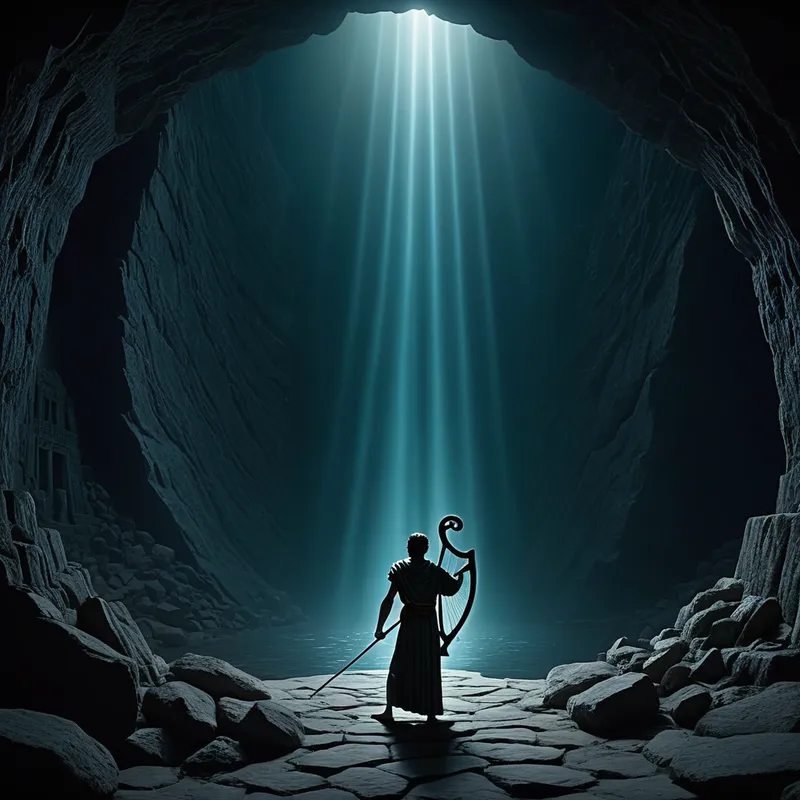
Hear now the tale of the deepest journey, the path not of sun or stars, but of roots and stone. It begins not with a call to glory, but with a cry of loss so profound it cracks the world. The air grows cold, the light turns thin and grey. The hero stands at a threshold no map can mark: the yawning mouth of a cave, the shore of a black river, the gaping fissure in the earth where the warmth of life bleeds away into silence.
This is the realm of Hades, the Unseen One, and his queen Persephone. Here, the river Styx coils like a serpent of forgetfulness, and the air is thick with the sighs of shades. The hero comes as a thief of ghosts, armed only with a desperate love or an unbreakable oath. They must bargain with the grim ferryman Charon, pass the three-headed hound Cerberus, and walk the asphodel meadows where the dead drift like mist.
They seek an audience in the throne room of shadows. Perhaps they plead for the soul of a beloved, like Orpheus with his lyre that makes even the stone-hearted weep. Perhaps they come to wrestle a secret from death itself, like the mighty Heracles. The confrontation is a mirror held in absolute darkness. The hero faces the finality they sought to cheat, the cold truth of separation. Sometimes, they succeed in their quest—a shade is permitted to follow, a boon is granted. But the price is a law: do not look back. The ascent is a trembling hope, a retracing of steps now charged with unbearable tension. The moment of turning, of a glance over the shoulder, is the moment the underworld reclaims its prize. The hero emerges alone, forever scarred by the touch of that realm, carrying not a trophy, but a transformation etched upon their soul.

Cultural Origins & Context
The myth of katabasis was not mere entertainment for the ancient Greeks; it was a foundational narrative pattern that gave shape to their deepest existential anxieties and hopes. These stories were woven into the epic poetry of Homer’s Odyssey (Odysseus’s consultation with the dead in Book 11) and Virgil’s Aeneid, performed in the tragic plays of the Athenian stage, and recounted in local cult practices, particularly those associated with the Eleusinian Mysteries.
The function was multifaceted. On one level, it was a cosmology—a map of the afterlife that explained the fate of the soul. On another, it was a moral and psychological template. The journey to Hades was the ultimate test of arete (excellence) and metis (cunning). It reinforced cultural values: the importance of proper burial rites (to pay Charon), the power of music and poetry (Orpheus), and the supreme, often tragic, force of love and duty. These tales were told to confront the terror of death by having a hero face it and return, however changed, offering a fragile thread of connection between the world of the living and the absolute unknown.
Symbolic Architecture
At its core, katabasis is the archetype of the necessary descent. It represents the conscious, voluntary journey into the parts of the self—and of reality—that have been denied, repressed, or feared. The underworld is not a place of evil, but of what has been placed beneath: forgotten memories, unlived potentials, unresolved grief, and the psychic contents we label our “shadow.”
The treasure guarded by the dragon of the underworld is not gold, but the part of your soul you had to leave behind to become who you are.
The hero represents the ego, setting forth on a quest for a specific value (the beloved Eurydice, the wisdom of Tiresias). The deities of the underworld, Hades and Persephone, symbolize the sovereign, impersonal laws of the unconscious psyche and the cyclical nature of life-in-death. The prohibition “do not look back” is the critical test of inner transformation: one cannot integrate the depths while clinging to the old perspective of the surface world. The failure to obey is not a moral failing, but a psychological truth—the ego’s desperate need for validation often causes it to grasp at the very thing it wishes to integrate, thus losing it.
The Dreamer's Resonance
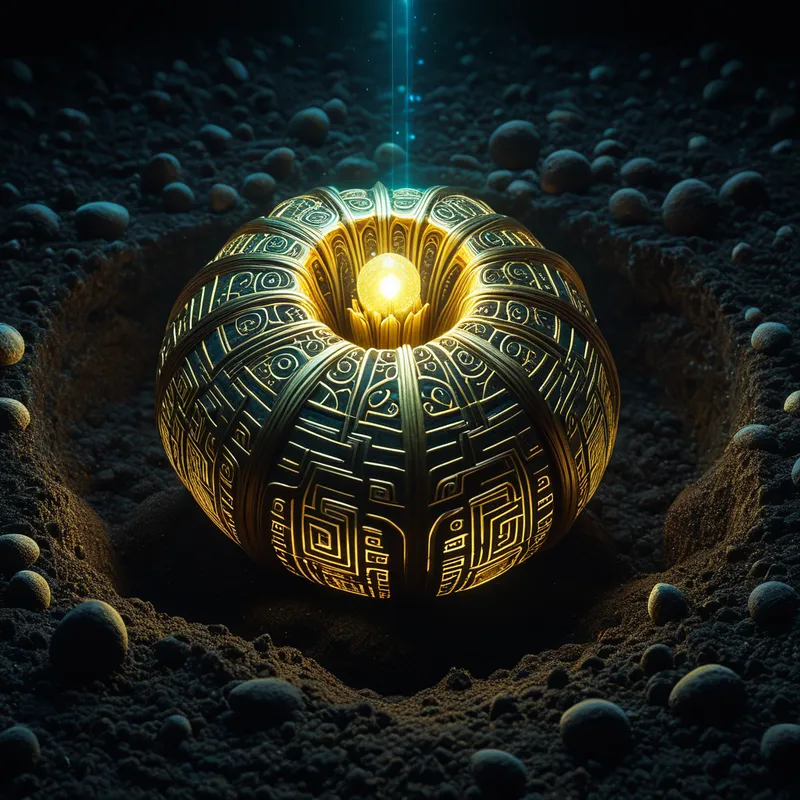
When the pattern of katabasis stirs in the modern dreamer, it announces a profound somatic and psychological process. This is not a simple nightmare, but a numinous dream of descent. The dreamer may find themselves in basements that descend further than possible, in ancient subway systems leading to caverns, or simply moving downward through a landscape that grows increasingly primordial and silent.
The body in the dream often feels heavy, pulled by gravity. This somatic sensation mirrors the psychological weight of the material being confronted—a depression that is literally a “pressing down.” The figures encountered—shadowy guides, silent ancestors, or even a version of the dreamer themselves from a different time—represent disowned aspects of the psyche seeking recognition. The process at work is one of psychic digestion. The conscious mind is being compelled to metabolize what it has refused: a past trauma, a buried talent, a grief put aside for survival. The dream is the psyche’s autonomous ritual, guiding the ego through its own underworld so that what is frozen (like the shades in Hades) may begin to move again within the flow of life.
Alchemical Translation
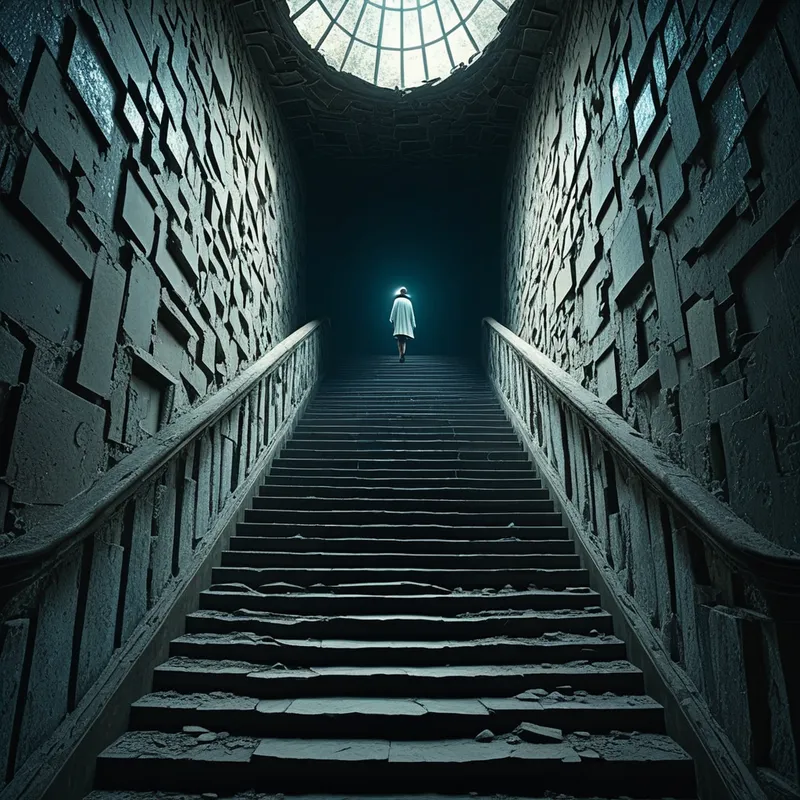
In the alchemical work of individuation—becoming the integrated, whole Self—katabasis is the essential first operation, the nigredo or blackening. It is the dissolution of the persona, the comfortable identity we present to the world, in the dark waters of the unconscious.
The goal of the descent is not to escape the darkness, but to learn its language and retrieve the gold hidden in its heart.
The modern individual embarks on this alchemical katabasis whenever they consciously engage with therapy, deep introspection, creative blockages, or spiritual crisis. The “beloved” to be retrieved is often a lost sense of authenticity, a vital feeling, or a core passion. The confrontation with the “lord of the underworld” is the encounter with one’s own complex-driven behaviors and core wounds, which hold absolute power until faced directly. The prohibition against looking back translates to the necessity of holding the tension of transformation without retreating into old narratives, defenses, or blame.
The triumph of this inner katabasis is not a life free of darkness, but a life in dialogue with it. The hero who returns does not conquer death, but gains its wisdom. They carry back the lapis philosophorum—the philosopher’s stone—which is the hard-won knowledge of the Self, a consciousness that now encompasses both the heights and the depths. They have performed the ultimate alchemy: turning the leaden weight of the shadow into the gold of embodied wisdom.
Associated Symbols
Explore related symbols from the CaleaDream lexicon: