Kantharos of Dionysus Myth Meaning & Symbolism
The story of the god Dionysus's sacred drinking cup, a vessel of divine ecstasy, madness, and the terrifying, transformative power of raw life.
The Tale of Kantharos of Dionysus
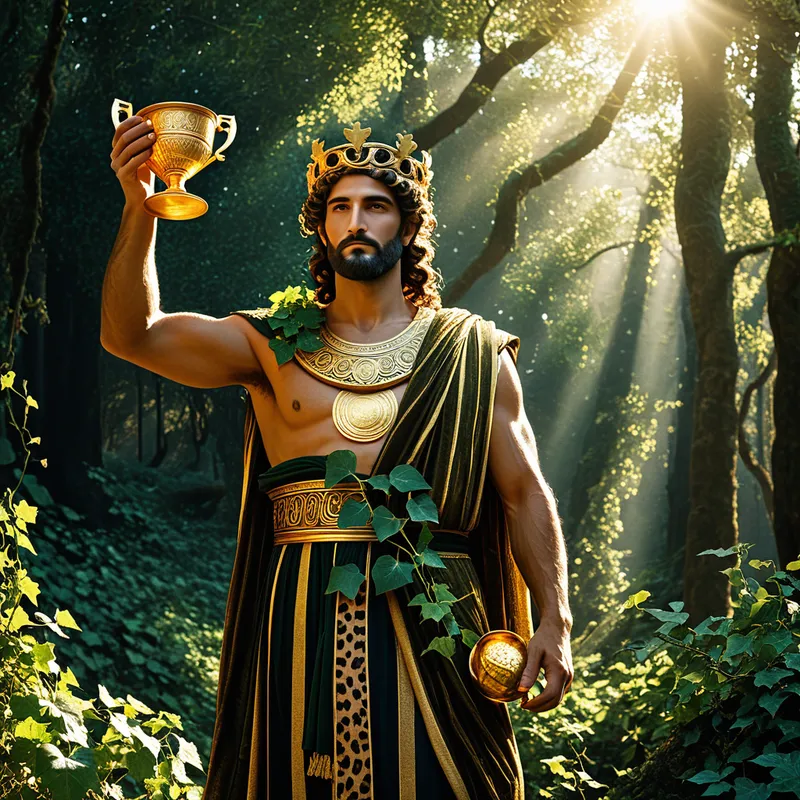
Listen. The air is thick with the scent of crushed grape and damp earth, of pine resin and the musk of animal hide. It is not the clean, ordered air of the temple, but the wild, breathing air of the mountain. Here, in the twilight spaces between the cultivated field and the untamed wood, he walks.
He is Dionysus, the twice-born, the stranger-god. His hair is dark as the wine-press, crowned with a wreath of ivy that whispers of eternal, clinging life. In his hand, he does not carry a scepter of gold, but a cup of humble clay, shaped by no mortal potter. This is the Kantharos. It is not empty.
From it rises a perfume that is more than smell—it is a promise, a memory of sunlight stored in the blood of the earth. He offers it not to kings upon their thrones, but to shepherds with wind-roughened faces, to women whose hands are calloused from the loom. “Drink,” his eyes seem to say, a smile playing on lips that know both song and scream. “Drink, and remember what you have forgotten.”
And they drink. The first sip is sweetness, the warmth of harvest home. But the cup is deep. The second draught is a fire in the veins, a loosening of the knots that bind the soul to the daily grind. Laughter bubbles up, unbidden. Feet, once heavy, begin to move to a rhythm heard not with the ear, but in the pulse. They become his followers, his Maenads, clad in fawn-skins, their hair unbound.
But the Kantharos holds a third measure. This is the dregs, the lees. To drink this is to drink the god whole. The comforting fire becomes a conflagration. The joyful rhythm becomes a pounding, tearing frenzy. The self, so carefully constructed—the dutiful daughter, the stern father, the respectable citizen—cracks like a clay mask. What emerges is raw, howling life. It is the ecstasy that dances with its twin, terror. They tear apart animals with bare hands, not in cruelty, but in a shattering recognition of the wild, consuming life-force that runs through all things, themselves included.
This is the journey of the cup: from the sweet gift of the vine, to the liberating frenzy of the feast, to the annihilating, revelatory madness of total communion. The Kantharos is the vessel of this entire spectrum. It is the gracious host and the devastating flood. It offers the gift that, if accepted fully, destroys the one who receives it, only to remake them in the god’s wild image. The myth is not a story with a neat end, but an eternal cycle of offering, acceptance, shattering, and return. The god with the cup is always walking towards the edge of the village, waiting for the next thirsting soul.
Cultural Origins & Context
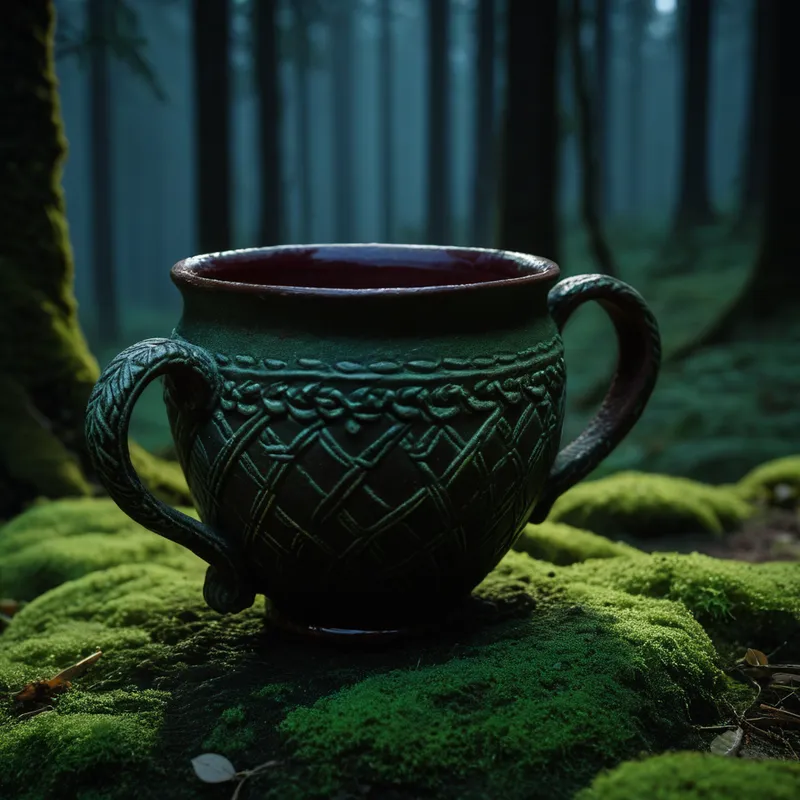
The figure of Dionysus and his sacred vessel did not arrive in the Greek world fully formed from Olympus. He was a god of edges and intrusions, whose myths and rituals carried the scent of foreign lands, perhaps Thrace or Phrygia. His worship was often met with resistance by civic authorities, a tension perfectly captured in myths like that of Pentheus. The Kantharos was central to this disruptive, ecstatic worship.
This was not the wine of the symposium, diluted and discussed by philosophers. This was the wine of the orgia—the secret rites performed on mountainsides, primarily by women. The Kantharos in these contexts was a ritual implement of profound power. Its contents were not merely alcoholic but were understood as the literal presence of the god. To drink was to ingest the mania (divine madness) of Dionysus. The myth, passed down through poets like Homer and dramatists like Euripides, served as both a warning and an invitation. It explained the terrifying, transformative power of the Dionysian cults that operated at the margins of polite society, offering an experience of totality that the rational, Apollonian order of the city-state could not contain.
Symbolic Architecture
The Kantharos is far more than a drinking vessel. It is a symbolic map of a radical psychological process.
The cup does not create the wine; it reveals the chaos and creativity contained within the one who drinks.
First, it is the Container. It represents the necessary vessel of the ego or the conscious personality. Without a cup, the wine—the raw, unconscious, instinctual life-force—simply spills into the earth, useless or chaotic. The cup gives it form, makes it something that can be approached, held, and intentionally consumed.
Second, it holds the Ambivalent Elixir. The wine symbolizes the daimonic—that which is simultaneously divine, creative, ecstatic, and destructive. It is the libido, the life-energy in its pure, undifferentiated state. It holds the promise of divine joy, artistic inspiration, and liberation from repression, but also the threat of madness, addiction, and the utter dissolution of the self.
Finally, the act of Drinking symbolizes the ego’s voluntary engagement with the contents of the unconscious. This is not a cautious sip of analysis, but a full commitment to the experience. It is the choice to face one’s own depths, with all the terror and glory that entails. The myth insists that to truly know this power, one must be willing to be broken apart by it.
The Dreamer's Resonance
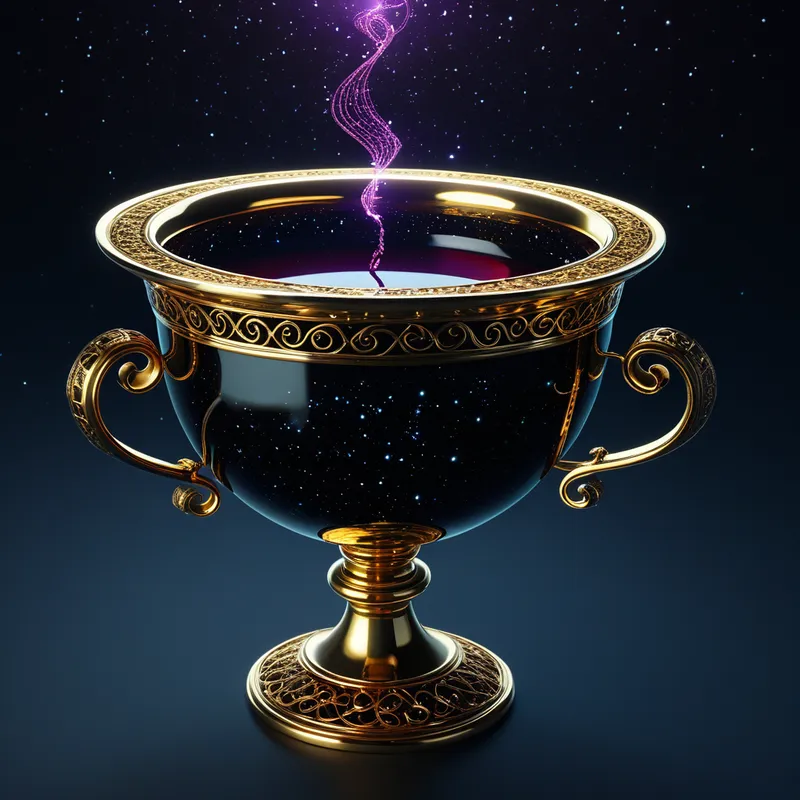
When the Kantharos appears in a modern dream, it rarely comes as a simple wine glass. It may be a cherished mug, a ceremonial bowl, a cracked vase, or even a glowing, impossible vessel. Its appearance signals that the dreamer’s psyche is engaging with a potent, transformative content from the unconscious.
To dream of finding or being offered the cup suggests an invitation from the deeper self. A new energy, a creative impulse, or a long-buried passion is seeking entry into conscious life. There is a thirst for something more profound than daily routine.
To dream of drinking from it and experiencing joy or inspiration mirrors the first stage of the myth. The unconscious is offering a gift—a surge of vitality, a new connection to instinct or emotion. This is often a positive, energizing dream.
To dream of the cup overflowing, breaking, or its contents turning threatening—becoming blood, poison, or storm—points to the second, more challenging stage. The ego-container is being overwhelmed. This can correlate with feelings of emotional flooding, a life crisis, addictive patterns, or the terrifying emergence of repressed rage or grief. The psyche is insisting that a controlled, sipped engagement is no longer sufficient; a deeper, more chaotic confrontation with this inner material is required.
Alchemical Translation
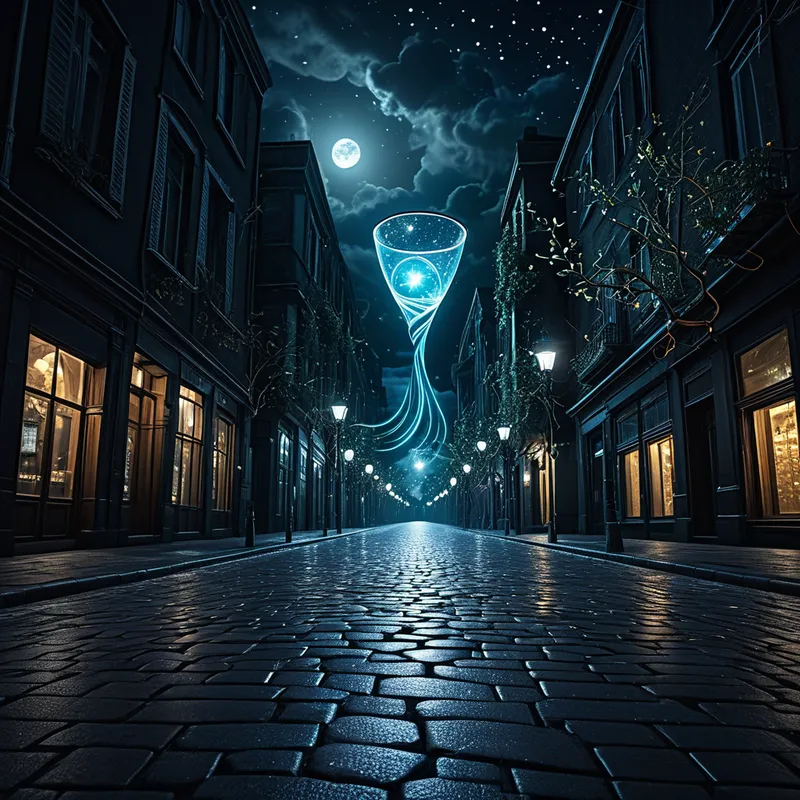
The journey with the Kantharos is a blueprint for the alchemical process of individuation—the Jungian path toward psychic wholeness. It models the terrifying and necessary work of integrating the shadow.
The first step, Nigredo (the blackening), is the recognition of one’s thirst. It is the dissatisfaction with a life lived only on the surface, the feeling of being parched in a spiritual desert. One seeks the cup.
The offering and first drink represent Confrontation with the Shadow. The “wine” is all we have denied in ourselves—our wildness, our rage, our primal desires, our irrational creativity. The ego, the “I,” must choose to consciously drink this in, to acknowledge these parts as its own, not as foreign enemies.
The madness of Dionysus is not a pathology to be cured, but a sacred dissolution required for a more authentic self to be born.
The frenzy and dissolution—the myth’s climax—are the Solutio (dissolution). The old, rigid ego-structure is broken down by the power of what it has ingested. This is a psychological death. In life, this feels like a breakdown, a profound loss of identity, a dark night of the soul.
But the myth does not end there. Dionysus’s followers, though maddened, are not destroyed; they are transformed. They gain a fearsome vitality and a direct connection to the life-force. This is the Coagulatio—the re-forming of the personality around a new center. The integrated individual is not the same polite citizen who first took the cup. They have tasted the divine madness and survived. They carry within them both the order of the conscious mind and the wild, creative, terrifying power of the unconscious, now held in a more capacious, resilient vessel—a Self that has been remade by the contents of its own sacred Kantharos.
Associated Symbols
Explore related symbols from the CaleaDream lexicon: