
Joseph's Grain Silos Myth Meaning & Symbolism
A betrayed dreamer interprets divine warnings, guiding a nation through famine by building granaries, transforming prophetic vision into collective survival.
The Tale of Joseph's Grain Silos
Listen. In the land of Canaan, where the hills are the color of old parchment, there lived a father who loved one son above all others. This son, Joseph, was a dreamer. He dreamed of sheaves of grain bowing down, of stars paying homage. He spoke these dreams, and the venom of his brothers’ envy filled the air like desert heat. They cast him into a pit, then sold him for pieces of silver to traders bound for the land of the Nile, Egypt.
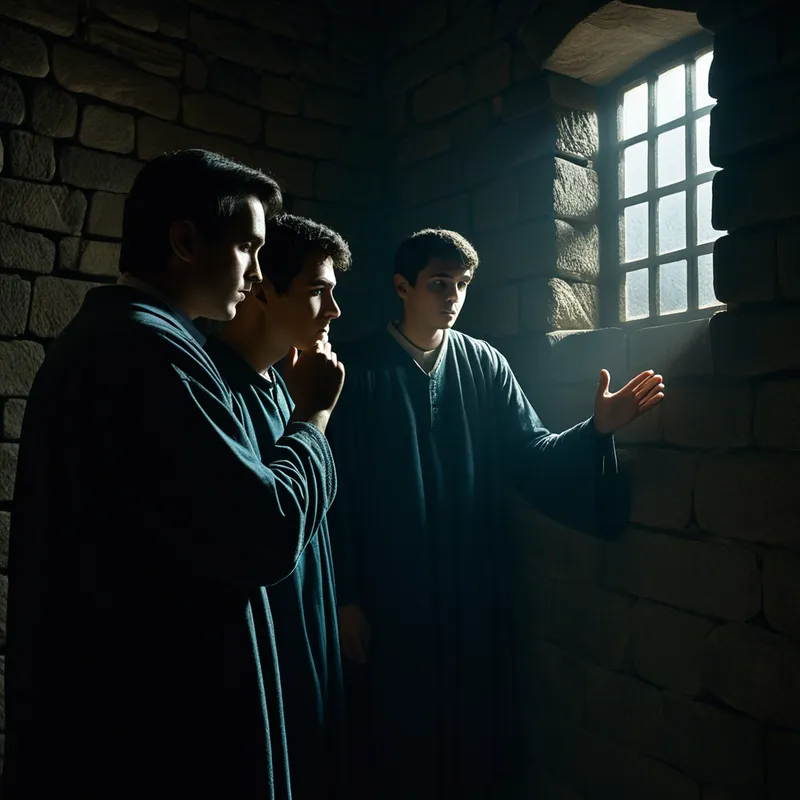
In Egypt, Joseph was a slave, then a prisoner, his gift for dreams both his curse and his key. In the dungeon’s gloom, he listened to the troubled dreams of the Pharaoh’s cupbearer and baker, dreams of vines and baskets, of birds and decay. He gave them meaning, and his name was remembered.
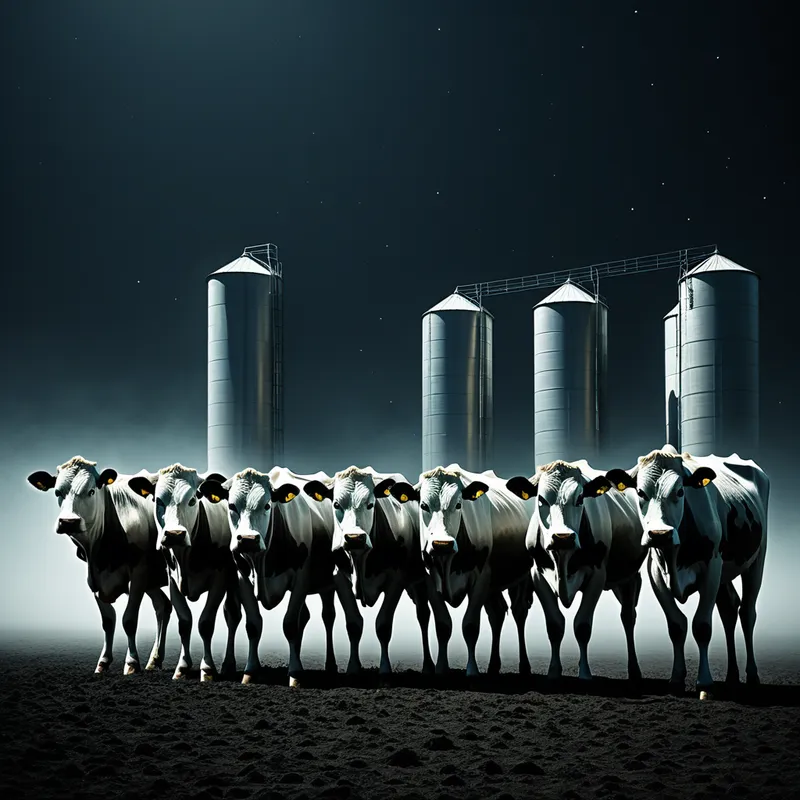
Then came the night that shook the Two Lands. The Pharaoh himself, the god-king, was visited by twin visions. First, seven cows, sleek and fat as the black soil of the Delta, emerged from the sacred river. Behind them came seven cows, gaunt and skeletal, who devoured the fat ones yet remained horribly thin. He slept again, and saw seven ears of grain, plump and golden on a single stalk. Then, seven ears, shriveled and blighted by the east wind, swallowed the healthy ones whole.
The court was silent. The priests murmured, but their incantations found no answer. The cupbearer remembered the Hebrew in the dungeon. Joseph was brought, shaved and washed, standing before the golden throne. He did not claim his own power. “It is not I,” he said, “but Elohim who will give Pharaoh a favorable answer.”
His voice was clear, a bell in the stifling air. “The seven good cows and the seven good ears are seven years of great abundance. The seven lean cows and the seven blighted ears are seven years of famine that will follow, so severe it will consume all the memory of the plenty. The dream is doubled because the matter is fixed by God, and God will shortly bring it to pass.”
But Joseph did not stop at the warning. The dream demanded an answer in flesh and stone. “Now therefore,” he said, his gaze steady, “let Pharaoh select a man discerning and wise, and set him over the land of Egypt. Let him take one-fifth of the produce of the land during the seven plentiful years. Let them gather all the food of these good years that are coming and store up grain under the authority of Pharaoh for food in the cities, and let them keep it. That food shall be a reserve for the land against the seven years of famine.”
Pharaoh saw the spirit of the divine in him. The dreamer became the architect. Joseph was clothed in fine linen, a gold chain placed around his neck, and set over all the house of Egypt. For seven years, the earth poured forth its bounty. Joseph traveled the length of the Nile, overseeing the gathering. In every city, great granaries, silos of sun-baked brick, rose from the earth. They were filled until they could hold no more, a golden hoard against the coming darkness.
Then, as foretold, the east wind blew, hot and barren. The famine gripped every land. But in Egypt, the storehouses were opened. The grain, saved from the years of fatness, flowed out to feed a starving world. The brothers who betrayed him came, bowing low for bread, fulfilling the very dreams that had sealed his fate. The pit, the prison, the dreams of warning—all were woven into a single, vast pattern of preservation. The visionary in the dungeon had become the savior of nations, his silos holding back the shadow of death itself.
Cultural Origins & Context
This narrative is embedded in the foundational text of the Hebrew Bible, the Book of Genesis. It functions as a pivotal bridge story, explaining how the Israelite clan, the sons of Jacob, came to reside in Egypt, setting the stage for the later Exodus. It was an oral tradition long before it was codified, a story told around fires to explain divine providence, the virtue of wisdom over brute strength, and the mysterious ways in which a people’s destiny is shaped.
Its societal function was multifaceted. For a people often at the mercy of drought and famine, it was a parable of prudence and divine foresight. It legitimized the role of the wise administrator and interpreter—the sage—as crucial to national survival. Furthermore, it served a profound theological purpose: it demonstrated how the God of a small nomadic family could work through the political machinery of a vast empire, using the betrayal and suffering of one individual to ensure the survival of the many. It is a masterclass in narrative theology, where human jealousy, Egyptian cosmology, and Hebrew monotheism collide to produce a story of breathtaking geopolitical and spiritual consequence.
Symbolic Architecture
At its heart, this is a myth about the transformation of intangible vision into tangible, life-sustaining structure. Joseph is the archetypal individuated consciousness who can hold the tension of opposites—the fat and the lean, abundance and famine, betrayal and exaltation—and synthesize them into a plan of action.
The silo is not merely a storehouse; it is the crystallized form of a dream. It represents the conscious ego’s capacity to receive the chaotic, often frightening symbols from the unconscious (the dreams), interpret their meaning (the seven years), and build a container—a psychological structure—to hold that energy for future use.
The seven years of plenty symbolize the fertile, creative periods of the psyche, where inspiration and energy flow freely. The seven years of famine represent the inevitable psychic winters, periods of depression, aridity, and shadow. The myth insists that the conscious mind must actively participate during the plenty; it must “gather” and “store” the insights, strengths, and resources gained in good times to survive the lean times. Joseph’s journey from the pit (the unconscious) to the prison (the liminal space of incubation) to the throne (the integrated, executive self) maps the path of psychological maturation. His brothers, who act on immediate, envious impulse, represent the unintegrated shadow that seeks to destroy the visionary faculty.

The Dreamer's Resonance
When this myth activates in the modern psyche, it often manifests in dreams of preparation, hidden resources, or impending cyclical change. One might dream of discovering a forgotten room full of canned goods in their childhood home, of frantically building a shelter before a storm, or of correctly interpreting a cryptic, urgent message.
Somatically, this can feel like a gathering of tension—a subconscious “stockpiling” of energy. The individual may be in a period of relative psychic “plenty” (productivity, creativity, social energy) but dreams are signaling an intuitive need to prepare for a coming contraction. The process is one of anticipatory integration. The dream-ego is learning to become the steward Joseph, moving from passive recipient of alarming dream images to active architect of their own resilience. The anxiety of the Pharaoh’s dream—the devouring thin cows—is the anxiety of the unconscious warning the conscious mind: “What you have will be consumed if you do not build a structure to contain its essence.”
Alchemical Translation
The alchemical process mirrored here is Coagulatio. It is the final stage where the volatile spirit (the prophetic dream) is made solid and useful (the grain in the silo). Joseph performs the ultimate alchemical act: he turns the prima materia of chaotic, divine revelation into the philosopher’s stone of administered salvation.
The individual’s journey is from being a vessel of raw, unconscious content (the dreamer tossed in the pit) to becoming the lapis philosophorum—the wise stone at the center of the world system, who can distribute nourishment in the time of famine.
For us, the “famine” may be a psychological crisis, a loss, a period of creative barrenness or depression. The “grain” is the stored wisdom, the endured suffering that has been metabolized into compassion, the skills honed in better times, the love banked in strong relationships. The myth instructs that individuation requires this administrative phase. It is not enough to have visions; one must build the silos. It is not enough to suffer; one must later dispense the wisdom earned from that suffering. The betrayal by the brothers (the old, tribal consciousness) is a necessary fracture that forces the dreamer out of the familial complex and into the wider world where his gift can achieve its full, world-saving scale. In the end, the silo stands as a symbol of the mature psyche: a fortress of meaning built from the raw harvest of the soul, designed to weather all seasons.
Associated Symbols
Explore related symbols from the CaleaDream lexicon: