
John Montagu, 4th Earl of Sandwich Myth Meaning & Symbolism
A tale of a nobleman's hunger during a marathon card game, leading to the accidental creation of a simple, world-altering meal.
The Tale of John Montagu, 4th Earl of Sandwich
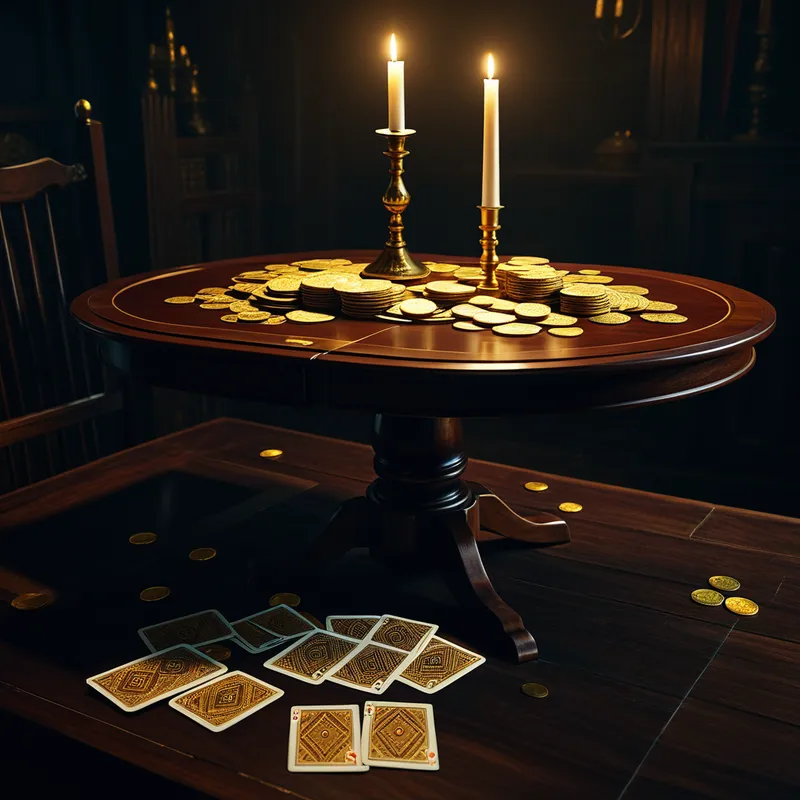
Let us gather in the smoky, gilded halls of memory, where time condenses into story. Our scene is not a misty forest or a storm-tossed sea, but a chamber thick with the scent of wax, sweat, and anticipation. Here, in the heart of London, the air hums with a different kind of magic—the clink of coin, the whisper of cards, the tense silence of men bound by chance and ambition.
At the center sits John Montagu, the Fourth Earl. He is a man of two worlds: the ordered realm of state and navy, and this chaotic, shadowed realm of the gaming table. For hours, then days, the ritual continues. The painted kings and queens dance their silent ballet. Fortunes ebb and flow like the tide. The Earl is ensnared, a ruler in his own right over this microcosm of risk, unwilling to cede his throne for something as mundane as a meal.
But the body is a stubborn temple. A deep, guttural call arises from within him—not the call of ambition, but the ancient, primal call of hunger. It is a beast that will not be ignored. To leave the table is to break the spell, to surrender momentum. The conflict is set: the devotion to the game versus the necessity of the flesh.
He calls out, not for a feast, but for a solution. A spark of pragmatic fire lights in his eyes. "Bring me," he commands, his voice cutting through the murmur, "some meat, placed between two slices of bread." It is not a request born of culinary genius, but of sheer, desperate utility. The servant departs and returns. What is placed before the Earl is no ceremonial dish. It is a simple, almost crude assembly: sustenance captured, contained, made portable.
He takes it in one hand. The other remains free, fingers poised above his cards. He eats. The beast is quieted. The game continues uninterrupted. In that simple act—the bringing together of separate elements to serve a singular, pressing need—a silent revolution was born. No fanfare sounded, no heavens parted. Yet, in the satisfaction of a hunger met without concession, a new form entered the world. The long vigil at the table of chance had yielded an unexpected, enduring prize.
Cultural Origins & Context
This is a myth of the modern age, born not in the oral traditions of pre-literate societies but in the gossipy, documented world of 18th-century European aristocracy. Its primary scribes were not bards, but biographers and social chroniclers like Pierre-Jean Grosley and later, James Boswell. The story was passed down as a charming anecdote, a piece of historical trivia that explained a ubiquitous feature of everyday life.
Its societal function was twofold. First, it served as an etiological tale, answering the child-like question "Why is this called a sandwich?" with a story of a named, noble origin. This lent a touch of aristocratic pedigree to a profoundly common object. Second, it reflected the values of its time: ingenuity, practicality, and the elevation of convenience as a legitimate virtue in an increasingly complex and busy world. The myth emerged from a culture where leisure (the marathon card game) and duty (the Earl's public roles) were in constant tension, and it offered a perfect symbol for their reconciliation.
Symbolic Architecture
At its core, the myth of the Sandwich is a profound parable of containment and synthesis. The Earl, faced with a disruptive inner force (hunger), does not vanquish it or submit to it entirely. Instead, he creates a vessel for it.
The hero does not slay the beast of need; he builds it a portable temple.
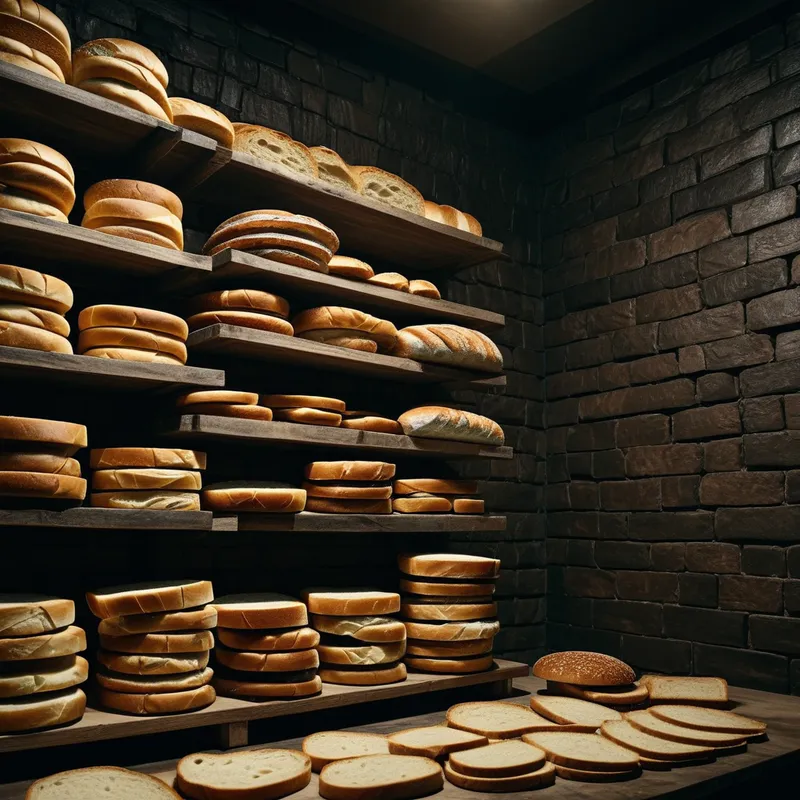
The bread acts as the liminal boundary, the walls of a new form. The meat is the wild, primal content—the energy, the desire, the instinctual drive. The act of placing one within the other is an act of psychic domestication. It represents the mind's capacity to take chaotic, pressing biological or emotional demands and structure them in a way that allows other, more complex activities (the "game" of culture, work, society) to proceed.
Psychologically, John Montagu represents the Ego in a moment of creative crisis management. He is the ruler of his own domain who is confronted by a rebellion from the physical Self. His ingenious solution is a masterpiece of compromise, creating a new structure that honors both the need of the body and the desire of the mind to continue its chosen focus.

The Dreamer's Resonance
When this myth pattern arises in modern dreams, it seldom appears as a literal sandwich. Instead, one may dream of ingeniously solving a pressing, mundane problem that is interrupting an important task. The somatic feeling is one of urgent hunger or a distracting physical need—a full bladder, a piercing thirst, an aching muscle. The psychological process is the dream-ego's attempt to integrate a shadow element of basic self-care without losing "the thread" of a larger pursuit.
A dreamer might find themselves in a crucial meeting or creative flow, only to be nagged by a need. They then invent a bizarre, Rube Goldberg-like contraption to address the need hands-free. The relief felt is profound. This is the psyche working to translate the Earl's myth: "How do I acknowledge this fundamental part of myself without derailing my entire conscious endeavor?" The dream is a workshop for developing personal "containment strategies" for life's inevitable, disruptive hungers.
Alchemical Translation
The alchemical journey modeled here is not one of fiery dissolution, but of elegant, pragmatic conjunction. The prima materia is the conflict itself: the tension between focused, transcendent activity (the card game as symbol for work, art, or intellectual pursuit) and the immanent, animal demands of the body.
The great work is sometimes the small, practical act that renders the opposites cooperative.
The "nigredo" or blackening phase is the Earl's grinding hunger and his refusal to abandon his post—a state of frustrated tension. The "albedo" or whitening is the flash of insight: the simple, unifying idea. The "rubedo" or reddening, the final achievement, is not a philosopher's stone, but the functional, edible artifact. The psychic gold produced is efficiency and integration.
For the modern individual, the myth calls for an alchemy of daily life. It asks: Where am I torn between a deep, consuming focus and a foundational need I am ignoring? The transmutation occurs not by choosing one over the other, but by designing a new, humble structure that serves both. It is the individuation of the mundane—becoming whole by finding the creative, containing form for our most basic hungers, so that our higher games may continue. We are all, in our way, Earls at a table, learning to build better, more nourishing vessels for the beasts within.
Associated Symbols
Explore related symbols from the CaleaDream lexicon: