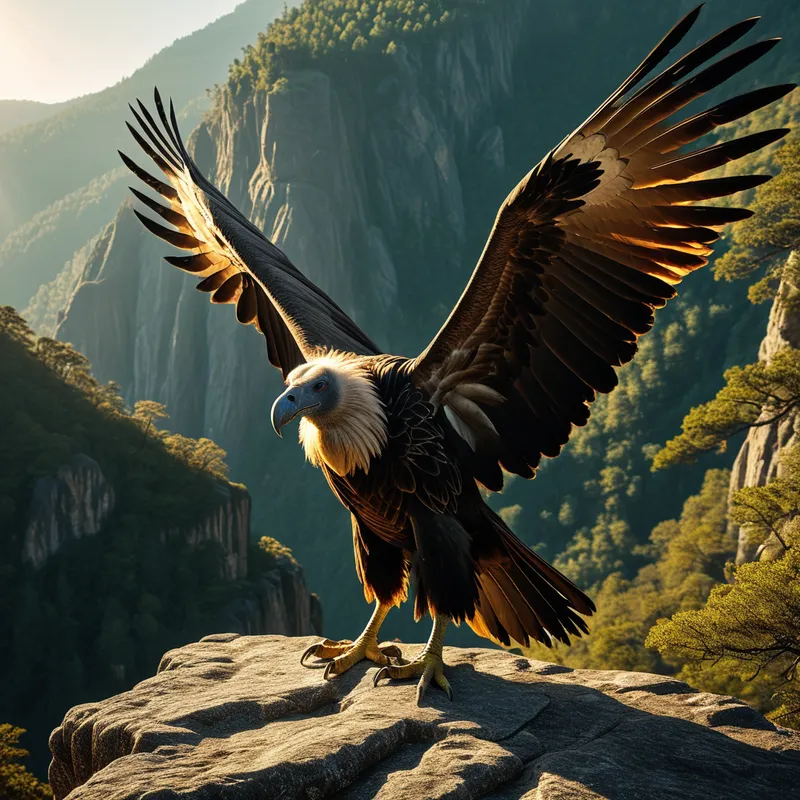
Jatayu Myth Meaning & Symbolism
A celestial vulture, witnessing an abduction, chooses righteous intervention. His mortal wounding becomes a sacred testimony, a map written in broken wings and spilled blood.
The Tale of Jatayu
Hear now the tale written not on palm leaves, but on the wind and in the memory of stone. It begins in the Dandaka forest, a green and whispering labyrinth where the air hummed with the breath of ancient spirits. Here, Rama, his wife Sita, and his brother Lakshmana walked their path of exile, their nobility a quiet light in the wilderness.
High above, where the sun was a closer kin, soared Jatayu. His wings were the color of a dying sun, his eyes saw the turning of ages. He was a remnant of a more primal world, a guardian of the sky-paths. On that fateous day, a shriek of pure terror tore the fabric of the forest's peace. It was Sita's cry.
Jatayu looked down. He saw the impossible: a golden chariot, pulled by monstrous asses, streaking across the sky. In it stood Ravana, his twenty arms a forest of menace, and clutched within them, Sita. Her struggle was a silent storm. The law of the world was being broken. An abduction in broad daylight, a theft of sacred dharma itself.
With a cry that was both a challenge and a lament, Jatayu folded his wings and became a thunderbolt. He did not hesitate. He, an ancient being, intervened in the drama of gods and demons. He rose before Ravana's chariot, a living mountain of feather and bone. "Release her, tyrant!" his voice echoed. "You who have forgotten fear, you will remember it now!"
What followed was a battle of terrible asymmetry. Ravana, wielding the celestial sword Chandrahasa, was a whirlwind of cosmic fury. Jatayu had only his talons, his beak, and the weight of his righteousness. He tore at the chariot, shattered its panels, wounded the demonic steeds. He pecked at Ravana's heads. For a moment, the sky was a chaos of gold and shadow, of falling chariot pieces and drifting feathers.
But Ravana was a lord of magic and war. With a final, vicious stroke, he severed Jatayu's wings. The great king of birds did not fall silently. His descent was a slow, tragic spiral, a leaf of fire drifting down from the sun. He crashed upon the earth, a broken monument, his life bleeding into the soil of Panchavati.
It was there, as his breath grew short, that Rama and Lakshmana found him. Cradling the great head in his lap, Rama listened. With his final strength, his breath a rustle of dry leaves, Jatayu bore witness. He named the abductor: Ravana. He pointed the direction: South. He gave them the coordinates of their destiny, written in his own ruin. And having delivered his testimony—the most crucial intelligence in the world—the noble heart of Jatayu stilled. Rama himself performed the funeral rites, honoring the eagle as a kinsman, for a debt of truth is the strongest bond of all.
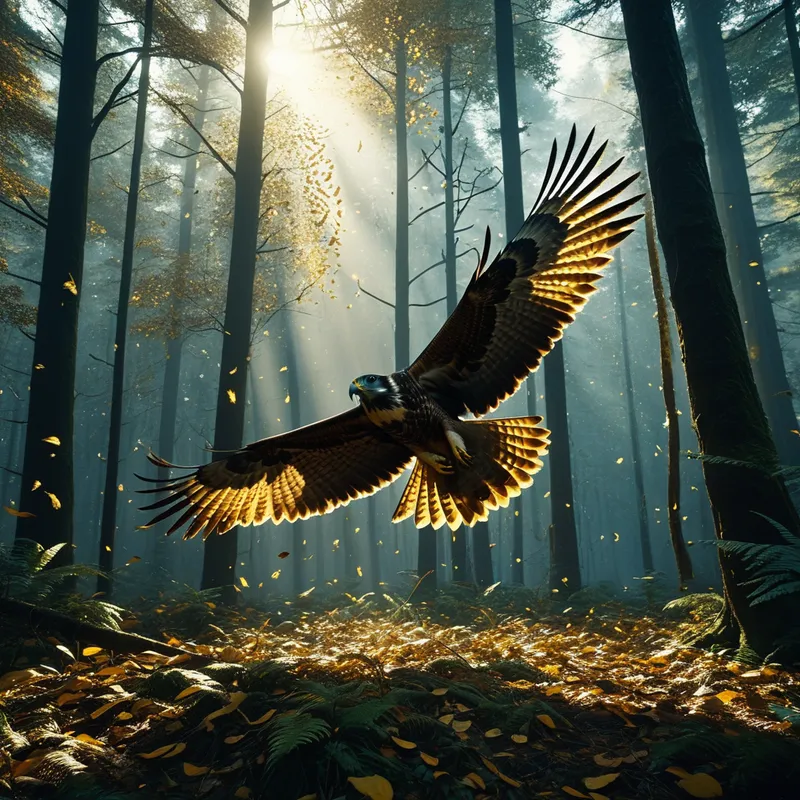
Cultural Origins & Context
This episode is a pivotal hinge within the vast epic of the Ramayana, attributed to the sage Valmiki. For millennia, it has been transmitted not as a mere subplot, but as a sacred unit of moral instruction. It was told by bards in village squares, enacted in folk theatre, and illuminated in temple sculptures. Its function was multifaceted: it modeled the duty of any being, however humble or mighty, to intervene against adharma (disorder). It elevated the act of witness to a sacred status. In a culture with a profound reverence for all life, Jatayu’s vulture-form is significant; it sanctifies a creature often associated with death, transforming it into an agent of divine purpose. The story served as a societal reminder that help can come from unexpected quarters, and that the ultimate value of a life is measured by its alignment with truth, not by its duration or power.
Symbolic Architecture
Jatayu is the archetype of the Conscious Witness who chooses to become the Active Intervener. He symbolizes the part of the psyche that observes a moral or psychological violation—the abduction of one's inner Sita (anima, value, soul) by a tyrannical Ravana (shadow, inflated ego, obsession)—and decides to engage, despite certain personal devastation.
The sacrifice is not in the dying, but in the knowing engagement with a force that will break you. The triumph is not in victory, but in the faithful transmission of the truth you gathered in the collision.
His severed wings represent the necessary deconstruction of an old identity or capability. The sky-king can no longer fly; his old mode of being is gone. Yet, in his grounded, broken state, he achieves his ultimate purpose: delivering the crucial message. He becomes the bridge between the catastrophic event and the conscious quest for restoration. Psychologically, he is the function of ethical consciousness that is wounded in the process of making the unconscious conflict known to the conscious mind (Rama). He is the cost of awareness.
The Dreamer's Resonance
When this myth stirs in the modern unconscious, it may manifest in dreams of wounded birds, especially large raptors falling from the sky, or of being a witness to a crime or violation you feel compelled to stop. Somatically, it may echo as a feeling of weight in the chest, a constriction around the shoulders (the seat of the wings), or a profound exhaustion after taking a moral stand.
This dream-pattern signals a profound psychological process: the recognition that to remain a passive observer to an inner or outer wrong is no longer tenable. The dream-ego is being called to its "Jatayu moment"—to intervene in a situation where it will likely be wounded. The crashing bird symbolizes the impending feeling of being grounded, of losing one's former freedom or detachment. The process is one of moving from detached observation to committed, self-sacrificial participation in one's own psychic drama. The dream is preparing the dreamer for a necessary, integrity-preserving defeat that will, in time, provide critical direction.
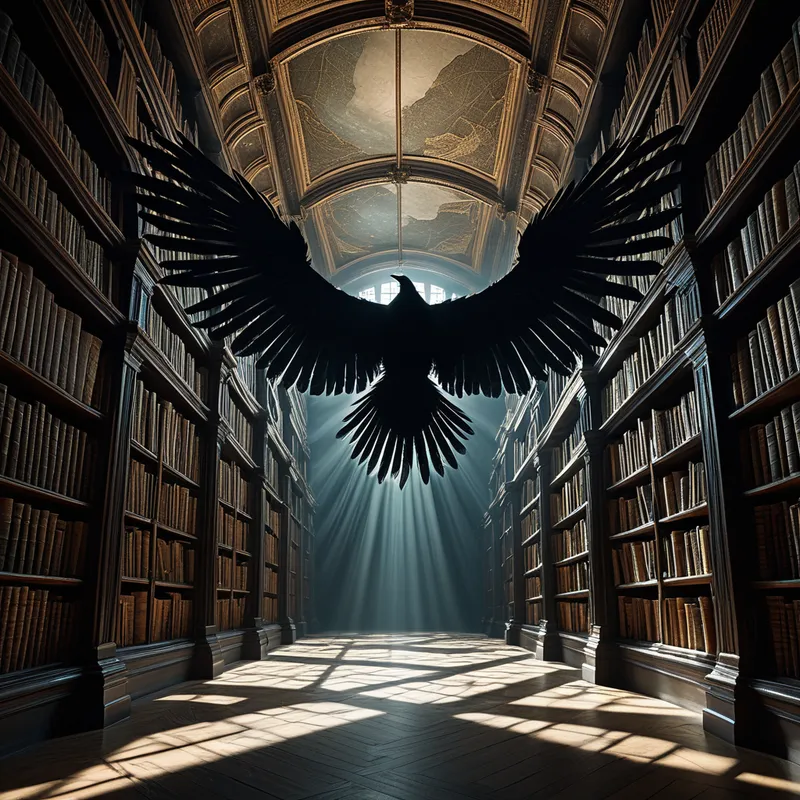
Alchemical Translation
The alchemy of the Jatayu myth models the opus contra naturam—the work against one's own instinctive nature—for the sake of psychic wholeness. The instinct of the witness, especially the elevated, sky-bound witness, is to observe and understand. The alchemical demand is to engage and be transformed by the engagement.
The process begins with Observation (The Sky View): seeing the abduction of one's soul-value clearly. This is followed by Descent (The Intervention): the conscious ego, identifying with the witness, plunges into the conflict with the shadow-complex. The inevitable Mortificatio (The Wounding): the old structures of defense, detachment, or pride (the wings) are severed. This is not a failure, but the crucial nigredo, the blackening. In the depths of this defeat lies the Secretum (The Testimony): the distilled essence of the experience—the name and direction of the shadow. This is the truth gained only through suffering.
Finally, there is Transmission (The Last Breath): the dying witness must deliver this secret to the seeking Rama within. The psychic energy (libido) of the old witness-form is not lost; it is offered as fuel for the next phase of the journey. Thus, the individual integrates the lesson that some parts of the psyche must be honorably sacrificed to provide the intelligence needed for the larger quest of individuation. The broken wing becomes the compass.
Associated Symbols
Explore related symbols from the CaleaDream lexicon: