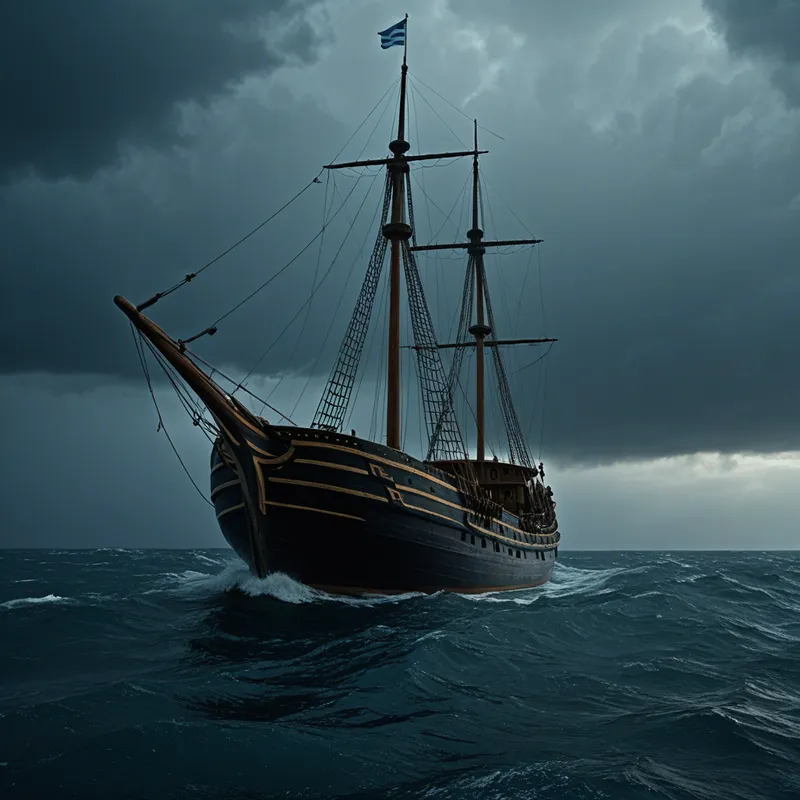
Jason and the Argonauts seekin Myth Meaning & Symbolism
A usurped prince gathers a crew of heroes to reclaim his throne by retrieving a magical fleece, a voyage of destiny, betrayal, and impossible tasks.
The Tale of Jason and the Argonauts
Hear now the tale of the one-sandaled man, a story whispered by salt spray and carved by the oars of destiny. In the shadowed halls of Iolcus, a throne was stolen. The rightful king, Aeson, grew old in chains of fear, while his brother, the usurper Pelias, ruled with a paranoid heart. An oracle’s chilling words haunted Pelias: Beware the man with one sandal.
That man arrived at the river’s edge, having carried an old woman—the goddess Hera in disguise—across the raging torrent, losing a shoe in the mud. He was Jason, son of Aeson, come to claim his birthright. Pelias, seeing the prophecy fulfilled, smiled a serpent’s smile. “You shall have the kingdom,” he said, “if you first bring me the Golden Fleece, which hangs in the sacred grove of Ares, in the far-off land of Colchis. A task for a hero, to prove your worth.”
Thus, the great quest was born. Jason summoned the greatest heroes of the age—Heracles, the divine musician Orpheus, the winged sons of the North Wind, and more. The shipwright Argus, with Athena’s blessing, built the Argo, a vessel with a speaking timber from the sacred Dodonian Oak. They became the Argonauts, “sailors of the Argo.”
Their voyage was a map of marvels and terrors. They out-sang the Sirens with Orpheus’s lyre. They navigated the crashing, living rocks of the Symplegades. They fought harpies and bronze giants. Each league was a test of unity, courage, and cunning.
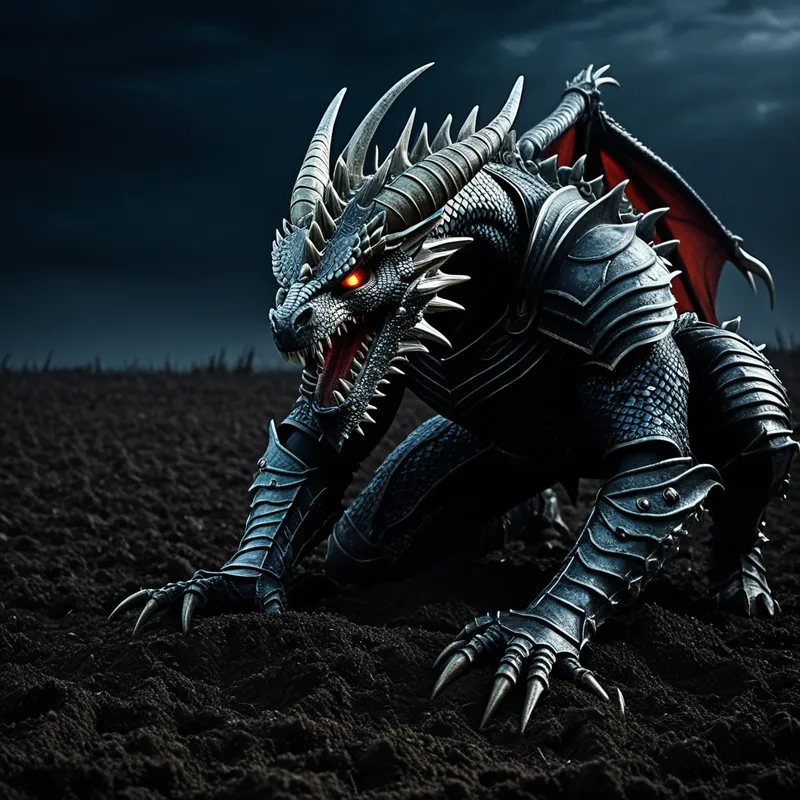
In Colchis, King Aeëtes set impossible labors: yoke fire-breathing bulls, plow the field of Ares with them, and sow the dragon’s teeth that would sprinto an army of skeletal warriors. Here, the tale turns on the heart’s pivot. Medea, the king’s daughter, a sorceress pierced by Eros’s arrow, pledged her help to Jason. With her magic, he tamed the bulls, plowed the earth, and when the earth-born men sprang forth, he threw a stone among them, turning their rage upon each other.
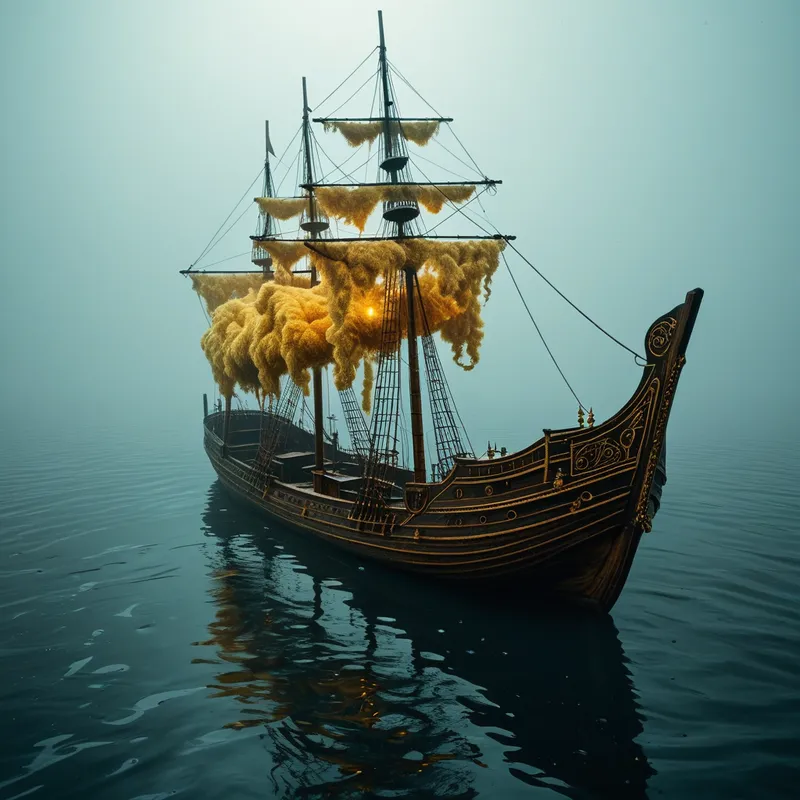
One final guardian remained: the unsleeping dragon that coiled around the oak where the Fleece shimmered. Medea’s enchanted herbs and whispered spells lulled the beast into a deep slumber. Jason reached into the branches, and his hands closed around the Fleece—a pelt of spun sunlight, heavy with the scent of power and sacrifice. Their return was not a triumph but a flight, marked by Medea’s horrific betrayal of her own family and a path homeward stained with blood and grief. The Fleece was delivered, the throne briefly won, but the cost was a soul-deep debt that would shadow Jason’s life forever.
Cultural Origins & Context
This epic, known as the Argonautica, is one of the foundational narratives of the ancient Greek world, predating even the Trojan War in its mythological timeline. Its most complete surviving version comes from the Hellenistic poet Apollonius of Rhodes, but the story’s roots are far older, woven from pre-Homeric oral traditions. It functioned as a foundational “road map” for the Greek imagination, charting the dangerous, wonder-filled edges of the known world—the Black Sea, which they called the Euxine. The tale was not mere entertainment; it was a cultural compass. It explained colonial and trade routes, encoded values of heroic excellence (aretē), the necessity of cunning (mētis), and the complex, often treacherous relationship between humanity and the gods. Performed by bards, it reinforced a worldview where destiny (moira) was inescapable, and even a hero’s glory was tempered by divine whim and moral ambiguity.
Symbolic Architecture
At its core, the myth is a masterful blueprint of the heroic journey, not as a simple conquest, but as a fraught negotiation with power, both internal and external. The Golden Fleece itself is the ultimate symbol of stolen legitimacy and numinous power—a kingly prize that is also a sacred, almost forbidden object. It represents the integrated Self, a wholeness that exists in a guarded, dragon-encircled state, requiring immense effort and external aid to reclaim.
The quest is never for the object alone, but for the transformation demanded by the path to it.
Jason is an unusual hero; he is not the strongest nor the most divine, but an organizer, a man whose primary power is his ability to gather a crew and accept crucial, often dangerous, help. His journey models the necessity of the crew—the aspects of the psyche (strength, art, intuition, swiftness) that must be integrated for a successful voyage. Medea represents the shadowy, transformative, and ultimately destabilizing power of the unconscious—the magical, instinctual force that enables victory but at a terrible price of moral compromise. The voyage out is a journey of ambition; the voyage home, laden with the Fleece and haunted by betrayal, is the harder journey of bearing the consequences of one’s choices.
The Dreamer’s Resonance
When this myth stirs in the modern dreamer, it often signals a profound call to embark—a psychic “seeking.” Dreaming of a sacred, unattainable object (the Fleece) points to a deep yearning for purpose, legitimacy, or a sense of wholeness that feels just out of reach. The dreamer may find themselves on a ship with unknown companions, symbolizing the mobilization of inner resources.
Dreams of impossible tasks—yoking fiery beasts, confronting sown armies—mirror somatic experiences of anxiety and overwhelm, where life’s demands feel inhuman. The figure of Medea in a dream can be particularly potent, representing a powerful, raw, and potentially destructive inner force (often related to creative power, rage, or deep love) that the conscious ego must learn to engage with, rather than suppress or flee. Such dreams ask: What impossible task is your psyche attempting? What “magical” but dangerous ally within are you being forced to acknowledge?
Alchemical Translation
The alchemy of the Argonautica is not in finding gold, but in the nigredo of the journey itself—the blackening, the confrontation with chaos, betrayal, and one’s own shadow. Jason begins as the “orphaned” prince, his rightful place stolen. His quest is the heroic ego’s project to reclaim its throne through a great deed.
The true Fleece is not the prize won, but the soul forged in the losing of innocence.
The process demands the conjunctio, the sacred marriage, with the Medea-as-anima figure—the engagement with the deep, magical, and irrational feminine principle of the psyche. This union enables the victory but also initiates the albedo, the painful purification through guilt and consequence. The final stage, the rubedo, is elusive in Jason’s tale, for he dies a broken man, crushed by the stern of his own ship. This tragic end is the myth’s most profound alchemical warning: the quest for the golden prize of external validation, power, or legacy, if undertaken without integrating the moral weight of the means, leads not to the philosopher’s stone of the integrated Self, but to collapse. The modern individuation journey modeled here is thus one of cautious ambition, where the crew must be heeded, the shadow honored but not allowed to rule, and where the final goal is not the Fleece on the wall, but the wisdom earned on the dark sea home.
Associated Symbols
Explore related symbols from the CaleaDream lexicon: