Jack and the Beanstalk Myth Meaning & Symbolism
A poor boy trades his last cow for magic beans, climbs a sky-piercing beanstalk, and confronts a monstrous giant to seize his stolen birthright.
The Tale of Jack and the Beanstalk
Listen, and hear a tale of the soil and the sky, of a boy with nothing and the world he dared to claim.
In a time of grey hunger, in a cottage where the wind sang through the cracks, lived a widow and her son, Jack. Their last hope was a bony cow, whose milk had long since dried. “Take her to market,” said the mother, her voice thin as old paper. “Sell her for a good price, or we shall not see the spring.”
So Jack led the creature down the dusty road. But before he reached the market’s clamor, a strange man with eyes like polished stones stepped from the hedgerow. “A fine beast,” he said, his voice a low hum. “I will trade you for these.” He opened his hand to reveal five beans, glowing with a faint, inner light like captured moonlight. “Plant them,” he whispered, “and you will climb to your fortune.”
Jack, his heart a flutter of desperation and wonder, traded the cow for the beans. His mother’s grief was a storm. She cast the beans from the window into the cold dirt, and their supper that night was tears.
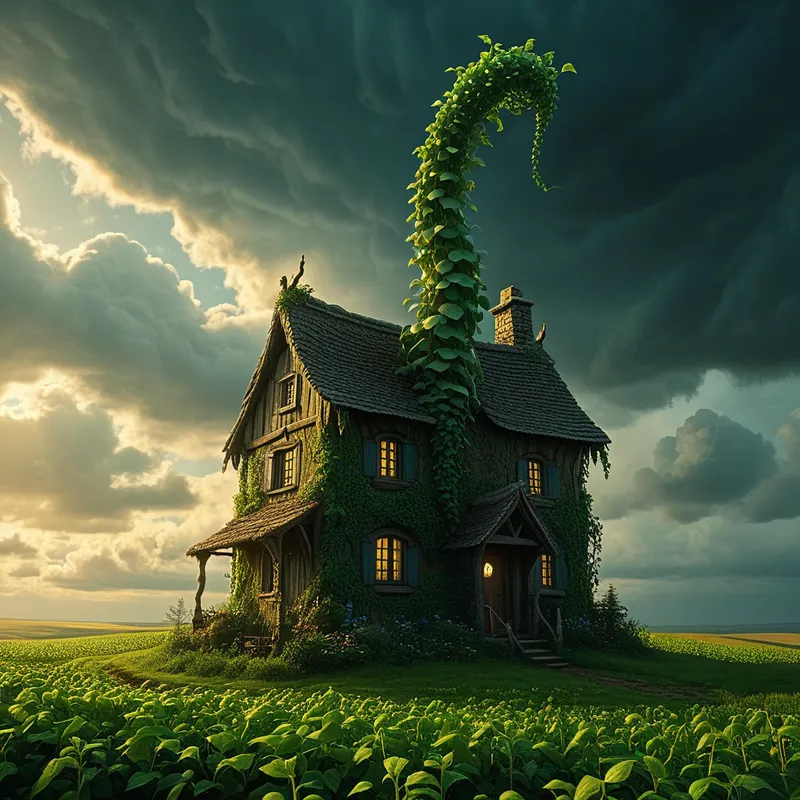
But with the dawn, a miracle. Overnight, a great stalk had thrust from the earth, a twisting ladder of green and gold, its top lost in the clouds, a bridge to another world. Without a word, Jack began to climb. He climbed past the calls of familiar birds, into a silence thick and cold, until he pushed through a floor of cloud and found himself in a land of hard, bright light.
Before him stood a castle of rough-hewn stone, its door tall as a barn. A woman, as tall as a tree but with a weary face, answered his knock. “Foolish child!” she hissed. “This is the house of the Giant. He smells the blood of an Englishman and grinds their bones for his bread. Hide!”
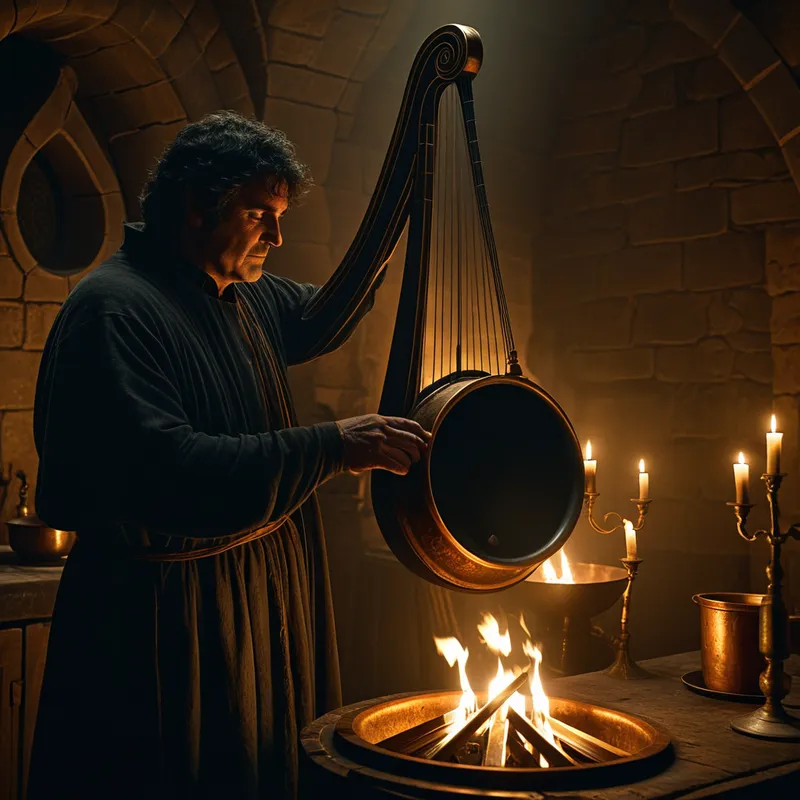
But the thud of footsteps shook the very stones. The Giant entered, a mountain of flesh and rage. “Fee-fi-fo-fum!” he roared, shaking the rafters. After a meal of sheep and wine, he commanded his wife to bring his treasures: a hen that laid eggs of solid, shimmering gold, and a harp of silver and gold that sang with a voice of heartbreaking beauty. As the Giant slept, his snores like thunder, Jack seized the hen and the harp. But the harp cried out, “Master! Master!”
The Giant awoke in a fury. Jack fled, scrambling down the living ladder, the Giant’s hot breath on his neck, his enormous hands tearing at the leaves. Reaching the ground, Jack screamed for an axe. With three great blows, he severed the stalk. It fell with a sound like the world tearing, and the Giant fell with it, broken upon the earth. From that day, Jack and his mother lived in peace and plenty, the golden hen their security, the singing harp their joy.
Cultural Origins & Context
The tale of Jack and his beanstalk is a quintessential product of the British oral tradition, a “Fairy Tale” born not in palaces but in the smoky hearths of peasant cottages. Its earliest printed version appears in the 1734 “Round About Our Coal-Fire” chapbook, but its roots are far older, intertwining with the ancient Celtic myth of the Otherworld and the global motif of the World Tree. It was a story told by mothers to children, by travelers at inns, its details shifting with each teller—sometimes the giant has one eye, sometimes three; sometimes the treasures are a sword and a purse of endless coin.
Its societal function was multifaceted. For the impoverished rural listener, it was a fantasy of radical reversal, where cunning and audacity could defeat brute power and redistribute stolen wealth. It validated the “little man” against the oppressive lord in his castle (the giant is often called “the ogre” or “the lord”). Furthermore, it served as a cautionary tale about trust, risk, and the volatile magic of the natural world—the beans are both foolishness and fate. The story is a cultural pressure valve, allowing the expression of deep-seated class anxieties and the universal childhood fear of a devouring, parental authority figure.
Symbolic Architecture
At its core, the myth maps the perilous journey from a state of lack (the barren cow, the hungry home) into a realm of potential (the sky-world) to confront the monolithic power that hoards life’s treasures. Each element is a psychic coordinate.
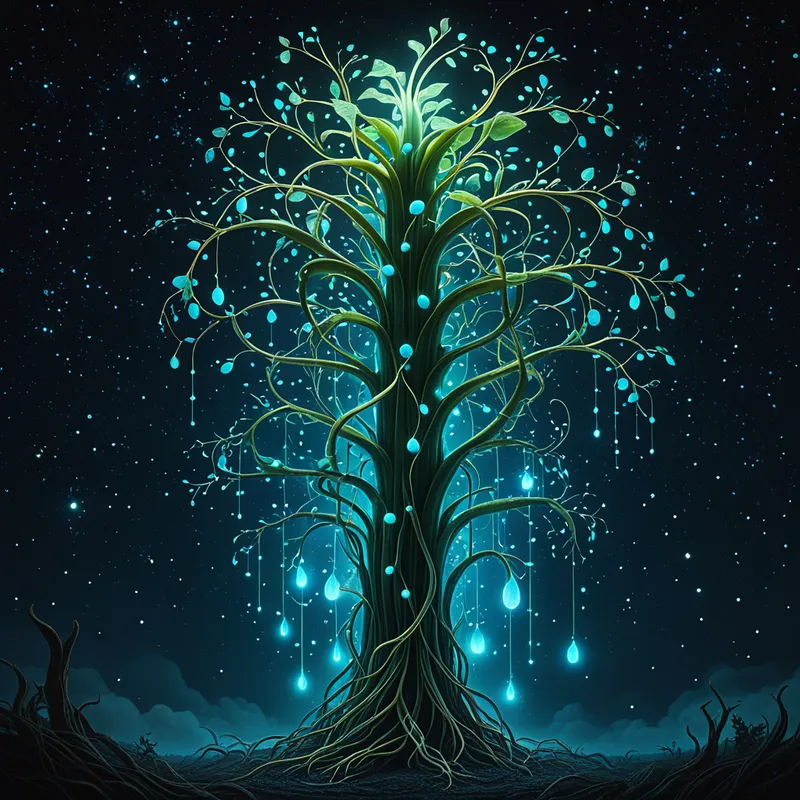
The Magic Beans represent an intuitive, seemingly irrational choice that breaks the cycle of literal, grinding logic. They are the call to adventure that sounds like nonsense.
The beanstalk is the axis of ascent, the sudden, vertiginous connection between the mundane ego (the cottage) and the supernal realm of the unconscious (the giant’s domain). To climb it is to undertake a radical reorientation of consciousness.
The Giant is not merely an enemy, but the personification of a colossal, blocking complex. He is the inner critic magnified to monstrous proportions, the voice that says “I will grind your bones,” hoarding the gold (value, self-worth) and the music (soul, creativity) for himself. His famous chant is the mantra of a paranoid, predatory psyche.
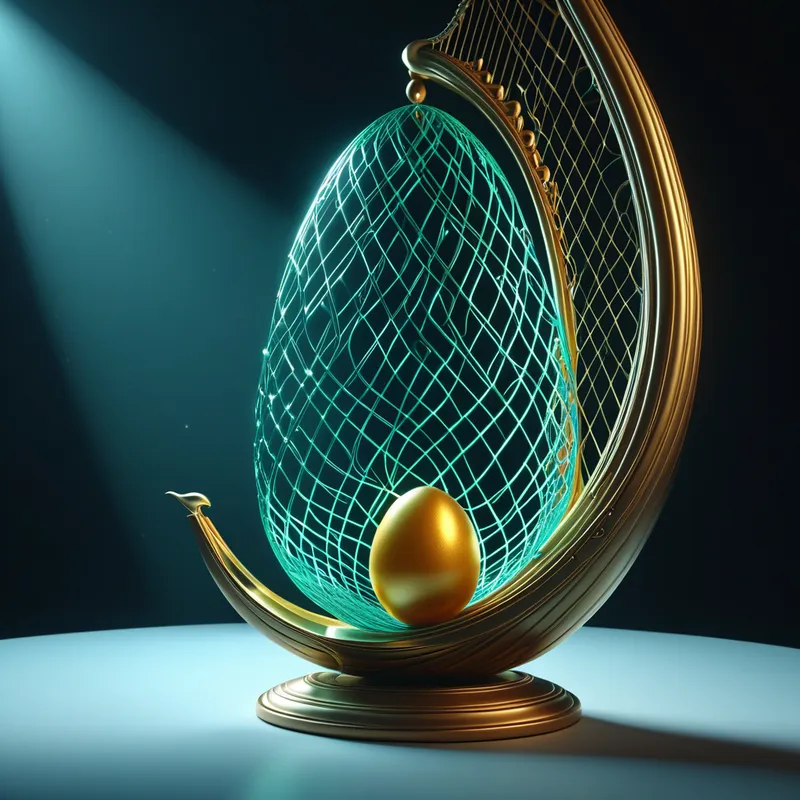
The treasures are the stolen aspects of the Self. The Golden Hen represents fertile, ongoing abundance. The Singing Harp is the captured voice of the soul itself. Jack’s theft is, symbolically, a reclamation.
The Dreamer's Resonance
When this myth stirs in the modern dreamscape, it signals a critical phase of vertical challenge. To dream of climbing a vast, unstable plant or structure toward an unknown above speaks to a somatic feeling of reaching beyond one’s station, of seeking a higher perspective or accessing repressed energies. There is often a mix of exhilaration and terror in the climb—the heart pounds, the hands grip.
Dreaming of a giant’s castle, or of hiding from a looming, oppressive presence, indicates an encounter with a “giant” complex. This may manifest somatically as a feeling of being crushed, dwarfed, or paralyzed. The dreamer is in the presence of an inner authority so vast it feels external—perhaps a legacy of parental expectation, societal pressure, or a monolithic self-doubt. The act of taking something (a jewel, a book, a key) from this place in the dream is the psyche’s enactment of the necessary theft: seizing back one’s own authority, creativity, or joy from the grip of this inner tyrant. The final, often abrupt, cutting down of the stalk in the dream can feel like a violent but necessary severance, a burning of bridges to an old, inflated identity.
Alchemical Translation
The myth of Jack is a perfect model for the alchemical process of Individuation, the opus of turning leaden poverty into golden selfhood.
The initial state (nigredo) is the black despair of the cottage: poverty, maternal grief, a dead end. The “foolish” trade for the beans is the first transmutation, an act of surrender to the irrational, intuitive function (the trickster-deity in the hedgerow). Planting the beans—even in anger—is an act of faith in the unconscious.
The climb is the ascensus, the conscious ego’s arduous journey into the superordinate psyche. It is a willed inflation, necessary to meet the Giant on his own ground.
Confronting the Giant is the central ordeal (mortificatio). One does not negotiate with the Shadow in its giant form; one outwits it, steals its fire, and triggers its enraged pursuit. This represents the painful but liberating engagement with a dominant complex, robbing it of its power (the treasures). The theft of the harp and hen is the separatio and extractio—the careful distillation of valuable psychic contents from the corrupt matrix that holds them.
Finally, the felling of the beanstalk is the crucial solutio and coagulatio. The connection to the inflated realm must be severed for the gained treasures to be integrated into earthly life. The Giant must fall, the archaic pattern must die, so that the new, golden consciousness can solidify. Jack returns not just with wealth, but with a singing soul—the integrated Self, no longer starving in a cottage or hiding in a giant’s pot, but sovereign on its own ground.
Associated Symbols
Explore related symbols from the CaleaDream lexicon: