Ivan Tsarevich and the Firebird
A Slavic prince embarks on a perilous quest to capture a magical firebird, facing supernatural challenges that test his character and resolve.
The Tale of Ivan Tsarevich and the Firebird
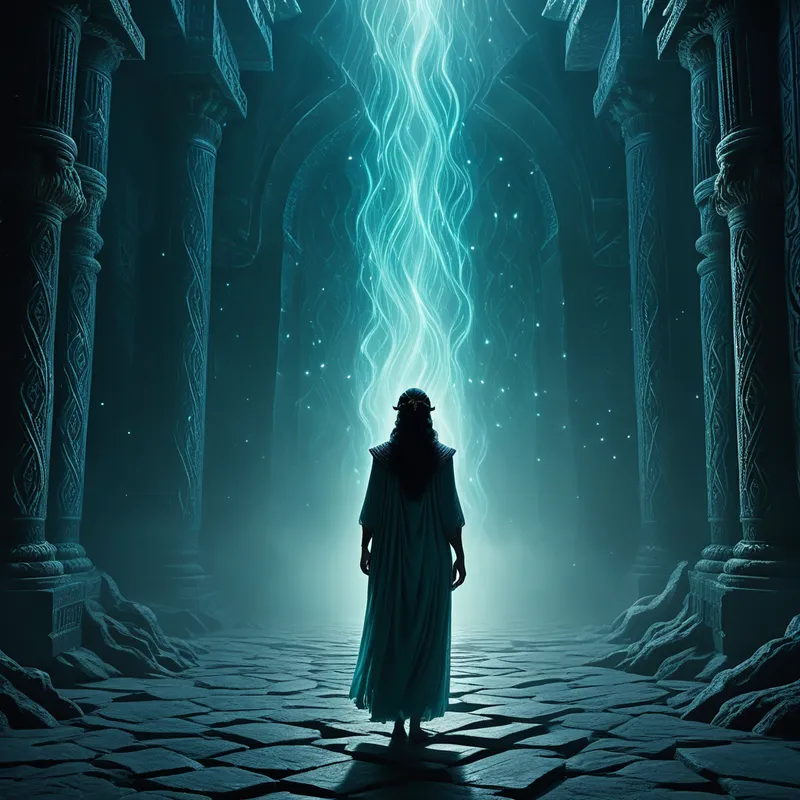
The story begins not with a roar, but with a theft. In the garden of the Tsar, a father whose realm is order itself, the golden apples of immortality begin to vanish. Each morning reveals another absence, a silent subtraction from the heart of the kingdom. The Tsar commands his three sons to watch, but the elder two, bound by slumber or sloth, see nothing. It is the youngest, Ivan Tsarevich, who keeps the true vigil. In the depth of night, he witnesses the thief: a creature of incandescent beauty, a bird whose feathers are living flame, plucking the apples with a beak of polished jet. In its radiance, the night garden is transformed; one feather, left behind, glows with a light that fills a dark chamber like a captive sun.
This feather, an object of impossible beauty, becomes the seed of the quest. The Tsar, desiring the whole of the marvelous [thing](/myths/thing “Myth from Norse culture.”/), sends his sons to find and capture [the Firebird](/myths/the-firebird “Myth from Slavic culture.”/). The elder brothers soon abandon the search, lost in the comfort of the known world. Ivan, however, rides on, guided by a longing he does not yet understand. His path leads him to a [crossroads](/myths/crossroads “Myth from Celtic culture.”/) marked by a stone stele, offering a choice: go left and save your horse, go right and lose it. Ivan chooses the path of sacrifice, and his faithful steed is devoured by the great Gray Wolf. Yet this apparent catastrophe is the first initiation. The Wolf, having consumed the horse, does not leave Ivan stranded but transforms. He becomes Ivan’s mount, his guide, and the voice of a deeper, instinctual wisdom. The prince has lost his conventional power to gain a mythic ally.
Guided by the Wolf, Ivan arrives at the garden of another Tsar, where the Firebird is caged in a golden prison. The Wolf warns: take the bird, but do not touch its golden cage. Ivan, overcome by the splendor of [the vessel](/myths/the-vessel “Myth from Alchemical culture.”/), disobeys. His touch triggers a cacophony of alarms, and he is captured. The price for his life is another impossible task: to bring the Tsar the Horse with the Golden Mane from the realm of Tsar Afron. Again, the Wolf assists, and again he warns: take the horse, but do not touch its golden bridle. And again, Ivan’s mortal hand reaches for the golden trappings, ensnaring him once more. This second failure demands the ultimate prize: the Princess [Vasilisa the Beautiful](/myths/vasilisa-the-beautiful “Myth from Slavic culture.”/) from the ends of [the earth](/myths/the-earth “Myth from Hindu culture.”/).
Here, the quest deepens from acquisition to connection. With the Wolf’s cunning, Ivan meets the princess, and something genuine passes between them—not theft, but recognition. She agrees to go with him. On the return, the Wolf, through a final magical transformation, provides the golden-haired horse and the Firebird to appease the covetous tsars, allowing Ivan and Vasilisa to escape toward home.
But the tale is not yet done. Nearing his father’s kingdom, Ivan, weary and perhaps forgetting the transformative trials, is persuaded by his treacherous brothers to dismount and rest. They murder him, dismember him, and take the princess and the treasures for themselves. Ivan’s body lies scattered at the foot of a tree, a silent testament to betrayal. It is the Gray Wolf who returns, who finds the broken prince. With the waters of life and [death](/myths/death “Myth from Tarot culture.”/), procured from the crowning test of loyalty to a fledgling [raven](/myths/raven “Myth from Haida culture.”/), the Wolf reassembles and resurrects Ivan. The prince returns, not as the boy who left, but as a man forged in death and revival. The truth is unveiled, [justice](/myths/justice “Myth from Tarot culture.”/) is served, and Ivan Tsarevich, with Vasilisa by his side, inherits the kingdom—not because he was born to it, but because he was reborn for it.
Cultural Origins & Context
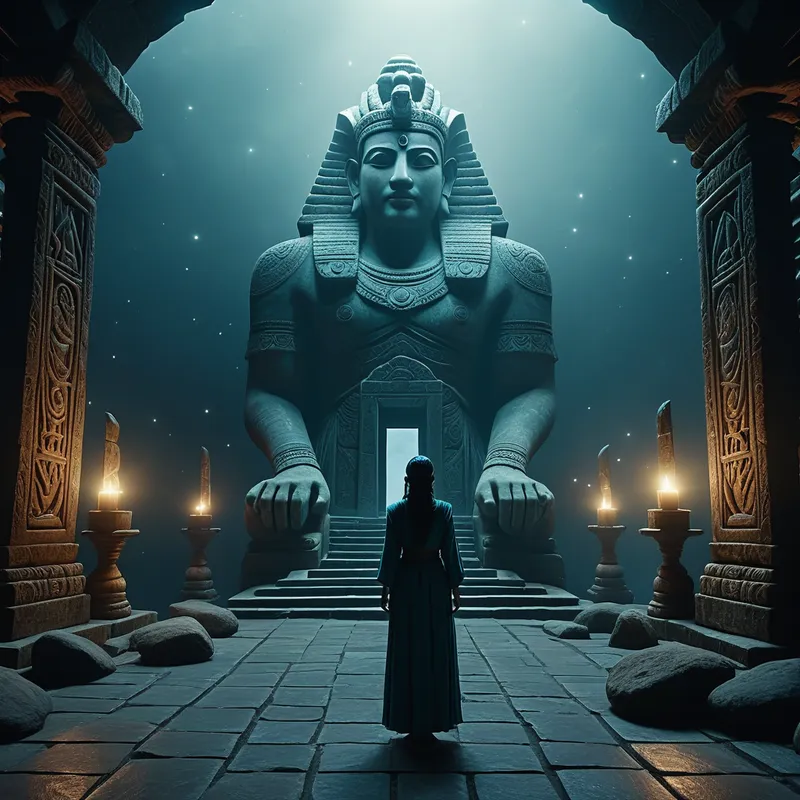
The tale of Ivan Tsarevich and the Firebird is a [cornerstone](/myths/cornerstone “Myth from Biblical culture.”/) of East Slavic, particularly Russian, folklore, collected and immortalized in the 19th [century](/myths/century “Myth from Biblical culture.”/) by ethnographers like Alexander Afanasyev. It belongs to the vast corpus of volshebnaya skazka (wonder tales) and follows a classic narrative arc scholars call “the hero’s departure, initiation, and return.” Ivan is not the only hero of such tales—he exists alongside [Ivan the Fool](/myths/ivan-the-fool “Myth from Slavic culture.”/) and Ivan the Peasant’s Son—but as a Tsarevich, his journey speaks directly to the societal ideal of rulership. His quest is not for personal gain but begins as a filial duty to restore order to his father’s domain, reflecting the patriarchal and monarchic structures of the culture.
The story’s landscape is deeply Slavic. The journey moves from the ordered tsardom into the boundless, magical geography of the drugoe tsarstvo (the “other kingdom”), a realm where logic is suspended and archetypes rule. The Gray Wolf is a quintessential figure from this world, an animal helper embodying the untamed wisdom of the forest, a force both destructive and nurturing. The repetitive structure of the tasks—the three tsars, the three thefts—echoes the ritualistic patterns of oral storytelling, embedding the narrative with a hypnotic, dreamlike quality. It is a map of the [psyche](/myths/psyche “Myth from Greek culture.”/) drawn with cultural symbols, where the hero’s success depends not on brute strength but on his relationship with the supernatural aid that the forest provides.
Symbolic Architecture
The myth operates on a [logic](/symbols/logic “Symbol: The principle of reasoning and rational thought, often representing order, structure, and intellectual clarity in dreams.”/) of symbolic transformation, where every [character](/symbols/character “Symbol: Characters in dreams often signify different aspects of the dreamer’s personality or influences in their life.”/) and object is a facet of a single, unfolding [consciousness](/symbols/consciousness “Symbol: Consciousness represents the state of awareness and perception, encompassing thoughts, feelings, and experiences.”/). Ivan is the nascent ego, the princely consciousness sent from the seat of paternal order (the Tsar-[Father](/symbols/father “Symbol: The father figure in dreams often symbolizes authority, protection, guidance, and the quest for approval or validation.”/)) to recover a lost, radiant vitality.
The Firebird is not merely a goal, but the symbol of an elusive, divine inspiration. Its theft of the golden apples signifies how numinous beauty and creativity inevitably disrupt the established order of the psyche. To pursue it is to consent to a revolution within.
The Gray [Wolf](/symbols/wolf “Symbol: Wolves in dreams symbolize instinct, intelligence, freedom, and a deep connection to the wilderness and primal instincts.”/) is the critical agent of this [revolution](/symbols/revolution “Symbol: A fundamental, often violent transformation of social, political, or personal structures, representing upheaval, liberation, and the overthrow of established order.”/). He represents the instinctual, untamed Self that must be encountered and integrated. The consumption of Ivan’s horse is a brutal but necessary [death](/symbols/death “Symbol: Symbolizes transformation, endings, and new beginnings; often associated with fear of the unknown.”/) of the [hero](/symbols/hero “Symbol: A hero embodies strength, courage, and the ability to overcome significant challenges.”/)’s previous, tame mode of travel—his conscious will. Only by surrendering this can he gain the [Wolf](/symbols/wolf “Symbol: Wolves in dreams symbolize instinct, intelligence, freedom, and a deep connection to the wilderness and primal instincts.”/), the transformative power of the unconscious that carries him through the impossible. Ivan’s repeated failure—touching the cage, touching the bridle—is [the ego](/myths/the-ego “Myth from Jungian culture.”/)’s fatal attraction to the beautiful, [static](/symbols/static “Symbol: Static represents interference, disruption, and the breakdown of clear communication or signal, often evoking feelings of frustration and disconnection.”/) container of power (the [symbol](/symbols/symbol “Symbol: A symbol can represent an idea, concept, or belief, serving as a powerful tool for communication and understanding.”/)) rather than the living power itself. Each failure deepens his dependence on the [Wolf](/symbols/wolf “Symbol: Wolves in dreams symbolize instinct, intelligence, freedom, and a deep connection to the wilderness and primal instincts.”/)’s wisdom and extends the [quest](/symbols/quest “Symbol: A quest symbolizes a journey or search for purpose, fulfillment, or knowledge, often representing life’s challenges and adventures.”/) toward its true [purpose](/symbols/purpose “Symbol: Purpose signifies direction, meaning, and intention in life, often reflecting personal ambitions and core values.”/): the retrieval of the [anima](/symbols/anima “Symbol: The feminine archetype within the male unconscious, representing soul, creativity, and connection to the inner world.”/), Vasilisa the Beautiful, the [soul](/symbols/soul “Symbol: The soul represents the essence of a person, encompassing their spirit, identity, and connection to the universe.”/)-[image](/symbols/image “Symbol: An image represents perception, memories, and the visual narratives we create in our minds.”/) that completes him.
The final [betrayal](/symbols/betrayal “Symbol: A profound violation of trust in artistic or musical contexts, often representing broken creative partnerships or artistic integrity compromised.”/) and dismemberment by the brothers represents the ultimate [fragmentation](/symbols/fragmentation “Symbol: The experience of breaking apart, losing cohesion, or being separated into pieces. Often represents disintegration of self, relationships, or reality.”/) of the ego by its own [shadow](/symbols/shadow “Symbol: The ‘shadow’ embodies the unconscious, repressed aspects of the self and often represents fears or hidden emotions.”/) aspects—ambition, envy, laziness. His resurrection, facilitated by the loyal Wolf with magical waters, is the psyche’s [capacity](/symbols/capacity “Symbol: A measure of one’s potential, limits, or ability to contain, process, or achieve something, often reflecting self-assessment or external demands.”/) for reconstitution at a higher level of wholeness. He returns not just alive, but sovereign.
The Dreamer’s Resonance
When this myth stirs in the modern soul, it speaks to the perennial call of the magnificent and the elusive. To dream of the Firebird is to sense a promise of brilliance, a talent, a vision, or a state of being that feels inherently ours yet perpetually out of reach. Its feather left behind is the haunting evidence of that potential, glowing in the darkness of our ordinary life, impossible to ignore.
Ivan’s journey mirrors the inner process we undergo when we finally decide to pursue that glimmer. The path immediately demands sacrifice—the “horse” of our familiar comforts, our old identities, our safe routines. The appearance of the Gray Wolf in a dream or in the feeling of being guided by a fierce, intuitive force through a crisis is the myth coming alive within us. The repetitive failures—the “golden cages” we cling to, be they perfect plans, external validation, or material forms of success—are necessary stumbles. They teach us that the quest is not about capturing the luminous object, but about being utterly transformed by the pursuit. The retrieval of the “princess” is the integration of a new depth of feeling, relatedness, and inner marriage. And the betrayal by the “brothers” may reflect the sabotage we face from internalized critics or old patterns that seek to destroy our newly forged wholeness before it can take root in our waking world.

Alchemical Translation
In the alchemical vessel of the tale, base princely metal is transmuted into sovereign gold. The operations are clear: the [nigredo](/myths/nigredo “Myth from Alchemical culture.”/), or blackening, is Ivan’s initial failure, the death of his horse, and his descent into the servitude of impossible tasks. It is [the dark night of the soul](/myths/the-dark-night-of-the-soul “Myth from Christian Mysticism culture.”/) where the old form is dissolved.
The Gray Wolf is the Mercurius of the process—the volatile, transformative spirit that is both the agent of dissolution and the guide to new synthesis. He is the cunning water that wears away stone, the animal spirit that knows the hidden paths.
The [albedo](/myths/albedo “Myth from Alchemical culture.”/), or whitening, begins with the winning of Vasilisa, the silver feminine principle that brings clarity and connection. The final murder and dismemberment represent a return to the nigredo, a more profound dissolution necessary for the ultimate stage. [The resurrection](/myths/the-resurrection “Myth from Christian culture.”/) with the waters of life and death is the [rubedo](/myths/rubedo “Myth from Alchemical culture.”/), the reddening—the achievement of the perfected, incorruptible Self. Ivan is no longer just a son of the king; he has become the Philosopher’s King, the [lapis philosophorum](/myths/lapis-philosophorum “Myth from Alchemical culture.”/), who has integrated the fiery spirit (Firebird), the instinctual wisdom (Wolf), and the soul’s beauty (Vasilisa) into a functioning, ruling totality.
Associated Symbols
Explore related symbols from the CaleaDream lexicon:
- Fire — The transformative and purifying element embodied by the Firebird, representing divine inspiration, passion, and the uncontainable spirit.
- Horse — The initial vehicle of the ego’s will and journey, whose sacrifice is required to access a deeper, instinctual power.
- Forest — The archetypal realm of the unknown, the unconscious, and testing, where the rules of the ordinary world are suspended.
- Wolf — The instinctual guide and ally, embodying untamed wisdom, loyalty, and the transformative power of the primal Self.
- Quest — The fundamental narrative of a purposeful journey toward a numinous goal, involving trials, transformation, and the integration of wisdom.
- Transformation Cocoon — The entire sequence of trials and aid from the Wolf, a process of disintegration and reconstitution that creates a new form of being.
- Death — The necessary dissolution of the old self, both in the sacrifice of the horse and Ivan’s physical dismemberment, preceding rebirth.
- Rebirth — The triumphant outcome of the quest, where the hero is resurrected into a higher state of integration and sovereignty.
- Magic — The pervasive principle of the “other kingdom,” where animals speak, objects are enchanted, and the laws of nature yield to symbolic necessity.
- Hero — The archetypal figure, Ivan Tsarevich, who answers the call, faces supernatural trials, and returns transformed for the benefit of his world.
- Shadow — The treacherous brothers who embody the suppressed, envious, and destructive aspects of the psyche that must be confronted and overcome.
- Journey — The core movement from the known into the unknown and back again, mapping the progression of consciousness through symbolic landscapes.