
Isaac Myth Meaning & Symbolism
The son of promise, bound upon an altar by his father's hand, becomes the living symbol of a covenant forged in ultimate surrender.
The Tale of Isaac
Listen. The story begins not with a birth, but with a laugh—a laugh of disbelief echoing in the tent of an old man and an old woman, a laugh at the impossible promise of a son. Yet the promise held. From the barren ground of aged bodies, a shoot sprung. They named him Isaac, the living echo of that first incredulous joy. He was the child of the covenant, the embodied future of a people yet unborn, the treasure of his father Abraham's twilight years.
The air on Moriah was thin and cold. For three days, Abraham had walked in a silence more profound than any desert, his son at his side, the fire and the knife in his pack. "Father?" Isaac's voice, trusting, broke the terrible quiet. "Here I am, my son," Abraham replied, the words like stones in his throat. "The fire and the wood are here, but where is the lamb for the burnt offering?"
The question hung between them, a blade of its own. Abraham’s answer was the first articulation of a faith that walks into absolute darkness: "Yahweh Yireh will provide the lamb, my son." They built the altar together, stone upon stone. The boy, strong and obedient, did not struggle as the cords bound him to the wood he himself had carried. The fire was lit. The smell of smoke and crushed herbs filled the air. Abraham raised the knife. The world held its breath. In that suspended moment, the entire covenant—past, present, and future—hung on the edge of a father's obedience and a son's surrender.
Then, a voice from heaven, not in thunder but in urgent command: "Abraham! Abraham! Do not lay a hand on the boy!" The old man's arm froze. His eyes, blurred with unshed tears, saw it then: a ram, its horns tangled in a thicket, a substitute caught in the brambles of divine timing. With a cry that was both sob and shout of relief, Abraham offered the ram instead. The promise lived. The son was given back, not taken. They descended the mountain together, but neither would ever be the same. The laugh that named him was now a laugh redeemed, echoing in the foundation of a faith built on the terrifying, beautiful mystery of provision through surrender.

Cultural Origins & Context
This story is the axial narrative of the Torah, found in the book of Genesis. It emerges from an ancient Near Eastern world where child sacrifice, particularly to gods like Moloch, was a grim, known reality. The tale of Isaac, passed down orally for generations before being codified, served a revolutionary theological and social function. It was a foundational etiological myth for the Israelite people, dramatically distinguishing their deity, Yahweh, from the surrounding pantheons. The message was stark: their God demanded ultimate faith but abhorred human sacrifice. The ritual of animal substitution, central to later Temple worship, finds its archetypal precedent here. This story was told at hearths and in temples to define a people's identity—a people born from a promise preserved, a sacrifice halted, and a covenant sealed not by death, but by divine provision.
Symbolic Architecture
Isaac is the ultimate sacrificial object who becomes, through his binding (Akedah), the living symbol of the surrendered self. He represents not the active hero, but the profound potency of passive acceptance—the ego that consents to its own potential dissolution for a higher order.
The true sacrifice is not the destruction of the thing, but the surrender of the will that clings to it.
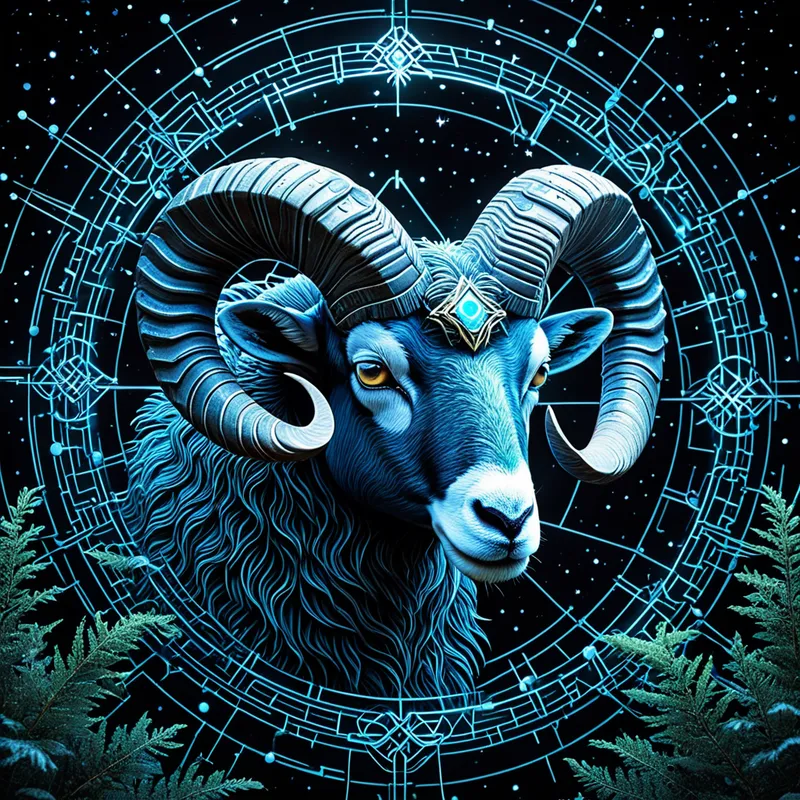
Abraham embodies the paternal logos principle faced with an incomprehensible command from the numinous. His struggle is the archetypal crisis of faith: the conscious mind commanded to sacrifice its most cherished creation, its legacy, its future (Isaac) to the very source that promised it. The ram in the thicket is the symbol of the unexpected synchronicity, the emergent third thing that resolves an impossible psychic tension. It represents the Self’s provision when the ego surrenders its agenda. The mountain, Moriah, is the liminal space where the human and the divine terrifyingly intersect, the altitude where old identities are burned away.
The Dreamer's Resonance
To dream in the pattern of the Akedah is to experience the somatic weight of a sacred burden. You may dream of being bound—not by enemies, but by loved ones or by your own sense of duty—upon an altar of obligation or expectation. The knife held above you is not one of malice, but of fate, of a necessary ending you feel powerless to prevent. This is the psyche working through a profound sacrifice of identity: perhaps the "child" of a creative project, a relationship, or a long-held self-image that must be offered up. The anxiety is not of death, but of surrender to a process whose outcome you cannot control. The dream may end before the resolution, leaving you in the suspended terror of the raised blade, indicating a psyche still grappling with the command to let go. If the ram appears, it signals a nascent intuition that the solution lies not in your own effort, but in a reorientation to a larger pattern.
Alchemical Translation
The alchemy of Isaac is the transmutation of blind obedience into conscious surrender, and of destined victimhood into liberated legacy. The initial stage is the nigredo: the divine command that plunges the Abrahamic consciousness into a dark night of the soul, where all previous understandings of promise and blessing turn to ash. The three-day journey is the period of incubation, the ego wrestling in silence with an unbearable paradox.
The crucible of faith is fired by the heat of contradiction.
The binding on the altar is the albedo, the whitening. Here, the identified self (Isaac) is purified by its own consent to the process. It is not a fight, but a yielding. This passive acceptance is its own form of supreme action. The raising of the knife is the climax, the rubedo or reddening, where the tension between holding on and letting go reaches its maximum intensity. It is the point of no return psychologically.
The intervention and the provision of the ram represent the citrinitas, the yellowing or dawn. It is the emergence of the transcendent function—the new attitude that arises from holding the tension of opposites. The ego is not destroyed but redeemed, given back to itself, now in service to a larger reality. The individual descends from the mountain having internalized the ram: the knowing that one's deepest sacrifices are not demands for annihilation, but calls to release one's own limited version of the future so that a more profound provision, orchestrated by the Self, can be caught in the thicket of everyday life. The covenant is renewed within. The laugh returns, no longer of disbelief, but of hard-won wisdom.
Associated Symbols
Explore related symbols from the CaleaDream lexicon: