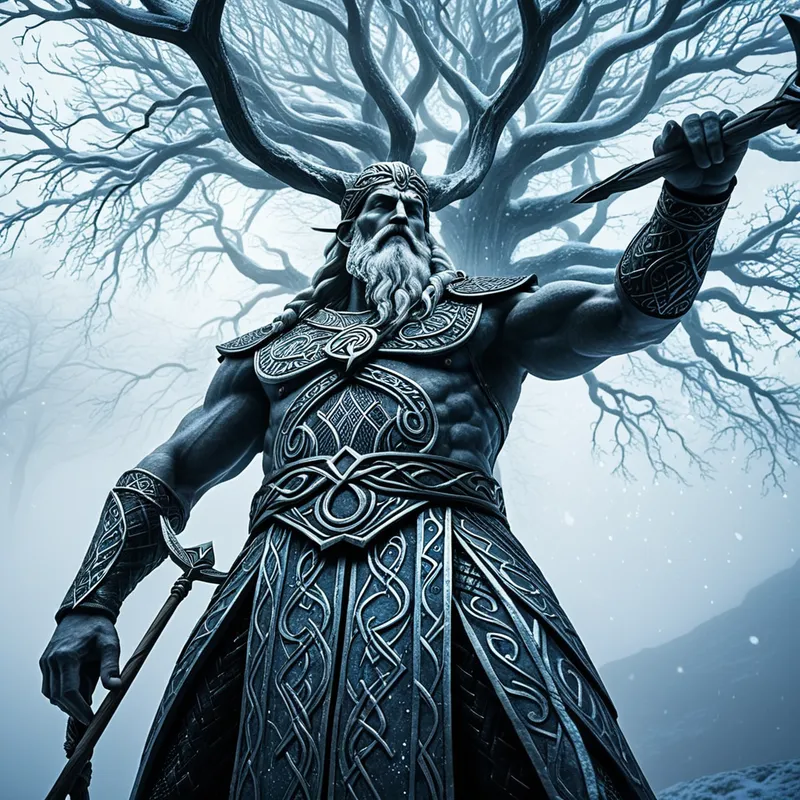
Óðinn's Sleep Sacrifice Myth Meaning & Symbolism
The Allfather hangs himself on the World Tree, pierced by a spear, to gain the ultimate knowledge of the runes through a death-like sleep.
The Tale of Óðinn's Sleep Sacrifice
Listen, and hear the price of knowing. In the time before time, when the winds of Ginnungagap still whispered secrets of nothingness, there was one who was not content with the wisdom of the nine worlds. He was Óðinn, the Hooded One, the Wanderer, and his single eye saw far, but not far enough. A hunger gnawed at him, a thirst that the mead of poetry could not quench. He sought the root of things, the hidden law that sings in the sap of the world and carves destiny into stone.
His journey led him down, down past the realm of mortals, down past the dark elves in their caverns, to the deepest, coldest root of Yggdrasil. There, in the silent, dripping dark where the spring of Urðr bubbled with memory, he stood. The air was thick with the scent of wet earth and ancient moss. The great roots, gnarled and vast as mountain ranges, coiled into the gloom. He could hear the slow drip of time itself.
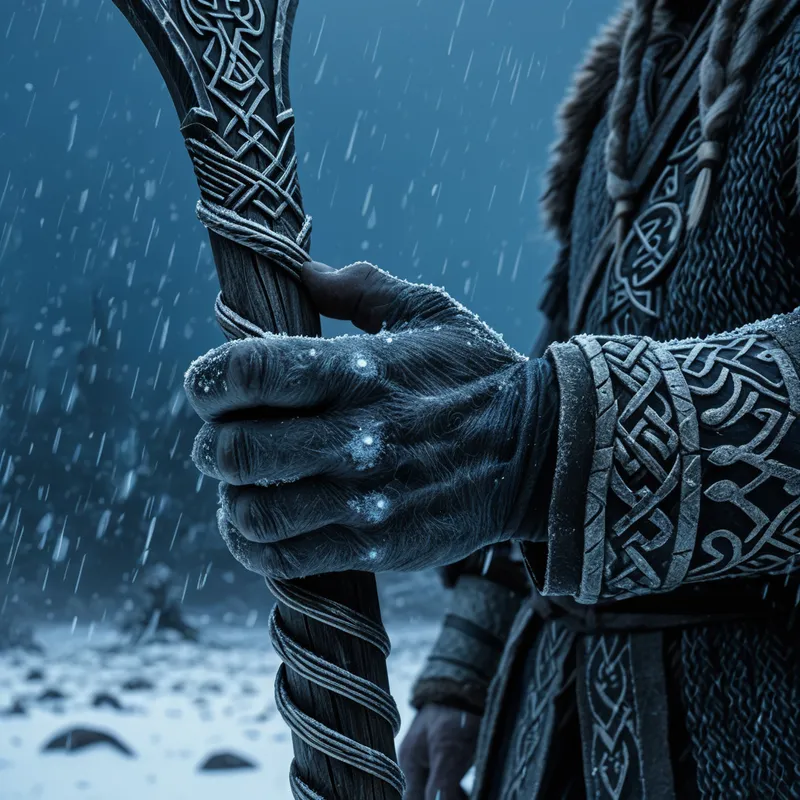
He drew his spear, Gungnir, its point gleaming with a cold, unwavering light. He did not raise it against a foe. With a cry that was part agony, part invocation, he drove it through his own side. The pain was a white fire, a searing anchor in the void. Then, with ropes woven from his own will, he bound himself to the limb of the World Tree. He hung there, a sacrifice to himself. The blood, dark and godly, seeped into the roots. The cold bit into his bones. He was the hanged god, suspended between the worlds, between life and death, consciousness and the abyss.
For nine nights and nine days, he hung. The winds of Niflheim scoured him. His vision swam. Hunger became a distant memory; thirst was a dream. His single eye saw nothing of the outside world, for it had turned inward, gazing into the well of his own being, into the roaring silence of the Hel within. He died a little more with each passing hour, not a death of the body, but a death of the self he knew. He let go of name, of title, of the pride of the Allfather. He became only the Hanged One, the empty vessel.
And in that utter surrender, in that sleep that was a kind of death, the vision came. Not as a voice, but as a seeing. From the depths of the well, from the pain of his wound, from the very wood of Yggdrasil, shapes began to glow. They were not letters, but living forces—runes. They swam up to him through the dark: Fehu, the mobile wealth of cattle and energy; Uruz, the raw, untamed strength of the aurochs; Thurisaz, the thorn of conflict and the giant's might. They burned themselves into his mind, each one a key to a lock in the fabric of reality. He saw their power to bind and to loose, to heal and to harm, to protect and to prophesy.
With a final, shuddering gasp that was his first breath of new life, his bonds fell away. He did not simply step down; he fell, a newborn thing, onto the cold ground. But he rose, transformed. The pain was now wisdom. The wound was now a wellspring. He had paid the price, and the secret songs of the universe were his to sing.
Cultural Origins & Context
This profound narrative is preserved for us in the Old Norse poem Hávamál ("The Sayings of the High One"), stanzas 138-139. The Hávamál is part of the Poetic Edda, manuscripts compiled in 13th-century Iceland but containing material that is undoubtedly far older, reaching back into the common Germanic pagan past. The voice that speaks the poem is Óðinn himself, offering a first-person account of his ordeal. This is critical—it is not a story told about a god, but wisdom claimed by the god, presented as hard-won personal experience to be learned from.
The myth would have been recited by skalds (poets) and perhaps in more ritualistic settings. Its function was multifaceted. On one level, it was an etiological myth explaining the divine origin of the runes, legitimizing their use in magic and divination. On a deeper societal level, it modeled the core Germanic and Norse values of seeking wisdom (frœði) at any personal cost, and of the transformative power of ordeal and self-reliance. Óðinn is not given the runes; he seizes them through an act of terrifying autonomy. This reflects a worldview where knowledge is not a gentle gift, but a hard-won prize extracted from the fabric of a harsh and sublime reality through courage, suffering, and cunning.
Symbolic Architecture
The myth is a masterclass in symbolic depth, depicting not an external adventure but an internal, alchemical process.
The Yggdrasil is the axis of all reality—the psyche itself, with its conscious crown, its middle-world trunk of ego, and its deep, unconscious roots. To hang upon it is to suspend one's ordinary identity at the very center of one's being.
The spear, Gungnir, represents piercing insight, the focused will that must wound the ego to break it open. It is the instrument of initiation, the "point" of the ordeal that creates a sacred wound, a permanent opening to the numinous.
The nine nights and days signify a complete cycle of gestation and rebirth, echoing the nine months of human pregnancy and the Norse cosmological significance of the number nine. It is the necessary period of dissolution in the dark, where the old form is broken down so a new one can coalesce.
The sacrifice is not of something you have, but of something you are. You do not pay with gold, but with your former self.
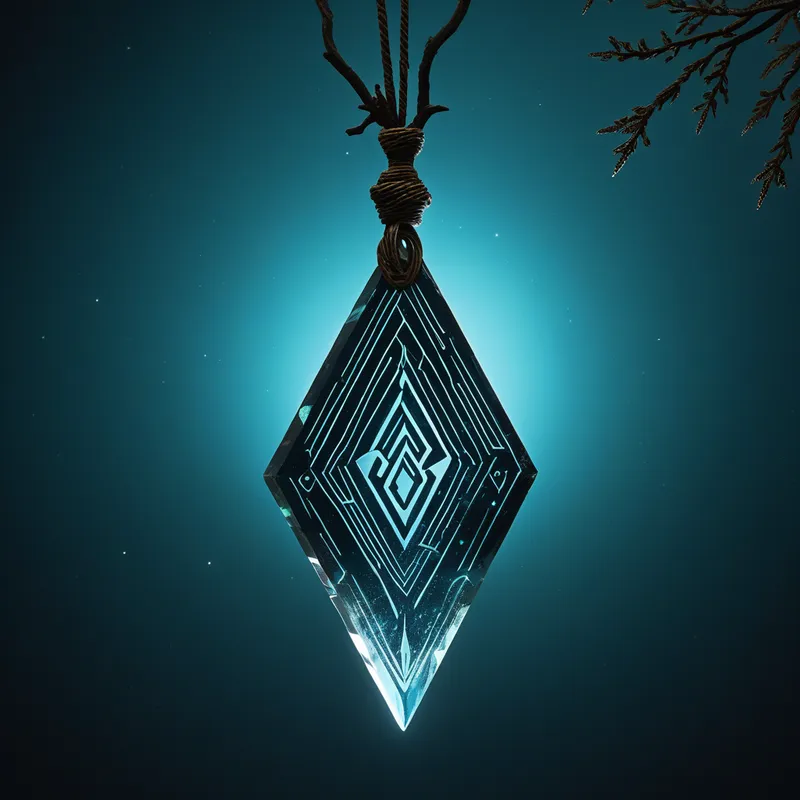
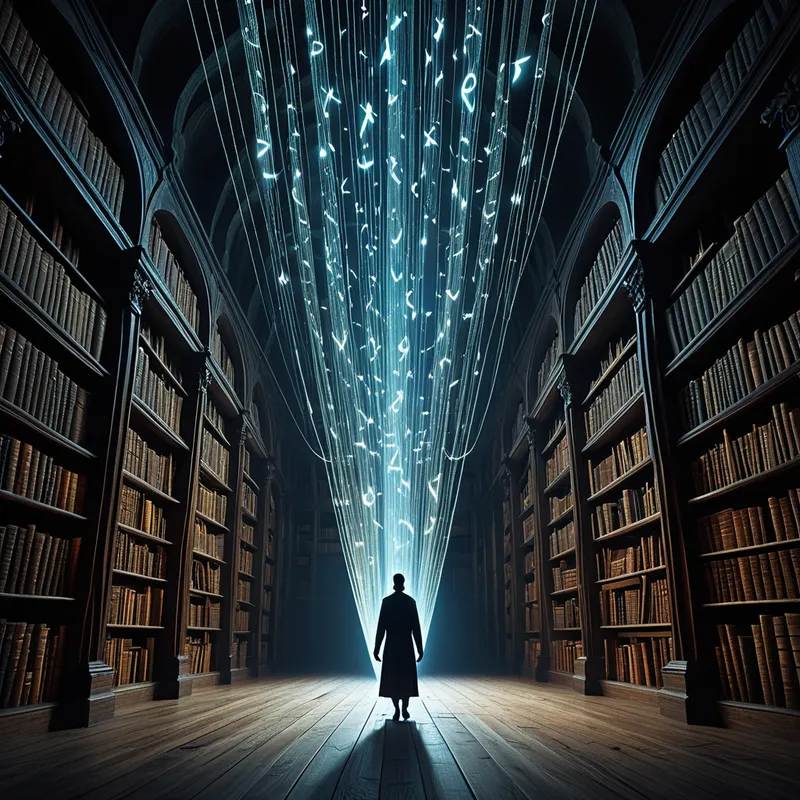
The runes that are won are the archetypal patterns of the unconscious, the fundamental codes of psychic energy. They are not "information" but living, dynamic principles—the very architecture of the soul made visible. To gain them is to gain a symbolic language with which to converse with the deepest layers of the self and the world.
The Dreamer's Resonance
When this mythic pattern stirs in the modern dreamer, it signals a profound psychological initiation underway. One may dream of being suspended, trapped, or paralyzed in a significant place—perhaps an office, a childhood home, or a vast, abstract space. There is often a sense of voluntary ordeal, of choosing to endure a painful but necessary stasis.
The somatic experience is one of constriction and piercing pressure, often in the chest or side, mirroring the spear wound. This can reflect the "sacred anxiety" of ego-death, the feeling of being dismantled by a life crisis, a depression, or a breakthrough that demands the surrender of a long-held identity (the professional, the caregiver, the certain one). The dreamer is in the "nine nights" phase—a liminal sleep where conscious control is relinquished. The psyche is performing its own hanging, its own incubation, to force a confrontation with foundational, runic-level truths about the dreamer's nature that the waking ego has refused to see.
Alchemical Translation
For the individual on the path of individuation, Óðinn's ordeal is a precise map for psychic transmutation. The process begins with the Nigredo, the blackening: the conscious decision to "go down to the roots," to confront the shadow material and the complexes that anchor one's life. This is the painful, often depressive, phase of honest self-appraisal.
The act of self-binding and piercing is the Mortificatio, the killing of the old king (the dominant, ruling attitude of the ego). The ego must be dethroned and suspended—its certainties, its defenses, its self-image rendered inert. This is an active surrender, a willed passivity, where one allows oneself to be undone by the unconscious.
The tree of the self must be wounded to bear the fruit of wisdom.
The nine-night vigil is the Albedo, the whitening, the purification in the moonlit waters of the unconscious. It is a state of receptive incubation, where the old dissolves and new patterns slowly coalesce from the chaos. Finally, the grasping of the runes is the Rubedo, the reddening, the return with the elixir. The integrated consciousness rises, not simply healed, but fundamentally reconstituted. It now possesses a new language—a symbolic understanding of its own dynamics. The wound of the spear remains as a reminder and a source of power; the scar tissue is wiser than the original skin. The individual is no longer merely living life but can now, to a degree, read it, understanding the deeper runic currents—the archetypal themes of power, constraint, flow, and breakthrough—that shape their destiny. They have gained not answers, but a more profound relationship with the questions.
Associated Symbols
Explore related symbols from the CaleaDream lexicon: