Indra's Vajra Myth Meaning & Symbolism
The story of the thunderbolt forged from a sage's bones, wielded by the king of gods to slay the serpent of chaos and restore cosmic balance.
The Tale of Indra’s Vajra
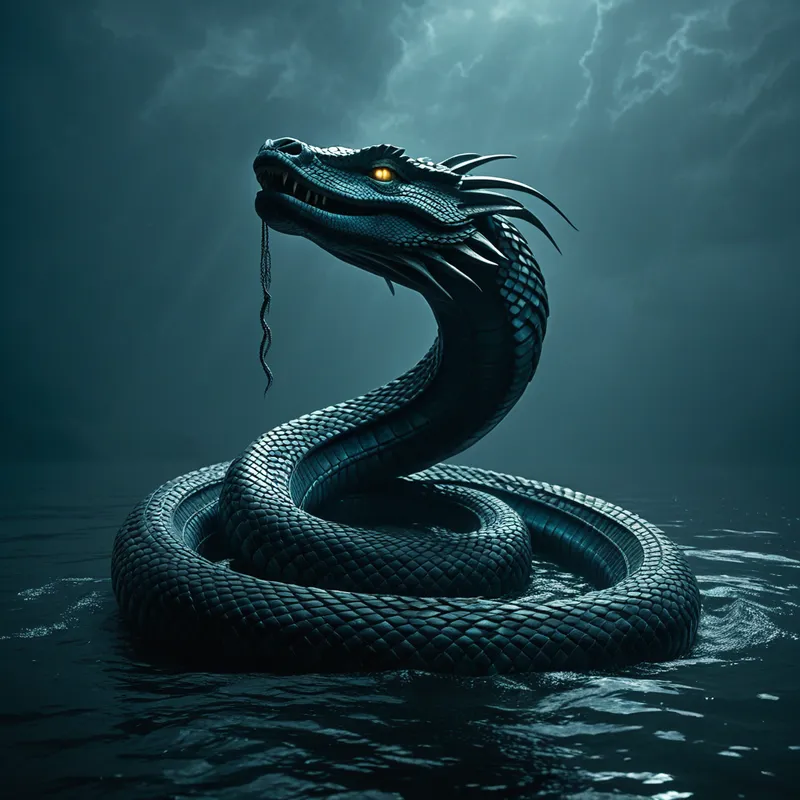
Listen. In the time before time, when the worlds were still soft and the gods walked with the weight of creation on their shoulders, a great drought choked the cosmos. Not a drought of [water](/myths/water “Myth from Chinese culture.”/), but of life itself. For the primordial waters, the source of all that is and will be, had been stolen. They were held in the vast, dark belly of a monstrous serpent, Vritra, whose name means “the Enveloper.” He lay coiled upon the mountains, his scales like polished obsidian, his breath a stale wind that promised only stagnation. The rivers ceased their singing. The clouds grew thin and empty. All creation grew parched, waiting.
At the head of [the pantheon](/myths/the-pantheon “Myth from Greek culture.”/) stood [Indra](/myths/indra “Myth from Hindu culture.”/), the thunder-wielder. But his arm was empty. His famed thunderbolt was gone, for no weapon of ordinary divine craft could pierce Vritra’s hide, forged from the essence of inertia itself. Desperation hung in the halls of [Svarga](/myths/svarga “Myth from Hindu culture.”/). The gods, their luster dimming, gathered in a silent council. Their whispers were carried by [the wind](/myths/the-wind “Myth from Various culture.”/) to the ears of the great father, Brahma. He spoke a truth that was also a sacrifice. “The bones of the sage Dadhici,” he said. “He has meditated for eons, his [tapas](/myths/tapas “Myth from Hindu culture.”/) (austerities) so fierce that his very skeleton has become indestructible, harder than diamond. Only from such a substance can the necessary weapon be forged.”
They went to Dadhici’s hermitage, a place of profound silence. They bowed before the sage, whose flesh was thin over a frame of unimaginable resilience. They told him of Vritra, of the stolen waters, of the thirst of the worlds. Dadhici listened, his eyes closed. He did not hesitate. A smile, gentle as a leaf falling, touched his lips. For what is the purpose of austerity, if not to serve life? With a final, conscious breath, he released his spirit from its adamantine cage. His body fell, and from it, the divine artisan [Vishwakarma](/myths/vishwakarma “Myth from Hindu culture.”/) extracted the luminous, unbreakable bones.
In the forges of the cosmos, Vishwakarma worked. The bones were heated in the breath of Agni, the fire god, and cooled in the breath of Vayu, the wind god. They were shaped not into a blade, but into something more profound: a short, heavy, indestructible mace, its ends flaring into multiple prongs or blades. It was named the [Vajra](/myths/vajra “Myth from Hindu culture.”/). It did not cut; it shattered. It did not pierce; it discharged. It was the concentrated essence of resolve, the physical form of a sage’s ultimate offering.
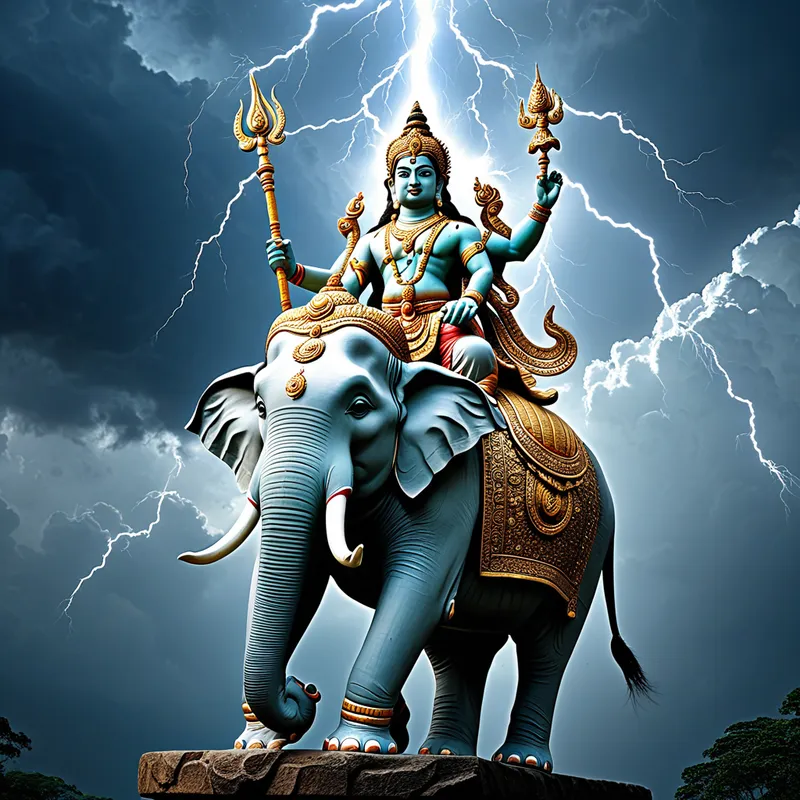
Armed with the Vajra, Indra mounted his great white elephant, Airavata. [The sky](/myths/the-sky “Myth from Persian culture.”/) darkened with the gathering of his might. He descended to where Vritra lay, a continent of scaled arrogance. The battle shook the pillars of heaven and earth. Vritra roared, spewing darkness and doubt. Indra, fueled by the sacrifice he carried, hurled the Vajra. It was not a throw, but a release of concentrated truth. It struck the serpent not with mere force, but with the undeniable reality of order against chaos, of flow against obstruction.
With a sound like a mountain cracking, Vritra was shattered. The waters held within him burst forth in a torrential, life-giving flood. They rushed into the riverbeds, leaped into the clouds, and soaked into the thirsty soil. The cosmos drank deeply and sighed in relief. The Vajra, stained with the residue of chaos, returned to Indra’s hand, humming with a new, settled power. The king of gods had reclaimed his sovereignty, but it was a sovereignty earned through the bone-deep sacrifice of another. The weapon was now his, but its origin was a permanent echo in its core.
Cultural Origins & Context
The myth of Indra and the Vajra is one of the oldest and most central narratives in the Vedas, particularly the Rigveda. Here, Indra is not just a king among gods; he is the archetypal champion, the model of virile, active power necessary to establish and maintain Rta. The story was not merely entertainment. It was a cosmological and ritual blueprint, recited by priests during sacrifices meant to ensure the victory of order—seasonal rains, societal stability, and cosmic balance—over the ever-present threat of chaos (drought, social disintegration, moral decline).
The myth functioned on multiple societal levels. For kings and warriors, it was a paradigm of legitimate power: true sovereignty (Indra’s rule) requires both fierce strength and a sacred instrument (the Vajra) forged from sacrifice (Dadhici’s bones). For the common person, it explained the essential, life-or-death cycle of the monsoon—the dramatic, violent, and necessary release of pent-up waters. The myth was passed down through generations of Brahmin priests, its recitation believed to have a participatory, magical effect, aligning human action with the divine drama that keeps [the world](/myths/the-world “Myth from Tarot culture.”/) in motion.
Symbolic Architecture
The Vajra is far more than a [weapon](/symbols/weapon “Symbol: A weapon in dreams often symbolizes power, aggression, and the need for protection or defense.”/); it is a dense, [multi](/symbols/multi “Symbol: Multi signifies multiplicity and diversity, often representing various aspects of life or identity in dreams.”/)-layered [symbol](/symbols/symbol “Symbol: A symbol can represent an idea, concept, or belief, serving as a powerful tool for communication and understanding.”/). Its very substance—the bones of a sage—represents the [transmutation](/symbols/transmutation “Symbol: A profound, alchemical process of fundamental change where one substance or state transforms into another, often representing spiritual evolution or personal metamorphosis.”/) of spiritual discipline (tapas) into an [instrument](/symbols/instrument “Symbol: An instrument symbolizes creativity, communication, and the means by which one expresses oneself or influences the world.”/) of world-changing [action](/symbols/action “Symbol: Action in dreams represents the drive for agency, motivation, and the ability to take control of situations in waking life.”/). The sage’s [interior](/symbols/interior “Symbol: The interior symbolizes one’s inner self, thoughts, and emotions, often reflecting personal growth, vulnerabilities, and secrets.”/) fortitude becomes the god’s exterior power.
The Vajra is the moment where concentrated consciousness strikes the inertia of the unconscious, releasing the trapped waters of potential into the riverbed of lived experience.
Vritra symbolizes the primal, undifferentiated state of [chaos](/symbols/chaos “Symbol: In Arts & Music, chaos represents raw creative potential, uncontrolled expression, and the breakdown of order to forge new artistic forms.”/), but also the psychological forces of obstruction: doubt, fear, complacency, and [the ego](/myths/the-ego “Myth from Jungian culture.”/)’s tendency to hoard [energy](/symbols/energy “Symbol: Energy symbolizes vitality, motivation, and the drive that fuels actions and ambitions.”/) (the waters) in a stagnant pool of self-protection. Indra represents the active, sovereign principle of [consciousness](/symbols/consciousness “Symbol: Consciousness represents the state of awareness and perception, encompassing thoughts, feelings, and experiences.”/)—the part of the [psyche](/myths/psyche “Myth from Greek culture.”/) that must confront and integrate the [shadow](/symbols/shadow “Symbol: The ‘shadow’ embodies the unconscious, repressed aspects of the self and often represents fears or hidden emotions.”/) to release creative and emotional flow. Dadhici’s sacrifice is the crucial, often overlooked, third element: the necessity of surrendering a hardened, egoic [structure](/symbols/structure “Symbol: Structure in dreams often symbolizes stability, organization, and the framework of one’s life, reflecting how one perceives their environment and personal life.”/) (the “bones” of a fixed [identity](/symbols/identity “Symbol: Identity represents the sense of self, encompassing personal beliefs, cultural background, and social roles.”/) or belief) to a [purpose](/symbols/purpose “Symbol: Purpose signifies direction, meaning, and intention in life, often reflecting personal ambitions and core values.”/) greater than [the self](/myths/the-self “Myth from Jungian culture.”/), so that a new, more potent form of agency can be born.
The Dreamer’s Resonance
When this myth stirs in the modern unconscious, it often manifests in dreams of profound impasse and sudden, shocking release. One might dream of a massive, dark, coiling weight on the chest (Vritra), a feeling of being constricted, unable to breathe or move forward in life. The emotional tone is one of suffocating stagnation—a career plateau, a frozen grief, a relationship devoid of flow.
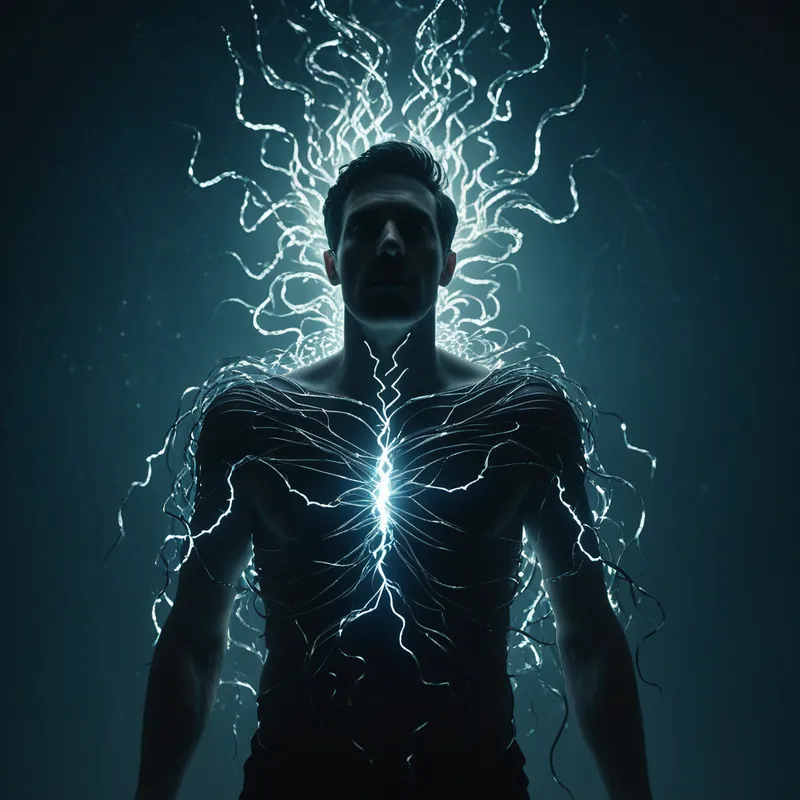
The Vajra’s appearance in dreams is less often as a weapon and more as a sudden, piercing insight: a lightning bolt of clarity in the dream’s darkness, a sharp, crystalline object found in an unlikely place, or the shocking sound of something shattering. Somaticly, the dreamer may awaken with a jolt, a feeling of electrical energy coursing through them, or a deep, liberating breath after the breaking of the “serpent.” This is the psyche enacting its own ritual. The dream is the forge where the hardened patterns of the past (Dadhici’s bones of habit and defense) are, through the pressure of the conflict itself, being reconstituted into the precise tool needed to break the deadlock.
Alchemical Translation
For the individual on the path of individuation, the myth of Indra’s Vajra models the alchemical process of [solve et coagula](/myths/solve-et-coagula “Myth from Alchemical culture.”/)—dissolve and coagulate. First, one must confront their personal Vritra: the complex, the addiction, the entrenched narrative that holds the “waters” of one’s vitality and potential hostage. This requires the courage of Indra—the willingness to engage [the shadow](/myths/the-shadow “Myth from Jungian culture.”/) directly.
But courage alone is blunt. The alchemical weapon is forged in the prior, quiet stage of Dadhici: the disciplined, often painful, work of introspection and askesis (spiritual exercise). This is where we discover our own “indestructible bones”—the core truths, values, or traumas that have structured our being. The sacrifice is the conscious decision to offer up this old, rigid structure to be broken down and remade. We must let our old self-concept die so that its essence can be reforged into a tool of discernment and decisive action (the Vajra).
The victory is not the destruction of the serpent, but the liberation of the waters it held. The goal of the inner battle is not to annihilate a part of oneself, but to release the bound energy and creativity back into the ecosystem of the soul.
Finally, the reclaimed sovereignty (Indra restored) is a new, more integrated state of consciousness. The Vajra remains in hand, not as a weapon for constant war, but as a symbol of the ego’s newfound capacity to act in alignment with the Self—to make clear, firm, truth-shattering decisions that maintain the inner order and allow the waters of life to flow unimpeded. The myth teaches that ultimate power is never merely taken; it is always received through sacrifice, and its rightful use is always in service to the flourishing of the whole world within and without.
Associated Symbols
Explore related symbols from the CaleaDream lexicon: