Indra's Heaven Myth Meaning & Symbolism
A celestial king discovers his magnificent, eternal paradise is an illusion, a fleeting dream woven by cosmic forces, leading to a profound spiritual awakening.
The Tale of Indra's Heaven
Listen, and hear of the realm where desire finds its ultimate form, yet truth wears the mask of a dream.
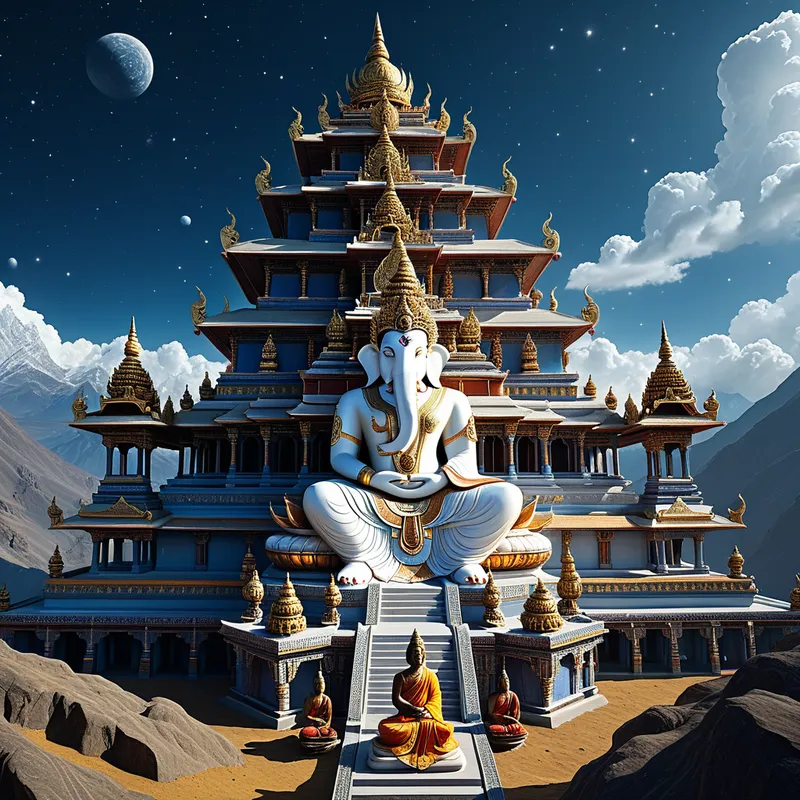
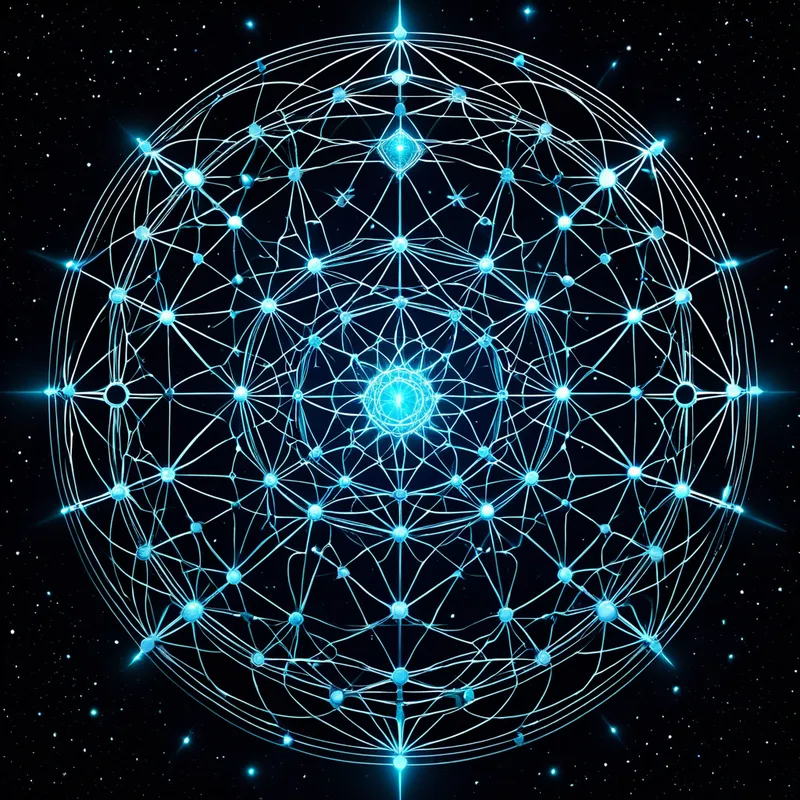
In the immeasurable heights above the world of mortals, beyond the circling sun and the path of the moon, lies the dominion of Sakra, Lord of the Trayastrimsa. Here, the air is not air, but the fragrance of a thousand celestial blossoms. The ground is not stone, but polished crystal that sings underfoot. Palaces of light, spontaneous and perfect, rise from thought alone. The inhabitants, the devas, know no sorrow. Their bodies are radiant, their laughter is music, and their every wish is granted before it is fully formed. At the heart of this splendor sits Sakra himself, also known as Indra, upon a throne of white jade. His mount, the great white elephant Airavata, stands guard, its tusks like polished ivory pillars. In his hall hangs his greatest treasure: a net of infinite dimensions, and at every knot of this net, a perfect, multifaceted jewel. Each jewel reflects every other jewel in the net, creating a dazzling, endless play of light—a perfect image of his ordered, eternal, and self-reflecting kingdom.
For eons, this was the unchanging law of Indra's Heaven. Time flowed like honey, and the devas reveled in their godly lifespan, believing their glory was as permanent as the foundations of the world-mountain itself. Indra ruled with benevolent pride, the architect of a paradise that knew no shadow, no decline, no end.
Then, a whisper began. It was not a sound, but a tremor in the very fabric of the celestial light. A single, minuscule flaw appeared in the perfect vision. Perhaps it was a flower in the eternal gardens that wilted, just for an instant. Perhaps it was a note of music in the constant symphony that fell silent. The devas felt a strange chill, a ghost of a feeling they had no name for. They looked to their king.
Indra, from his throne, felt it first and deepest. The flawless reflection in his Net of Jewels shimmered. In the heart of a single, perfect gem, he saw not the reflection of all others, but for a fleeting moment, he saw through it. He saw the intricate, shimmering web of his heaven… and then he saw the vast, empty, silent darkness that lay beyond its threads. The vision was gone in an instant, but the seed was planted. The unshakable certainty of his eternal reign cracked.
He descended from his high palace, walked through his streets of light, and saw not permanence, but a breathtaking, terrifying dance of causes and conditions. He saw that each deva’s radiance was fed by the merit of past deeds, a fuel that was not infinite. He saw that the palaces, for all their solid light, were sustained by collective belief, a dream shared by countless minds. The paradise was not a fixed place, but a magnificent, collective illusion—the most beautiful and convincing dream in all the cosmos.
The realization did not destroy his heaven. The music played on, the light still shone. But everything was transformed. The splendor was now seen for what it was: a temporary, wondrous expression of Samsara at its most refined. The ruler of the gods had encountered the supreme law that governs even gods: Anicca. His triumph became his lesson. His eternal home became a teaching. And in that moment of profound disillusionment, the King of Heaven took his first step on a path that led beyond even the highest heavens.

Cultural Origins & Context
This myth, while featuring Vedic deities like Indra, is fundamentally a Buddhist story. It is found across the Pali Canon, particularly in the <abbr title=""Collection of Long Discourses" in the Pali Canon">Digha Nikaya and the <abbr title=""Collection of Numerical Discourses" in the Pali Canon">Anguttara Nikaya. It was not a tale of worship, but a pedagogical device used by the Buddha and his monks. When teaching monks, nuns, and lay followers—often kings and merchants accustomed to worldly power and pleasure—the storyteller would invoke the grandeur of Indra's Heaven, a cultural touchstone of the ultimate success.
The function was subversive and profound. By first captivating the listener with a description of the highest sensual and material pleasure conceivable, the story sets the stage for a devastating, liberating punchline: Even this is not enough. Even this is not real. Even this will end. It served to recalibrate the entire spiritual ambition of the listener. If the goal was merely rebirth in a heavenly realm, even the best of them was revealed as a dead end, a gilded cage within the cycle of rebirth. The myth thus acted as a "skilful means" (Upaya) to point the seeker toward the only true goal: Nirvana, which is unconditioned and beyond all realms, heavenly or otherwise.
Symbolic Architecture
The myth is a masterful map of psychological and cosmic illusion. Indra is not a villain, but the archetype of the successful ego at its absolute zenith. He represents the part of the psyche that has mastered its world, built a perfect self-image, and dwells in the palace of its own achievements and identities.
The Net of Jewels is the ultimate symbol of the interconnected, self-validating illusion. Each jewel (each thought, each belief, each achievement) reflects all others, creating a closed, perfect, and utterly convincing system of self.
His Heaven, therefore, is the psychological state of complete identification with one's persona, status, and accomplishments. It is the "peak experience" mistaken for a permanent state. It is the belief that one has arrived at a final, perfected version of oneself. The conflict arises when the foundational law of reality—impermanence (anicca)—inevitably whispers at the gates. The "flaw" in the jewel is the intrusion of the unconscious, of a truth larger than the ego's constructed reality. Indra's journey from pride to realization models the painful but necessary death of egoic certainty, the moment when the self you have spent a lifetime building is revealed as a magnificent, temporary dream.
The Dreamer's Resonance
When this myth stirs in the modern unconscious, it often manifests in dreams of profound, unsettling revelation within success. You may dream of standing in your dream home, only to watch the walls become transparent or the floor turn to mist. You may receive a great award, and as you look at the trophy, it crumbles to dust in your hands. You may see yourself in a mirror, wearing the robes of a king or queen, and watch the reflection age rapidly or dissolve.
Somatically, this can feel like a sudden hollowing-out at the moment of triumph, a vertigo at the peak of the mountain. Psychologically, it marks the process of "de-identification." The psyche is grappling with a realization that the roles you play, the status you hold, the possessions you cherish—even the spiritual insights you cling to—are not your essential self. It is the soul's intuition of Anatta pressing against the confines of a well-constructed identity. The dream is not a failure, but the beginning of a deeper liberation, often arriving when one's worldly or personal "heaven" has been achieved and found wanting.

Alchemical Translation
The alchemy here is the transmutation of pride into wisdom, and of attachment into liberating disillusionment. Indra's initial state is the "lead" of ignorant bliss, the inflation that comes with believing one's current station is the final goal. The cracking of the heavenly vision is the nigredo, the darkening, the necessary dissolution of that inflation.
The triumph of the myth is not that Indra destroys his heaven, but that he sees through it. The paradise remains, but he is no longer imprisoned by it. This is the alchemical gold: conscious relationship to one's own achievements and states, without being owned by them.
For the modern individual, this models the path of individuation beyond the social persona. One builds a life, a career, a reputation—one's own "Net of Jewels." The alchemical work begins when, at the height of that construction, one has the courage to ask: "Who am I beyond this net?" The process involves holding the tension between appreciating the beauty of one's creation and recognizing its ultimate insubstantiality. It is to rule your inner "heaven"—your talents, your relationships, your accomplishments—not as a deluded monarch who believes it is eternal, but as a wise steward who knows it is a temporary, beautiful expression of a journey that continues far beyond its borders. The goal shifts from building a better, permanent palace to awakening to the boundless sky in which all palaces appear and vanish.
Associated Symbols
Explore related symbols from the CaleaDream lexicon: