Inanna Myth Meaning & Symbolism
The Queen of Heaven descends to the underworld, is stripped, killed, and resurrected, modeling the ultimate journey of ego death and renewal.
The Tale of Inanna
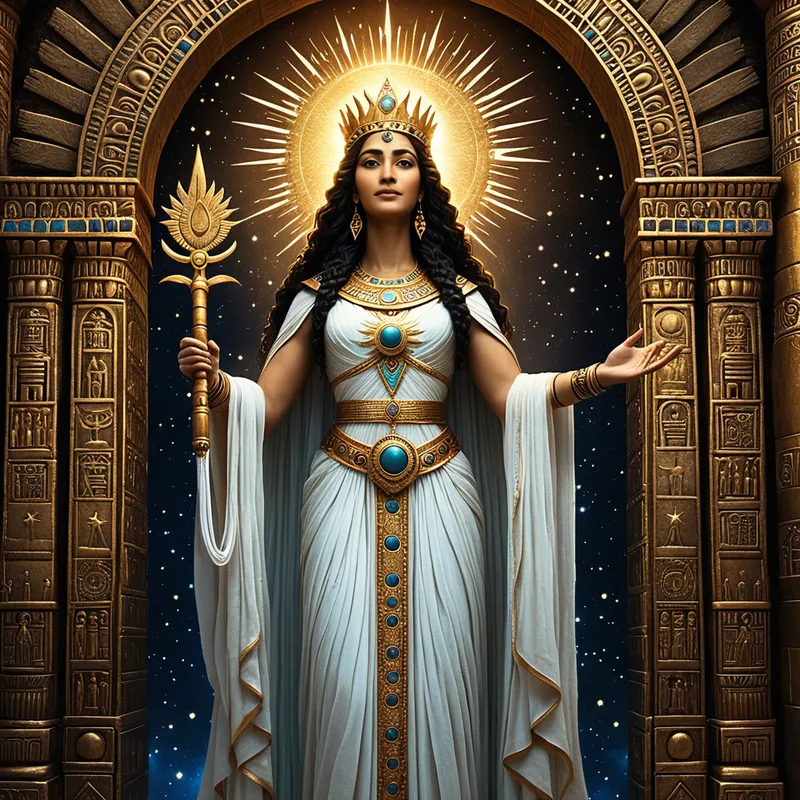
Hear now the tale that shakes the pillars of the world, the story of the one who went down and returned. From the Ziggurat of Uruk, where the air shimmers with incense and power, the Queen of Heaven turns her gaze. Not to the bright expanse of her domain, but downward, to the silent, dusty realm from which no traveler returns. A deep and terrible longing has taken root in her heart—to witness the funeral rites of Gugalanna, the husband of her dark sister, Ereshkigal.
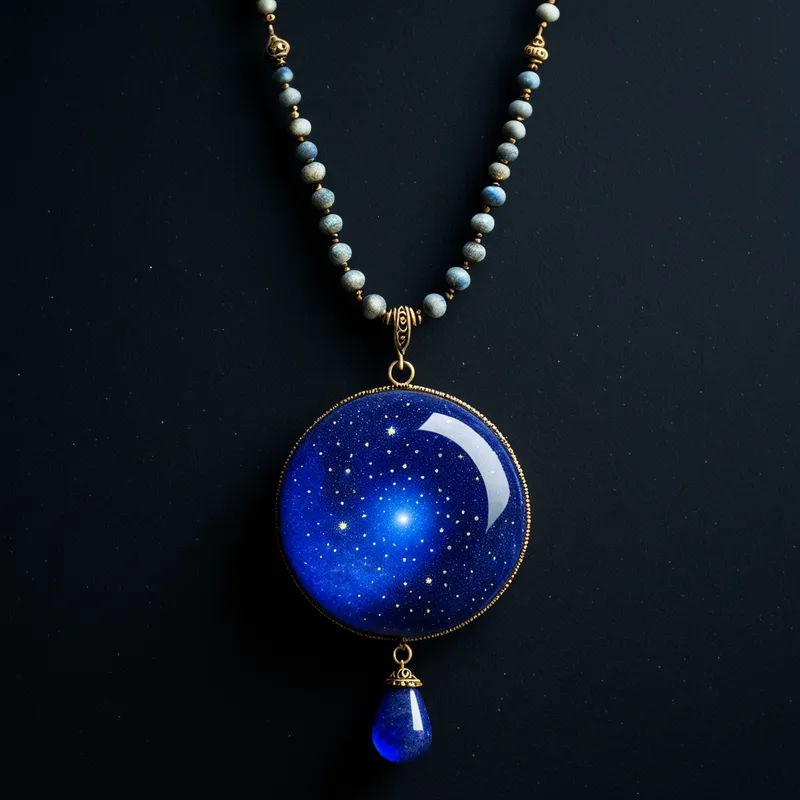
She adorns herself in the seven Me, the symbols of her sovereignty: the shining crown, the lapis lazuli necklace, the double strand of beads, the breastplate, the golden ring, the measuring rod and line, and her royal robe. Thus armored in her divine identity, she approaches the Ganzir, the gate to the underworld. Her faithful servant, Ninshubur, waits above with instructions to mourn and seek the gods if she does not return.
At the first lapis lazuli gate, the stern gatekeeper, Neti, challenges her. “Who are you?” he demands. “I am Inanna, Queen of Heaven, on my way to the East,” she declares. But Ereshkigal, sensing her approach, commands Neti to bolt the seven gates of the underworld. At each gate, Inanna must be stripped.
“Enter,” says Neti, “but according to the ancient rites.” The crown is lifted from her brow. “What is this?” she cries. “Quiet, Inanna,” comes the reply, “the ways of the underworld are perfect. They may not be questioned.” Gate by gate, the necklace, the beads, the breastplate, the ring, the rod, and finally her royal robe are taken. Naked and bowed low, she enters the throne room of her sister.
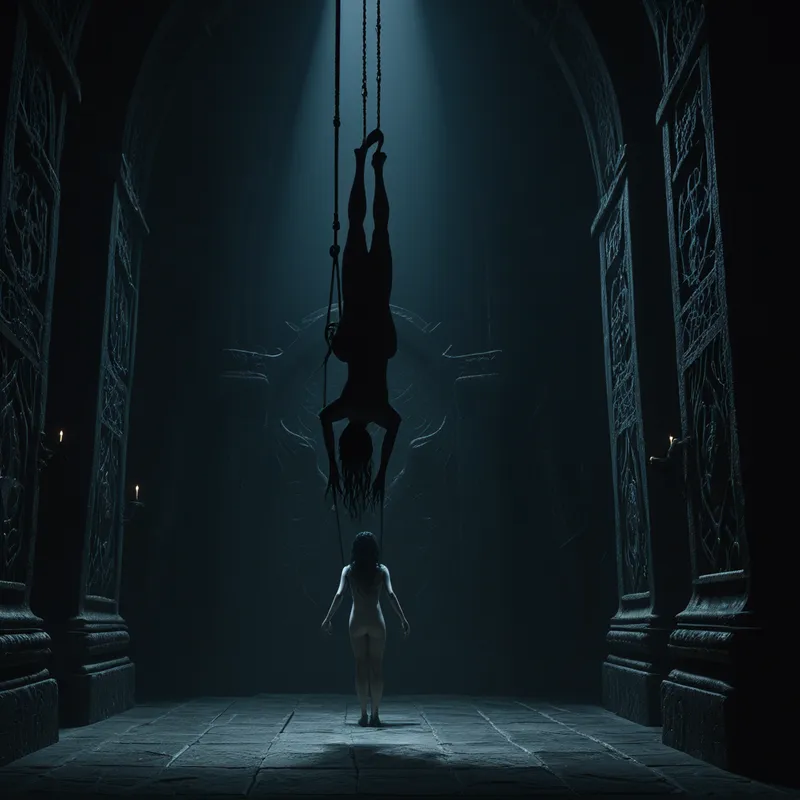
Ereshkigal sits upon her throne, swollen with the pains of childbirth and grief. The Anunnaki fix upon Inanna the eye of death. Ereshkigal speaks a word of wrath, and Inanna is turned to a corpse—a piece of rotting meat—and hung upon a hook.
Three days and three nights pass. Above, Ninshubur raises the lament. She petitions the gods. Enki, the clever god, hears. From the dirt under his fingernails, he fashions two sexless creatures, kurgarra and galatur. He gives them the food and water of life and whispers a strategy of empathy.
They descend to the underworld and find Ereshkigal moaning, “Oh, my insides! Oh, my outsides!” They do not flinch. They mirror her agony. “You are in pain,” they say. “We are in pain with you.” “You are distressed,” they say. “We are distressed with you.” Moved by this unheard-of compassion, Ereshkigal offers them a boon. They ask only for the corpse hanging on the hook. They sprinkle the food and water of life upon Inanna’s lifeless form.
She stirs. She rises. But the laws of the underworld are absolute: no one leaves without providing a substitute. As Inanna ascends through the gates, reclaiming her Me, she is followed by a troop of relentless galla demons, insisting on a soul in her place. They find her husband, Dumuzid, seated upon her throne, not mourning but reveling. In a flash of cold fury, Inanna fixes the eye of death upon him. The demons seize him. Through the pleading of his sister, Geshtinanna, a compromise is struck: Dumuzid will spend half the year in the underworld, and his sister the other half. Thus, the cycle of life, death, and return is etched into the very fabric of the world.
Cultural Origins & Context
This myth, known as Inanna’s Descent to the Underworld, was inscribed in cuneiform on clay tablets over 4,000 years ago in ancient Mesopotamia. It was not mere entertainment but a sacred narrative central to the cult of Inanna (Ishtar), the dynamic goddess of love, war, fertility, and political power. Recited likely during ritual ceremonies, perhaps tied to the cycles of the planet Venus (which disappears and reappears from view) or seasonal agricultural rites, the story served multiple societal functions.
It reinforced the cosmic order and the terrifying, non-negotiable power of the underworld. It explained the seasonal cycle of vegetation (Dumuzid as the dying and rising god). For the priesthood and monarchy, it validated the divine source of Inanna’s Me—the foundational principles of civilization—and the goddess’s fearsome sovereignty. The story was a theological anchor, a piece of sacred law written in narrative form, teaching that even the highest power must submit to the ultimate law of transformation and reciprocity.
Symbolic Architecture
The descent is the ultimate metaphor for the ego’s confrontation with the absolute. Inanna does not go to conquer, but to witness. Her journey is one of voluntary, if naïve, surrender to a reality beyond her celestial domain.
To descend is not to fall, but to submit to a gravity more profound than ambition. The underworld is not hell, but the unadorned truth of the psyche, where all titles are meaningless.
The seven Me represent the accumulated identities, achievements, and social armors of the conscious self. Their systematic removal is a brutal, initiatory deconstruction. The ego, in its full regalia, cannot enter the realm of the soul. Nakedness—stripped of status, role, and persona—is the prerequisite for encountering the Shadow in its most potent form: Ereshkigal. This is not a personal shadow, but the archetypal, chthonic Great Mother, the holder of all that is repressed, denied, and left to rot.
Inanna’s death on the hook signifies the necessary, total dissolution of the conscious standpoint. The resurrection is not a self-powered triumph, but a gift born from empathy (Enki’s creatures) and the intervention of a deeper, cunning wisdom (Enki himself). The return, however, comes with a price: the sacrifice of what is cherished (Dumuzid). This establishes the eternal rhythm—the conscious life cannot flourish without periodically sacrificing its gains to the depths, and the depths yield new life only when honored.
The Dreamer's Resonance
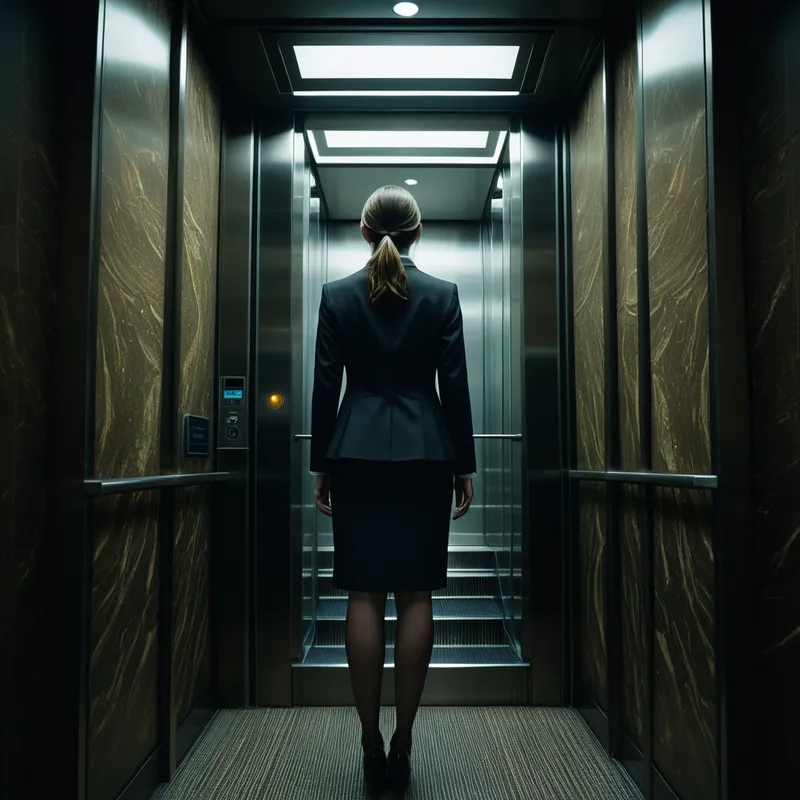
When this myth stirs in modern dreams, it announces a profound psychological initiation. The dreamer may find themselves in elevators going down, descending staircases into basements, or losing vital possessions. The somatic feeling is one of dread, vulnerability, and irreversible passage.
This is the psyche’s signal that a foundational aspect of the personality—a long-held self-image, a career identity, a core relationship—must undergo a ritual death. The dream ego is being prepared for the stripping away. Dreams of being naked in public, of forgotten rooms filled with decay, or of a powerful, wrathful feminine figure all echo Inanna’s ordeal. The process is one of enantiodromia—the emergence of the unconscious opposite. The outwardly successful, luminous, “heavenly” conscious attitude is being pulled into its dark, grieving, subterranean counterpart to be rebalanced. The dreamer is not going mad; they are being prepared for wholeness.
Alchemical Translation
For the modern individual, Inanna’s myth maps the alchemical nigredo and the journey toward individuation. It is a manual for psychic transmutation.
The first step is the call: a restless, often inexplicable pull toward what one fears most—one’s own depression, grief, rage, or emptiness (the underworld). The conscious self must then consent to the descent, willingly facing the gates where it will be systematically dismantled. In therapy or deep introspection, this is the painful confrontation with one’s history, traumas, and broken parts.
The hook is the point of suspension, where the old self hangs lifeless, and all doing ceases. This is the crucial, fallow period of depression or stagnation, where the only task is to endure.
Resurrection comes not from the ego’s willpower, but from the nurturing, empathetic attention (kurgarra and galatur) we learn to give to our own inner Ereshkigal—to our own raw, howling pain. Enki represents the transcendent function, the psychic resource that creates a solution from the overlooked “dirt” of our experience.
The final, harsh lesson is the law of equivalence. One cannot return to the old life unchanged. Something cherished—an old ambition, a comforting illusion, a dependent relationship (Dumuzid)—must be surrendered to the depths to maintain the new equilibrium. The result is not a “better” ego, but a fluid consciousness capable of moving between the heights and depths, owning both its luminosity and its rot, and in doing so, becoming truly whole. The Queen of Heaven and the Queen of the Dead are, in the end, one being.
Associated Symbols
Explore related symbols from the CaleaDream lexicon: