Hvergelmir Myth Meaning & Symbolism
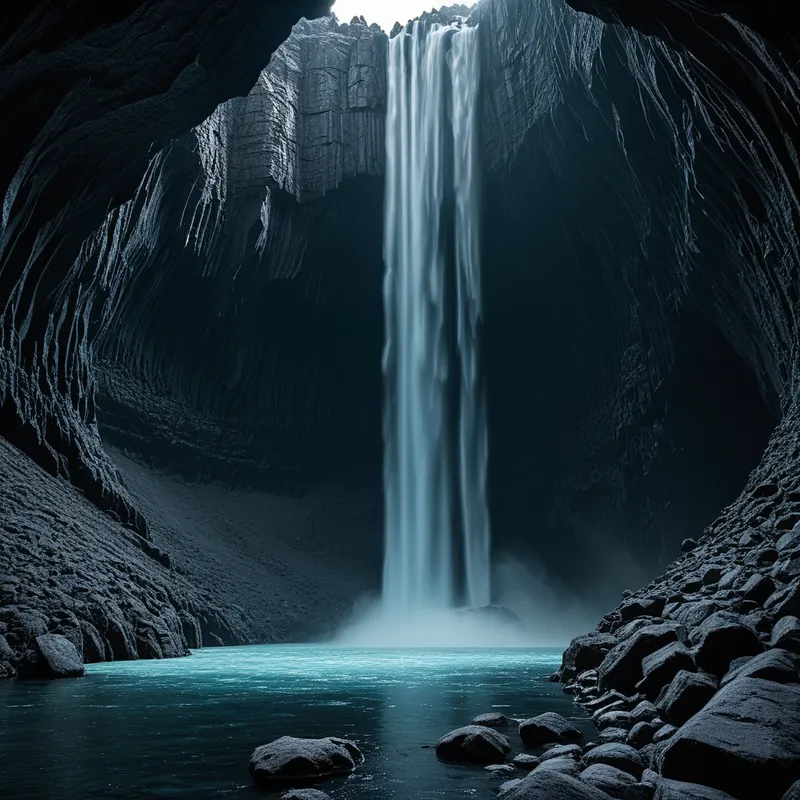
The myth of Hvergelmir, the roaring cauldron at the root of all things, where the first rivers of life and death are born from primordial chaos.
The Tale of Hvergelmir
Listen, and hear the tale of the First Roar, the sound before sound, the wellspring of all that is and will be. In the time before time, in the void of Ginnungagap, there was a stirring. Not a god, not a giant, but a pressure. A yearning in the dark. And from this yearning, from the meeting of ice and fire, the great worlds were heaved into being, and at their heart, the mighty Yggdrasil drove its roots deep into the soil of existence.
But one root, the one that quested toward the frozen, mist-shrouded realm of Niflheim, found not solid ground, but a mouth. A gaping, thunderous maw in the fabric of things. This was Hvergelmir, the “Bubbling Boiling Spring.” It was no gentle pool. Its waters were a seething, roaring cauldron, a chaos of molten ice and hissing steam, the very womb of dissolution and the forge of beginning.
From its furious heart, eleven rivers were born. They did not trickle; they burst forth, great serpents of water named Élivágar. They carved canyons of time through the primordial ice, their currents carrying the essence of potential—and of ending. Their waters were the stuff of life, yet so cold and ancient they could freeze a sun. They flowed out to water the roots of the World Tree, and they flowed into the worlds, becoming the veins of Midgard.
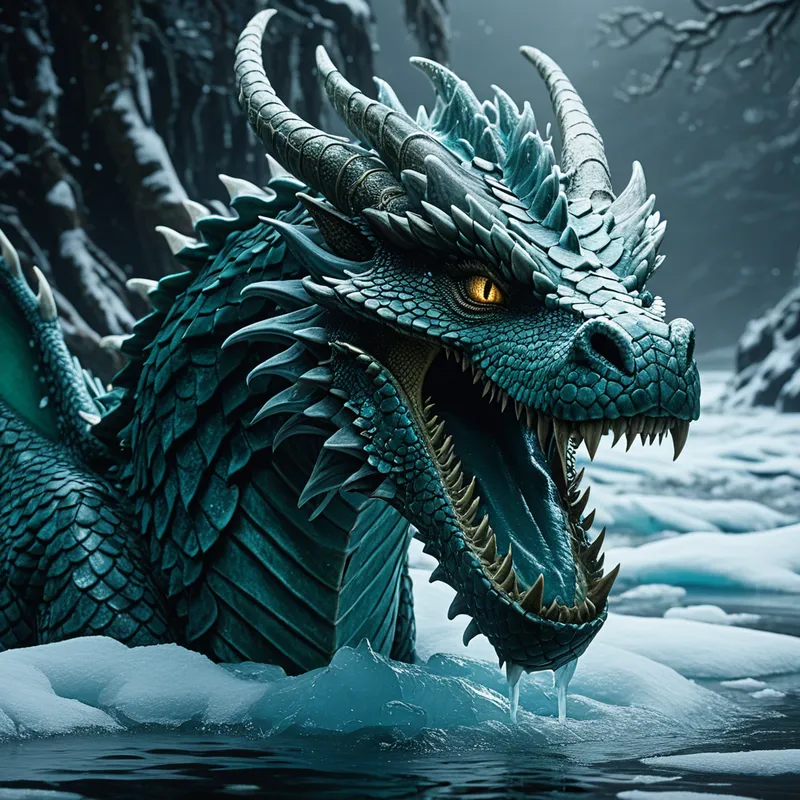
And in the darkest depths of this churning spring, beneath the roots where no light ever fell, something stirred. A shape formed from the silt of malice and the cold of eternity. This was Nidhogg, the “Malice Striker.” With scales like tarnished armor and eyes like dead stars, it took its place. Its eternal work was not to guard, but to corrode. It sank its fangs into the sacred root, gnawing, forever gnawing, dripping venom into the wellspring, ensuring that the source of all rivers also tasted of decay.
Here, at the root of all things, the roar never ceases. The waters boil forth, the rivers rush out to nourish the cosmos, and the dragon in the deep chews on the foundation of the world. It is the first sound and the last, a promise and a curse, the beginning that already contains the end.
Cultural Origins & Context
The myth of Hvergelmir is preserved primarily in the Poetic Edda, specifically in the poems Grímnismál and Völuspá, and is elaborated upon in the later Prose Edda by Snorri Sturluson. This was not a tale for casual entertainment, but a cosmological anchor point. Skalds and seers would recite these verses to map the architecture of reality itself.
Its societal function was profound. In a worldview that saw the cosmos as a fragile order (örlög) besieged by chaotic forces, Hvergelmir represented the raw, untamed substrate of existence. It explained the origin of the world’s waters—the source of life—but located that source in a place of terror and primordial monsters. It taught that creation and destruction are not opposites, but twins born from the same chaotic source. For a people living in a harsh, glacial landscape, the image of life-giving rivers emerging from a frozen, dragon-haunted abyss would have felt viscerally true. It was a myth that did not offer comfort, but a stark, awe-filled understanding of the nature of things.
Symbolic Architecture
Hvergelmir is the ultimate symbol of the prima materia—the formless, chaotic source from which all differentiated life emerges and to which it ultimately returns. It is not a benevolent “creator” in a paternal sense, but an impersonal, generative chaos.
The source is not pure. It is the mingled waters of being and non-being, and to drink from it is to accept both life and its inherent corruption.
The eleven rivers (Élivágar) symbolize the process of differentiation. The One (the chaotic well) becomes the Many (the rivers, the worlds, all individual things). They are the archetypal patterns, the fundamental forces, flowing out from the unconscious source into the structured “world” of consciousness and culture.
Nidhogg, the dragon at the root, is the critical element. It represents the principle of entropy, decay, and the shadow within the source itself. It is not an external enemy, but an intrinsic function of the system. The wellspring does not just create; it also dissolves. The dragon ensures that the process of creation is never separate from the process of destruction, that every beginning carries within it the seed of its own end.
The Dreamer's Resonance
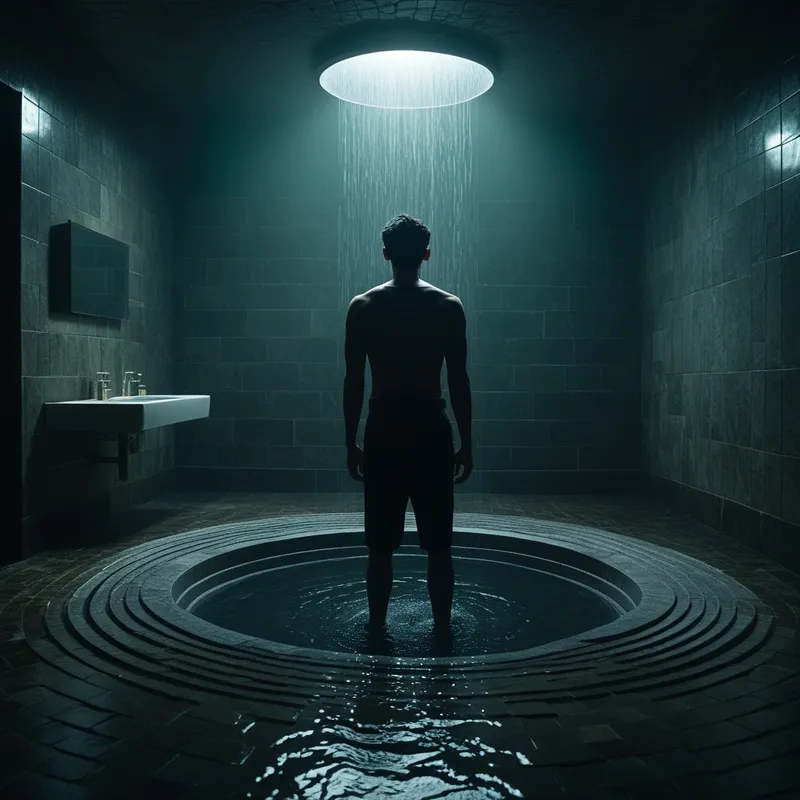
When Hvergelmir appears in the modern psyche, it is rarely as a literal Norse myth. It manifests as dreams of overwhelming, impersonal sources. Dreams of a basement flood with black, icy water bubbling up from a crack in the foundation. Dreams of a whirlpool in a familiar river that pulls you toward a dark center. Dreams of a kitchen sink that will not stop draining, revealing a bottomless, roaring darkness beneath.
These are dreams of confronting the foundational chaos of one’s own psyche. The somatic experience is often one of cold dread, vertigo, or the feeling of being dissolved. Psychologically, this marks a profound regression—not a neurotic retreat, but a necessary descent to the origin point of a complex or a life pattern. The dreamer is being taken back to the “root,” to the seething, unformed emotional material from which their current struggles first emerged. It is a terrifying but sacred process: to stand at the edge of one’s own personal Hvergelmir and witness the raw, undifferentiated pain, rage, or longing that feeds the rivers of their behavior.
Alchemical Translation
The alchemical journey of individuation is not a straight path upward toward light, but a circuitous descent into the nigredo, the blackening. Hvergelmir is the vas (the vessel) of this initial, crucial operation. The psyche must willingly descend to its own root, to the chaotic, dragon-infested well of the personal and collective unconscious.
The work is not to slay the dragon, but to understand that its gnawing is what allows for the continual flow of the waters. Our decay makes room for our becoming.
The “alchemical translation” of this myth is the process of holding the tension of the opposites at the source. One must acknowledge the life-giving waters (creativity, love, connection) and the venomous dragon (self-sabotage, rage, nihilism) as emanating from the same inner ground. The goal is not to purify the well—an impossible task—but to consciously drink from it. This means accepting that our most vital energies are mixed with shadow, that our creativity is fueled by our wounds, and that our very foundation is under perpetual, necessary erosion.
By integrating this knowledge, the individual performs the ultimate act of psychic transmutation. They cease trying to build their identity on an imagined, solid root and instead learn to flow like the rivers of Élivágar, nourished by and carrying within them both the source’s generative power and its inherent darkness. They become a conscious participant in the eternal cycle of dissolution and return, finding their sovereignty not in stability, but in the dynamic, roaring flow of their own authentic being.
Associated Symbols
Explore related symbols from the CaleaDream lexicon: