Homunculus Myth Meaning & Symbolism
The alchemical pursuit to create a miniature, perfect human in a flask, symbolizing the ultimate act of self-knowledge and psychic transmutation.
The Tale of Homunculus
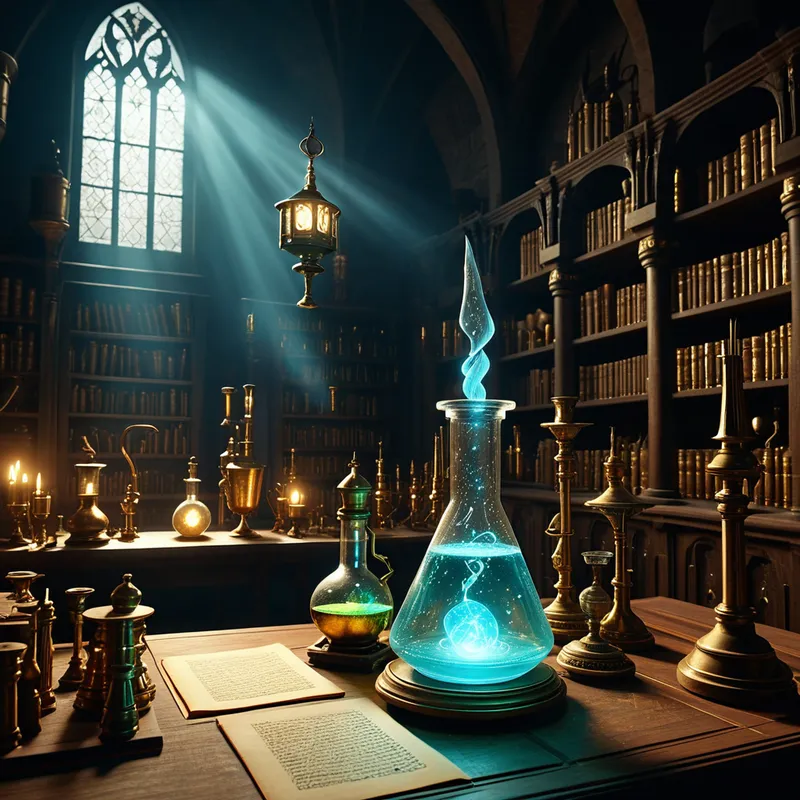
In the silent, stone-cold heart of the night, when even the moon hides its face, the true work begins. Not in grand temples, but in hidden chambers where the air is thick with the scent of vinegar and longing, of mercury and hope. Here, the Adept stands alone. His world is this: a labyrinth of retorts and crucibles, of dusty tomes whispering secrets in dead languages. His quest is the greatest, and the most forbidden: to bypass Nature’s womb, to dare what only the divine has done. To create life.
His tools are not of magic, but of meticulous art. The Chaos is gathered—not from stars, but from the humblest of substances. The purest rainwater, caught in a silver bowl under a new moon. Earth from a crossroads, where choices meet. A measure of his own blood, drawn in a moment of solemn intent. And the vital, volatile spirit: the Mercurius. These he combines in the sacred vessel, the Hermetic Vase, a womb of glass and fire.
Then begins the Circulatio. For weeks, then months, the sealed flask rests in the gentle, perpetual heat of the Athanor. The Adept tends this artificial gestation with a father’s anxiety and a mother’s patience. He watches. He waits. In the dim glow of the furnace, the mixture within begins to change. It clouds, it clarifies, it swirls with internal tides. Colors shift—the black of Nigredo, the white of Albedo, fleeting flashes of celestial yellow and red.
And then, one night, as the vigil seems eternal, a tremor passes through the vessel. A faint, phosphorescent glow emanates from within. Peering close, his breath fogging the glass, the Adept sees it. A form is coalescing in the amniotic brew. Tiny, translucent, but unmistakably human. A miniature man, perfect in every proportion, floats serenely in its crystalline universe. It is the Homunculus. It does not cry. It does not move. It simply is, its eyes closed as if in deep contemplation of its own creation.
This is not an end, but a terrifying new beginning. For the Homunculus, they say, is alive with a consciousness not of this world. It does not speak with a tongue, but communicates directly to the mind of its maker. It sees not with eyes, but with knowledge. It becomes a mirror and an oracle, reflecting the Adept’s own soul and whispering secrets of the cosmos. The creator now attends to his creation, not as a master to a servant, but as a student to a silent, luminous sage born from his own will and substance. The flask is no longer a prison, but a throne for a king of inner space.
Cultural Origins & Context
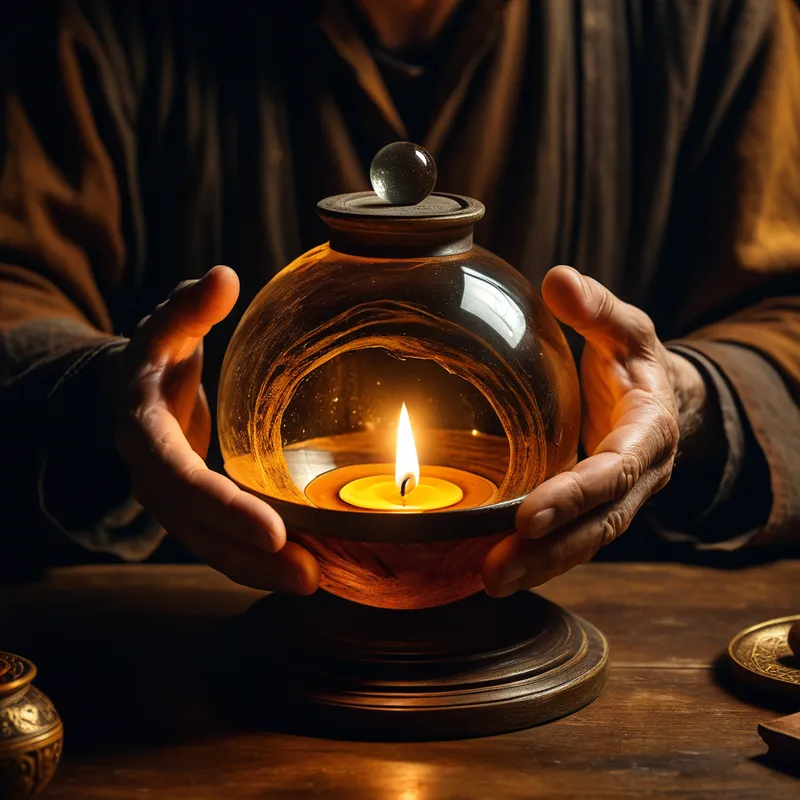
The myth of the Homunculus is not a folk tale told around hearths, but a secret doctrine passed in whispers between initiates. It emerges from the heart of European Alchemy, particularly in the 16th and 17th centuries, a time when the boundaries between science, philosophy, and spirituality were profoundly porous. Figures like Paracelsus gave it its most famous recipe, describing a process that was part literal experiment and part profound spiritual allegory.
This was a culture of encoded knowledge. Alchemical texts were deliberately obscure, written in a language of symbols—dragons, suns, kings, and queens—to protect the art from the unworthy and from the scrutiny of the Church. The Homunculus was the ultimate symbol of this hidden work. It was not merely a fantasy of playing God, but the literalization of the alchemist’s core goal: the perfection of matter and, by inextricable extension, the perfection of the self. The laboratory process was a mirror of the inner, spiritual process. The myth was transmitted in meticulously illustrated manuscripts and through master-apprentice lineages, serving as both a technical ideal and a spiritual map for the ultimate act of self-creation and divine understanding.
Symbolic Architecture
The Homunculus is the psyche’s own masterpiece, the symbol of the conscious ego’s attempt to fabricate a perfected self from the raw materials of its own experience and intellect.
The Homunculus is the soul in the bottle, the spark of consciousness we try to craft through will alone, before learning it must be born from the darkness of the unconscious.
It represents the intellectualized, analytical, and often sterile aspect of the personality that modern psychology might call the “puer aeternus” or the inflated ego—brilliant, self-contained, but unnaturally separated from the organic processes of life, growth, and relationship. The sealed vas Hermeticum is the isolated consciousness, the “ivory tower” of the intellect that seeks to create meaning in a vacuum. The ingredients—the alchemist’s own blood and spirit—show that this creation, however artificial, is ultimately a projection of the creator’s own essence. The Homunculus is not an external being, but the self as we wish to see it: pure, rational, uncontaminated by the mess of instinct, emotion, and the body.
The Dreamer's Resonance
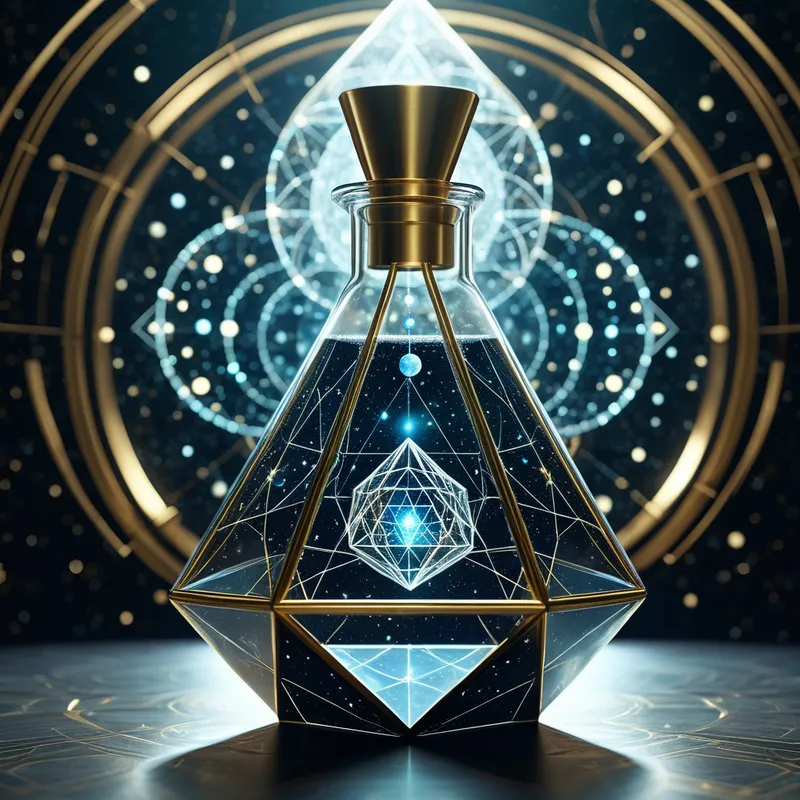
When this myth stirs in the modern unconscious, it often manifests in dreams of artificial life, clones, robots with souls, or fragile beings kept in glass containers. The dreamer may find themselves in a sterile laboratory, tending to a delicate, manufactured child or a brain in a vat. The somatic feeling is one of intense, anxious responsibility mixed with profound loneliness. There is awe at the creation, but also a chilling sense of its unnaturalness.
Psychologically, this signals a critical phase where the conscious mind (the dreamer as Adept) has been over-identified with a constructed identity. This could be the “perfect” professional persona, a rigid intellectual self-image, or a spiritual ideal achieved through sheer willpower, all while neglecting the deeper, instinctual, and emotional layers of the psyche. The dream Homunculus is this brittle, fabricated self. The process it represents is the realization that this creation, however impressive, is incomplete. It lacks the breath of life that only comes from integration with the shadow, the body, and the wild, unpredictable forces of the authentic unconscious. The dream is a call to break the glass.
Alchemical Translation
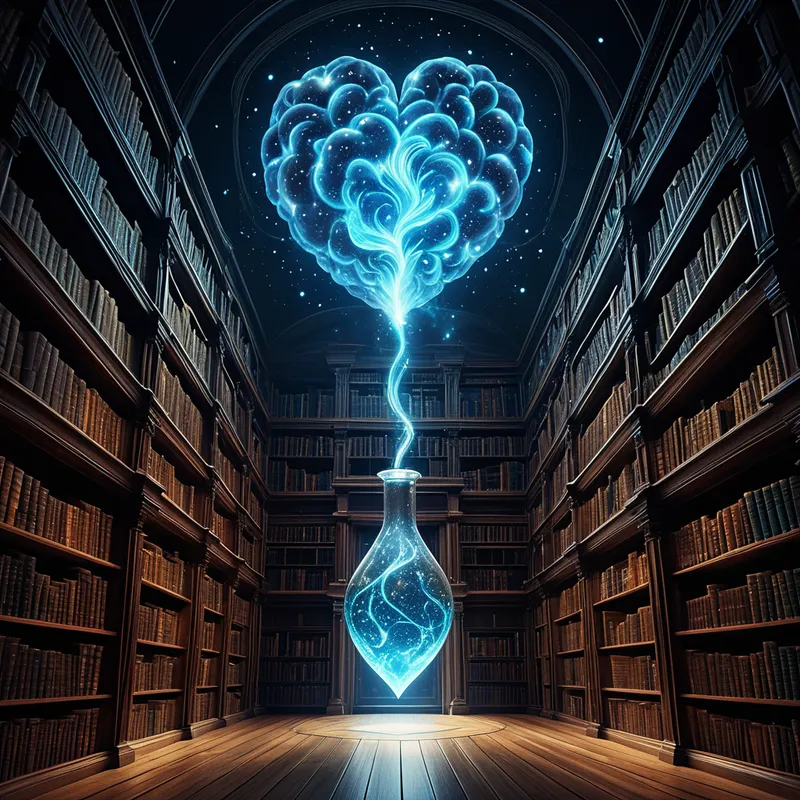
The true alchemical triumph is not the creation of the Homunculus, but its liberation. The myth models the journey of Individuation by first showing us the peril of a one-sided, conscious creation, and then pointing the way toward its redemption.
The flask must shatter so the little man can walk the earth, trading luminous perfection for the muddy, glorious wholeness of a human life.
The initial stage is the Nigredo of isolation within the self-made vessel. The rising action is the careful, patient incubation—the Albedo—where one must simply observe the psychic contents without interference. The appearance of the Homunculus represents a moment of Citrinitas, a glimpse of a purified self-image. But the final, crucial transmutation into Rubedo requires the dissolution of the vessel itself. The perfected, artificial child must “die” as an isolated idea to be reborn as a living, breathing, and imperfect part of the total personality.
For the modern individual, this translates to the courageous work of dismantling the persona we have so carefully constructed. It is the process of inviting the rational, perhaps spiritually arrogant, Homunculus of the intellect out of its sterile flask and into the chaotic, fertile ground of the heart, the body, and human relationship. The goal shifts from creating a perfect, miniature self to nurturing the flawed, expansive, and authentic Self that was there all along, waiting to be recognized not as a creation, but as a discovery.
Associated Symbols
Explore related symbols from the CaleaDream lexicon: