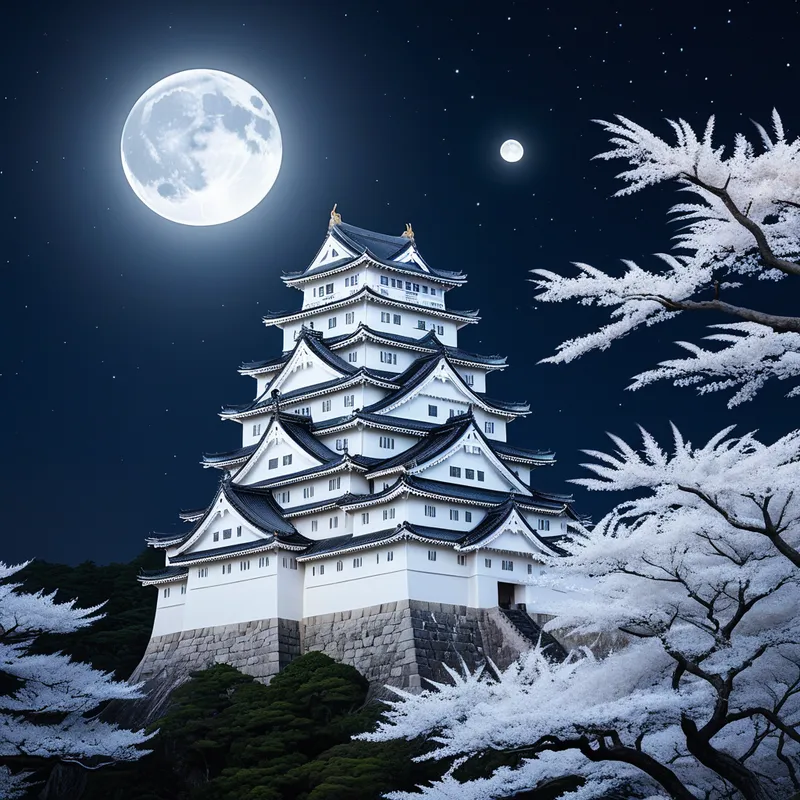
Himeji Castle Myth Meaning & Symbolism
A celestial crane maiden weaves her own feathers into a castle's defenses for her mortal love, transmuting sacrifice into an eternal, protective form.
The Tale of Himeji Castle
Listen, and hear the tale whispered by the wind through the pines of Harima. In a time when the world was softer, when kami walked closer to the earth, there lived a humble samurai named Toyotomi Hideyoshi. He was a man of ambition, yet his heart held a quiet loneliness, a space untouched by conquest. One evening, as dusk painted the sky in sorrowful hues, he wandered a path beside a still pond. There, he beheld a vision of heartbreaking beauty: a crane of purest white, its leg trapped cruelly in a hunter’s snare.
Without a thought for his silks or station, Hideyoshi knelt in the mud. His hands, calloused from the sword, worked with impossible gentleness, freeing the delicate limb. The crane looked into his eyes—a gaze of ancient, intelligent sorrow—and with a soft cry, took flight, vanishing into the lavender twilight. Hideyoshi felt a strange emptiness, as if he had released a part of his own soul to the sky.
Winters passed. One night, a fierce blizzard howled around his modest manor. A knock, faint as a falling leaf, sounded at his gate. There stood a woman of unearthly grace, her skin pale as moonlight, her eyes holding the deep stillness of a mountain lake. She gave her name as Oshizu, a traveler separated from her family. Moved by a compassion he did not understand, Hideyoshi offered her shelter.
As the snows melted into spring, Oshizu remained. She was quiet, her movements fluid and silent. She brought a peace to his halls he had never known. Love, tender and profound, grew between the samurai and the mysterious woman. They married under a canopy of cherry blossoms. Yet, Oshizu had one condition, uttered with a gravity that chilled the warm air: “My lord, you must never watch me weave. Promise me this.” Hideyoshi, lost in her eyes, swore.
Their happiness was a perfect, fragile bowl. But war, the relentless demon of that age, came calling. Hideyoshi was commanded to fortify his lands. Enemies gathered like storm clouds on the horizon, and his heart grew heavy with dread. He had no mighty castle, no impregnable walls to protect his home, his people, and his beloved Oshizu. He saw fear in the eyes of his retainers and, for the first time, a shadow of despair in his wife’s gaze.
Then, a miracle began. Each night, from Oshizu’s sealed chamber, came the rhythmic, haunting sound of a loom. Click-clack, click-clack. It was the sound of concentration so deep it seemed to pull on the threads of reality itself. By day, Hideyoshi’s men would discover new sections of wall and tower, constructed with impossible speed and beauty. The structure was like nothing on earth: white, gleaming, a complex puzzle of wood and plaster that seemed to defy siege engines and time itself. Rumors spread like wildfire. Some spoke of yōkai aid; others whispered of divine intervention.
Hideyoshi’s gratitude warred with a terrible, gnawing curiosity. The click-clack of the loom became a siren song, a secret beating at the core of his home. One fateful night, driven by a love now twisted into desperate suspicion, he broke his oath. He slid the shoji screen open just a crack.
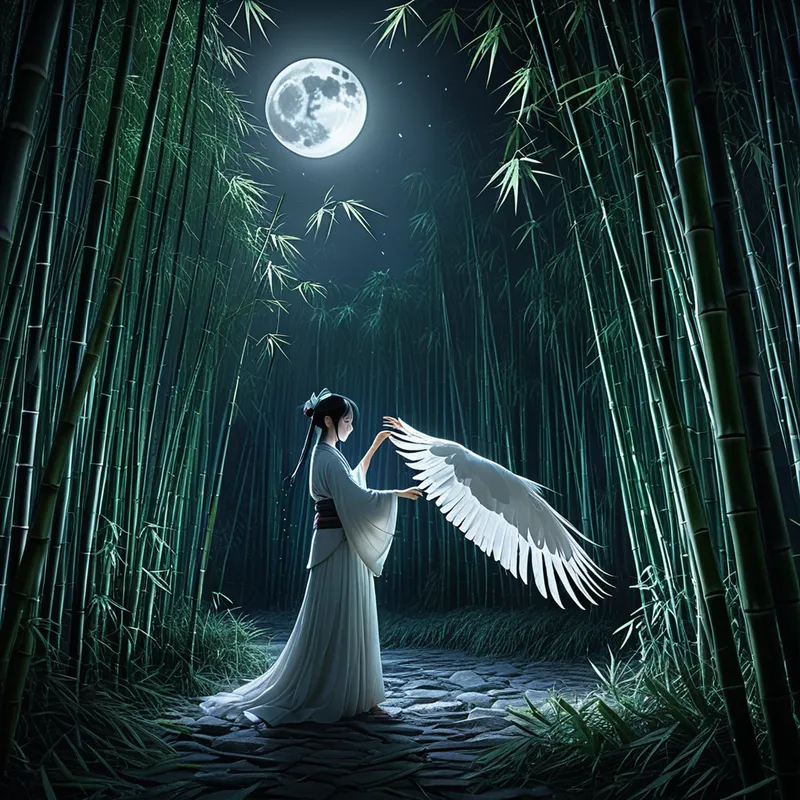
The sight within stole the breath from his lungs. There was no loom. In the center of the room stood Oshizu, but not the Oshizu he knew. In her place was the magnificent white crane. And she was plucking her own feathers, one by one, with a grimace of exquisite pain. Each shimmering plume, as it left her body, floated into the air and transformed—molecularly, magically—into a beam of flawless cypress, a tile of perfect ceramic, a section of the gleaming white plaster that was becoming the castle’s skin. She was weaving her very essence, her celestial form, into the fortress to protect him.
A gasp escaped his lips. The sound broke the sacred silence. The crane-maiden turned. In her animal eyes, Hideyoshi saw not anger, but a bottomless, tragic love—and the shattering of a cosmic law. With a cry that was both bird and woman, a sound of ultimate farewell, she beat her now-bare wings and flew straight through the wall, which parted like mist, and vanished forever into the moonlit sky.
Hideyoshi was left alone in the suddenly hollow room, the click-clack forever silenced. All that remained was the castle, rising white and majestic against the mountains: a monument of perfect protection, born from absolute sacrifice. He named it Hakujō-jo, the White Heron Castle. It stood unconquered, for its walls were woven not of stone and mortar, but of a love that had willingly unmade itself.
Cultural Origins & Context
The legend of the Crane Maiden of Himeji is a classic example of the Tsuru no Ongaeshi (Crane’s Return of a Favor) folktale type, deeply embedded in the animistic fabric of Japanese spirituality. These stories are not formal Kiki mythology, but belong to the living, oral tradition of mukashibanashi (tales of long ago), told by village elders and traveling storytellers around hearths and in communal spaces.
The tale is almost always localized, attached to a specific, awe-inspiring natural or man-made feature—in this case, the breathtaking and strategically brilliant architecture of Himeji Castle, which began construction in the 14th century. The myth functions as an etiological narrative, providing a supernatural, emotionally resonant origin story for a real-world marvel that seems to defy ordinary human effort. It answers the implicit question: “How could something so beautiful and strong come to be?” By attributing its creation to a kami in animal form, the story sanctifies the castle, transforming it from a military asset into a testament to sacred values: gratitude (on), reciprocity (ongaeshi), and selfless sacrifice. It served to instill a sense of reverence for the structure and the land it occupied, binding the community to it through a shared, poignant story rather than mere feudal loyalty.
Symbolic Architecture
At its core, the myth is a profound allegory of the psyche’s transformative power when faced with the ultimate threat: the loss of the beloved, which is also the loss of one’s own soul-connection. The crane is a pan-Asian symbol of longevity, fidelity, and good fortune, but here, it is also the anima, the inner feminine spirit of a man’s psyche (Hideyoshi) or the literal, mysterious “other” who completes him.
The castle is not a fortress built against the world, but a psyche solidified from the substance of sacrifice. Its white walls are the visible form of an invisible love.
Oshizu’s weaving is the central alchemical act. She does not build; she transubstantiates. Her feathers—symbols of her freedom, her celestial nature, her very identity—are the prima materia. The forbidden chamber is the temenos, the sacred, protected space where this miraculous inner work must occur unseen. Hideyoshi’s broken oath represents the ego’s fatal intrusion into the unconscious process. Curiosity, doubt, and the desire for control (to “see how it’s done”) shatter the necessary mystery. The tragedy is not that she leaves, but that the process cannot survive witnessing. The soul’ deepest transformations are often betrayed by the conscious mind’s insistence on observation and understanding.
The Dreamer's Resonance
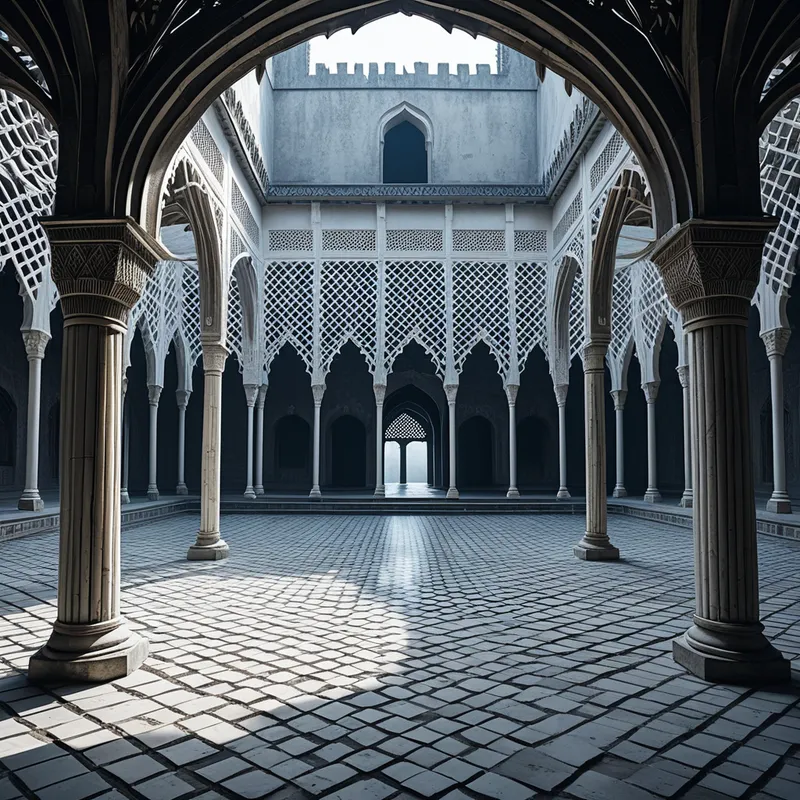
To dream of Himeji Castle is to dream of a profound psychological process underway. The dreamer may find themselves within its labyrinthine corridors, which feel both protective and isolating. The stunning white latticework may appear impossibly beautiful yet cold to the touch. This is the somatic signature of a defense mechanism being erected from the very core of one’s being—a structure of coping, resilience, or artistic creation born from a recent wound or loss.
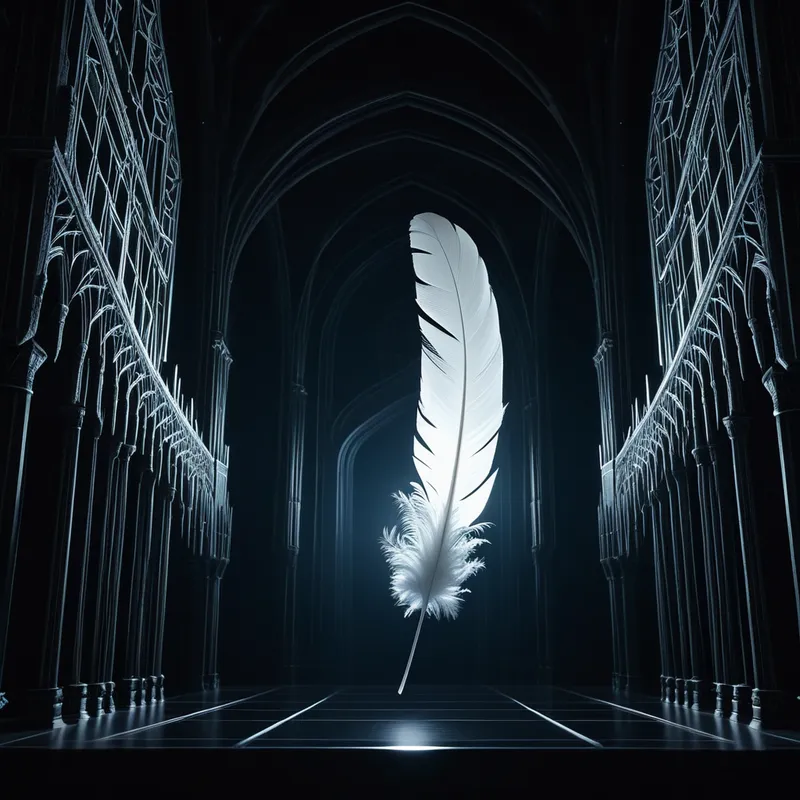
The dream may feature the sound of weaving or the sight of falling white feathers. This indicates a period of necessary, painful, but ultimately creative withdrawal. The psyche is in its “forbidden chamber,” metabolizing an experience, plucking parts of the old self to build something new for protection. If the dreamer, in the dream, tries to open a door or look inside a closed room, it mirrors Hideyoshi’s fatal gaze. It signals an anxiety that is threatening to interrupt a delicate inner process—a rush to “figure it out” or “get over it” that could abort a deeper transformation. The dream is a warning to honor the sanctity of one’s own grieving or creative incubation period.
Alchemical Translation
The myth of Himeji Castle models the individuation journey’s most painful, yet most beautiful, arc: the transmutation of relationship into internal structure. In life, we form profound bonds—with partners, ideals, or states of being. Sometimes, through death, betrayal, or necessary separation, that bond is severed. The external connection is lost. The Crane Maiden myth shows us what is possible next.
The initial, instinctual response is grief—the bare, plucked state of Oshizu. The alchemical work is to take that raw substance of loss, that “feather” of what was once part of us, and consciously, painstakingly, weave it into the architecture of our soul. We do not forget the beloved; we internalize their essence. Their love, their lesson, their memory becomes the white plaster of our resilience, the clever defensive maze of our wisdom, the enduring beauty of our character.
Individuation is the process by which the soul, bereft of its outer attachments, learns to spin its own loneliness into a palace.
Hideyoshi’s final state is instructive. He is left with the castle, not the crane. His task is no longer to possess the miraculous, but to dwell within its gift. For the modern individual, this means moving from seeking completion in another to inhabiting the wholeness that a past love helped forge. The castle—the integrated, complex, and beautiful self that can withstand life’s sieges—is the ultimate legacy of a sacred bond, even, and especially, a lost one. The crane flies away, but the castle remains, a testament that the truest protection was never about keeping the other captive, but about allowing their essence to become the unshakable foundation of one’s own world.
Associated Symbols
Explore related symbols from the CaleaDream lexicon: