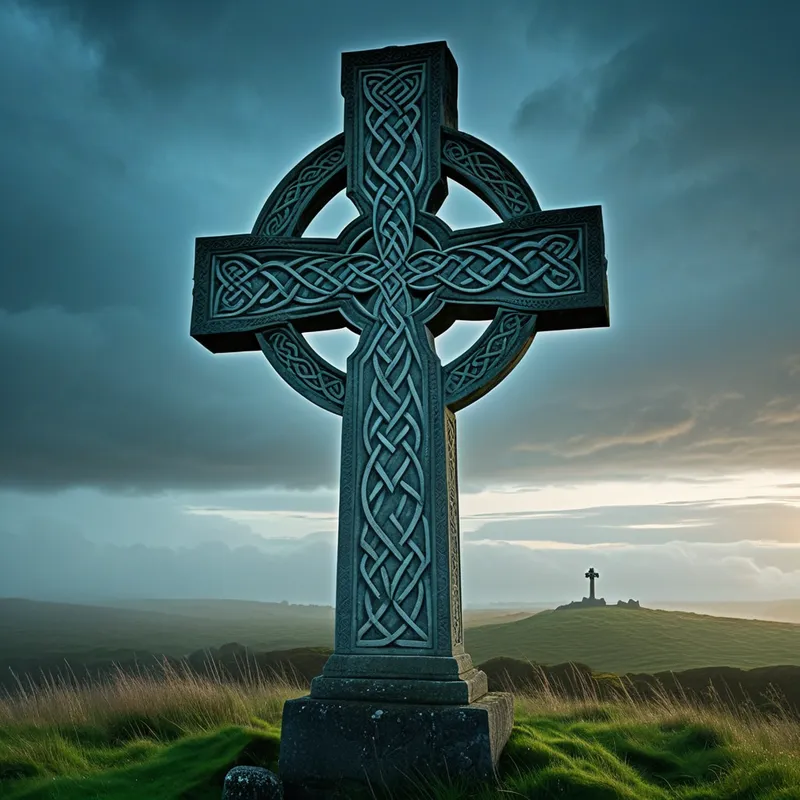
High Crosses of Ireland Myth Meaning & Symbolism
Stone sentinels rise from the mist, carved with a world's memory. They are the meeting place of two faiths, a testament to a culture's profound inner transformation.
The Tale of the High Crosses of Ireland
Listen, and let the mist of memory gather. The land was old, older than the stories told by firelight. It was a land of green hills that whispered of the Tuatha Dé Danann, of oak groves sacred to the druid, of spirals carved in stone that spoke of a world without beginning or end. Then came a new word, carried on the wind from across the sea. It was a word of a single God, of a sacrifice on a tree, of a love that sought to embrace all things.
But the old memory of the land did not die. It could not be erased. It sank deep into the soil, into the soul of the people, and waited.
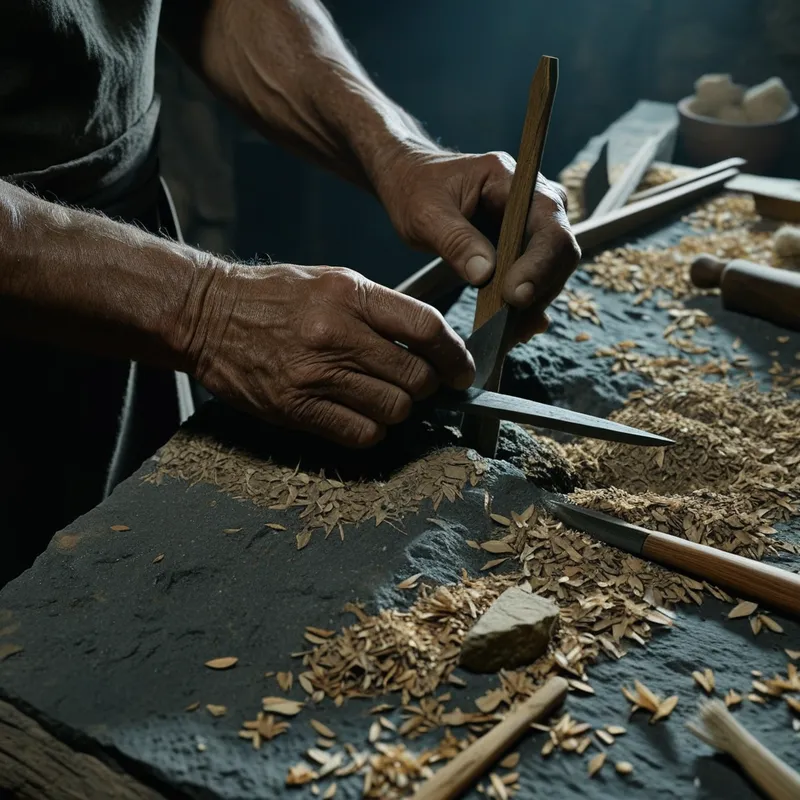
Then came the makers. In quiet places, where the only sounds were the wind and the river, they went to work. They sought out the bones of the earth itself—great, grey slabs of stone that had felt the first rains. These were not to be mere markers. They were to be thresholds.
With patient, reverent hands, they began to carve. The hammer and chisel did not impose a new world upon the old; they called forth a conversation. From the cold granite, the ancient spirals awoke once more, but now they flowed into the shape of a cross. The wild, interwoven patterns of the La Tène style did not vanish; they became the very body of this new symbol, a labyrinth of stone leading the eye upward.
Upon the broad faces of the stone, stories unfolded. Here was Adam naming the beasts in a panel that felt as primal as any tale of the Milesians. There was Samson wrestling the lion, his struggle echoing the heroic combats of the Ulster Cycle. And at the heart, on the eastern face to meet the rising sun, they placed the central mystery: the Crucifixion. Yet this Christ was not a figure of agonized suffering alone. He was the Rex Gloriae, crowned and triumphant, his arms outstretched not in defeat, but in a cosmic embrace that held both the serpent of Eden and the Celtic knot of eternity.
One by one, these stone scriptures rose from the earth: at Monasterboice, at Clonmacnoise, at Durrow. They stood at the crossroads of the physical and spiritual worlds, at the ford between the old faith and the new. They were silent teachers, their lessons written in sunlight and shadow, in rain-worn relief. They did not preach conquest, but integration. They said: Look. The memory is not lost. It is transformed. The circle is not broken; it now has a center. The endless knot now has a name.
Cultural Origins & Context
The High Crosses, or Crosses of the Scriptures, are not the product of a single mythic event but of a profound historical and psychological process spanning the 8th to 12th centuries. They emerged in the unique cultural laboratory of early Christian Ireland, a society where monastic settlements were the new centers of power and learning, replacing the old tribal tuatha.
These crosses functioned as the central "public libraries" and pulpits of their time. In a largely illiterate society, they rendered the sacred narratives of the Bible—the scriptura—into a visual language everyone could "read." The monks who commissioned and carved them were often the descendants of the filid, the poet-seers of the Celtic world. They understood the power of the image, the symbol, and the sacred center. The cross was planted in the monastic precinct, a permanent, unshakable axis mundi around which community life, pilgrimage, and prayer revolved. It was a declaration in stone: here, at this point, heaven and earth meet.
Symbolic Architecture
The High Cross is a master symbol of synthesis. It is a perfect architectural metaphor for a psyche undergoing a fundamental reorganization without repudiation of its foundational layers.
The Circle that often rings the intersection of the cross’s arms is the ancient Celtic symbol of the sun, the wheel of the year, and the eternal cycle. It represents the pre-Christian worldview—holistic, cyclical, and immanent. The Cross is the linear, historical axis of Christian narrative—the unique, incarnational event moving from fall to redemption. Their fusion creates the Celtic cross, a mandala where the eternal (circle) and the historical (cross) are irrevocably joined.
The stone does not choose between its memories; it holds them in a tense and beautiful unity. So too does the soul that seeks wholeness.
The Biblical Panels are not mere illustrations; they are a curated map of salvation history, placed in a specific order to lead the viewer’s contemplation upward from creation and law (Old Testament) to grace and redemption (New Testament). This vertical journey mirrors the individuation process—moving from the foundational, often chaotic "old stories" of the personal and collective unconscious toward a central, integrative consciousness.
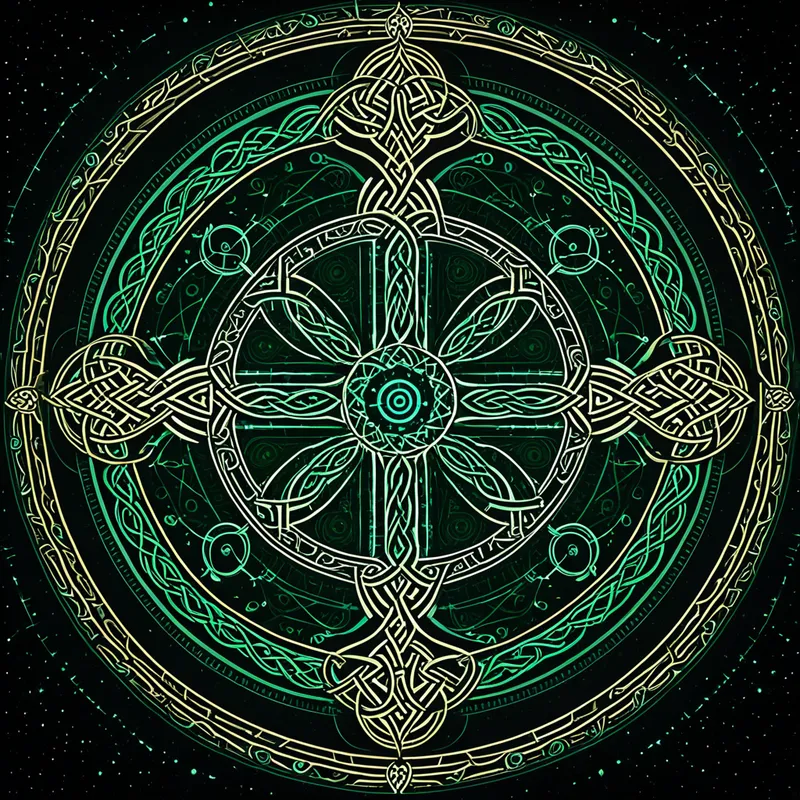
The Knotwork is perhaps the most profound psychological element. These endless, interwoven patterns with no beginning or end symbolize the complex, interconnected nature of the psyche itself. They suggest that all opposites—light and dark, spirit and matter, old and new—are part of a single, unfathomable tapestry. The cross provides a center to this labyrinth, a still point from which the pattern can be comprehended without being undone.
The Dreamer's Resonance
To dream of a High Cross is to dream of a moment of profound psychic integration. The dream-ego may find itself before a towering, weathered monolith in a foggy landscape. The feeling is one of awe, solemnity, and deep time.
Somnially, this represents the emergence of a psychic structure capable of holding immense tension. The dreamer may be caught between conflicting identities (e.g., traditional family roles vs. personal calling), cultural heritages, or belief systems. The cross in the dream is the nascent symbol of a tertium non datur—a third way that is not a compromise, but a higher synthesis. The somatic sensation is often one of grounded solidity ("the rock") combined with an upward surge of energy or vision ("the spire"). It is the dream of the Self beginning to organize the disparate elements of the personality around a central, meaningful core.
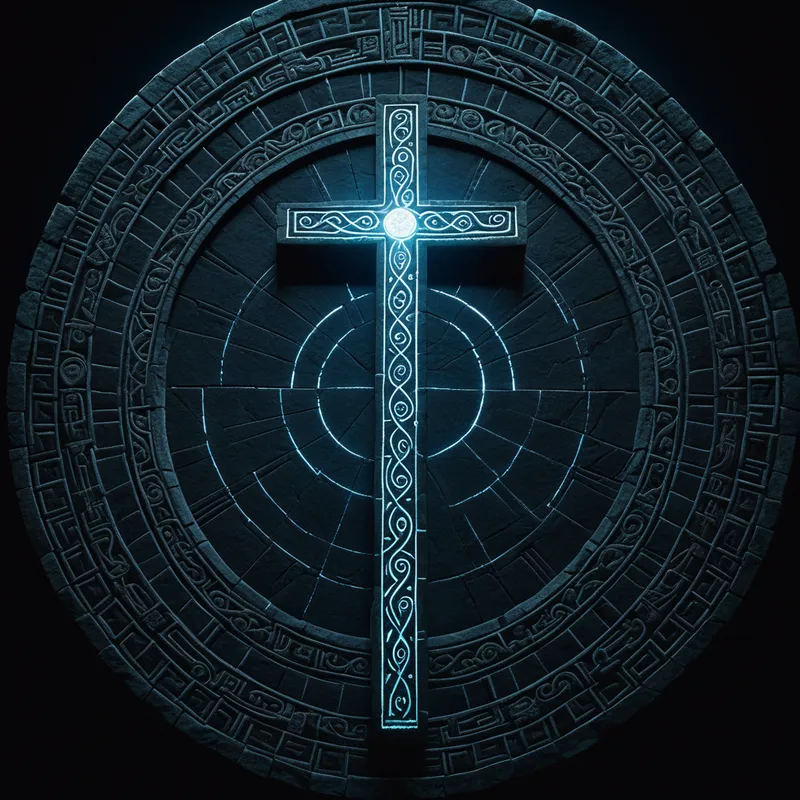
If the cross in the dream is broken or obscured, it may indicate a felt rupture in this integrative capacity, a retreat from the difficult work of holding contradictions. If it is glowing or newly carved, it signals active, conscious engagement with this alchemical process.
Alchemical Translation
The myth of the High Crosses models the alchemical opus of individuation: the coniunctio oppositorum (union of opposites) on a cultural and personal scale. The "base matter" is the native, instinctual, pagan layer of the psyche—the prima materia rich with animal vitality, ancestral memory, and a sense of magical participation with the world. The "divine agent" is the transformative symbol or complex—here, the Christian narrative of incarnation and redemption—that descends as a novel, compelling force of order and meaning.
The alchemical vessel is the stone itself—the enduring, patient body of the soul where this reaction must take place. The process is not one of destruction (solve) alone, but of careful, artistic coagulation (coagula). The old spirals are not burned away; they are re-contextualized. The wildness of the natural psyche is not condemned; it is framed within a narrative of purpose.
Individuation is not becoming a saint by killing the pagan, but becoming a sage by giving the pagan a sacred place in the temple.
For the modern individual, this translates to the heroic, patient work of self-creation. It is the act of taking the raw, often conflicting materials of one’s inheritance—cultural, familial, traumatic, gifted—and consciously, artistically, assembling them into a unique, cohesive identity. It is recognizing that our personal "paganism" (our instincts, wounds, and primal drives) and our "christianity" (our ideals, ethics, and spiritual yearnings) need not be at war. They can be carved into a single, sturdy monument that speaks of a journey from fragmentation to a centered, enduring wholeness. The High Cross stands as an eternal testament: transformation is not erasure, but a deeper, more intricate remembering.
Associated Symbols
Explore related symbols from the CaleaDream lexicon: