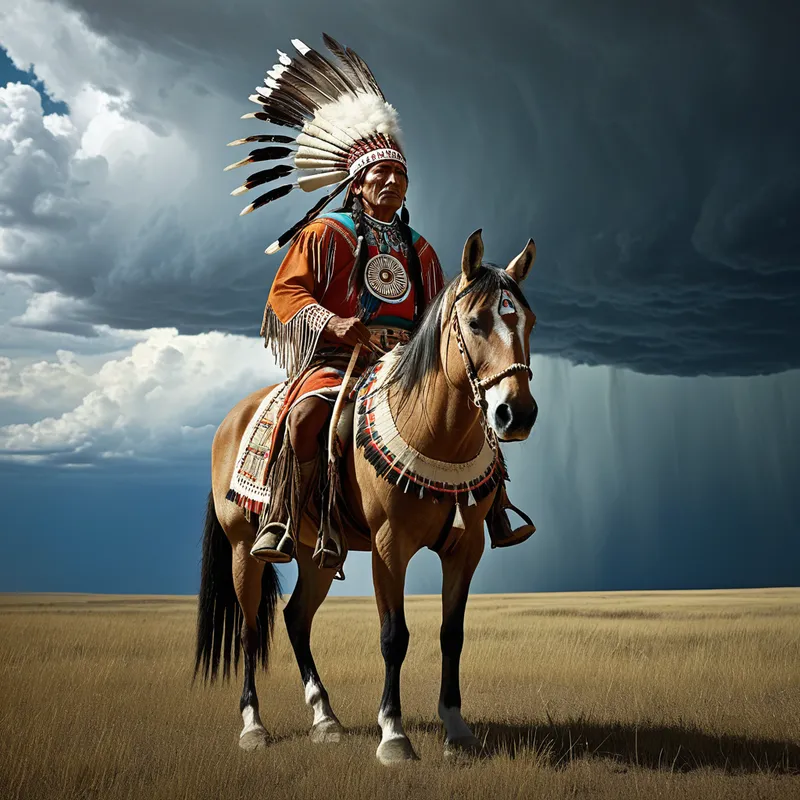
Heyoka Myth Meaning & Symbolism
The Heyoka is a sacred contrary, a thunder-being dreamer who heals through absurdity, embodying the world turned upside-down to restore balance.
The Tale of Heyoka
Listen. In the time when the world was still speaking clearly, when the thunder was not just noise but the voice of the Wakinyan, a call would come. It was not a call one sought. It was a call that sought you, in the deepest hour of sleep, under a sky cracked open by lightning.
A man, a woman, would dream. And in that dream, they did not walk as humans walk. They flew with the storm. They felt the terrible, exhilarating power of the thunder-beings coursing through them. They saw the world from the clouds, saw the tiny, ordered patterns of the camp circles below, and heard a laughter that was not human—a rumbling, cosmic laughter that turned everything upside down. They awoke gasping, the smell of ozone in their nostrils, the taste of cold winter in a summer mouth. They were marked.
From that day, their life was no longer their own. They had been claimed by the Heyoka. To refuse was to invite the lightning’s wrath upon oneself and one’s people. So they accepted the sacred burden. They became the contrary.
You would see them in camp. In the blistering heat of the high sun, they would shiver violently, wrapping themselves in thick buffalo robes, complaining of the cold, begging for warmth. In the dead of winter, when the breath froze in the air, they would stride nearly naked, fanning themselves, seeking a cool drink from the frozen river. They would say “yes” when they meant “no,” weep at a joyful birth, and laugh uproariously at a solemn funeral. They rode their horses backwards. They built their lodges with the door facing the wrong way. They were the living embodiment of the world inverted.
The people would laugh, yes. Children would point. But behind the laughter was a watchful, profound silence. For the Heyoka’s actions were not mere foolishness. They were a mirror, held up to the community. When pride grew too tall, the Heyoka would stumble and fall in the mud, showing the folly of arrogance. When grief became a suffocating blanket, the Heyoka’s absurd, inappropriate joy would poke a tiny hole in it, letting a sliver of light—and air—back in. They spoke in riddles that revealed uncomfortable truths. They broke every taboo to show that the spirit, the wakan, was not bound by human rules.
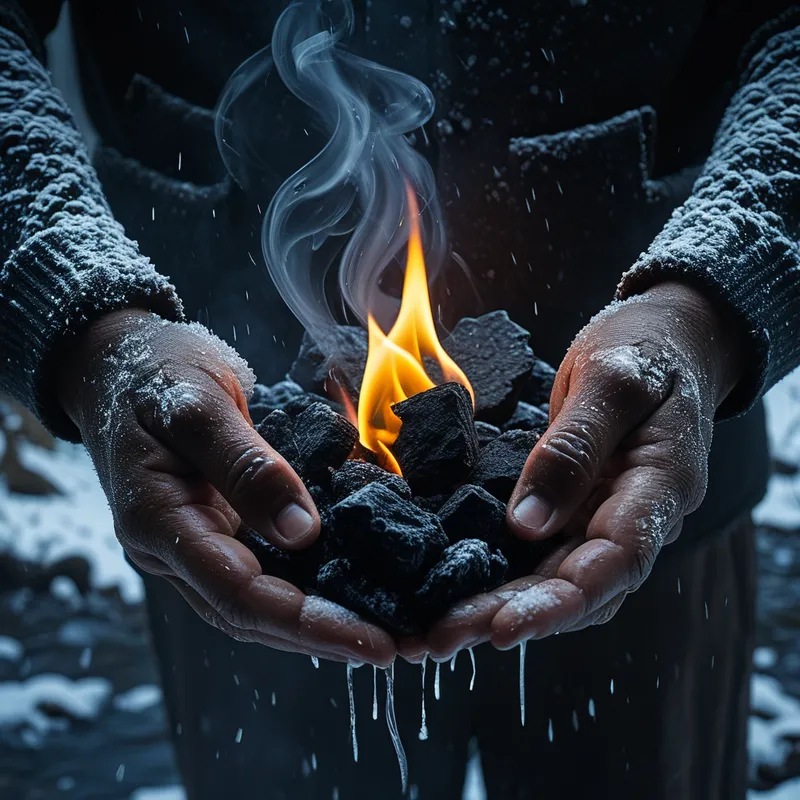
Their most sacred duty came in times of deepest stagnation, when the buffalo did not come, or when sickness lingered. Then, the Heyoka would perform the most powerful ceremony. Through their contrary actions—pouring water on hot stones to “cool” them, pretending to burn themselves with snow—they would appeal directly to the thunder-beings. By embodying the opposite, they restored balance. They brought the rain. They broke the fever of the land. And when their work was done, they would return to being a quiet member of the tribe, the terrifying power of their office resting once more, a silent storm contained within a human frame.
Cultural Origins & Context
The Heyoka is a sacred figure central to the cosmology of the Lakota people, and found in similar forms among other Plains tribes. This is not a myth of the distant past, but a living religious and social role. The call to become Heyoka is not chosen; it is received through a powerful visionary dream or encounter with the Thunder Beings (Wakinyan). This dream is often traumatic, involving being struck by lightning or carried off by the storm spirits. To refuse the call is considered extremely dangerous.
The Heyoka’s societal function is multifaceted. Primarily, they are a sacred clown, a ritual contrarian. Their behavior violates social norms and taboos in a sanctioned, holy manner. This serves as a critical pressure valve for the community, using humor and absurdity to critique arrogance, puncturing pomposity, and relieving social tension. On a spiritual level, they are intermediaries between the people and the powerful, unpredictable forces of the thunder beings. By acting in opposites, they perform a cosmic balancing act, restoring harmony (wolakota) when the world has fallen out of balance. Their teachings are not direct, but indirect, embedded in paradoxical action, forcing the community to think differently and see the world from an inverted angle.
Symbolic Architecture
The Heyoka is the ultimate archetype of the sacred paradox. It represents the necessary, disruptive force of the unconscious that shatters rigid ego structures and cultural complacency.
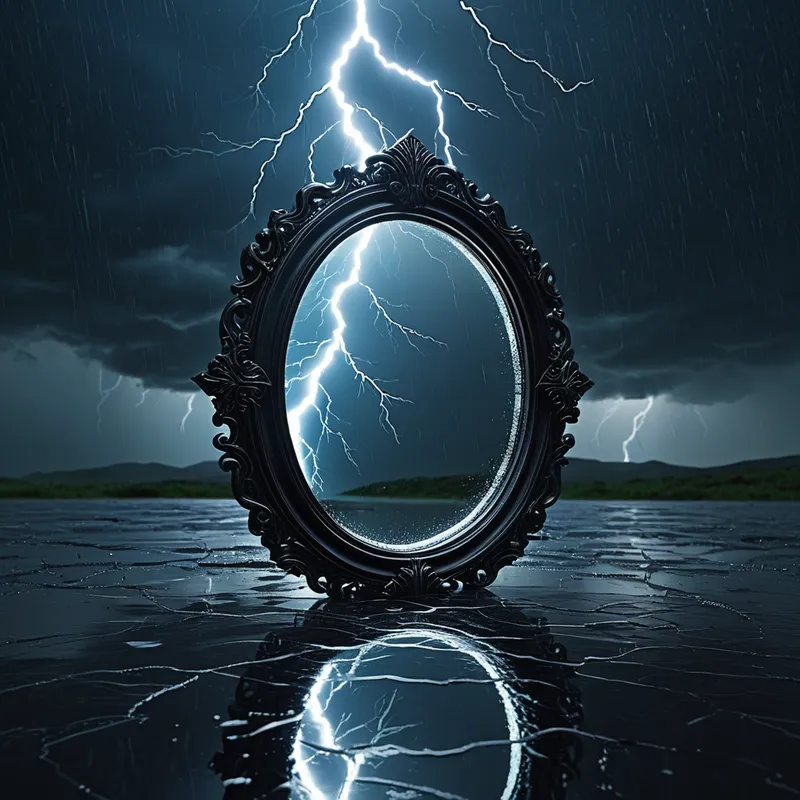
The Heyoka does not heal with medicine, but with a mirror. It shows the tribe its own frozen postures and, by acting out the opposite, thaws them.
The thunder dream signifies a traumatic, numinous encounter with the Self—the total, archetypal psyche that includes both light and shadow. This encounter “unmakes” the individual’s old personality. Their subsequent contrary behavior symbolizes the psyche’s self-regulating function. When consciousness becomes too one-sided (too serious, too proud, too grieving), the unconscious produces its opposite (absurdity, humility, joy) to restore equilibrium. The Heyoka’s backwards riding and inverted speech symbolize the need to sometimes approach life a contrario, to solve a problem by embracing its reverse. Their immunity to heat and cold represents a transcendence of ordinary, dualistic perception, achieving a state where opposites are held in a unified, transformative tension.
The Dreamer's Resonance
When the pattern of the Heyoka emerges in modern dreams, it signals a profound psychic reorientation. The dreamer is not simply having a “weird” dream; they are being visited by the contrarian function of their own soul.
You may dream of laughing at a funeral or crying at a party, embodying the exact opposite of the expected emotional response. You might dream of trying to walk forward but only moving backward, or of seeing your reflection act independently in a mocking or enlightening way. These are somatic signals from the unconscious that your waking attitude has become too rigid, too identified with a single role—the always-competent professional, the perpetually nurturing caregiver, the ceaselessly cynical critic. The Heyoka-dream is the psyche’s attempt to introduce the missing opposite, to create friction, and ultimately, movement. It is often experienced as unsettling, embarrassing, or confusing because it challenges the dreamer’s conscious self-image. The process underway is a necessary dismemberment of an outdated ego-stance, making way for a more complex and authentic wholeness.
Alchemical Translation
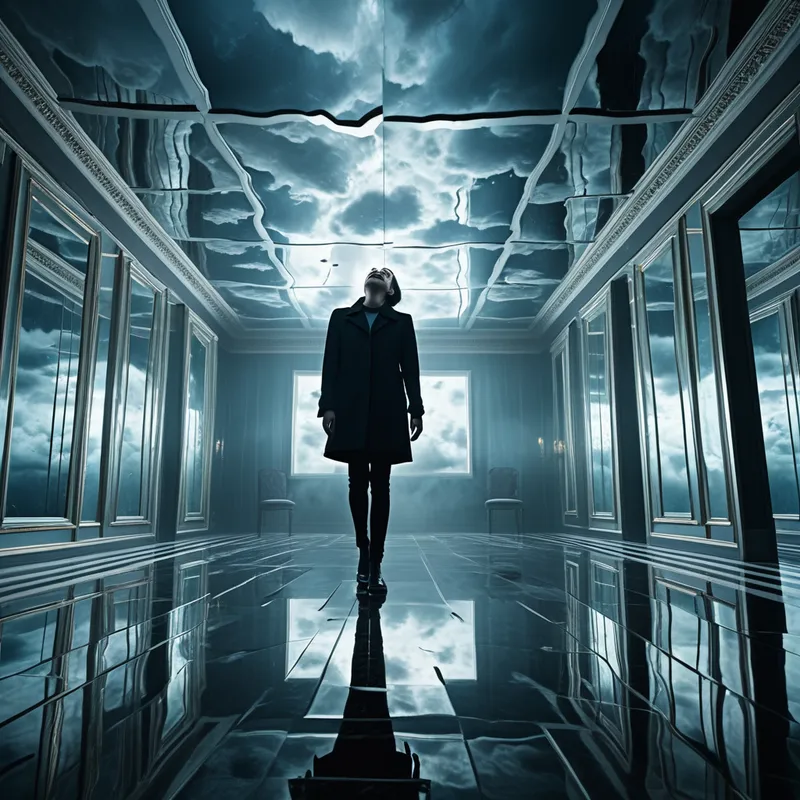
The journey of the Heyoka is a masterful map for the modern process of individuation—the alchemical work of becoming who one truly is by integrating the rejected, contrary parts of the self.
The first stage is the Lightning Strike (Numinous Trauma): the thunder-dream. In psychological terms, this is the eruption of a powerful unconscious content—a sudden depression, an inexplicable obsession, a life-altering insight—that shatters the comfortable, but limited, conscious personality. It feels like being chosen by a terrifying, outside force. The key is to accept this call, however disruptive, as a summons to a deeper life.
The second stage is Embracing the Contrary (The Solve): donning the sacred clown’s role. This is the conscious, often painful, work of living out the opposite of one’s neurotic tendency. If one’s persona is one of hyper-control, the Heyoka path involves practicing deliberate surrender. If it is one of constant agreeableness, it involves finding one’s sacred “no.” This is not about becoming the opposite, but about experiencing it, thereby dissolving the ego’s identification with one pole of a duality.
The alchemy of the Heyoka is not in choosing a side, but in holding the tension of the opposites until a third, transcendent thing is born.
The final stage is Restoring the Flow (The Coagula): the healing ceremony. By fully embodying the contrary, the psychic energy that was locked in conflict is released. The internal “buffalo” (vitality, creativity) returns. The “fever” of one-sidedness breaks. The individual coagulates into a new form, one that can contain paradox without being torn apart. They become a vessel for wakan—sacred power—not by being purely “spiritual,” but by being fully human, integrating the absurd with the solemn, the shadow with the light. The modern Heyoka is the one who can laugh at their own deepest pain, not to diminish it, but to see it from a perspective that finally allows it to transform.
Associated Symbols
Explore related symbols from the CaleaDream lexicon: