
Hermes' Lyre Myth Meaning & Symbolism
The newborn god Hermes invents the lyre from a tortoise shell, steals Apollo's cattle, and trades the instrument, transforming theft into sacred art.
The Tale of Hermes' Lyre
Before the world knew his name as the swift messenger, he was simply a child of dawn, born in a secret cave on Mount Cyllene. His mother, the nymph Maia, slept, weary from his birth. But Hermes did not sleep. His eyes, old as the stars yet bright with newness, opened to the world. An itch was in his fingers, a hum in his blood—the urge to make, to move, to play.
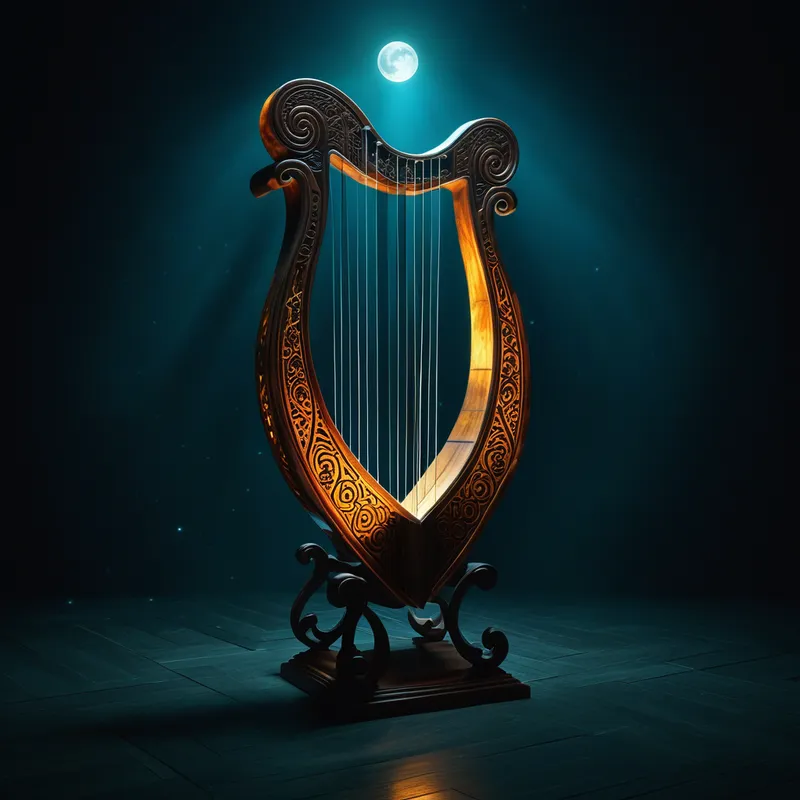
He slipped from his cradle, a blur of divine infant energy, and stepped into the golden light outside the cave. The world was his to explore. And there, at the entrance, he found her: a great tortoise, browsing on dewy grass. Hermes laughed, a sound like chimes. "A welcome guest!" he proclaimed, though the tortoise did not speak. With a touch that was both tender and terrible, he ended her slow, earthly journey. He cleaned her shell, hollow and resonant. From the mountainside, he cut reeds for a crossbar. He dared to steal from his own mother’s sacred herd, taking the guts of a cow, stretching and twisting them into seven taut strings.
And so, in his first hour of life, he invented music. He plucked the strings, and a sound emerged that the world had never heard—a sound that was laughter and longing, trickery and truth, all woven together. He sang to himself, a hymn of his own clever birth, accompanying himself on this new, wondrous thing: the first lyre.
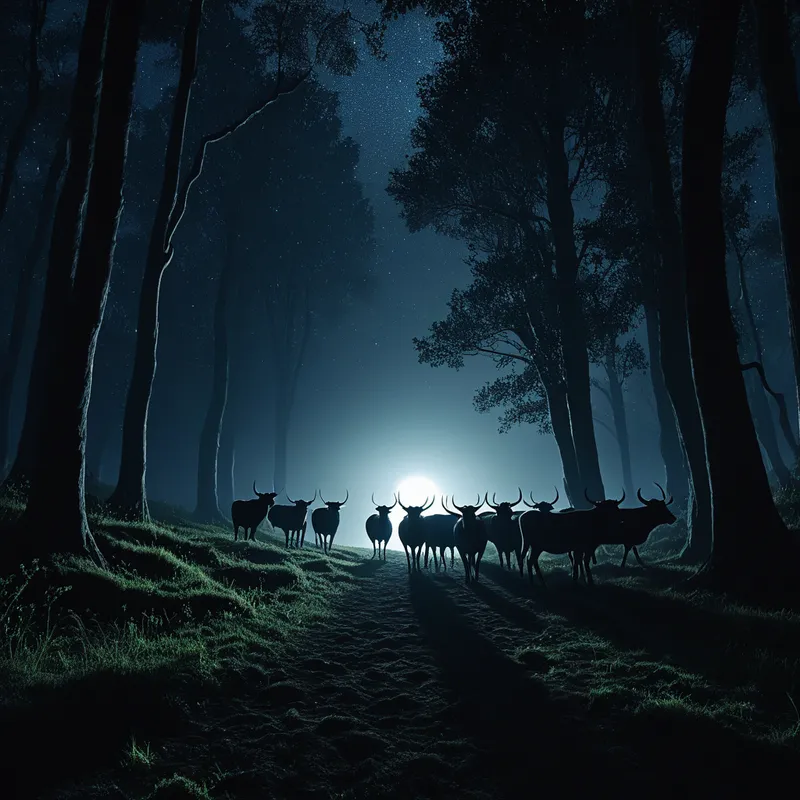
But the itch returned. Music was not enough. He desired action, a deed worthy of a god. His gaze turned to the sun-drenched plains of Pieria, where the magnificent cattle of his elder brother, the glorious Apollo, grazed. Under the cover of twilight, the babe became a thief. He padded forth on tiny, silent feet, and drove fifty of the finest cows away. A master of cunning, he crafted sandals of brushwood and myrtle to reverse the tracks, and he even drove the herd backwards, so that their prints seemed to lead to, not from, the pasture. He sacrificed two of the cows to the twelve gods (a pious act from an impious deed), hid the rest, and returned to his cradle, innocent as dawn.
Apollo, discovering the theft, raged like a forest fire. His divine foresight led him unerringly to the cave on Cyllene. There he found the babe, swaddled and blinking. "Return my cattle, thief!" Apollo thundered. Hermes feigned outrage, a performance of wounded innocence. "I, a newborn? What are cattle? I seek only my mother's milk and sleep."
But Zeus, father to both, heard the dispute from Olympus. He intervened, not with anger, but with a father's amused command. "Show him, my swift son," Zeus said. Hermes, caught but unashamed, led Apollo to the hidden herd.
Yet, as they walked, Hermes took out his lyre. He plucked the strings once more, and the air stilled. The very light seemed to bend toward the sound. Apollo, god of music, stopped. His anger melted like frost in sunlight. He heard in those notes a beauty he, for all his art, had never conceived. It was raw, clever, soul-stirring. The thief had created what the musician could only dream of.
"Keep the cattle," Apollo whispered, his eyes fixed on the instrument. "Give me the lyre."
Hermes, the negotiator born, smiled. He handed over the lyre, and in return, received not only reconciliation but Apollo's golden staff of authority, the gift of prophecy, and dominion over herds. Theft was transmuted into trade, conflict into harmony. The lyre passed from the trickster's hands to the musician's, and the world gained a new song.
Cultural Origins & Context
This myth is preserved for us primarily in the Homeric Hymn to Hermes, a poetic text likely composed in the 6th or 5th century BCE. It was not scripture, but a part of a rich oral and performative tradition. Bards would recite such hymns at festivals, invoking the god's presence and narrating his essential nature. The story functioned as a divine charter myth, explaining Hermes' domains: why he is the patron of thieves, merchants, travelers, and cunning; why he carries the caduceus; and how music, specifically the lyre, became sacred to Apollo. It grounded his chaotic, boundary-crossing energy in a foundational narrative that was both entertaining and deeply explanatory for a culture that saw the gods in every facet of daily life, from commerce and animal husbandry to artistic inspiration.
Symbolic Architecture
The myth is a perfect symbolic blueprint for the birth of consciousness itself, specifically the creative and mediating consciousness. Hermes, the divine infant, represents the nascent, undifferentiated spark of psyche—pure potential, curiosity, and amoral energy. His first act is not destruction, but creation from what is at hand: the tortoise.
The lyre is the primal act of culture: taking the raw materials of nature (shell, gut) and imposing a meaningful, resonant order (strings, scale) upon them. It is the birth of art from the body of the world.
The theft of Apollo's cattle is equally critical. Apollo represents established order, light, reason, and conscious artistry—the ego in its mature, solar form. Hermes, the unconscious trickster, raids the "herds" of the conscious mind (its structured thoughts, its prized possessions). He does not destroy them, but re-orders them (the backwards tracks), integrating them into his own nascent realm. The conflict that follows is inevitable: the conscious self discovers a part of itself has been plundered by the unconscious.
The resolution is the myth's masterstroke. The lyre—the creative product born from the union of raw instinct (the tortoise) and stolen resources (the gut)—becomes the mediating object. It is a symbol of the transcendent function, the third thing that emerges from the tension of opposites.
Hermes does not defeat Apollo; he enchants him. The conscious self is not conquered by the unconscious, but is seduced by its creativity. The traded lyre symbolizes the pact between the deep, cunning self and the lofty, artistic self—a pact that enriches both.
The Dreamer's Resonance
When this myth pattern stirs in the modern dreamer, it often signals a profound, if disruptive, psychic event. Dreaming of a clever child performing an impossible theft, discovering a strange musical instrument, or driving animals in reverse may point to the emergence of a Hermetic quality within.
Somatically, one might feel a restless energy, an "itch" to create or disrupt a stagnant routine. Psychologically, it is the process of the unconscious appropriating energy from the conscious attitude. Perhaps the dreamer's overly Apollonian life (all order, work, and light) is being raided by a Hermesian need for trickery, play, or lateral thinking. The conflict felt upon waking—guilt mixed with exhilaration—mirrors Apollo's rage and fascination. The dream asks: What established "cattle" in your life—habits, beliefs, prized achievements—need to be creatively stolen and reconfigured? What raw material (the "tortoise") have you overlooked from which to fashion your first true song?
Alchemical Translation
The alchemical journey modeled here is not one of heroic conquest, but of cunning integration and profitable exchange. The prima materia is the chaotic, instinctual energy of the newborn self. The first operation is inventio (invention): crafting the lyre. This is the individual's initial, often clumsy, attempt to give form to inner chaos—a journal entry, a sketch, a new idea.
The theft and conflict constitute the nigredo, the blackening—the necessary crisis where the old order (Apollo) confronts the new, shadowy impulse (Hermes). This friction is not a flaw but the furnace of transformation.
The alchemical gold is not the cattle, nor the lyre alone, but the relationship forged between them. It is the moment the self accepts that its greatest treasures often come from the parts it initially considered thieves.
For the modern individual, the process of individuation requires this Hermesian trick. We must learn to "steal" energy from our rigidly held identities and re-invest it in nascent potentials. We must take the "gut" of our experiences—even the difficult, sacrificial ones—and string them into a narrative that has resonance. The final stage is the sacred trade: offering our raw, creative trick (the lyre of our unique perspective) to the broader, ordered world (Apollo) in exchange for a place in it, for authority (the caduceus), and for a deeper connection to meaning (prophecy). We reconcile the thief and the god within, and in doing so, our life ceases to be a mere herd of duties and becomes a participated symphony.
Associated Symbols
Explore related symbols from the CaleaDream lexicon: