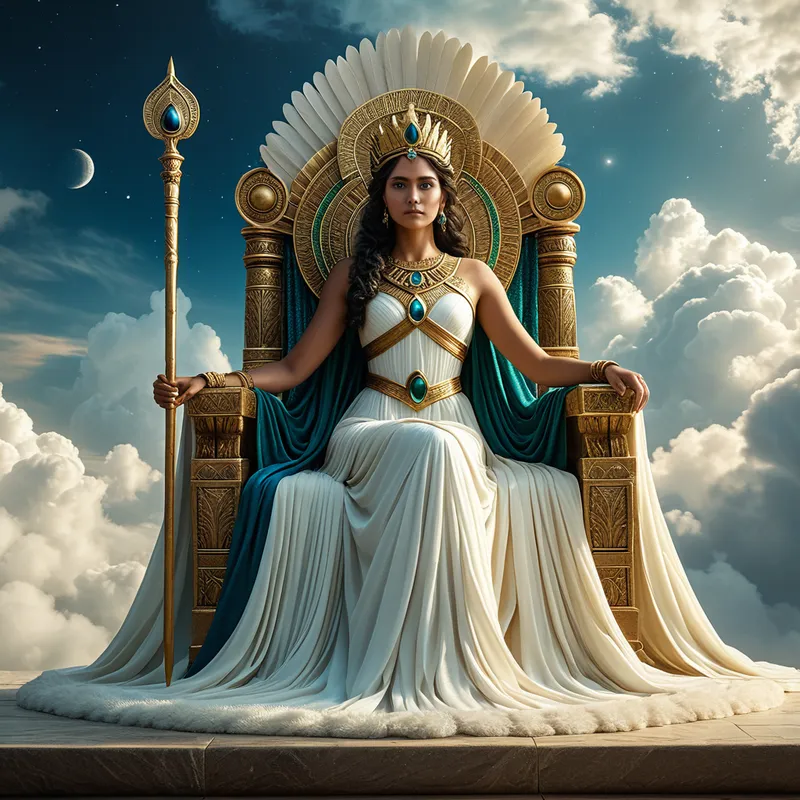
Hera Myth Meaning & Symbolism
The myth of Hera, goddess of marriage and queen of the gods, embodies the sacred vow, the fury of betrayal, and the alchemy of wounded power into sovereignty.
The Tale of Hera
Before the world knew order, there was chaos and war. The Titan Kronos swallowed his children, but one, the youngest, was saved. He grew in secret, a storm given flesh and cunning. His name was Zeus. When he forced his father to disgorge his siblings, a new age was born atop the cloud-wreathed peaks of Mount Olympus. But a throne alone is a cold seat. Power seeks its complement, its sacred mirror.
Zeus saw her, and the very ether stilled. She was Hera, his sister, radiant as a sunrise on polished marble, her dignity a fortress, her gaze a law unto itself. He desired her, not as a conquest—for he had many—but as the cornerstone of his cosmos. She refused him. His thunderbolts held no sway here; his shape-shifting tricks were an insult to her essence. For three hundred years, she held her sovereignty intact.
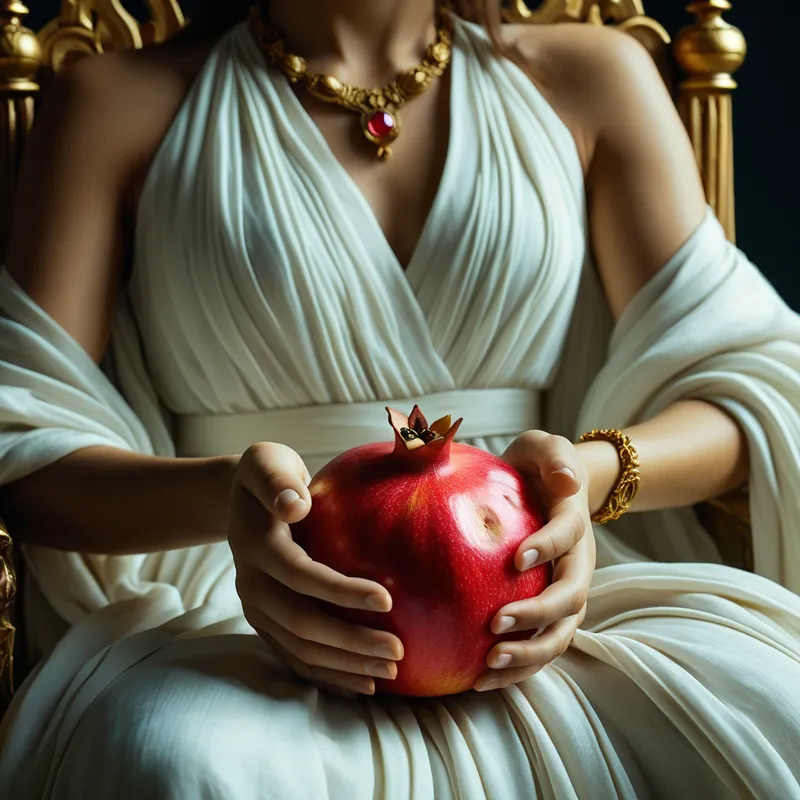
Then, Zeus crafted a new strategy. He summoned the west wind, Zephyrus, to bring a gentle, perpetual spring to the land. He transformed himself, not into a beast, but into a shivering, helpless cuckoo bird, its feathers battered by a phantom storm. Hera, taking pity, drew the fragile creature to her breast to warm it. In that moment of compassion, Zeus resumed his divine form and claimed her. Some say it was a rape. Others, a cunning seduction. But all tell that from this fraught union, a wedding was born—the first, the sacred Hieros Gamos—that shook the heavens with its celebration. The earth blossomed with golden apples, and Hestia surrendered her seat at the council for the sake of her sister’s honor. Hera became Queen.
Yet the nectar of the wedding feast soured quickly. Zeus’s eye, and his form, wandered. To a nymph in a river, to a princess in a tower, to a maiden in a meadow—each betrayal a fresh crack in the foundation of her world. Hera’s rage was not a petty jealousy; it was the fury of a covenant shattered, the wrath of a cosmic principle violated. She pursued his lovers and their offspring with a terrifying, inventive focus. She sent serpents to a cradle, madness to a mother, a relentless gadfly to torment a transformed heifer across the world. Her vengeance was the storm that answered his thunder.
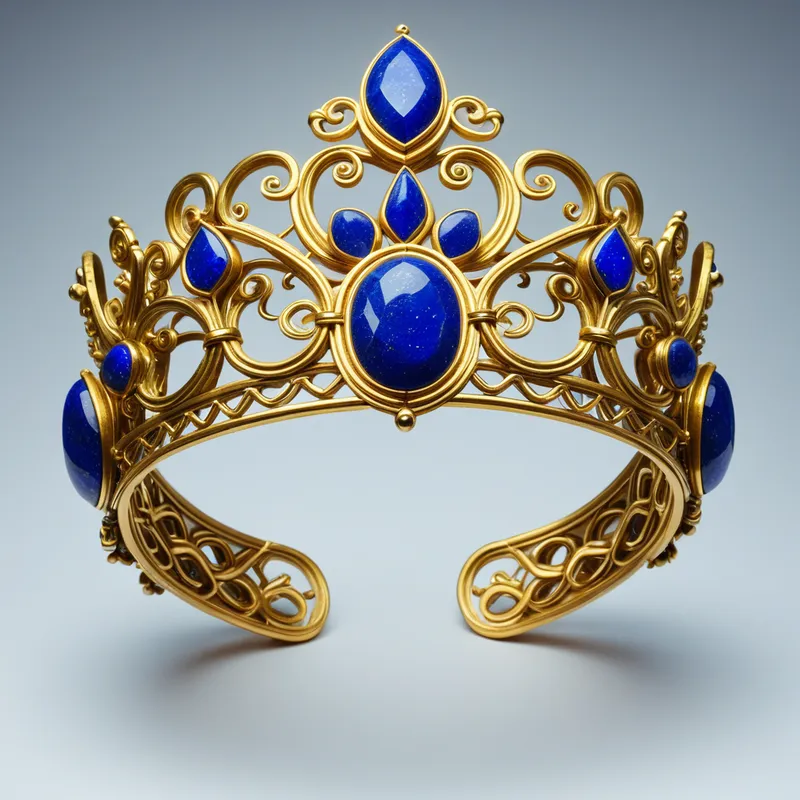
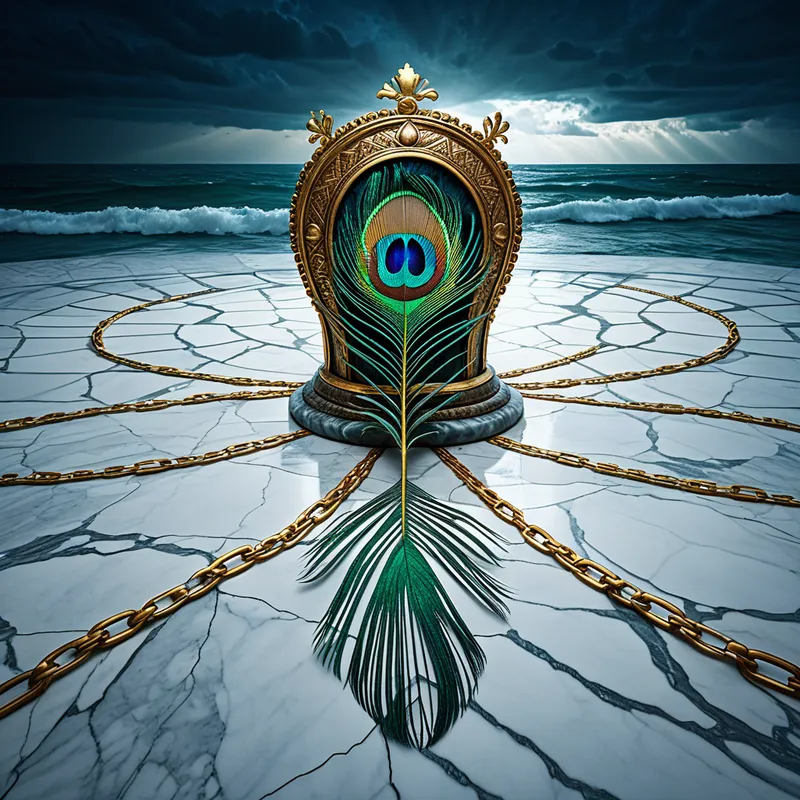
And in her solitude, when the halls of Olympus echoed with his absences, she sought counsel. She once conspired with Poseidon and Athena to bind the king of gods in unbreakable chains. They nearly succeeded, until the monstrous Briareus was summoned to his aid. For her rebellion, she was suspended from the sky with golden anvils tied to her feet, a humiliation that etched itself into her immortal soul. Yet, she was never deposed. The quarrel would pass, the tense balance restored. She returned to her throne, her gaze more watchful, her heart a landscape of scar tissue beneath the polished gold of her crown. Her sacred animals, the peacock with its watchful eyes and the loyal cow, stood witness. She was, forever, the Queen.
Cultural Origins & Context
The myths of Hera were not bedtime stories; they were the sacred narratives that underpinned the social and cosmic order of the ancient Greek world. Her worship was ancient, predating the Olympian pantheon in many places like Argos and Samos, where she was likely originally a powerful goddess of sovereignty and the seasons in her own right. The Homeric epics and the later poetic cycles codified her into the complex, wounded queen we recognize.
Her primary societal function was as the divine patroness of marriage (gamelia). At weddings, sacrifices were made to her, and her example presented a profound, double-edged lesson: marriage was the sacred foundation of civic life, a cosmic mirror of order, yet it was also a realm of immense struggle, requiring endurance and containing the potential for profound pain. Her festivals, like the Hieros Gamos re-enactment, were not celebrations of romantic love, but rituals affirming the stability and fertility of the community itself. Her myths were told to explain the paradox of a powerful goddess consistently wounded by her own domain, reflecting the real tensions within the patriarchal institution of marriage that women of the time navigated.
Symbolic Architecture
Hera embodies the archetype of the Sacred Vessel. She is not love (Aphrodite) or hearth (Hestia), but the container itself—the sanctified bond, the institution, the throne room. Her suffering unveils the psychology of the container betrayed.
The vow is a universe. To break it is not to commit a sin, but to commit a cosmology.
Her rage is often pathologized as jealousy, but symbolically, it is the furious, creative energy of a world struggling to re-integrate after a cataclysm. Each act of vengeance is a distorted attempt to restore the balance of her cosmos, to purge the illegitimate elements that threaten the sanctity of her defined realm. The peacock’s tail, with its myriad eyes, symbolizes her omniscient awareness as Queen and her relentless, sleepless vigilance born of betrayal.
Her marriage to Zeus represents the eternal union of opposites necessary for creation: the stabilizing, structuring principle (Hera) and the dynamic, disruptive principle (Zeus). Their strife is not a marital failure, but the engine of the world’s unfolding drama. Hera’s trials—her suspensions, her plots—are the necessary tensions that test and ultimately affirm the resilience of the cosmic order she represents.
The Dreamer's Resonance
When Hera visits modern dreams, she does not appear as a gentle guide. She manifests as the feeling of righteous, cold fury in a relationship betrayal; as the rigid, perfect facade that hides a cavern of hurt; as the obsessive, circling thoughts that seek to "fix" or control a situation that has violated a deep personal covenant.
Somatically, she may be felt as a tightness in the jaw (suppressed speech), a heavy weight on the chest (the burden of dignity), or a burning in the gut (the fire of wrath). Psychologically, her pattern activates when an individual’s sacred inner contract—with a partner, a life path, or a core self-concept—has been profoundly violated. The dreamer is not processing simple anger, but the sacrilege of a broken vow. The unconscious task is to navigate the tidal wave of humiliated rage without being destroyed by it or turning it entirely outward in destruction. It is the process of holding the unbearable tension between the ideal (the sacred marriage) and the reality (the betrayal), until a new, more conscious form of commitment can be forged.
Alchemical Translation
The individuation process modeled by Hera is the transmutation of wounded power into conscious sovereignty. Her myth begins with her autonomous refusal, moves through the enmeshment and humiliation of the dysfunctional union, and culminates not in escape, but in an uneasy, enduring reign.
The alchemical gold is not found in escaping the wound, but in sitting upon the throne it builds.
The first stage is Recognizing the Covenant: identifying what inner or outer vows form the foundation of one’s sense of order and self. The second is Enduring the Shattering: allowing the rage, grief, and humiliation of betrayal to be fully felt, as Hera feels hers, without immediately spiritualizing or bypassing it. This is the "suspension with golden anvils"—the painful, isolating tension.
The crucial alchemical work is in the third stage: Distilling the Essence. Here, one must ask: What remains of me when the covenant is broken? What power did I outsource to the other, to the institution? Hera’s power was always her innate sovereignty, her Hera-ness, which existed before Zeus and persists despite him. The modern task is to separate one’s inherent dignity and authority from the broken container of the relationship or situation.
The final stage is Reigning from the Scar: returning to the throne, not as a naive queen of a perfect realm, but as a sovereign who has integrated the knowledge of betrayal into her wisdom. The peacock’s eyes see clearly now, not just outward threats, but the inner landscape. The marriage that is ultimately sanctified is the internal Hieros Gamos—the conscious union between one’s own structuring principle (the inner Queen/King) and one’s dynamic, creative spirit. One becomes the unshakable container for one’s own life, capable of relationship but defined by no single bond other than the sacred vow to one’s own sovereign soul.
Associated Symbols
Explore related symbols from the CaleaDream lexicon: