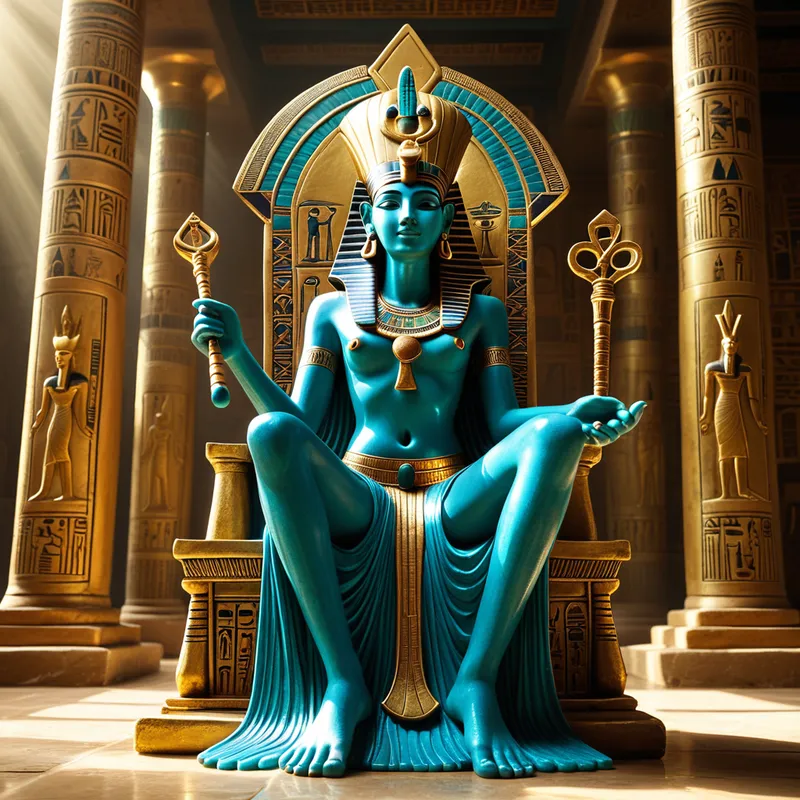
Heqet Myth Meaning & Symbolism
The story of the frog-headed goddess who breathes life into clay, presiding over the miraculous emergence of form from the primordial waters of potential.
The Tale of Heqet
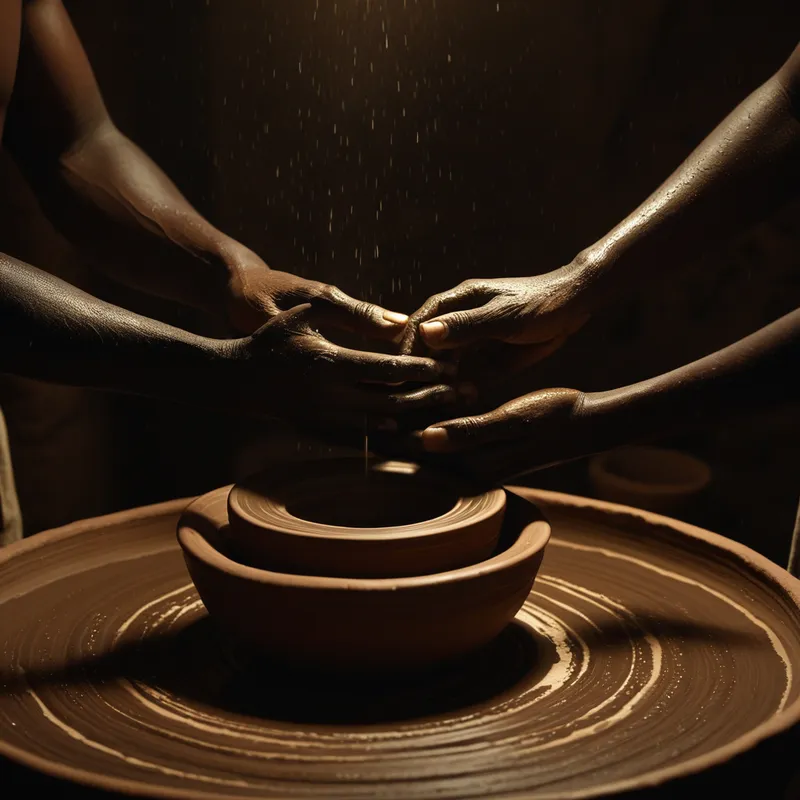
In the time before time, when the world was a dark, silent ocean, a thought stirred in the heart of the abyss. From the endless, watery Nun, a mound of fertile silt arose. And upon that first land, the great potter Khnum sat at his wheel. His hands, skilled from eternity, gathered the black earth of the riverbank. He began to shape—not vessels for grain or water, but vessels for spirit itself. The forms of gods and kings, women and men, took shape beneath his fingers. But they were inert, cold clay, beautiful shells waiting for the spark.
The air was thick with the scent of damp earth and the quiet hum of potential. Into this chamber of creation came a whisper, a soft croaking that was also a song. It was Heqet. She moved not with footsteps, but with the gentle, inevitable push of life swelling in the dark. Her form was both strange and familiar: the body of a woman, radiant and nurturing, crowned with the wise, watchful head of a frog. Her eyes, large and liquid, saw not just the clay figures, but the souls yearning to be.
She approached the last figure shaped by Khnum’s hands—a royal form, a child of destiny. Kneeling in the fertile mud, she leaned close. The only sound was the drip of water from the cavern ceiling and the low, rhythmic pulse of her own being. She opened her mouth, but no words came out. Instead, she breathed. It was not the wind’s breath, but the breath of the marsh at dawn, of life quickening in hidden places. She breathed the ankh—the breath of life—directly into the nostrils of the clay being.
And where her breath touched, a miracle unfolded. The cold earth warmed. A flush of color rose from within the clay—the pink of blood, the gold of vitality. The chest shuddered, then rose and fell in a steady, living rhythm. The eyelids, once sealed with mud, fluttered open. Life, swift and undeniable, surged through the vessel. Heqet placed her webbed hand upon its brow, a final seal of protection and potency. The first birth from the void was complete. From that moment, she became the silent witness at every threshold, her cool, amphibian touch the herald of every cry that breaks the silence of the womb, her ancient song the anthem of all beginnings.
Cultural Origins & Context
Heqet’s veneration stretches back to Egypt’s earliest dynastic periods, her image etched on seals and amulets long before the pyramids pierced the horizon. She was not a goddess of grand state mythologies, but of the intimate, universal threshold. Her primary cult center was at Abydos, a site deeply connected with death and resurrection, linking her power over biological birth to the greater cycle of cosmic rebirth.
Her myth was not a single, codified epic recited in temples, but a living truth enacted. It was passed down through the hands of midwives, who invoked her name as a protective charm during labor. It was whispered by women hoping to conceive, who wore frog-shaped amulets of turquoise or carnelian. It was present in the inundation of the Nile, when the receding waters left behind teeming life and millions of frogs, a visible, cacophonous symbol of sudden, prolific creation. Heqet’s story was society’s acknowledgment of the profound, dangerous, and sacred mystery of generation—the moment spirit takes on flesh, which for the Egyptians was the fundamental template for all creation.
Symbolic Architecture
The frog is the master symbol here, an organism that exists in two worlds—water and land—and undergoes a radical metamorphosis from a swimming tadpole to a leaping adult. Heqet embodies this entire process.
To breathe life into clay is to instigate the ultimate alchemy: the marriage of the eternal (spirit/breath) with the temporal (earth/body).
Her association with water ties her to Nun, the formless potential from which all differentiated life emerges. Her breath is the activating principle, the divine spark that organizes chaos into a living being. Psychologically, Heqet represents the archetype of quickening. She is not the planner (Khnum) or the raw material (clay), but the vital, animating force that bridges the gap between blueprint and being, between idea and manifestation. She governs the critical, often unconscious, moment when something moves from being a potential within the psyche to a living reality in the world.
The Dreamer's Resonance
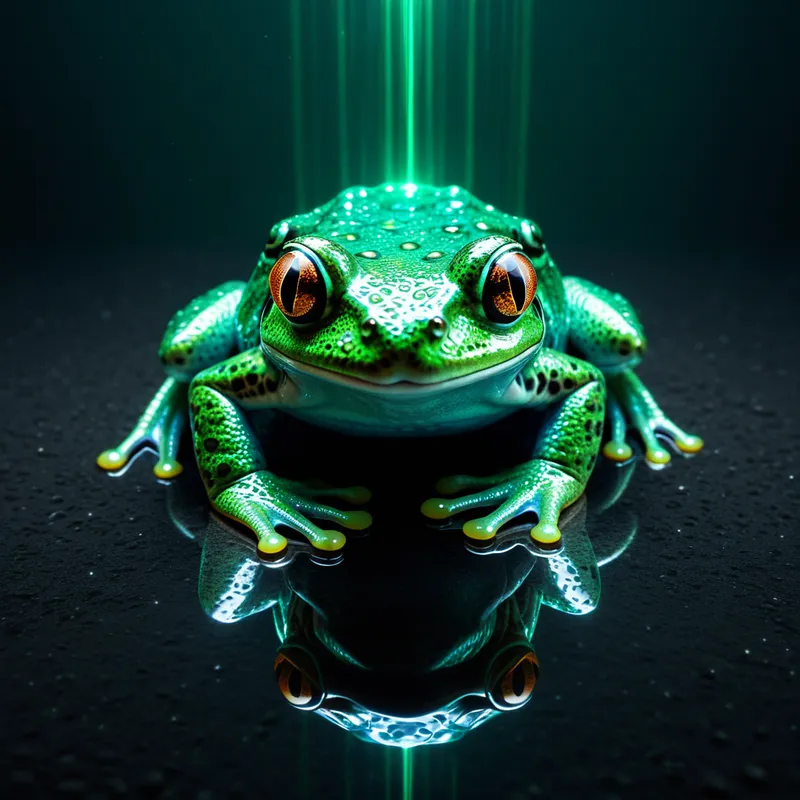
When the pattern of Heqet stirs in modern dreams, it speaks to a process of psychic pregnancy and imminent birth. This is rarely literal. One might dream of wetlands, pools, or murky, fecund waters teeming with tadpoles. The dreamer may find themselves holding a lump of clay that grows warm and pulses in their hands, or they may hear a distant, rhythmic croaking that feels deeply comforting.
Somatically, this can correlate with a feeling of fullness, pressure, or a gathering of energy in the solar plexus or womb space—a sense that something is coming to term psychologically. The process is one of final gestation. The hard work of shaping (analysis, planning, crafting) is done, and the dream psyche is now in the vulnerable, passive, yet powerfully active stage of waiting for the autonomous spark of life to enter the form. It is the anxiety and awe of standing at the brink of a new identity, a new project, or a new level of consciousness, knowing you have prepared the vessel but cannot force the spirit to enter.
Alchemical Translation
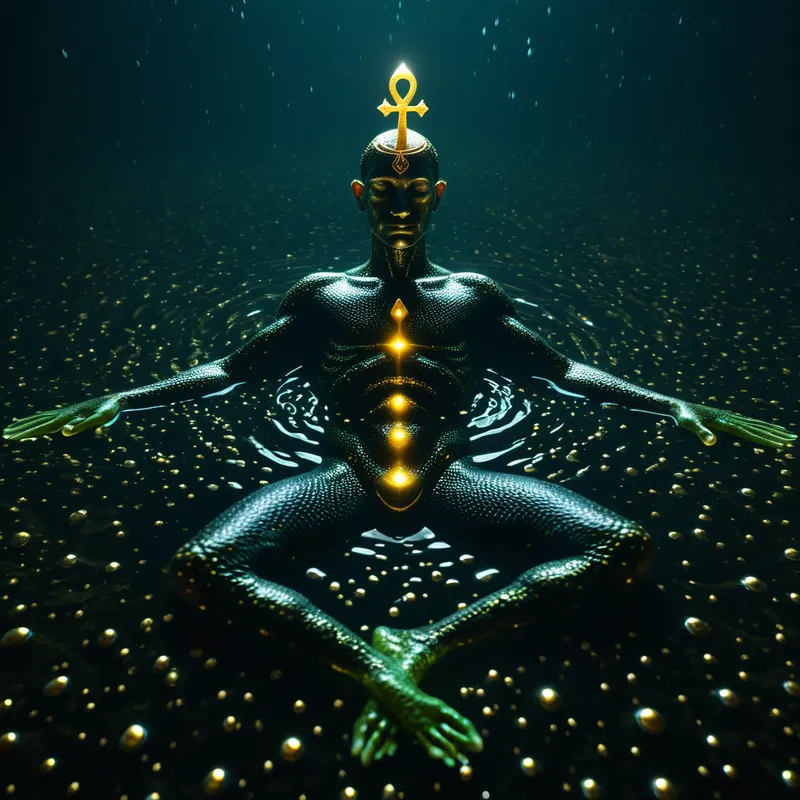
The alchemy Heqet models is that of animation. In the journey of individuation, we spend much time as Khnum at the wheel: shaping our personas, crafting our skills, molding our conscious egos from the clay of our experiences. But this crafted self can remain a hollow artifact, a well-formed but lifeless ideal. The Heqet phase is the terrifying surrender.
The final act of creation is not an act of will, but an act of reception. One must become the hollow reed, waiting for the breath of the deeper Self to sound through.
This is the translation: we must move from the doing of psychology to the being of it. We must kneel in the mud of our own unfinished nature and wait for the quickening breath from the unconscious—an intuition, a synchronicity, a burst of authentic emotion that truly animates the forms we’ve built. It is the moment a studied philosophy becomes a lived conviction, when a practiced role becomes a genuine expression, when love moves from concept to felt reality. Heqet’s lesson is that true life is always a gift from a source beyond the ego. Our task is to prepare the vessel with integrity, and then, with the humility of the frog—a creature of earth and water—open ourselves to the breath of the infinite.
Associated Symbols
Explore related symbols from the CaleaDream lexicon: