
Heliades Myth Meaning & Symbolism
Daughters of the Sun, transformed into poplar trees weeping golden amber, eternally mourning their brother Phaethon's fiery demise.
The Tale of Heliades
Hear now the lament of the Sun’s own daughters, a song sung not by lyres but by the wind in the poplar leaves, a melody of light turned to grief.
In the gleaming eastern halls of their father, Helios, the Heliades lived—Lampetia, Phaethusa, and others—radiant as the dawn, their laughter the sound of sunlight on water. Their brother was Phaethon, whose heart burned with a mortal’s pride and a god’s longing. You know his folly. You have seen the scar across the sky. He grasped the reins of the fiery chariot, begged from their indulgent father, and the heavens screamed as he lost control. The world below scorched, rivers boiled, and the earth cracked open in terror until Zeus himself, to save creation, struck the boy down with a thunderbolt of pity.
He fell like a star, extinguished in the cold waters of the river Eridanus. His sisters heard the cosmic shatter. They felt the sun dim. Racing from their palace, their golden robes streaming behind them like captive sunbeams, they found the smoking bank, the scattered, smoldering wreckage of divine ambition. Their brother was gone, his essence dissolved into the muddy flow.
There, on that desolate shore, their grief began. It was not a human grief, quiet and fading. It was a cosmic keening. For four full moons, they wept without cease, their divine forms rooted to the spot by the sheer weight of their sorrow. They called his name into the uncaring wind until their voices grew hoarse, then silent. Their tears fell upon the earth, upon the scattered remnants of the chariot, and did not sink in. They pooled, shining and viscous.
Their flesh grew cold and stiff. Their flowing hair stiffened into twigs that reached for a sun that now seemed a mockery. Their feet, once so swift, dug deep into the riverbank, seeking anchor in their despair. Their slender bodies stretched and hardened, skin becoming smooth, pale bark. The gods, witnessing this transformation of pure lament, did not intervene. Some say it was Hestia’s gentle influence, or the stern mercy of Demeter, who understands loss. Their transformation was their elegy.
Where their tears fell, they did not vanish. They hardened in the air, droplets of solidified light, of liquid sorrow turned to stone. Golden amber. And when the change was complete, three—or seven, or all—slender poplar trees stood sentinel by the mournful river, their leaves whispering forever of Phaethon. And from their branches, eternally, the golden tears of the Sun’s daughters fall, a monument not of stone, but of grief itself made tangible.

Cultural Origins & Context
The myth of the Heliades is a thread in the vast, complex tapestry of Phaethon’s story, most comprehensively relayed to us by the Roman poet Ovid in his Metamorphoses. In the Greek tradition, it is a secondary, resonant echo of a primary catastrophe. This places it within a specific genre of mythological explanation: the aition, a story that explains the origin of a natural phenomenon. Here, the phenomenon is amber, found notably along the river Eridanus (often identified with the Po River in Italy or other European waterways).
The societal function was multifaceted. For ancient listeners, it explained a mysterious, beautiful substance (amber) as the solidified tears of divine beings, connecting the material world directly to the emotional world of the gods. It served as a profound lesson on the consequences of hubris, but not for the hubristic one—for those who loved him. The myth gave a language to inconsolable, transformative grief, particularly the grief of sisters, framing it as a force so potent it could alter the very substance of a being. It was a story told to make sense of loss, to find a trace of the sacred and the eternal in the hard, golden residue of pain.
Symbolic Architecture
The Heliades represent the aspect of consciousness that is bound by love and memory to a catastrophic event. They are not the heroes who act, but the witnesses who are acted upon, whose entire reality is rewritten by another’s fall.
To be transformed by grief is not to be destroyed, but to be translated into a new and enduring form of being. The self is not lost; it becomes a vessel for the memory that changed it.
Their metamorphosis into poplar trees is deeply symbolic. The poplar is a tree of the underworld, sacred to Persephone, and its leaves are famously tremulous, whispering with every breeze—an eternal, restless murmuring of their lament. They are rooted, unable to flee the site of trauma, forced to integrate it into their very structure.
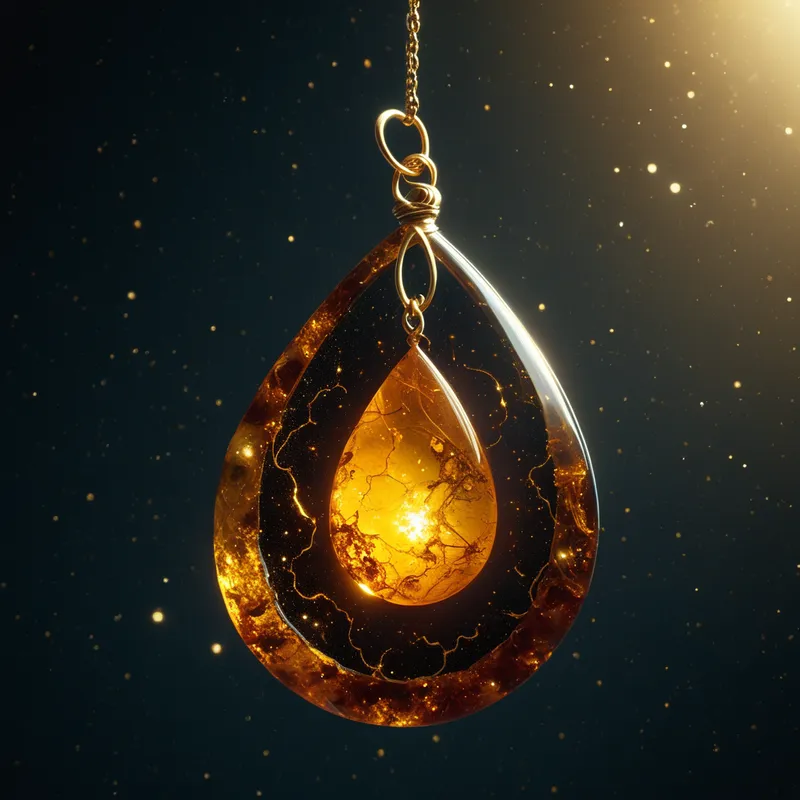
The amber is the alchemical key. Tears, the fluid of emotion, typically evaporate or are absorbed. These tears resist. They harden into a substance that is warm to the touch, captures light, and often preserves ancient life within it. The grief of the Heliades is not futile; it produces a tangible, valuable, and beautiful residue. It is sorrow fossilized into a jewel, pain transmuted into a substance that lasts for millennia.
The Dreamer's Resonance
When this myth appears in the modern psyche, it rarely comes as a narrative. It arrives as a somatic or imagistic experience. You may dream of being unable to move your feet, of roots growing from your ankles into the floorboards of a childhood home or the site of an old accident. You may dream of crying tears that fall as heavy, golden beads that you must gather, each one containing a frozen moment of a lost relationship or a personal failure.
This is the psyche’s portrayal of a grief or a trauma that has become structural. It is no longer a passing emotion; it has been incorporated into the foundation of the personality. The dreamer is in the process of what the Heliades underwent: the immobilizing, painful, yet sacred process of being changed by a loss. The dream asks: What part of you has become rigid, rooted to a past event? And what precious, enduring substance is being formed from the endless processing of that pain? The weeping is not a sign of failure, but of an ongoing, profound alchemy.

Alchemical Translation
The journey of the Heliades is a stark map of the nigredo, the blackening, the stage of putrefaction and despair in the alchemical—and Jungian individuation—process. Phaethon’s fall is the catastrophic event that shatters the naive, solar consciousness (the identification with the heroic, inflated ego). The sisters represent parts of the psyche that were in relationship to that identity.
Their transformation is the albedo, the whitening. The ego-complex dies, and a new, more rooted consciousness begins to form. They do not follow their brother into oblivion; they are translated. They become the tree—a symbol of the axis mundi, the connecting pillar between realms. Rooted in the earth (the reality of the trauma), crowned in the sky (remaining connected to the divine source, Helios), they mediate.
The ultimate goal is not to stop weeping, but to discover what your tears are made of. The psychic task is to consciously participate in the transmutation of raw, flowing pain into a solid, luminous wisdom you can hold in your hand.
The amber is the rubedo, the reddening, the final gemstone produced. For the modern individual, this translates to the hard-won, crystallized insight gained from enduring a profound loss. It is the book written after the depression, the compassion forged in heartbreak, the stable sense of self built upon the ruins of an old identity. We are all, in some way, the Heliades—forever changed by our losses, standing vigil by the rivers of our past, and, if we attend to the alchemy, producing from our endless tears the only gold that truly lasts: the amber of a soul tempered by sorrow.
Associated Symbols
Explore related symbols from the CaleaDream lexicon: