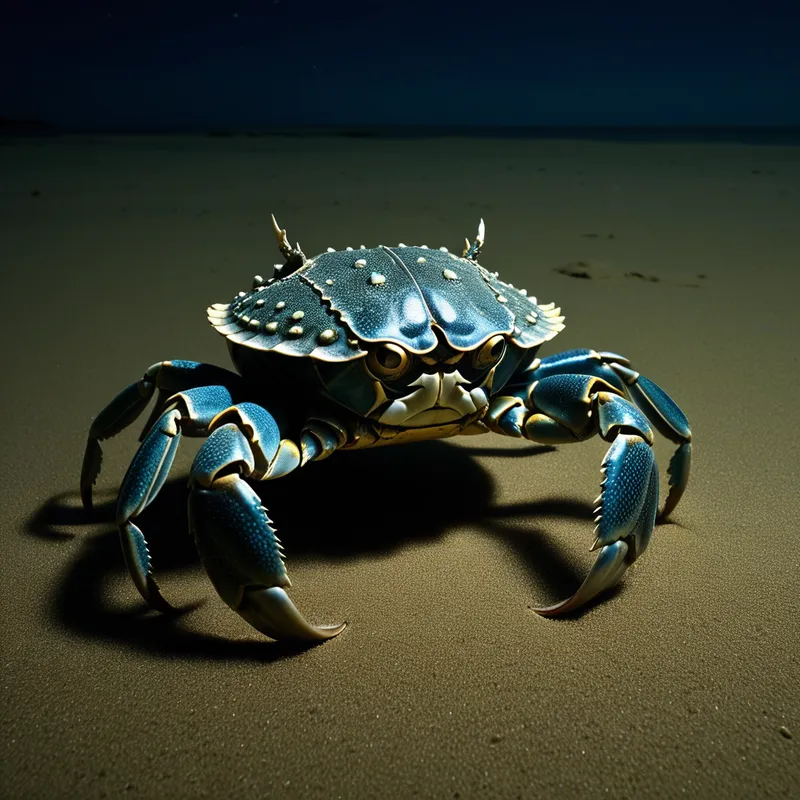
Heikegani Myth Meaning & Symbolism
A crab whose shell bears the face of a fallen samurai, embodying the souls of the drowned Heike clan, eternally haunting the sea floor of Dan-no-ura.
The Tale of Heikegani
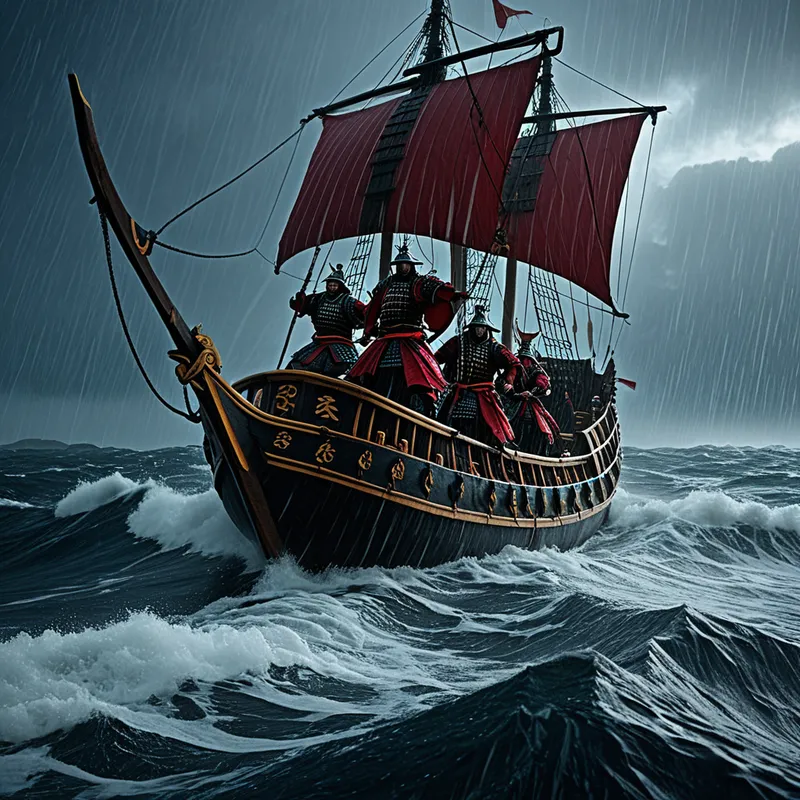
Listen, and let the salt air fill your lungs. Let the cold current of the Seto Naikai pull you down to the silt and shadow of Dan-no-ura. Here, in the year 1185, the sea did not simply swallow ships; it drank the soul of an era. The Heike, once masters of the sun and tide, found their crimson sails torn by the storm-winds of fate and the relentless arrows of the Genji. The battle was not merely lost; it was dissolved into the brine.
The child Emperor, Antoku, clung to his grandmother, Nii no Ama. Her eyes, older than the sea itself, held no more tears, only the reflection of a world ending. “The capital is far behind us,” she whispered, her voice a dry reed in the gale. “Better to sink to the realm of the Ryūjin than to fall into the hands of our foes.” And with the sacred sword and jewel of the imperial regalia clutched tight, she stepped from the gunwale, the weight of a dynasty pulling her and the boy sovereign into the abyss. Around them, samurai and courtiers, their silks and lacquered armor becoming their shrouds, followed in a final, silent procession. The sea swallowed their cries, their honor, their unfinished stories.
The waves calmed. The Genji claimed the surface world. But in the silent, sunless depths, a murmuring began. The grief of the Heike was too vast, too potent to simply vanish. It pooled in the trenches, a psychic sediment heavier than stone. Their samurai pride, their bitter defeat, their loyalty that bound them even in death—this complex spirit had no shrine, no tomb. It had only the cold, pressing dark.
And so, the sea, that great alchemist, began to work. From the mud where bone mingled with shell, a new form was pressed. Not a ghost to wail, but a creature to crawl. The essence of a fallen warrior—his scowling brow, his fierce, down-turned mouth, the very lines of his kabuto helmet—was etched not on stone, but on the living carapace of a small, sideways-walking crab. The Heikegani was born. Each shell, a unique death mask. Each scuttle across the seafloor, a silent, eternal patrol. They do not haunt the living with phantoms; they present the living with a mirror, pulled from the deep. To catch one is to hold a piece of the drowned past, to gaze upon the face of a soul that could not find peace, only this strange, embodied memory.
Cultural Origins & Context
The legend of the Heikegani is not a myth from the age of the Kami, but a folklore born from a specific, seismic historical trauma: the Genpei War and the decisive Battle of Dan-no-ura. Its propagation is owed not to court scribes, but to the oral tradition of fishermen, monks, and storytellers. The crab itself, a real species (Heikea japonica), provided the uncanny canvas. Its shell patterns, which to a scientifically disinterested eye are mere ridges, became, through the lens of collective memory, unmistakable human faces.
This myth functioned as a profound cultural mechanism. In a society steeped in ancestor veneration and the Buddhist concepts of karma and restless spirits (onryō), the Heikegani offered a tangible resolution. It provided a form for the formless anguish of the Heike clan. The crabs became their memorial, their ihai (mortuary tablet), crafted by nature itself. Furthermore, the tale served a moral and cautionary purpose, often recounted in tandem with the epic Heike Monogatari. It was a reminder of the impermanence of earthly glory (mujō) and the inescapable wages of pride and conflict. By fearing to harm the crab, fishermen enacted a form of posthumous respect and pacification, ensuring these powerful souls did not turn their wrath upon the living.
Symbolic Architecture
The Heikegani is a perfect symbolic vessel for the psychology of a collective shadow. It represents what a culture cannot, or will not, consciously integrate: the guilt of victory, the pity for the defeated, the unresolved trauma of a foundational civil war.
The shell is the hardened memory; the creature within is the living, adapting psyche that must carry it.
The crab’s form is rich with meaning. It carries its skeleton—its history, its identity—on the outside. This is the burden of ancestral legacy made visible and inescapable. It moves sideways, a metaphor for indirect progression, for dealing with the past not by facing it head-on, but by a constant, crabwise negotiation. It inhabits the boundary between land and sea, the conscious and the unconscious, the historical record and the mythical depths.
The face on the shell is not a generic visage, but specifically that of a samurai. This symbolizes the archetypal complex of honor, loyalty, and violent purpose that was drowned. The myth suggests that such a potent psychic structure does not die; it undergoes a metamorphosis. It is translated from the human, historical realm into the archetypal, eternal realm of nature and symbol.
The Dreamer's Resonance
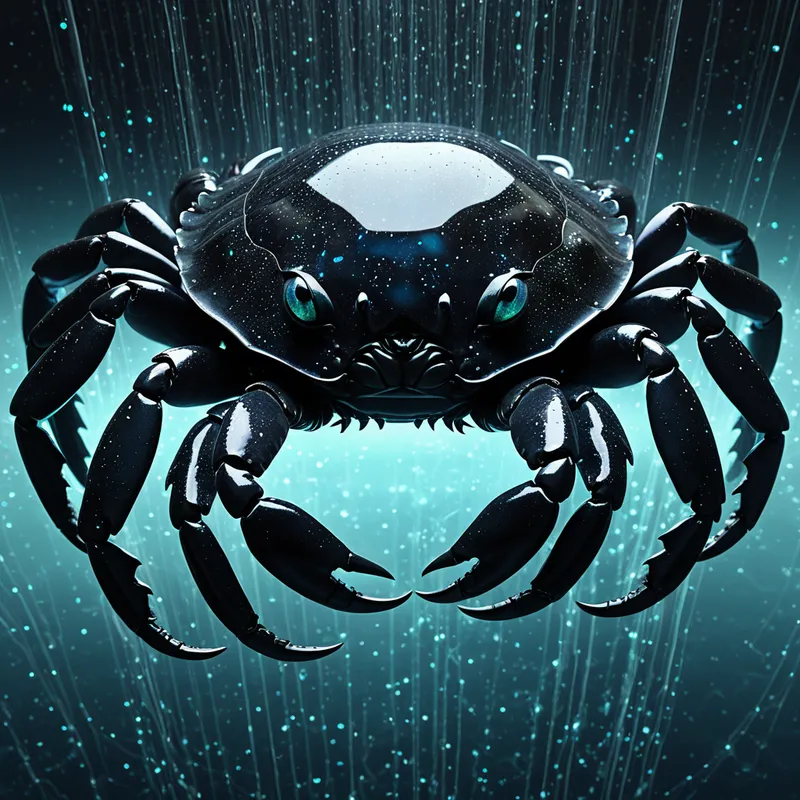
To dream of the Heikegani is to encounter the psyche’s own process of giving form to formless pain. It rarely appears as a threat, but as a profound, melancholic discovery. You might dream of walking on a beach at twilight, turning over a stone, and finding the crab gazing up at you. Or you may be swimming in deep, dark water and feel them scuttling over your hands—not biting, but imprinting.
Somatically, this dream often accompanies a feeling of carrying a heavy, invisible burden on your back or shoulders—the literal weight of the “shell.” Psychologically, it signals the emergence of what we might call “ancestral memory” or familial karma: patterns of defeat, pride, loss, or unexpressed loyalty that seem to predate your own life choices. The face on the shell is the dream’s attempt to personify this burden, to give it a countenance so it can be seen, acknowledged, and ultimately, related to. The dream asks: What part of your own history, or the history of your lineage, feels drowned, unresolved, and is now demanding recognition in this strange, armored form?
Alchemical Translation
The alchemical journey modeled by the Heikegani myth is not one of heroic conquest, but of humble, bottom-dwelling transmutation. It is the opus of the orphan archetype, who must integrate the legacy of a fallen “family” (be it biological, cultural, or ideological) to find wholeness.
The first stage is the drowning—the experience of catastrophic loss, defeat, or the dissolution of a prized identity (the Heike samurai). The conscious ego is overwhelmed by the unconscious. The second stage is the long descent into the murky depths of the psyche, where things are broken down into their essential components (the seafloor). Here, in the nigredo, the material of the old self lies in disarray.
The miracle is not in avoiding the descent, but in what the soul chooses to rebuild from the wreckage.
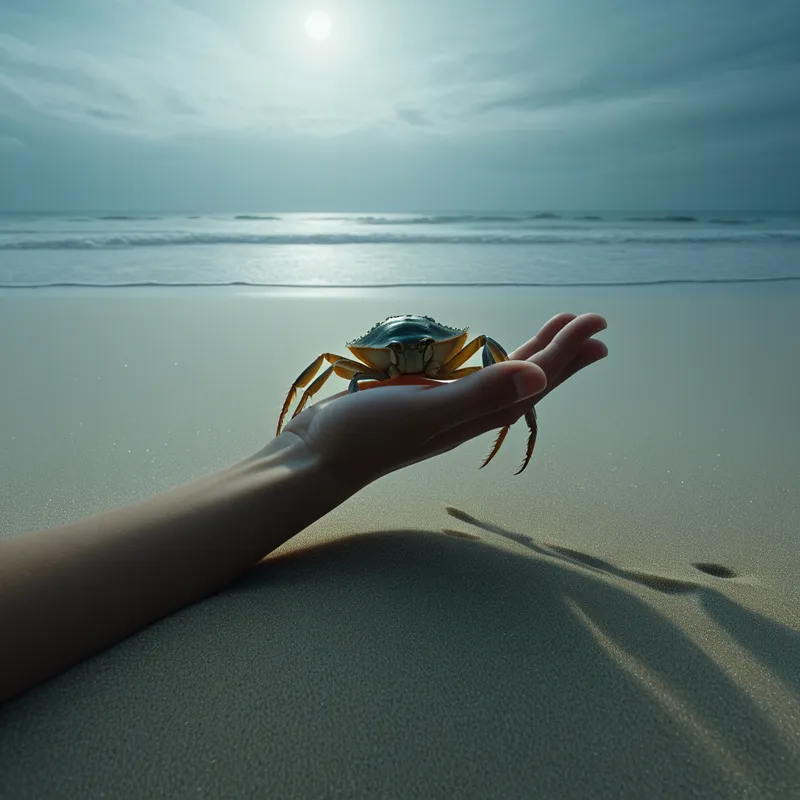
The third, and crucial, stage is the re-forming. This is not a return to the previous shape, but a creation of something new and fitting for the current environment. The pride and honor of the samurai do not vanish; they are compressed, simplified, and etched onto a new, resilient structure—a shell. This is the creation of a psychic artifact. The modern individual undergoing this process learns to carry their history not as a open, weeping wound, but as a carved, protective part of their being. The goal is not to erase the face of the past, but to wear it with awareness, to let it be the armor that allows you to navigate the deep, dark places without being destroyed by them. You become the creature that carries the memory, and in doing so, you give it a place to rest, ending its eternal, restless wandering.
Associated Symbols
Explore related symbols from the CaleaDream lexicon: