Heavenly Choir Myth Meaning & Symbolism
A celestial host of angels singing in perfect harmony, an eternal hymn of praise that bridges the divine and the human soul.
The Tale of Heavenly Choir
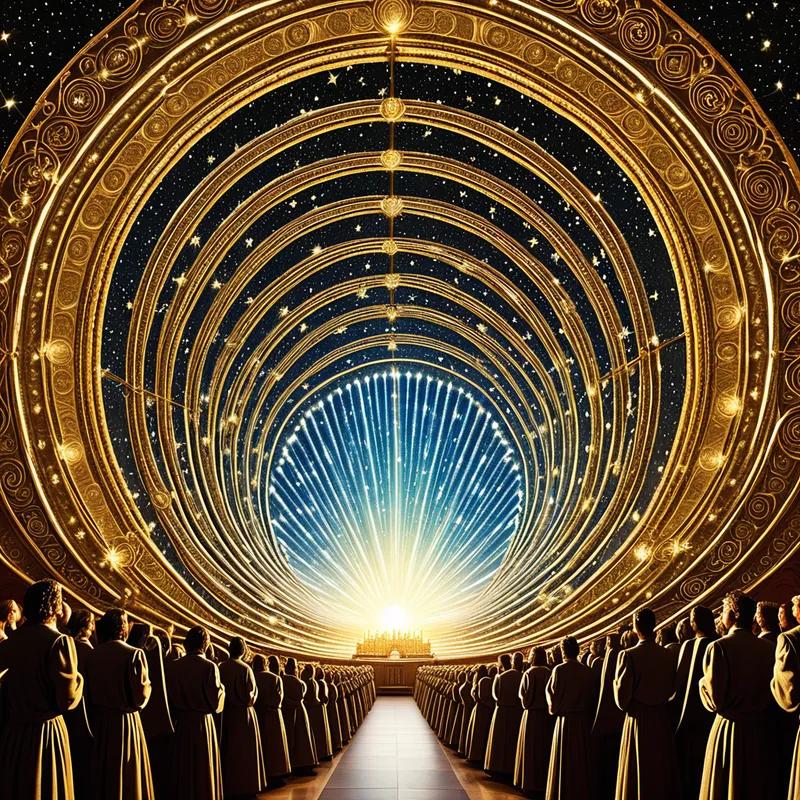
Hear now, not of the earth, but of the air between the stars. Before the first word was spoken into the void, there was a sound. Not a crash, nor a whisper, but a tone—pure, foundational, and alive. This was the first note of the Heavenly Choir.
In the realm beyond realms, where light is not seen but known, the host gathers. They are not one, but many; not a crowd, but a singular organism of praise. The Seraphim burn with a love so fierce it illuminates eternity, their six wings a blur of devotion. The Cherubim, eyes upon eyes seeing all patterns of creation, hold the space with a profound, knowing silence that is itself a part of the song. And the countless Angels, their forms woven from intention and starlight, stand in ranks that stretch into the infinite.
Their conflict is not of war, but of dissonance. For the song they sing is the very fabric of Shalom. It is a hymn of such perfect alignment that to falter is to unravel a thread of reality. The rising action is the constant, eternal choice to attend—to listen with their entire being to the source of the song, and to pour forth their unique note in flawless harmony with the whole. There is no leader, yet there is perfect conductor-ship. The resolution is ceaseless; it is the everlasting now of their praise, a sonic tapestry that holds the cosmos in being.
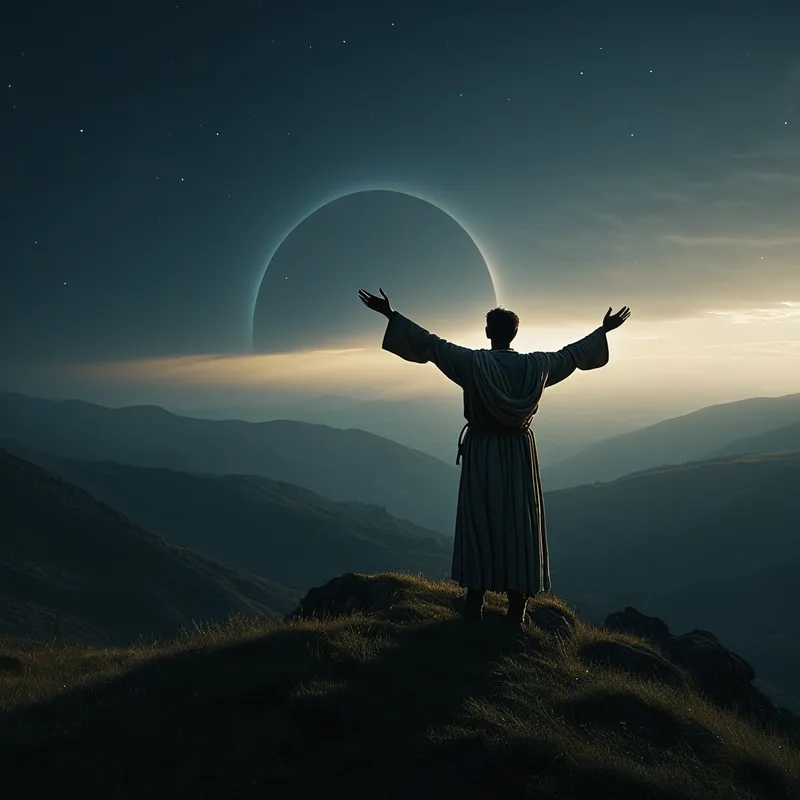
And sometimes, the veil between that realm and this one grows thin. On a hillside outside a forgotten town, shepherds huddle against the night cold, the smell of wool and earth thick in the air. Then—a tearing of the sky. Not with violence, but with unbearable brilliance. An angel of the Lord appears, and the glory of the Lord shone around them. The shepherds fall, faces in the dirt, hearts hammering against their ribs. “Be not afraid,” comes the voice, like crystal and honey. But the message is almost secondary. For then, as if the single angel was merely the opening of a door, the sky itself fills. Not with shapes, but with presences. A multitude of the heavenly host, spilling into the earthly night. And they are singing. The air vibrates with it, a sound that is felt in the bones before it is heard by the ears: “Glory to God in the highest, and on earth peace, goodwill toward men.” The song is not loud; it is total. It enters the shepherds, the sleeping town, the very rocks of the hillside, and for a timeless moment, everything is in tune. Then, the light fades, the sound recedes into a memory that feels more real than the returning darkness, and the men are left in the silent field, forever changed.
Cultural Origins & Context
The myth of the Heavenly Choir is woven from threads of Jewish apocalyptic literature, mystical speculation, and the foundational narratives of the Christian New Testament. Its most iconic depiction comes from the Gospel of Luke’s Nativity story, where the celestial multitude announces the birth of Christ to the shepherds. This was not an invention but an eruption of a deeper, older idea into history.
The concept existed in the Hebrew imagination long before. The prophet Isaiah witnessed the Seraphim calling “Holy, holy, holy” to one another in the Temple. The Book of Job speaks of the “morning stars” singing together at the dawn of creation. Early Christian theologians and mystics, like Pseudo-Dionysius the Areopagite, systematized these visions into intricate celestial hierarchies, detailing the orders of angels and their specific roles in the perpetual liturgy of heaven.
This myth was passed down not just through scripture, but through liturgy, art, and music. Gregorian chant was seen as an earthly echo of the angelic song. The architecture of cathedrals, with their vaulted ceilings reaching for the heavens, was designed to acoustically and visually inspire a sense of ascending into that divine chorus. Its societal function was dual: it was a vision of ultimate cosmic order and beauty (a comfort in a chaotic world), and it was a model for the ideal human community—a society where every individual, like every angel, contributes their unique voice to a perfect, harmonious whole.
Symbolic Architecture
At its core, the Heavenly Choir is a profound symbol of cosmic harmony and the interconnectedness of all things. It represents the universe not as a silent machine, but as a living, singing organism where every part is in conscious, joyful relationship with the source.
The choir is the sound of the universe remembering it is one. Each angel’s voice is a unique frequency in the spectrum of being, and the hymn is the totality of existence expressing itself.
Psychologically, the choir symbolizes the integrated Self. The different orders of angels—Angels, Seraphim, Cherubim—can be seen as aspects of the psyche: the messengers (communication), the burning lovers of truth (emotion and eros), the wise guardians (intellect and intuition). In a state of wholeness or individuation, these aspects do not argue or compete; they harmonize. They sing the same song from different notes, creating a richness that a single voice could never achieve. The “glory” they sing is the radiant value and meaning of a life lived in alignment.
The Dreamer's Resonance
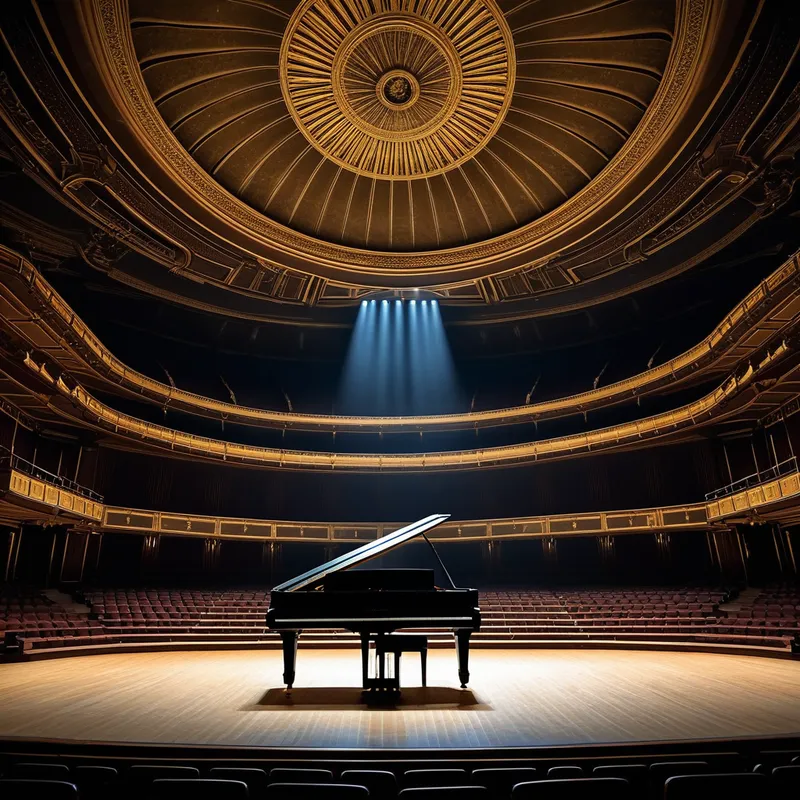
When the Heavenly Choir appears in a modern dream, it rarely comes with biblical literalism. The dreamer may find themselves in a vast, empty space—a derelict theater, a grand canyon, the hollow of a giant tree—and become aware of a sound. It might be a hum from the walls, a chorus of voices heard from another room, or a vibration felt in the dream body before it is heard.
This experience signals a profound somatic and psychological process: the deep unconscious is attempting to re-establish a sense of inner order and connection. The psyche is tired of the ego’s discordant monologue—its anxieties, conflicts, and fragmented desires. The choir is the dream’s answer: a symbol of the innate, underlying harmony of the Self. The dreamer witnessing it is often in a state of transition, loss, or confusion. The choir does not solve their problem; it re-contextualizes it. It reminds the dreamer that they are part of a larger, meaningful pattern. The feeling upon waking is often one of awe, profound peace, or a bittersweet longing (the German Sehnsucht) for a home they have never seen but somehow know.
Alchemical Translation
The alchemical process mirrored in this myth is not one of violent purification, but of attunement and synthesis. The base metal of the human condition—our fragmented, noisy, conflicted inner world—is not destroyed. It is invited to find its pitch.
The first stage is listening (Mortificatio). The ego, like the shepherds, must be struck silent and fall to the ground. Its plans, its worries, its constant narration must cease. This is a form of psychic death necessary for renewal.
The second stage is finding one's note (Solutio). In the great choir, no two angels sing the same exact tone. The individuation process requires discovering the unique, essential “note” of one’s own being—the core values, gifts, and calling that are yours alone. This is not narcissism; it is the prerequisite for contribution.
The ultimate alchemy is realizing your unique voice is not for yourself, but for the song. Individuation is the process of becoming a perfect instrument for a music greater than you.
The final stage is joining the chorus (Coniunctio). This is the sustained, lifelong practice of aligning that unique note with the whole. It is the harmony of opposites within: intellect and emotion, shadow and light, masculine and feminine. It is the “peace on earth” the angels proclaim—not the absence of conflict, but the Shalom of everything in its right relationship. The triumphant product of this alchemy is not a gold you possess, but a song you participate in—a life experienced not as a solitary struggle, but as a vital, irreplaceable part of a breathtaking, eternal harmony.
Associated Symbols
Explore related symbols from the CaleaDream lexicon: