
Hawaiian Imu Myth Meaning & Symbolism
A myth of the earth-oven as a sacred womb, where sacrifice becomes sustenance and the old world is cooked into the new.
The Tale of Hawaiian Imu
Listen. The story does not begin with a hero, but with a hunger. Not a simple hunger of the belly, but the deep, groaning hunger of the land itself, of the people who walked upon it, their spirits thin as morning mist. The sky-father Wākea looked down, and the earth-mother Papa felt the ache from below. Between them, their children—the taro, the sweet potato, the people—were failing. Food was scarce, life was hard, and the fire of the hearth was a feeble, flickering thing.
Then came a rumbling, not from the belly, but from the belly of the earth. It was the voice of Pele, she who shapes the land with her fury and her passion. But this time, it was not a river of fire she offered. It was a secret, whispered on the steam of a hidden vent. Her sister, Hiʻiaka, whose heart was cloaked in ferns and flowers, heard it. And Māui, the restless one, he of the fish-hook that pulled islands from the sea, felt the tremor of a new possibility.
They gathered at a place where the soil was soft and the stones were black from Pele’s heart. Māui, with his clever hands, dug. He dug deep into the flesh of Papa, creating a dark, moist cavity. Hiʻiaka lined this sacred hollow with smooth, round stones—the bones of the earth. Then Pele breathed. Not a destructive blast, but a focused, contained heat. She summoned fire upon the stones until they glowed, white as the noonday sun, humming with a trapped, primordial energy.
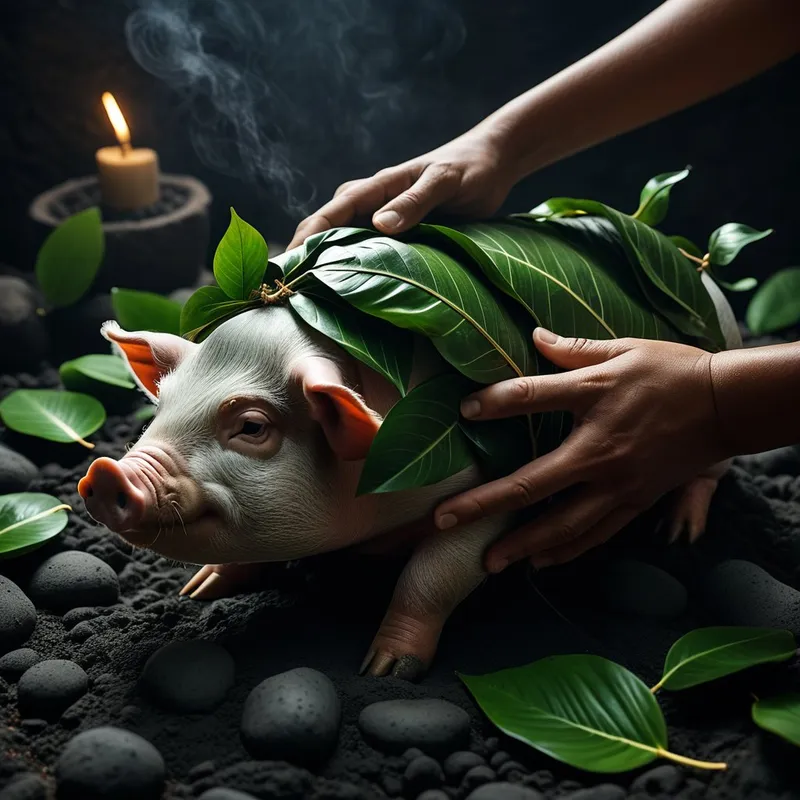
This was the dangerous moment. The raw, devouring heat. The untamed element. What could possibly hold it? What could transform this destruction into creation? Hiʻiaka moved then, gathering great, green fronds of the ki plant. She shrouded the blazing stones, and the steam hissed a song of pain and promise. Into this prepared womb, they placed the offering: a whole pig, the embodiment of life and sustenance. More leaves, more wet cloth, a final blanket of rich, dark soil. Then, they waited.
The earth itself became an oven. The heat, once wild, was now held in a dark, transformative embrace. For hours, the great digestion took place. The old life—the raw, the separate, the individual—was broken down. In that absolute darkness, under the weight of the soil, bathed in steam and stone-fire, a miracle of alchemy occurred. When the time was right, the covering was carefully peeled back. The steam that rose carried not the scent of death, but the profound, rich, unifying aroma of life remade. The pig was no longer raw flesh; it was tender, falling-apart sustenance, infused with the smoke, the leaf, the very essence of the earth. The hunger was met, not with a kill, but with a sacrament. The imu was born—a womb of transformation, where sacrifice becomes community, and fire becomes feast.
Cultural Origins & Context
The myth of the imu is not a single, frozen tale but a living narrative embedded in the daily and ceremonial practices of the Kānaka Maoli. It was passed down not merely through words, but through the ritual actions of preparation, the shared labor of digging, heating stones, and the communal anticipation of the unveiling. The knowledge was held by the kāhuna of various practices—those who understood the chants to placate Pele when heating stones, the proper protocols for offering the first portion to the gods (ʻai kapu), and the medicinal uses of the plants involved.
Its societal function was multifaceted. Practically, it encoded a sophisticated technology for cooking large quantities of food efficiently, crucial for feasts (ʻahaʻaina) and sustaining communities. Spiritually, it was a profound metaphor for the cycle of life, death, and regeneration, mirroring the planting of a tuber (which also required an underground period of transformation) and the return of the body to the earth. The imu ritual reinforced the fundamental Hawaiian value of mana—the belief that proper, respectful process (pono) was necessary to harness spiritual power for a successful, nourishing outcome. It taught interdependence, patience, and the sacred truth that life feeds on life, transformed through ritual and respect.
Symbolic Architecture
At its core, the imu is a symbol of the alchemical vessel. It represents the contained, sacred space where a radical transformation of substance and spirit occurs.
The imu is the dark womb of the world, where the raw materials of existence are subjected to the primal heat of being, not to be destroyed, but to be cooked into their true, communal form.
The pit itself is the unconscious, the fertile darkness of Papa. The fiery stones are the eruptive, passionate energies of the psyche—our instincts, our creative fires, our volatile emotions (Pele). Left unchecked, these energies consume. The layers of ki and soil represent the structures of culture, ritual, and consciousness that must contain and direct this raw power. The offering—the pig, the taro, the self—is that part of our individual, "raw" nature that must undergo dissolution. The long, patient waiting is the necessary period of incubation, where the conscious ego relinquishes control. The final unveiling and feast symbolize the emergence of a new, integrated substance: the nourishing product of the psyche's own transformative work, now fit to feed the whole community of the self.
The Dreamer's Resonance
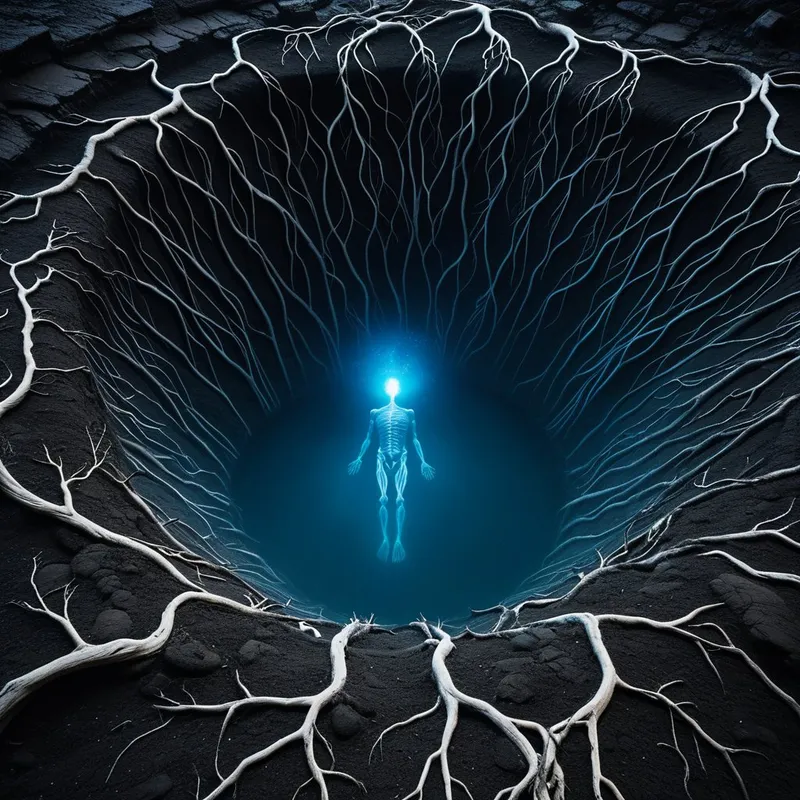
When the pattern of the imu appears in modern dreams, it signals a profound somatic and psychological process of incubation and transmutation. The dreamer may find themselves in a dark, enclosed, earthy space, or witness something being buried or placed in a pit. There is often a sense of pressure, heat, or being "cooked."
This is the psyche's enactment of a necessary decomposition. The ego is being invited, or forced, into a symbolic underground. The raw materials of a life situation—a career, a relationship, a long-held identity—are being subjected to the slow, invisible fires of the unconscious. The dreamer is in the "waiting" phase of the imu. Anxiety, feelings of being stuck or in the dark, and a sense of latent, pressurized energy are common somatic experiences. The dream is affirming that a transformative process is underway beneath the surface of awareness. It cautions against digging up the process prematurely, urging patience and trust in the alchemical dark. The emergence, when it comes in waking life, will feel like a sudden clarity, a release of creative energy, or the intuitive knowledge of the "right" next step—the feast after the long cook.
Alchemical Translation
The myth of the imu provides a masterful model for the Jungian process of individuation—the psychic transmutation of the personal and collective elements into a more whole, authentic self. The struggle is the ego's resistance to being "placed in the pit," to surrendering its raw, familiar form to a process it cannot control.
The triumph is not an escape from the fire, but the creation of the sacred vessel that can hold it. The modern individual must learn to dig their own imu: to create a conscious container (through therapy, art, ritual, or reflective practice) for their volatile energies. They must gather their "stones"—their core passions and traumas—and have the courage to let them be heated by the fires of attention and feeling. Then comes the critical act: wrapping those fires in the green, living layers of meaning, narrative, and cultural or spiritual context. Finally, one must place a part of oneself—an outgrown identity, a wound, a talent—into this vessel and willingly cover it over, entering a phase of patient incubation.
Individuation is the art of becoming your own imu-keeper, learning to trust that the darkest, hottest, most pressurized parts of your journey are not a tomb, but a sacred womb cooking you into a being of deeper nourishment and connection.
The "feast" that results is the integrated personality: no longer raw, disparate instincts and personas, but a cohesive, flavorful, and nourishing self, capable of sustaining its own life and contributing to the community of souls. The myth teaches that transformation is not a sudden, magical change, but a slow, sacred cook, where the elements of earth, fire, water (steam), and spirit are brought into a deliberate, reverent communion.
Associated Symbols
Explore related symbols from the CaleaDream lexicon: