Harpies Myth Meaning & Symbolism
Winged spirits of sudden snatching and defilement, the Harpies embody the psyche's violent, necessary confrontation with what has been left to rot.
The Tale of Harpies
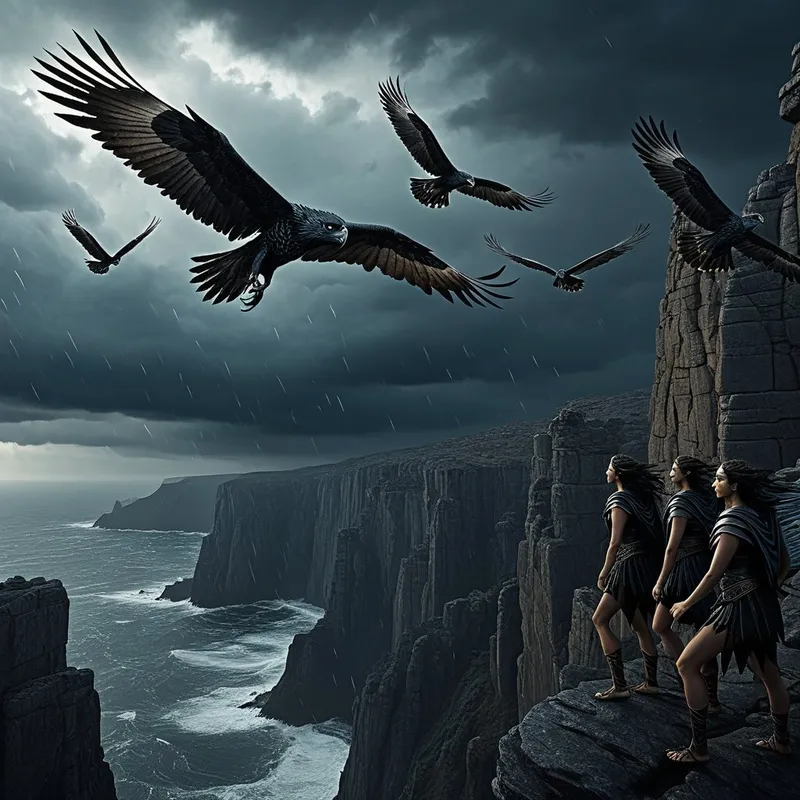
Hear now a tale not of glorious heroes, but of a punishment that flew on hurricane winds. In the shadowed halls of a prophet named Phineus, a torment unfolded daily. The air, thick with the scent of roasted meats and fresh bread, would grow cold. A sound would begin, a distant shrieking that was neither bird nor beast, but the voice of the storm given form. Then they would come—the Harpies.
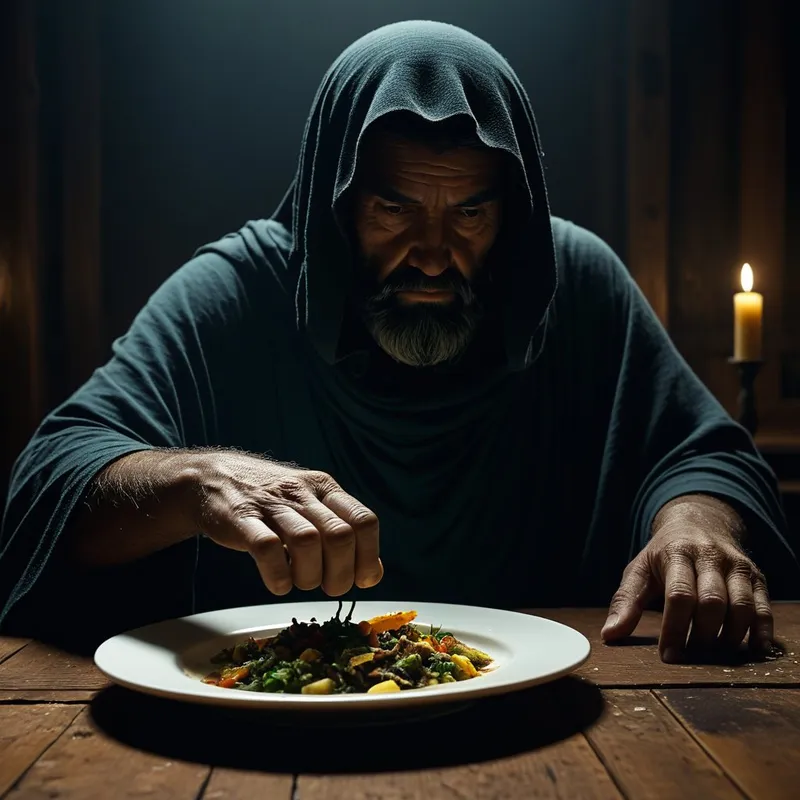
With the fair faces of maidens and the fierce, taloned bodies of eagles, they descended like a squall. Their names were whispered in dread: Aello and Ocypete. Their wings beat the air into a frenzy, scattering cups and overturning tables. But they did not come for slaughter. Their crime was more exquisite. With deft, cruel claws, they would snatch the food from the very lips of Phineus and his men. What they did not steal, they defiled, leaving behind a stench so foul that no mortal could bear to eat. Phineus, once a king blessed with sight beyond sight, was now a blind, gaunt wraith, condemned by Zeus himself to this eternal, gnawing hunger for his transgressions.
The land around his hall grew barren, echoing the emptiness within. Hope was a forgotten flavor. Then, a new sound cut through the perpetual shrieking—the rhythmic dip of oars and the creak of a mighty ship’s timbers. The Argo had come, bearing the sons of the North Wind, Zetes and Calais. These brothers, born with wings on their ankles and backs, listened to the prophet’s plea. They saw the filth, smelled the decay, and heard the approaching tempest of wings.
They did not draw swords. Instead, they stretched their own wings and took to the sky. What followed was a chase that raced across the known world, a whirlwind pursuit over churning seas and jagged mountains. The Harpies, swift as guilty thoughts, led them on a desperate flight, until at last, at the Isles of Turning, the sons of Boreas closed in. Their swords gleamed, ready to strike. But then, the voice of Iris rang out, a prismatic command in the turbulent air. She stayed the heroes’ blades, declaring the Harpies were instruments of Zeus, and their work for Phineus was done. The snatchers vanished into a deep cavern, becoming unseen spirits of the land. On the wind-swept cliff, Phineus, at last, ate in peace. The table was clean. The silence was a feast.
Cultural Origins & Context
The Harpies are ancient figures, their roots likely stretching back into pre-Greek chthonic traditions where the boundaries between bird, spirit, and goddess were fluid. They appear in the foundational texts of Greek culture: Hesiod’s Theogony names them as daughters of the sea god Thaumas and the Oceanid Electra, making them sisters to the rainbow, Iris. This lineage is crucial—they are divine, not mere monsters, born of oceanic depth and dazzling wonder.
Homer mentions them only briefly as personified storm winds, but their defining myth is cemented in the epic of the Argonautica by Apollonius of Rhodes. Here, they are fully realized as agents of Dike, the cosmic justice of Zeus. Their story was not a fireside fable of adventure, but a poetic and religious assertion of a core principle: divine law is inescapable. To transgress, especially as Phineus did by misusing his prophetic gift, was to invite a punishment that was not merely painful, but erosive, a perpetual unraveling of sustenance and comfort. The Harpies gave a terrifying face to the concept of a curse that actively, relentlessly undoes one’s means of life.
Symbolic Architecture
The Harpies are the psyche’s embodiment of violent, necessary correction. They are not random predators; they are targeted disruptors.
They represent the moment when the unconscious, in the service of a higher order, raids the conscious mind to spoil its ill-gotten or misused sustenance.
Phineus, with his stolen knowledge, represents a consciousness that has grown fat on secrets not meant for it, on power without wisdom. His feast is the ego’s complacency. The Harpies are the eruption of the shadow in its most visceral form—not to destroy him, but to cleanse the table. Their defilement is a paradoxical purification. By making the food inedible, they force a halt to consumption. They enforce a fast, a necessary emptiness that must precede any true healing or new beginning.
Their bird-woman hybridity is key. They link the chthonic (the predatory bird, the scavenger) with the human (the maiden’s face), symbolizing a primal, instinctual intelligence acting with cruel purpose. They are the fury of the neglected, the debt collector of the soul. Their chase and eventual reprieve by Iris illustrates that these forces are not meant to be slain, but understood and integrated. Their function ends when the message is received, and the debt is paid.
The Dreamer's Resonance
To dream of Harpies is to experience a somatic alarm from the deep psyche. It is the dream of sudden, shocking loss—not of a person, but of a resource. The food snatched from your hand, the vital document blown away by a gust, the spoiling of a long-planned event. The somatic feeling is one of visceral violation and helpless rage.
Psychologically, this signals a confrontation with a self-created curse. The dreamer may be, like Phineus, “feeding” on something toxic: a relationship that provides comfort but decays self-respect, a career achievement built on compromised integrity, an addiction to old narratives of victimhood or blame. The Harpy attack is the unconscious’s brutal intervention to stop the consumption. The foul stench left behind is the dream’s unflinching presentation of the true nature of what one has been partaking in. The dream is a crisis, forcing the dreamer out of passive endurance and into a state where they must, like the Argonauts, finally confront the snatching shadows.

Alchemical Translation
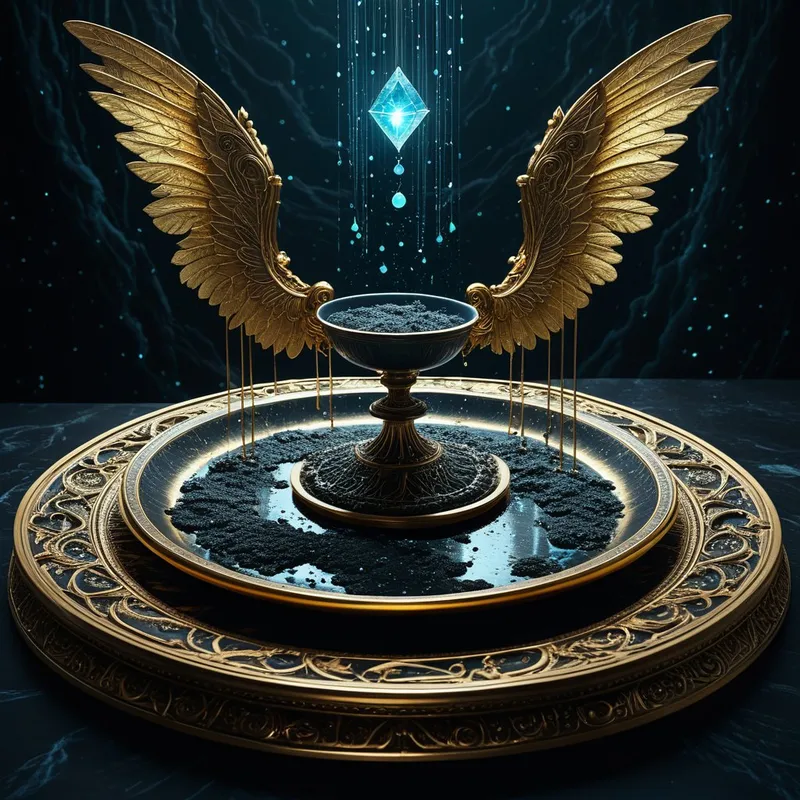
The alchemical journey modeled here is the Nigredo, the necessary blackening and dissolution of the ego’s contaminated structures. Phineus is the prima materia, the base self, blinded by his own gifts and rotting in his hall. The Harpies are the corrosive aqua fortis (strong water) applied by the divine artisan. Their action is not evil, but the fierce beginning of the Opus.
The individuation process requires a Harpy-event: a sudden, devastating theft of what the ego clings to for identity, so that a truer self may eventually emerge from the enforced emptiness.
The modern individual’s “Harpies” are those life events—sudden loss, exposure of a lie, a devastating failure—that swoop in and snatch away the props of our false persona. The chase by Zetes and Calais represents the conscious mind’s initial, often angry and heroic, attempt to fight this dissolution. But the work is not to kill the disruptive force. The alchemical translation occurs at the Isles of Turning—the point of Coniunctio or confrontation. Here, through the mediating voice of Iris (insight, the promise of connection), one must recognize the disruptive force as an agent of one’s own deeper destiny. The Harpies retreat into the earth, becoming a permanent, integrated part of the inner landscape—no longer persecutors, but remembered as the severe midwives of a harder, cleaner truth. Only then does the feast become possible again, not as a right, but as a gift born of purified space.
Associated Symbols
Explore related symbols from the CaleaDream lexicon: